 |
|
Greetings from Washington, and welcome back to Puck.
|
|
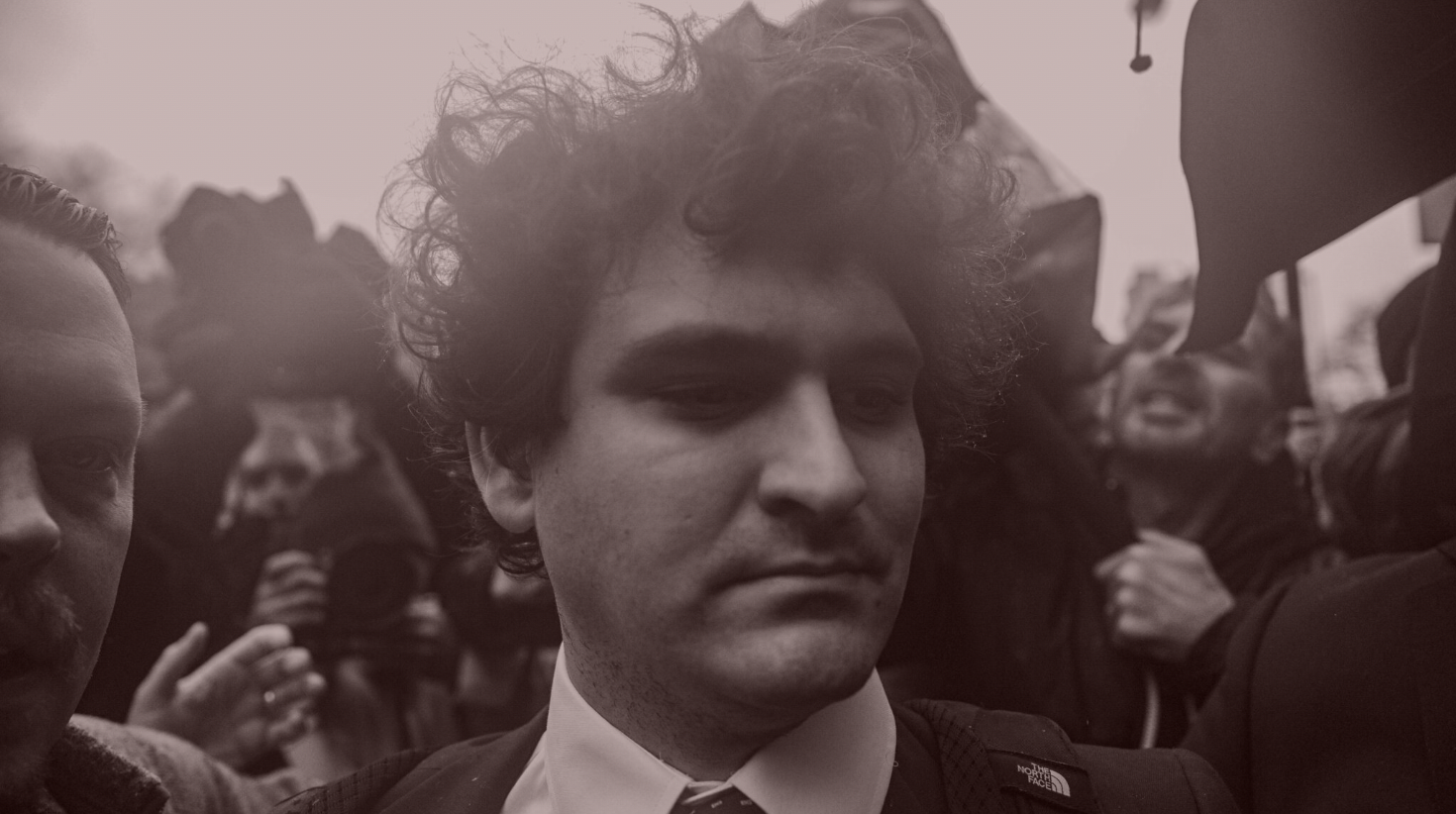
Tonight, the inside story of a Democratic startup called Deck, and how it got trapped between a trio of billionaires—Mark Zuckerberg, Sam Bankman-Fried, and 24-year-old Rory Gates—before it died last week. Who is to blame?
But first…
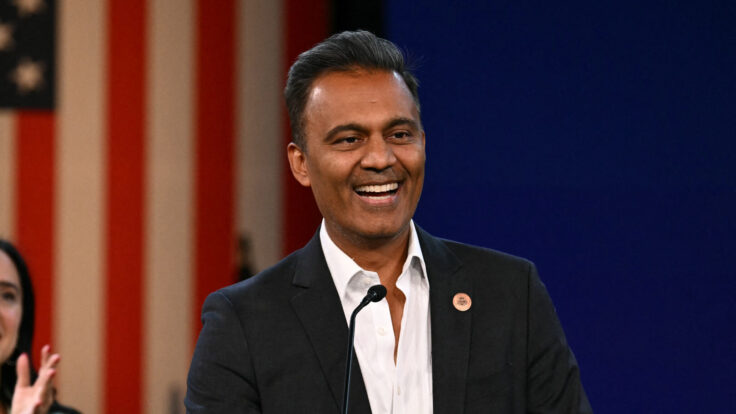
- Sacks’ House Guest: G.O.P. donor and mega-influencer David Sacks is, as Puck readers know, a Ron DeSantis super fan, having pitched the Florida governor to tech executives at private meetings and helped to launch his campaign alongside Elon Musk. But I’ve recently learned that Sacks hosted a different Republican candidate at his house for some, in the language of the trade, donor cultivation: Vivek Ramaswamy.
Sacks invited Vivek to his place in Los Angeles last Wednesday for a get-together with one or two dozen people. Vivek was in SoCal for some fundraising, although this event with Sacks was a meet-and-greet without a ticket price. Sacks’ power is more as a connector and podcaster—his checks are smaller than his mouth—but the fact that he is bringing Vivek on the All-In pod and introducing him to his wealthy friends says something about Ramaswamy’s momentum.
|
|
|
| Few billionaire playthings have had a wilder couple of years than the Democratic analytics startup Deck, which has bounced from the balance sheet of one tech oligarch to another, and from one scandal to the next. First, in 2017, Mark Zuckerberg acquired the company, at the peak of dumb speculation that he was preparing to run for president, only for Zuckerberg—and, somehow, Deck—to get swept up in the Cambridge Analytica scandal. Then, after a few years of independence, it was sold to Sam Bankman-Fried. We all know how that billionaire scandal unfolded, and Deck was subsequently put back on the auction block. At one point in the last year or so, I’ve learned, it appeared that the company might be purchased by Rory Gates, the 24-year-old Microsoft scion who has been moonlighting as an investor in Democratic voter tech.
Alas, in a peculiar twist of fate, the startup now belongs to no one. Once regarded as among the most successful startups of the billionaire-fueled Resistance era in Silicon Valley, backed by everyone from Chris Sacca to Eric Schmidt, Deck is headed to the S.B.F. ash heap, as I reported last week. On one level, it’s a small story in business and politics: Trump won’t get re-elected because Democrats lost one tech-infused voter-targeting platform. But in a bigger sense, the company’s demise captures the mercurial forces at play in the billionaire philanthropy-industrial complex—or at least the downside to being owned by a mega-donor whose business problems might collide with their personal philanthropic interests.
“Why is this happening?” read an internal announcement that Deck sent to clients last week. “It’s a long story, but the short version is that we were purchased by Sam Bankman-Fried about a year ago. Several months later, he was arrested on fraud charges and his company—FTX—was in bankruptcy. Deck then wound up as part of the FTX bankruptcy estate and the difficult decision has been made to wind down our operations by August 31st.”
The company’s founder, Max Wood, told me he couldn’t comment given the ongoing legal proceedings. But I’ve pieced together that “long story” from other sources, and boy, is it a doozy. |
|
|
| Wood is regarded as one of the most mensch-like figures in the extended Democratic tech universe, and also one of the unluckiest. He launched Deck in 2015 hoping to make predictive analytics software free to every Democrat who wanted to run for office. Two years later, Wood decided to sell the company, which he had bootstrapped, to Zuckerberg and Priscilla Chan at the Chan Zuckerberg Initiative. The idea was to relaunch Deck as a voter-data project under CZI in April 2018, but the Cambridge Analytica scandal exploded in March, and anything associated with Zuck and voter data became temporarily radioactive. “CZI’s leaders told some employees that a data-capturing program—even one at CZI—would be too touchy in the wake of Facebook’s data troubles,” sources told me at the time. Wood and his project were casualties of a scandal at a company he didn’t even work for.
But Wood was determined to spin Deck back out of CZI, roll back the clock, and pick up where he left off as an independent company. In 2019, Wood began to use his Silicon Valley connections to raise outside funding from Democratic investors like the progressive-tech incubator Higher Ground Labs. In the eyes of operatives, Deck has been merely a modest hit, but one with high-powered clients (like the Democratic National Committee) and tons of small campaigns, which typically can’t afford to hire expensive pollsters or develop targeting scores. Nowadays, Deck has 15 employees and harbored plans to work with thousands of campaigns in 2024.
Beginning around mid-2022, I began hearing murmurs that Deck was exploring a sale. A few months later, I finally learned who had bought it, a tightly-kept secret even among some of Deck’s backers: Sam Bankman-Fried. At the time, S.B.F. was at the height of his powers in Democratic donor circles. Even some people who worked for S.B.F. rolled their eyes at the Deck acquisition; it was certainly unusual for a donor to shell out some $5 million to buy out the entire cap table and I.P. of a political startup. But S.B.F. grew enamored with the startup via Mind the Gap, the Democratic donor-advisory firm founded by his mother Barbara Fried, and in August 2022 swooped in, beating out some other interested acquirers. He was the white knight that the company needed, informally promising to fund the company’s operating costs going forward.
Of course, selling the company to S.B.F. soon turned out to be an even worse mistake than selling to Zuckerberg. When FTX went bankrupt last year, the company’s lawyers at Sullivan & Cromwell filed for Chapter 11 on Deck’s behalf, despite it being a personal property of Bankman-Fried and not of FTX or any corporate entities, as I reported late last year. Deck considered it a clerical error, while FTX considered Deck to be a company asset given that S.B.F. allegedly absconded with customer funds to buy it.
Wood found himself in the unenviable position of leading a company without long-term financial backing and with a major legal headache, to say the least. Deck had to find a way to get out of bankruptcy, ideally by finding a new buyer. And the clock was ticking. |
|
|
| Wood eventually arrived at the counterintuitive conclusion that it was actually good for Deck to remain mired in bankruptcy and not to fight FTX C.E.O. John Ray, since the debtors had pledged to cover some of Deck’s payroll. In the meantime, as Wood awaited the monthly hearings of the FTX bankruptcy case that might release him from purgatory, he began canvassing his network of Silicon Valley backers to find a rescue package that would allow him to buy the company back. He had a final term sheet and went out to raise $3 million from individuals and 501(c)4s to make it happen.
The usual suspects in Wood’s rolodex, including onetime Deck investor Ron Conway, voiced their support, I’m told. But the most intriguing potential backstop to emerge over the last year or two came from what felt like outer space: Rory Gates, the sole son of Bill and Melinda. Rory, unlike his Insta-famous sisters Phoebe and Jennifer, is extremely secretive and has maintained a remarkably low profile—seriously, try Googling him—but he has recently become the talk of the town as he quietly demonstrated a professional interest in politics. Rory has requested meetings with multiple Democratic operatives over the last year or two to learn about the Democratic tech stack, giving the impression of wanting to become a major political donor or perhaps even as a full-time practitioner. (Perhaps coincidentally, he has been making these inquiries at a time when Melinda herself has gotten more involved in political giving, hiring some advisers at Pivotal Ventures who focus on women’s political empowerment.)
Over the same time, Rory expressed an interest in buying or taking a major stake in Deck. Democrats who have gotten to know Rory described him to me as a textbook, well-meaning neophyte—a wealthy brainiac who graduated last year from UChicago with a double major and a masters and comes off as, well, very, very young. But Rory has also been taking steps to further educate himself. He has been chaperoned in some meetings by Sheila Gulati, a venture capitalist who is a friend of the Gates family, and he recently hired a professional donor-advisor to help steer his political giving, I am told. (Rory declined to comment through a representative.) “He’s intelligent and well-read and deeply informed about the wide range of issues that interest him,” Melinda said in a rare post about him on his 18th birthday, back in 2017. “But one of the things that makes me proudest is that Rory is a feminist.”
Another possible investor, or even acquirer, was one of the many entities that had been trying to cultivate Rory: the Democratic super PAC Future Forward. Future Forward has displaced Priorities USA, as I reported in October, as the leading super PAC backing Biden’s reelection campaign. And last year, just as Rory had been, Future Forward had considered buying Deck outright before it was sold to S.B.F.. This year, Future Forward, explored various ways to make a major investment in the startup as Wood hunted for escape hatches, but the talks fell through in part due to the same reason they did with Rory: the stench of S.B.F. that still hangs over the entity.
After all those fits and starts, Deck crafted what it thought would be a deal to finally get out from under the FTX bankruptcy, and a purchase agreement was drafted. The $3 million in SAFE financing would come from a handful of individual donors like Conway, and one large check that would be undisclosed from an anonymous giver. But that would become a problem: Ray and his lawyers grew concerned that not all of the investors in the consortium were disclosed. Wood and his team tried to assuage the debtors that their anonymity was not an issue—no, it was not M.B.S.—but was unable to convince them, and so Wood set out to raise the money yet again to fill what was a new hole.
Wood eventually got the commitments together, for a second time, and FTX seemed ready to sign off on a final purchase agreement—but then in early August, dubiously in Deck’s view, FTX pulled the plug. “After months of attempting to sell Deck, there was never a transaction presented that FTX Debtors believed would ultimately close,” the debtors told me in a statement. “It would be irresponsible for the FTX Debtors to use creditor resources to pursue a transaction that would likely fail.” Furthermore, they continued, “the FTX Debtors were not comfortable with the bidder’s lack of transparency and secrecy. The FTX Debtors are fully committed to transparency with all stakeholders and will continue to maintain the integrity of the Chapter 11 process.”
Now, Deck is shutting down at the end of the month, although some investors wonder if that was premature. Backers of the company can’t help but lament how differently things could have gone, and whether billionaires are really the best exit path for Democratic tech. After the 2020 election, at the prodding of major Deck investors including Schmidt, the Democratic National Committee even gave serious thought to buying Deck, I am told. Some Deck backers wish that the White House political team, led by Jen O’Malley Dillon, had pushed harder for the deal, with one source calling that decision the “original sin.” Nowadays especially, Deck supporters wonder what could have been.
Wood has to wonder, too. I recently relistened to a pair of interviews that he did with Nathaniel G. Pearlman, the Democratic tech podcast impresario and the founder of NGP VAN, arguably the most successful progressive tech product ever. He asked Wood, just after dealing with Zuckerberg but before dealing with S.B.F., whether he would ever sell again. “I am not for it. I mean, talk to me in a few years—because God only knows what could happen,” Wood responded, presciently. |
|
|
|
| FOUR STORIES WE’RE TALKING ABOUT |
|
|
|
|
|
 |
|
|
|
Need help? Review our FAQs
page or contact
us for assistance. For brand partnerships, email ads@puck.news.
|
|
You received this email because you signed up to receive emails from Puck, or as part of your Puck account associated with . To stop receiving this newsletter and/or manage all your email preferences, click here.
|
|
Puck is published by Heat Media LLC. 227 W 17th St New York, NY 10011.
|
|
|
|