Welcome to The Hidden Layer. I’m Ian Krietzberg, wrapping up my time in
San Francisco and excited to head back to the East Coast. And yes, in between running (and Waymo-ing) around the city, I did see Anthropic’s announcement that its next model, Claude Mythos, is just too powerful to release to the public.
I happened to be chatting with an international cybersecurity expert last night who didn’t entirely buy this story. Anthropic claims that Mythos Preview has already found thousands of vulnerabilities in every major web browser and operating
system; the company formed a consortium—including Apple, CrowdStrike, Microsoft, Broadcom, etcetera—called Project Glasswing to secure the world’s tech infrastructure before these sorts of capabilities are unleashed. But the truth is that no one really knows what Mythos is capable of, and frontier labs have often leveraged fearmongering for free marketing. More on this to come.
Today, my
partner Julia Alexander swings by The Hidden Layer to give us her sharp analysis of what went wrong with Disney and OpenAI, and what Disney’s A.I. strategy looks like going forward. Plus, my notes on the HumanX conference here in S.F., Anthropic’s exponential revenue growth, and Alibaba’s Nvidia emancipation.
Also mentioned in this issue: Stefan Weitz, Jennifer Tejada, Krishna Rao, Jensen Huang,
PagerDuty, Trump, Edo Segal, Waymo, Bob Iger, Sam Altman, Reed Hastings, Josh D’Amaro, Elon, Michael Bay, PewDiePie, Andrew Rosen, Minecraft, Roblox, and more…
Let’s get into it… |
Two
Takeaways From HumanX… So Far
|
- Past the point of certainty: When I attended HumanX last year, conference C.E.O. Stefan Weitz described his mantra to me as, “We’re here to give you confidence and conviction in your A.I. journey.” But a lot has changed in the past 12 months: the rise of the agentic web, debates over L.L.M.s
versus world models, Anthropic’s battle with the Pentagon, the SaaSpocalypse panic, OpenAI’s
“code red” strategic pivot, etcetera. So when I connected with Weitz a few days before this year’s conference began, I wasn’t surprised by his newfound belief that it’s no longer “realistic” to stand by that thesis. “You’re moving at a speed you didn’t choose through conditions that you can’t see,” he told me. (And this was several days before Anthropic
revealed Mythos.)
This year, Weitz said, HumanX has been more focused on promoting practical applications for A.I., as well as enterprise adaptability and readiness, rather than predicting the future—“because who the hell knows what’s dropping tomorrow?” It’s a point I heard echoed by a number of executives over the past few days. Jennifer Tejada, the C.E.O. of software firm PagerDuty, told me, “We want our customers to benefit from new technology, and we are expected to
manage the risk.” She said that failure to strike a balance between opportunity and risk could put a company in “real material business trouble,” and concluded, “There’s still a lot more that we don’t know than what we know.” Steve Lucas, the C.E.O. of Boomi, told me that, between the “ticking time bomb” of cybersecurity implications, increasingly
tense governance considerations, rising urgency around regulation, and the opportunities the technology affords,
uncertainty about the near-term future is almost unavoidable. “I see it evolving,” he said. “I see it changing every second of every day.” - The art of the practical: The conversations on the sidelines of HumanX focused on the same industry-wide issue that I’ve been hearing about for years: Enterprise adoption is still a big question mark. While companies are vastly
increasing their budgets to make room for A.I. experiments, many deployments are shallow, and the majority of pilots are all but dead on arrival. In a recent survey of a few thousand executives and employees, enterprise A.I. firm Writer found that 79
percent of executives are struggling with lagging R.O.I., and 75 percent said their A.I. strategy is “more for show than for actual internal guidance.”
In its report, Writer noted the need for organizations to “radically redesign” their internal operations in order to get actual value from A.I. systems. This notion was echoed across the HumanX conference floor—although it’s far easier said than done. As several executives admitted to me earlier this week, unless tech companies shift their
strategy to offer holistic partnerships rather than specific tools, the rate of A.I. diffusion throughout the economy will be limited by predictable frictions—employee education and retraining, structural reorganization, etcetera—which can be costly and cumbersome. Clearly, the industry is at an inflection point: Companies will need to validate the R.O.I. for adoption to continue.
|
Two Things
You Should Know…
|
-
Anthropic’s exponential run rate: Shortly before revealing its mysterious Mythos model, the Anthropic press shop announced an expanded partnership with Google and Broadcom for “multiple gigawatts of next-generation T.P.U. capacity” that’ll come online in 2027. According to C.F.O. Krishna Rao, this expansion of Anthropic’s compute infrastructure is a “disciplined” response to “unprecedented” and “exponential” growth. As a case in point, Anthropic disclosed that its
run-rate revenue has now surpassed $30 billion—a pretty significant jump from the $9 billion it reported at the end of 2025. (Run rate, the industry’s preferred metric, is typically calculated by multiplying the previous month’s revenue by 12, so take that with a grain of salt.) Google, of course, was one of Anthropic’s earliest hyperscale investors, as well as a leading purveyor of T.P.U. compute-as-a-service. The deal is another shining example of the circular financing that powers the
industry, where investors are also cloud providers and startups double as the cloud providers’ largest customers.
- The Alibaba–Nvidia trial separation: Alibaba, the Chinese e-commerce giant, announced on Tuesday that it’s launching a new data center in its home country, powered by 10,000 of its own semiconductor chips, for model training and inference. That’s a major strategic shift: In between U.S. semiconductor export bans, Alibaba has been
stockpiling older generations of Nvidia G.P.U.s—a pipeline that Nvidia had been intent on keeping open. Indeed, C.E.O. Jensen Huang embarked on a lengthy quest last year to get Trump to allow Nvidia to export its chips to China. But
while Alibaba certainly likes its H200s, China is intent on technological self-reliance. This new data center is a push in that direction.
|
Quote of
the Week: The Kingdom and the Power
|
“A.I. is going to be a very polarizing topic, and people are going to co-opt it, because it’s all
about power. These people that are leading these companies—the only thing they care about is power. They have more money than God, and they are just trying to get more power.”
—Edo Segal, the C.T.O. of Napster, in a wide-ranging conversation with me on Wednesday about the company’s transition to A.I. agents.
And now, here’s Julia… |
|
|
|
After the Sora headfake, should the House of Mouse play defense with its I.P., or
triple down on the technology via its stake in Epic Games and let its fans run wild? |
|
|
|
Bob Iger’s final act as C.E.O. of Disney—his now-canceled billion-dollar
deal with OpenAI—had a certain logic to it. In one fell swoop, Iger would jujitsu Sam Altman from a threat into a partner, ensure that his kingdom wouldn’t be overrun by the tech barbarians at the gate, and burnish his bona fides as a media visionary before quite possibly reprising his old role as an advisor at Thrive, an early OpenAI investor. But Iger’s lame-duck decision didn’t have a ton of support internally, I’m told, and many executives breathed sighs of
relief last week when OpenAI unceremoniously shut down Sora, its generative A.I. video platform, thus killing the Disney deal.
Yet the death of Sora doesn’t herald the end of A.I. video, nor suggest that the manifold threats to Disney have gone away. On the contrary, Hollywood is facing challenges on multiple fronts. Even the creepiest, most uncanny A.I. content—like those gnarly “fruit dating” videos that have started to dominate Reels, Shorts, and TikTok—is racking up hundreds of
millions of views. Facebook is overrun with deepfake Boomer slop. And as Netflix chair Reed Hastings recently noted, all of legacy media will come under pressure as digital creators get their mitts on increasingly sophisticated A.I. tools.
Josh D’Amaro, Iger’s successor, will now have the opportunity to rethink the company’s A.I. strategy entirely. Should Disney retrench and play defense in the copyright wars? Find a new licensing
partner? Or get creative with other ways to invest in generative A.I.? Any partnership that opens the A.I. slop floodgates is precisely the sort of thing that most company executives have spent their careers fighting. At the same time, an A.I. deal that’s overly restrictive sort of defeats the point of tapping into Disney’s diehard, multigenerational fandom.
These are the questions that kept coming up in my conversations last week with various Disney employees and former entertainment
executives now working in the A.I. space. Historically, Disney, as everyone knows, has been extremely protective of its family-friendly brand—which is why Iger famously decided not to buy Twitter (too much “nastiness” on the platform, he said, and that was pre-Elon), and why ESPN initially avoided sports betting. But there’s huge value in tapping the unhinged creativity of the internet, along with Disney’s I.P., for the company’s next phase of growth. And that market is
already professionalizing. Skibidi Toilet, the surreal internet series that became a YouTube phenomenon, is set to become a movie developed by… Michael Bay. |
Disney has been down this road before. In 2014, Iger acquired Maker Studios, a YouTube creator
network, in a $500 million deal. Predictably, this resulted in the unfortunate-on-every-level discovery that one of Maker’s top stars, Felix “PewDiePie” Kjellberg, was reading Frozen erotic fanfic in his videos. Iger was reportedly displeased. (Five years later, Maker was essentially defunct.)
D’Amaro might worry about getting burned again, but he needs to find a manageable path for A.I. engagement. Younger audiences are increasingly comfortable using gen A.I.
tools to make content, according to a Reuters Institute study published last fall. They also prefer watching creator-led content, often discovered through social media. According to Deloitte’s 2025 State of Media survey, more than half of all Gen Zers said they felt a stronger connection to creators than traditional actors.
Perhaps the answer has been in front of D’Amaro’s face this whole time. My conversations about Disney’s community story-building potential often lead back to the same
possible M&A target: Epic Games, the maker of Fortnite, the battle royale–style shooter where fans can play as characters from Marvel, Star Wars, and other Disney properties. Disney already has a 10 percent stake in the company and is building out a special Disney-branded environment on the platform, but as former Viacom digital executive Andrew Rosen explained, the best way to leverage I.P. in the A.I. marketplace is to have full control over the
platform where content is created and stored. (Rosen points to David and Larry Ellison perhaps having a similar theory in mind with their moves to bring together Paramount, Oracle Cloud, and their minority stake in TikTok.)
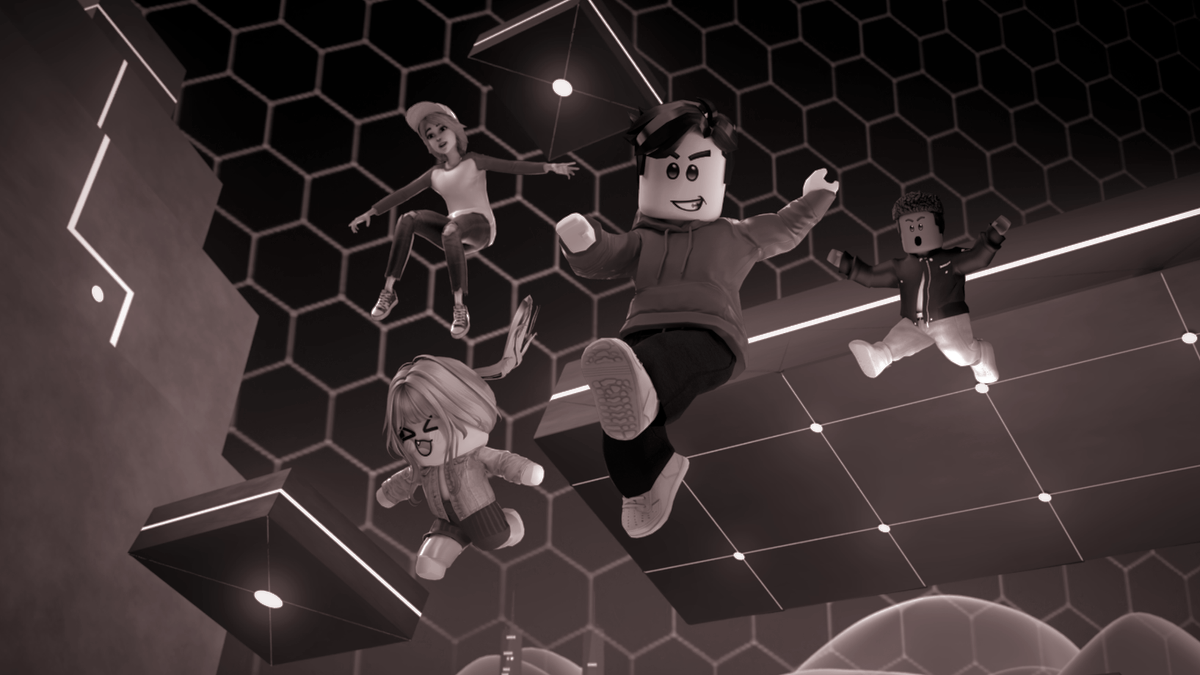
Video games are a natural sandbox for community co-creation. For years now, creators have been making entire digital series inside of Minecraft. More recently, there’s been an explosion of creativity inside gaming ecosystems
like Fortnite and Roblox, with gen A.I. tools only accelerating the content creation. And by owning one or more platforms where that sort of storytelling takes place, Disney could potentially monetize fan-driven I.P. experimentation in novel ways—though, yes, it could cost upward of $30 billion. For example, Disney could sell in-game tools for building more elaborate, individual set pieces within a larger “theme park” setting, or bring in advertising through partnerships with
clothing brands.
The key is “speed to I.P.,” Gavin Purcell, a former Tonight Show producer who now works in A.I., told me—providing tools to younger creators to iterate on legacy I.P. while simultaneously developing entirely new characters and concepts. Letting players build their own stories and worlds around, say, some of the lesser characters on Marvel’s 7,000-deep bench could eventually monetize I.P. otherwise collecting dust.
Still, there’s a caveat.
“You would have to have your own actual distribution platform,” Purcell said. “That’s the only way to do this right.” Could owning a collaborative storytelling and social platform like Roblox or Fortnite broaden how fans interact with and further develop Disney characters? “The real value to Disney is, how do you use these platforms that have their own A.I. tools to create new or rejuvenated I.P.?” Purcell added. “Rather than just investing enough money to say, ‘We’re an A.I.
company too.’”
Roblox, one of the fastest-growing gaming platforms, with more than 150 million daily active users as of Q3 2025, offers several meaningful proof points. According to analyst Matthew Ball’s annual “State of Gaming” report, Roblox has developed significant network effects, making individual developers (or creators) want to build within the game universe. Grow a Garden, which launched just last year on the platform, surpassed 20
million concurrent players in one session—and is now being adapted into a film. Last year Roblox hit 65 percent of Netflix’s total viewing hours. But while Netflix is growing between 1 and 2 percent per year, Roblox is growing tenfold. You can see why D’Amaro might dream of movie premieres inside Fortnite.
And therein lies the potential for vertical monetization. Rather than trying to establish new points on the flywheel, maybe Disney should simply double down on its
investment through the community building and storytelling that’s already happening online. Recent layoffs at Epic Games may have some people inside Disney feeling anxious about the investment, but C.E.O. Tim Sweeney has been working on addressing those issues—in part by copying what’s worked for Roblox. Fortnite is now allowing players to create their own games and ecosystems, which are rewarded with creator payouts that in turn can create new engagement
pipelines.
All entertainment companies are currently trying to figure out how to be in A.I., just like they once had to figure out how to be on YouTube—but investing in new technology can require completely changing direction. Oftentimes, the answer isn’t to acquiesce to the pressures from shareholders, but to further invest in what’s already worked, even if those paths forward feel like a whole new world. |
Thanks, Julia. That’s all for today. I’ll see you next week.
Ian |
|
|
|
Join Emmy Award-winning journalist Peter Hamby, along with the team of expert journalists at Puck, as they let you in
on the conversations insiders are having across the four corners of power in America: Wall Street, Washington, Silicon Valley, and Hollywood. Presented in partnership with Audacy, new episodes publish daily, Monday through Friday. |
|
|
|
A professional-grade rundown on the business of sports from John Ourand, the industry’s preeminent journalist,
covering the leagues, players, agencies, media deals, and the egos fueling it all. |
|
|
|
Need help? Review our FAQ page or contact us for assistance. For brand partnerships, email ads@puck.news. You received this email because you
signed up to receive emails from Puck, or as part of your Puck account associated with {{customer.email}}. To stop receiving this newsletter and/or manage all your email preferences, click here. |
Puck is published by Heat Media LLC. 107 Greenwich St., New York, NY 10006 |
|
|
|
|