Welcome back to Wall Power. I’m Marion Maneker.
I guess the pope
was on our side: The Knicks did it in five. Enjoy the confraternity in New York while it lasts. Tonight, Dan Duray has a great interview with Arthur Jafa, whose dual show with Richard Prince at the Fondazione Prada in Venice was being called “the real American pavilion,” in a campaign started by Jafa’s gallerist Gavin Brown. Dan gets to the heart of the Jafa-Prince
duality.
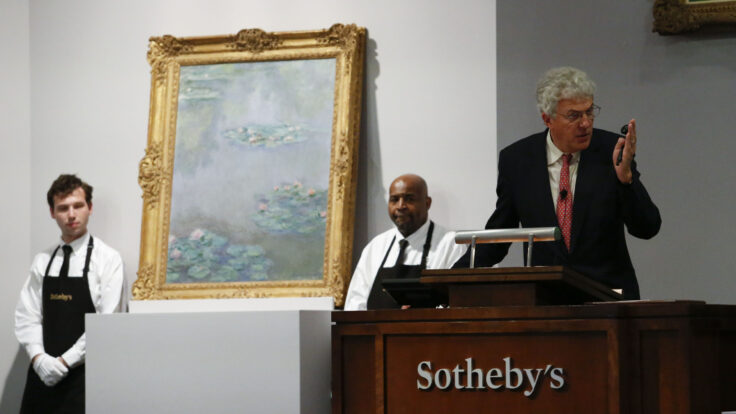
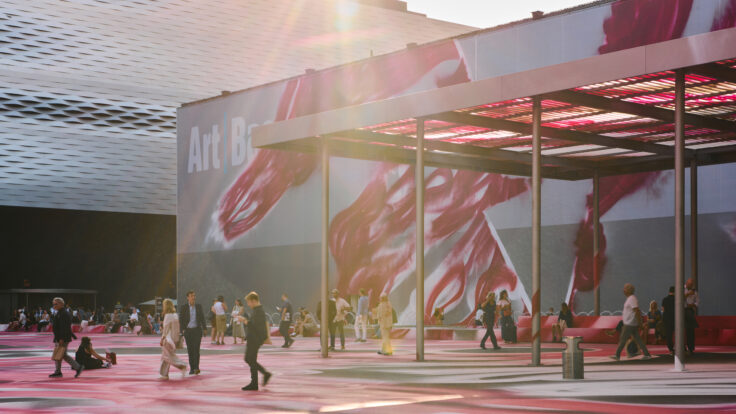
Up top, the gallery PDFs are flying; I give you a taste of what’s on offer in Basel next week; the ICA Miami announced its big tastemaking show for December; Christie’s had another blowout South Asian art sale; and we are once again reminded that people will collect anything. You won’t believe what someone just spent $3 million on…
Also mentioned in this issue: Alex Gartenfeld, Carroll Dunham, Ganesh Pyne,
Abanindranath Tagore, Willem de Kooning, Henry Moore, Andy Warhol, Elaine de Kooning, Nancy Spector, Jeff Koons, Marcel Duchamp, Sherrie Levine, Jasper Johns, Robert Rauschenberg, and more.
Let’s get started… |
-
ICA Miami announces Carroll Dunham: The influential ICA Miami announced last week that its director, Alex Gartenfeld, will curate the first museum survey of Carroll Dunham’s art in 25 years. The show, opening on December 1, will include 50 works spanning 1983 to the present. Gartenfeld’s antennae are very good, so the focus on Dunham is well worth noting.
- Christie’s single-owner South Asian sale
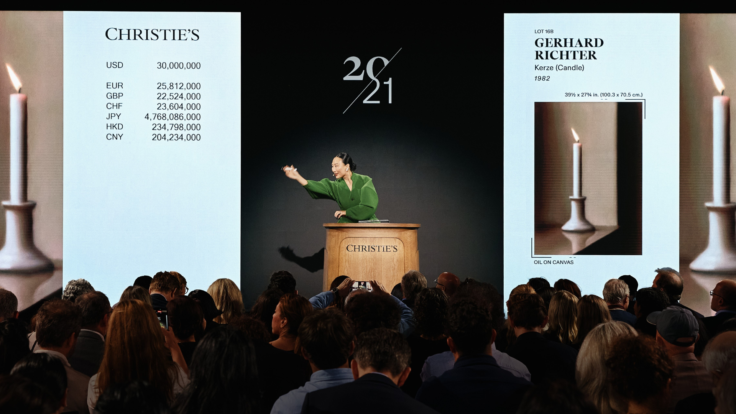
makes $25 million: Billed as a collection on the artistic legacy of Bengal, Christie’s sold 93 lots assembled during the 1990s and early 2000s for nearly £19 million ($25 million) on Thursday. The top three lots, all by Ganesh Pyne, sold for a combined value of
£8.5 million.
It’s been a wild year for Pyne’s art: His top five prices were all set this year, and a total of $18 million worth of his canvases sold in the first half. Among the other artists with standout sales, Abanindranath Tagore’s portrait of Mahatma Gandhi was estimated at £30,000 but sold for more than £1 million with fees. A Vasudeo Gaitonde painting estimated at a healthy £1.2 million sold for £2.2 million with fees.
|
|
|
|
A MESSAGE FROM OUR SPONSOR |
|
|
|
- ‘Super Mario Bros.’ game sells for $3 million at Heritage: The previous record price for a sealed Super Mario Bros. video game from the 1980s was $2 million, achieved in a private sale in 2021, according to Dallas collectibles house Heritage. On Friday afternoon, someone paid $3 million for one that was discovered recently. The game is “the earliest confirmed sealed copy of the most important game cartridge in history,” Heritage said in a release.
|
Art Basel
Is a de Kooning Showcase
|
Photo: Maris Hutchinson/Courtesy of Gagosian/© 2026 The Willem de Kooning Foundation/ARS, New
York
|
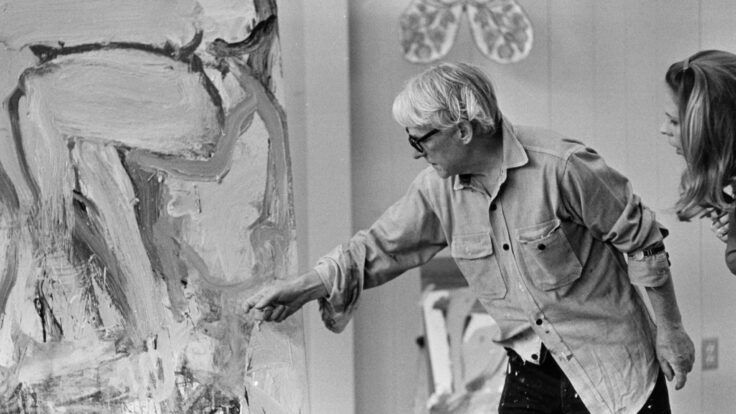
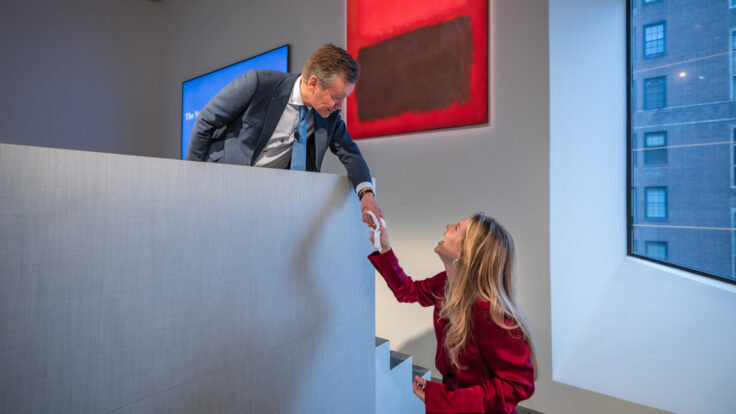
One subtrend of the season is the high volume of works by Willem de Kooning on the
secondary market. I’m hoping to dig into this further soon, but for now, it’s worth noting that Gagosian will have the 1984 de Kooning painting pictured above in its booth. The gallery hasn’t released an asking price, but recent auction sales and a PDF that cites similar works with auction prices all above $10 million should give you an idea of where they think this one is going. The gallery also has a large Henry Moore sculpture and an Andy Warhol
Skull painting.
Pace DiDonna Schrader has a larger 1984 de Kooning that will be adorning their Basel booth, too. The gallery had a small work at TEFAF, which they sold. In case you haven’t had enough de Kooning at the fair, Berry Campbell is bringing an Elaine de Kooning portrait of Tom Hess, painted in 1963, to the fair with a $465,000 asking price.
Now, let’s speak to Arthur Jafa… |
|
|
|
With a joint exhibit in Venice with his artistic hero, Richard Prince,
Arthur Jafa sounds off on the power of scarcity, why we’re still chewing on Duchamp, and his loyalty to Kanye. |
|
|
|
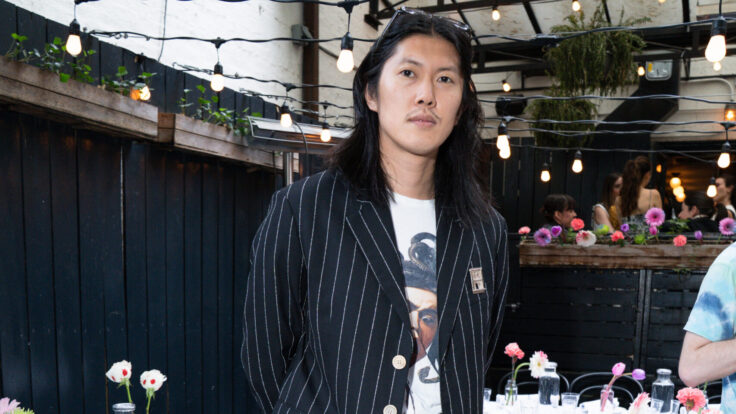
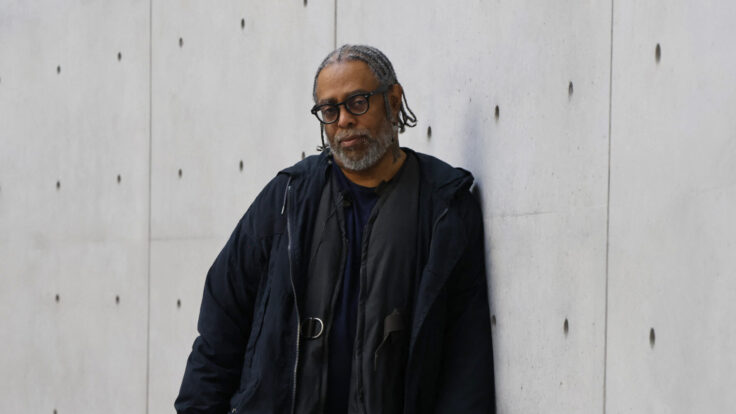
Arthur Jafa has built a career as an image scavenger, siphoning
pictures from cinema, music, and a deep reservoir of American iconography and recombining them into work that buzzes like a live wire. Those qualities pervade Helter Skelter, the exhibition that pairs him with Richard Prince at Fondazione Prada’s Venetian palazzo, Ca’ Corner della Regina, through November 23. Curated by Nancy Spector, former chief curator of the Guggenheim, the show stages a conversation between two artists who share an ethos of
lawlessness about whose images they take and what they make of them.
The title alone is a loaded readymade. It is a British fairground ride, a song on the Beatles’ White Album, a phrase Charles Manson twisted into a prophecy of race war, and the name of a notorious 1992 Los Angeles exhibition that left Black artists out. Jafa, who is 65, took the Golden Lion at the 2019 Venice Biennale. His breakthrough video, Love Is the Message, The
Message Is Death (2016), remains one of the most discussed artworks of the past decade. I caught up with him in Paris to talk about humor, the elective affinities he shares with Prince, the eternal challenge of Marcel Duchamp, and his admiration for Kanye West. As always, this interview has been edited for clarity and length. |
|
|
|
A MESSAGE FROM OUR SPONSOR |
|
|
|
“The
Blackest Artist I Know”
|
It’s great to be talking to you. How does it feel to be paired with Richard
Prince?
I’m very fortunate. Richard is a king. He’s built his fortune over 30 years. The first time they contacted me to say, “Would you be interested in doing the two-person show with Richard at the Prada Foundation in Venice?” I was like, “I think you should be asking Richard. I’m not the one you should be asking.”
How did you come to know him?
I know Richard through
Barbara Gladstone, whom I loved dearly. I miss her so much. She talked to me about Richard a lot in the beginning because I guess I had a little bit of lament that my art-world traction came so late in my career. I was like, “Oh, I could have done this, I could have done that.” And she used to always tell me, “Look, AJ, I’ve seen every version of this. And it’s always better to be a little later than a little early. It’s just always better.” And she
would always use Richard as the best example of that. She was like, “His peers all became millionaires, when he was not one. And he had a little chip on his shoulder about that.” But, you know, when you look at that group, outside of maybe Jeff Koons, he certainly has had the longest run. There are a lot of really good artists who are not artists for the ages, but Richard is definitely one that people will be talking about forever.
It’s like with the new Marcel Duchamp
show at MoMA. Who knows if he’s the greatest artist of the 20th century, but there’s no dispute he’s the most interesting artist of the 20th century. This is someone people are still thinking about. As opposed to, say, Pablo Picasso, where it’s like, as great as he is, give him the trophy and send him home. You know what I mean? Nobody’s denying that he’s great, or perhaps the greatest, but there are other artists who people are still trying to digest, still
chewing on.
When your thing jumped off in 1910, 1920—it’s incredible that people are still thinking so hard about Duchamp. And I think Richard is, to me, one of the few artists who has risen to the challenge of, What the fuck is on the other side of Duchamp? Once you do the urinal, what’s on the other side of that? That’s what everyone's trying to figure out. Critics might say Richard is just about appropriation, but he’s one of the people who’s really run with it.
How do
you make a thing when you don’t make anything? That’s a really profound, almost philosophical question, especially in the world of scarcity, fabricated scarcity, overpopulation, eco-disaster, all these kinds of things. I think Richard explored it more powerfully than anybody. I love Sherrie Levine, that’s amazing work, but it just doesn’t exist without Richard’s work. She would be the first person to say that, too, to the consternation of many feminists, which I understand. But
she literally called him up and said, “Is it all right if I did this?” Because her practice was so… derived from his insights, let’s say.
Well, that reminds me of something else Nancy Spector said about that first meeting. She said you described Richard as “the blackest artist you know.”
That’s kind of a joke. I did this interview with the Louisiana Museum where I repeated, “He’s about the blackest artist I know, because he
just steals and steals and steals,” which he loved. He sent me a note and said, “I owe you one for that.” It’s like he’s a master burglar. And you learn from him, but you don’t necessarily steal the same shit he steals. This is very, very, very complicated, because this is where the culture part comes in, you know? He might be stealing diamonds, and you’re stealing dookie chains, or whatever.
I’ve said it multiple times: I don’t think anybody would confuse my work with Richard’s work,
but there is an overlap. The overlap is pretty straightforward. He’s interested in the working class—what I would call outlaw, not high culture stuff—in the stuff that he appropriates. And I’m interested in Black shit and all of the other class stuff, too, because I grew up in the South, in the Delta.
Outside of the Appalachians, the Delta is the poorest region in America. But it’s a paradox. It’s the poorest region in America in terms of per capita income, but this is like ground zero
for American culture. The duality of that makes it a special place. But I am very working-class identified, so I love that in Richard’s work. I’ve actually appropriated Richard’s appropriations. I’ve actually repeated some of them. I used to be like, I dare you to call me on it, Richard Prince. |
|
|
|
When did you first meet?
We
met about five years ago through the auspices of Barbara Gladstone. I’ll never forget it. He met me up in Harlem. Covid had just ended, people were starting to move around again, and Gavin [Brown] had his final show at his Harlem space, and we showed AGHDRA (2021), my 75-minute-long screensaver or whatever. I’ve heard it called “the screensaver.” He met me there, and honestly, I thought he was gonna sit through 10 or 15 minutes of it. But he sat through
the whole thing. It blew my mind.
I wanted to get up and leave, because I’ve seen it. But I was like, well, shit, if he’s not gonna leave, I’m not gonna leave. So I just sat there. I was amazed. He sat through the whole fucking thing. And then at the end of it he just turned to me and said, “That was kind of remarkable. Let’s keep in touch.” Then he got up and walked away. It was such an amazing first.
There’s one place where you and Prince differ: that’s around Andy
Warhol.
I think Warhol’s thing is mostly about conceptual energy. This is me reducing the thing to a primal impulse. I’m going to impose a narrative on it that’s a little false. But to me, when gay Andy Warhol—who is a success as a commercial artist—decides that he’s gonna enter the art world, he goes up to Jasper Johns and Robert Rauschenberg, who are also both gay, and they say, Andy, your
shit is so fey. There’s a part of Andy Warhol that was like, Y’all think my shit is fey? I’m gonna show you. I’m gonna show you what not-fey looks like. And then the work is so dismissive of traditional painterly values. It’s not even really a painting. It’s a fucking kill screen. He comes out with that shit, it’s so hard, it made their shit look effete by comparison. He goes from those little delicate shoes he was drawing to car crashes.
To me, that’s an energy leap. That’s
not a quality leap. That’s an energy leap. It is such a profound leap. It’s so about aggression that quality becomes besides the point. |
One of my favorite things about Love Is the
Message at the Prada Foundation is that you can hear the soundtrack, Kanye West’s “Ultralight Beam,” throughout the entire first room. How do you feel about Kanye these days? Since that was your breakthrough piece, you’re always going to be associated with him on some level.
Not only do I not mind being associated with Kanye—that’s just part of my history—but Kanye has been incredibly supportive of me. It doesn’t matter what
he does. He could be a serial killer. But undeniably in his relationship with me, he has been incredibly generous.
Even last night, somebody asked me the Kanye question, like it was a big deal. I was like, “Kanye is a friend.” He’s a person I respect deeply. He’s clearly a genius. Maybe people hate to admit it. So was Ezra Pound, and he was a fascist, too.
There’s no correlation between ethics and being a great artist. If we’re gonna start
banishing great artists there are a zillion people ahead of him in the line. Let’s get rid of Wagner. I mean, come on. We could just sit here for an hour and talk about all the fucked up white artists who were, like, virulent racists, man. Slave owners, you know what I mean? That’s not an apology. What I’m saying is, he is my friend. I consider him a friend.
There are these slightly Luciferian things about him. He is certainly demonic, in certain respects, and that would
probably be more disturbing to him from a Christian perspective than I actually mean for it to be. But he’s free as a bird. And for Black folks, that is a big deal. |
Thanks for this interview, Dan. It was really interesting. That’s all for today. I hope you all had
a great weekend.
More soon,
M |
|
|
|
Puck founding partner Matt Belloni takes you inside the business of Hollywood, using exclusive reporting and insight
to explain the backstories on everything from Marvel movies to the streaming wars. |
|
|
|
Unique and privileged insight into the private conversations taking place inside boardrooms and corner offices up and
down Wall Street, relayed by best-selling author, journalist, and former M&A senior banker William D. Cohan. |
|
|
|
Need help? Review our FAQ page or contact us for assistance. For brand partnerships, email ads@puck.news. You received this email
because you signed up to receive emails from Puck, or as part of your Puck account associated with {{customer.email}}. To stop receiving this newsletter and/or manage all your email preferences, click here. |
Puck is published by Heat Media LLC. 107 Greenwich St., New York, NY 10006 |
|
|
|
|