{{ 'now' | timezone: 'America/New_York' | date: '%b %d, %Y' }} |
|
|
Hi, and welcome back to Line Sheet. If you’re in Paris at the Charles Porch
wedding extravaganza, I hope you’re having a great time. If you’re in Venice at the film festival, I hope you’re having a great time. (We all need a Guadagnino cardigan.) If you’re doing double duty, enjoy it! I look forward to reviewing both events via Getty Images.
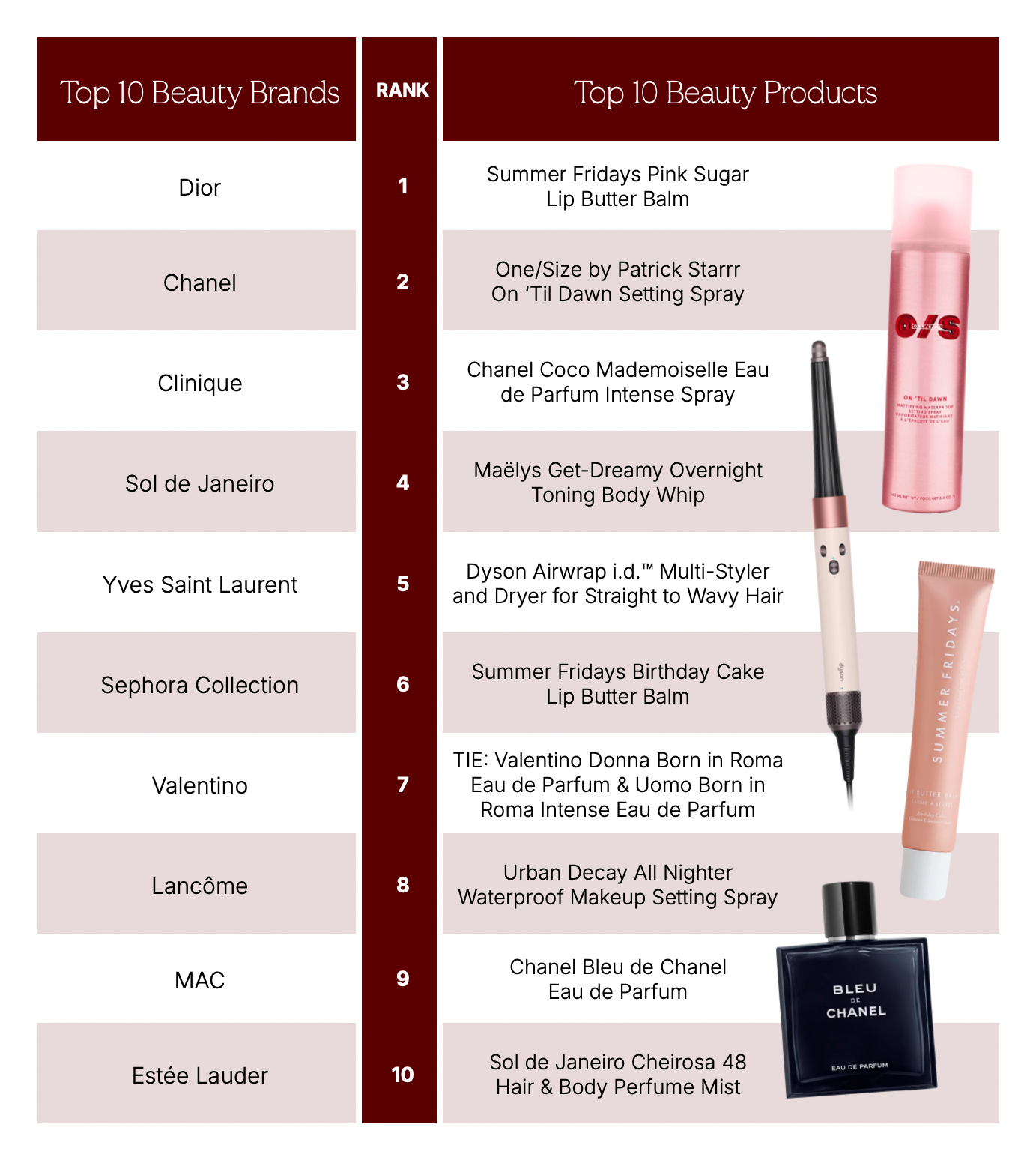
In today’s issue, Sarah “Data Diver” Shapiro is back with a look at the top 10 beauty winners of Q2, as determined by Yipit sales data from 11 million customers across the
U.S. Sarah reveals the most popular items, but also cross-references that info against the most popular brands. The results say a lot about the state of the beauty industry: Who’s hot, who’s not, and who’s still in charge despite all the new competition over the past 10 years.
Up top, Sarah reflects on mall-brand earnings season and explains why that draped, asymmetrical top—you know the
one—has proliferated. Plus, I’ve got a shopping report from the luxury retail microcosm of Montecito, which tells you everything you need to know about how rich Americans shop now.
Programming note: Today on Fashion People, my guest is the bridal designer with a difference, Danielle Frankel. We chatted about how she built an operation over the past decade with her partner/husband, Joshua Hirsch, what
makes modern brides tick, and plenty more. (By the way, I have no desire to discuss Taylor Swift’s future wedding dress, but if I were a betting woman…) Listen here and here.
Mentioned in this issue: Patrick
Starrr, One/Size, Chanel, Dior, YSL, Valentino, Rick Caruso, Jim Rosenfield, Gwyneth Paltrow, Meghan Markle, Sol de Janeiro, Jenni Kayne, Pieter Mulier, Gap, Richard Dickson, Abercrombie, Victoria’s Secret, and many more… |
|
|
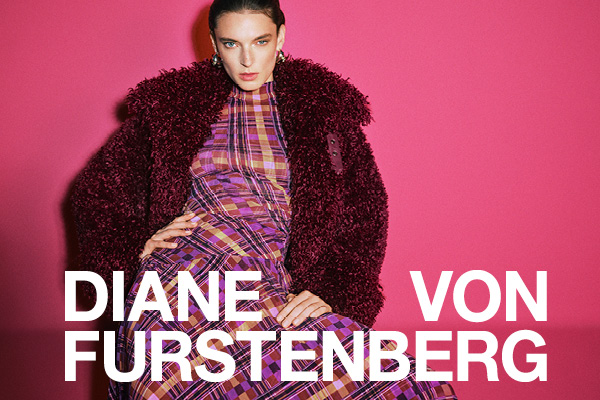
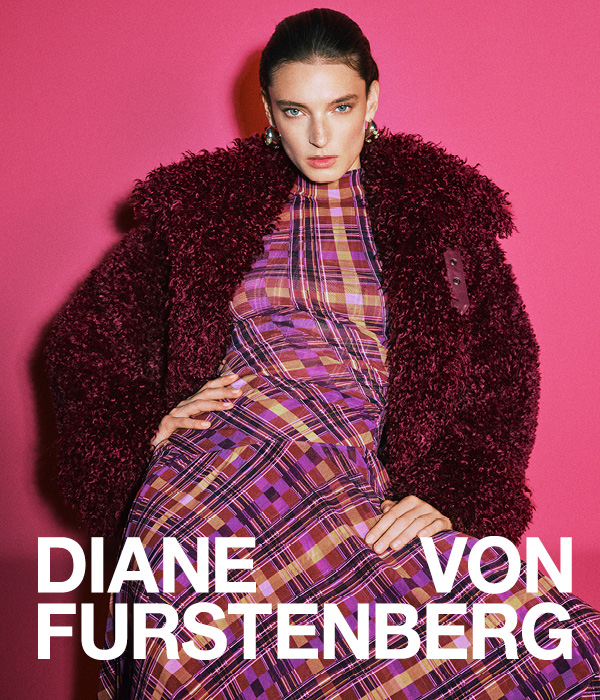
Diane von Furstenberg’s Fall Winter 2025 collection is a bold and complex celebration of modern femininity, inviting
the DVF woman to redefine allure on her own terms, leading with confidence, elegance, and strength.
Welcome to the new DVF, explore the Fall collection now at dvf.com
|
|
|
Three Things You Should Know…
|
- Montecito
brain: Last week, in search of a mommy-and-me adventure, my 4-year-old and I drove up to Montecito, where we were lucky enough to stay in a beachfront room at the Rick Caruso–owned Rosewood Miramar. (The place is incredibly pricey; I got an amazing, once-in-a-lifetime deal.) As a train and frozen dessert enthusiast, my kid had the best two days of his life watching Amtrak’s Pacific Surfliner slice straight through the property, which also happens to have an onsite
ice cream shop. (We were also invited by some kind souls to Ty Warner’s Coral Casino Beach and Cabana Club for a swim. I would love to discuss this magical property at length with you offline.)
Meanwhile, I couldn’t help but do some retail reconnaissance. After all, Caruso is Southern California’s most famous mall developer, and the
Miramar property—a formerly dank, decrepit spot that both Ian Schrager and Warner attempted to make over in the 2000s before Warner sold it to Caruso in ’07—is also a mall. Staying there is what I imagine it’s like to live in those apartments attached to the Americana at Brand, Caruso’s Glendale concept: The service and attention to detail are better than anything you believe is possible in the U.S. And the brands and concepts—two multibrand stores, The Webster and
Goop, along with a Brunello Cucinelli, Bottega Veneta, Zegna, and Loro Piana—are all performing notably well in an otherwise troubled luxury market. It was, in my mind, the right collection of stores for guests of that particular hotel—meaning, lots of people down from the Bay Area and up from Orange County.
Miramar is also a nice complement to the more down-home Montecito Country Mart, whose proprietor, Jim Rosenfield, is arguably the most admired mall developer
on the West Coast, if not the most famous. Nothing beats the Country Marts—the original in Brentwood, but also the one up in Marin—for the mix. Killing time before dinner with friends at Bettina, the very good pizza place in the Montecito mart, I scanned the current lineup: Sunspel for tees, Clare V. for bags, Malia Mills and Orlebar Brown for swimwear, and Dôen for dresses. There were also plenty of Country Mart standbys like Poppy for children’s clothing, Caffe Luxxe for coffee, an
odd-duck toy store, plus the stranger delights of Matt Albiani and Ron Brand’s Mate Gallery for New England ephemera, and Cynthia Benjamin for eyewear. Rosenfield gives people a reason to hang around and shop.
I can’t say the same for The Post, developed by Runyon Group, the guys behind the equally uncompelling Platform shopping mall in Culver City. The Post houses a range of brand stores that are all interesting on their own—vintage denim purveyor turned
basics label RLT, Brochu Walker, Merlette—but is far too homogenized for its putative client, i.e., the pandemic transplant from Westside Los Angeles who worships Gwyneth Paltrow and believes she really could become friends with fellow Jenni Kayne devotee Meghan Markle. The problem is that while those shoppers may have what my friend Amanda Dobbins has
dubbed Montecito Brain, they don’t want their shopping mall to have it, too. I hope that the Runyon guys get a little weird at The Post, because right now it’s weird in only the most boring way.
|
|
|

| Sarah Shapiro
|
|
- The going-out top of our
time: One-shouldered, draped tops are a thing right now. Google data reveals that searches for the term “asymmetric top” hit an all-time high this year. Dries Van Noten, Róhe (this one is a Substacker favorite), and A.L.C. all made a version. So did Staud and Leset.
Why? The trend certainly trickled down from the likes of Alaïa, where Pieter Mulier has been playing with asymmetry since he arrived in 2021. It also crawled up from TikTok, where West Village wannabes fetishize
mid-aughts clubbing wear. (It’s giving a bit of Chloë Sevigny in Last Days of Disco.) Perhaps more importantly, the drape actually, you know, flatters. And every few years, shoppers succumb to a novelty shoulder shape. - Mall brand mixed signals: The latest batch of second-quarter earnings reveals that Gap, Abercrombie, and Victoria’s Secret all showed comp store growth—i.e., revenue from existing, rather than
new, stores. That’s good news, although the bar has been set pretty low for what might be considered a victory for retail these days. Gap C.E.O. Richard Dickson declared that “confidence and consistency” drove the company’s modest wins across its Gap, Old Navy, and Banana Republic brands, but Athleta is still bleeding, with a 9 percent comp decline amid its ongoing “reset.” Victoria’s Secret managed a decent 4 percent comp increase. Meanwhile, growth at Abercrombie & Fitch Co.
was largely driven by a 19 percent sales surge at sub-brand Hollister, where, as I’ve written, there’s some genuine merchandising magic taking place.
Outside of Hollister, however, none of these numbers speaks to true merchandising innovation, exciting store experiences, or new distribution. And there’s more tariff trouble looming, as
evidenced by Gap’s expectation for 200 basis points of margin pressure in the back half of the year. (Abercrombie is bracing for $90 million in negative tariff impacts.) As usual, the stock market tells the real story: Shares of Victoria’s Secret and Abercrombie are down significantly year-to-date, while Gap is trading sideways. Investors clearly aren’t buying the turnaround narrative.
|
|
|
A new data series on the top 10 beauty brands by quarterly revenue, from mass volume plays
to unexpected up-and-comers that prove superior products can still win market share from the industry establishment. |
|
|
Beauty brands may be flooding everyone’s feeds with high-profile collabs, unexpected ambassadors, and novelty
launches—Baskin Robbins x Laneige, anyone?—but it’s sales and revenue that tell the real story. This week, I got my hands on unpublished numbers from YipitData, the market research firm, based on receipts from some 11 million U.S. customers in Q2. From there, we ranked the top brands by sales revenue to better understand which products are actually moving in today’s TikTok-ified shopping environment. |
|
|
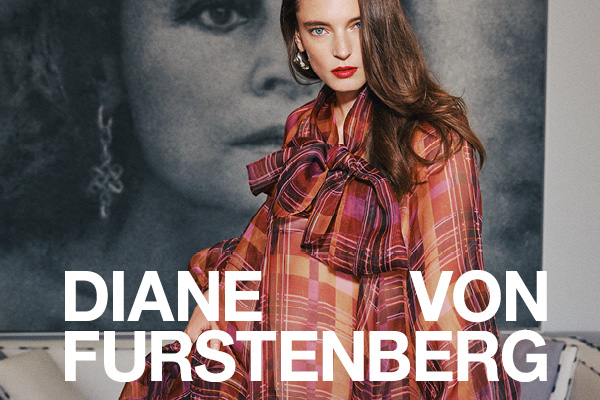
This season, Diane von Furstenberg embraces contrasts - softness and structure, romance and rebellion, sheerness and
opacity - celebrating a woman who is both timeless and of the moment. Elevated, tactile fabrics are at the heart of this collection, and unexpected combinations of fabric and print are playfully explored.
Welcome to the new DVF, explore the Fall collection now at
dvf.com
|
|
|
The brand rankings reveal a fascinating tension between scale and innovation. Legacy powerhouses like Estée
Lauder (whose corporate dramas Rachel covered earlier this week) and Lancôme continue to dominate the top 10 through sheer volume and retail muscle. Then there are insurgent brands like Patrick Starrr’s One/Size, which proves that a superior product can still take meaningful market share from the establishment (sorry, Urban Decay).
The rankings also illustrate the trajectories of certain brands. In particular, Estée Lauder’s five-spot climb since Q1 to 10th place stands out given the company’s recent challenges; meanwhile the top Estée Lauder SKU for the quarter was a
five-piece skincare set. Sol de Janeiro has, unsurprisingly, cemented its position in the top five thanks to Gen Z’s obsession with fragrance. (If you’re on
school-pickup duty, that’s almost certainly what you’re smelling wafting around these days.) Also unsurprisingly, it’s the fragrance category that’s propelling other top ranked brands, too: Dior, Chanel, YSL, and Valentino all count fragrance as their number-one item. |
Of Lip
Butters and Setting Sprays…
|
Taking the crown last quarter was Summer Fridays’
Lip Butter Balm, which was boosted in part by the more than 9,000 influencers and content creators who linked to the item, according to ShopMy. As Rachel has reported, the lip butters drive most of Summer Fridays’ sales, even though the brand started as a skincare line.
And while Pink Sugar was the shade of Q2, Birthday Cake also ranked in the top 10—which is especially noteworthy considering that customers are limited to three tubes per customer when purchasing online.
Clinching the number two spot was One/Size’s On ’Til Dawn Setting Spray—a product that is extremely familiar to me as the mom of a tween. Back in the day, I had assumed that setting
sprays were just for makeup artists and performers—hardly everyday essentials—or for people who prefer “no makeup makeup.” But as my daughter has since made abundantly clear to me, Gen Z/Alpha disagrees entirely. (Rachel can fill you in on how Sephora is helping drive these sales.) |
|
|
Meanwhile, the eighth spot was secured by Urban Decay Cosmetics’
All Nighter setting spray, which was largely driven by Gen Z. However, it’s worth noting that these sales took place before the product reworked its packaging and formulation without their old formula partner, Skindinavia, and the Q3 results will likely reflect this. There’s also chatter online about concerns over the new formulation—sticky, uneven coverage, etcetera. Urban Decay seems to have
lost a lot of mindshare to On ’Til Dawn, as well as Huda’s Easy Bake Blurring Setting Spray. The top 10 was rounded out by Sol de Janeiro’s Cheirosa 48 Hair & Body Perfume Mist, also a favorite of the Gen Z crowd.
The top 10 list was dominated by products favored by younger buyers, but there were some other revelations as well. For one, it revealed that legacy fragrances are still powerful in
the marketplace: Chanel secured two spots, with Coco Mademoiselle and Bleu de Chanel, and Valentino’s Donna Born in Roma and Uomo
Born in Roma remain bestsellers. It also underscored the efficacy of certain distribution channels: TikTok Shop, Ulta, and D.T.C. sales landed Maëlys’s Get Dreamy Overnight Toning Body Whip a spot on the list.
It also offered some guidance for brands thinking about their pricing strategies. For example, at $599, the Dyson Airwrap i.d. Multi-Styler moves far fewer units than a lip balm or a fragrance (it’s marked down to $499 for Labor Day weekend), but it does drive revenue. The higher price also attracts influencers—even at a discount, their affiliate commission is meaningful.
In sum, the list demonstrated that innovation can create breakout products, but sheer scale still rules in beauty. That said, while heritage brands maintain dominance through
distribution muscle and portfolio breadth, nimble players can carve out meaningful market share by solving real consumer problems—whether that’s Gen Z’s obsession with setting spray or the universal appeal of a lip balm designed for a social media moment. Stay tuned for the Q3 winners in a few months. |
Have a great weekend,
Lauren
P.S.: We use affiliate links because we are a business. We
may make a couple bucks off them. |
|
|
Puck’s daily art market email, anchored by industry expert Marion Maneker, offers unparalleled access to the mega-auctions and
galleries, elite buyers and sellers, and the power players who run this opaque world. Wall Power also features Julie Brener Davich, a veteran of Christie’s and Sotheby’s, who provides unique insights into how the business really works. |
|
|
Finally, a media podcast about what’s actually happening in the media—not the oversanitized,
legal-and-standards-approved version you read online. Join Dylan Byers, Puck’s veteran media reporter, as he sits down with TV personalities, moguls, pundits, and industry executives for raw, honest, sometimes salacious conversations about the business of media and its biggest egos. New episodes publish every Tuesday and Friday. |
|
|
Need help? Review our FAQ page or contact us for assistance. For brand partnerships, email ads@puck.news. You received this email because you signed up to receive emails from Puck, or as part of your Puck account associated with {{customer.email}}. To stop receiving this newsletter and/or manage all your email preferences, click here. |
Puck is published by Heat Media LLC. 107 Greenwich St, New York, NY 10006 |
|
|
|