|
Laurene Powell Jobs' Bizarre Week, CAA 's Next Steps, Wall Street in Crisis
Good afternoon! Welcome back to The Daily Courant, a new private email for Puck subscribers, bringing you the latest and greatest from our elite reporters covering the intersection of Wall Street, Washington, Silicon Valley, and Hollywood.
Today, we lead off with Theodore Schleifer's timely reporting on Laurene Powell Jobs and Emerson Collective's big new investment and involvement with Ozy Media, the Potemkin media company making news for all the wrong reasons.
Plus, below the fold, an excerpt from Matthew Belloni's conversation with CAA expert James Andrew Miller, about the evolving place of agencies in Hollywood, and what the future holds for its rivals in a quickly changing talent landscape.
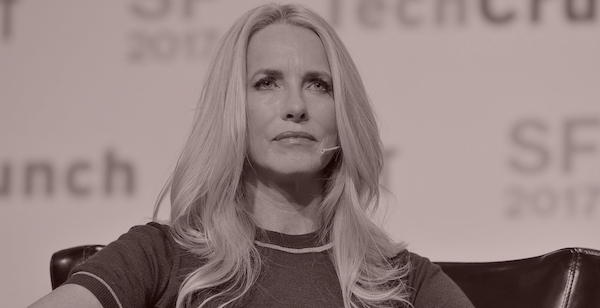
An unexpected turn underscores a fundamental truth about one of Silicon Valley’s prolific investors. It can feel like everyone knows Powell Jobs, and no one really knows her at all. 
TEDDY SCHLEIFER Laurene Powell Jobs has been a largely peripheral player in the media firestorm that has enveloped Ozy since Sunday night, when Ben Smith published a column suggesting that the media company has misled investors about the size of its audience. Emerson is an investor in Ozy, and Powell Jobs has been close with Ozy C.E.O. Carlos Watson for decades—the two co-founded College Track, her first philanthropic initiative, back in East Palo Alto in 1997. Now, her old friend and fellow tutor has become a liability: On Tuesday, the Ozy board announced it had hired the law firm Paul, Weiss to investigate its “business activities” under Watson’s watch, including an incident in which Ozy’s C.O.O. impersonated a YouTube executive during a conference call with Goldman Sachs.
None of this should be surprising to Emerson. In fact, in recent days I have learned that Emerson had grown alarmed with Ozy for some time, so much so that around 2018, the firm encouraged Watson to sell the company. Emerson tried various tactics to impose discipline, I am told, such as pairing new funding with requirements to hire a C.F.O., hit revenue targets, or pursue other course corrections. “[Emerson] has been trying to extricate [itself] from Carlos for a long time,” said one person familiar with their relationship. “They know he’s not good business.”
But Emerson had limited leverage and couldn’t get Watson to sell, nor could it get him to whip the company into shape. “My reading of the tea leaves is that Laurene [was] torn,” the source opined, referring to Powell Jobs’ thinking at the time. “She [wanted] to support her friend Carlos but … Ozy’s brand sucks and the business guys are all telling her to dump him.”
By late 2018, it was clear that the Emerson-Ozy relationship was frayed...

A conversation with CAA expert James Andrew Miller, about the evolving place of agencies in Hollywood, and what the future holds for its rivals in a quickly changing talent landscape. 
MATTHEW BELLONI When news of the CAA-ICM deal broke, I knew there was one person I needed to talk to: James Andrew Miller. Jim literally wrote the book on CAA (Powerhouse, in 2016; his new effort is a history of HBO, Tinderbox, which comes out on Nov. 16). He’s got, in my opinion, the best perspective on the agency world and its place in the larger Hollywood landscape. So yesterday and today, he and I went back and forth on what it means when the home of Tom Cruise and Brad Pitt gobbles up the house of Shonda Rhimes and Ellen DeGeneres in an all-equity deal, and what the future holds for CAA and its rivals in a quickly changing talent landscape.
Matt Belloni: You predicted this talent agency consolidation in your book, especially when Ari Emanuel started growing what is now Endeavor into a multi-headed octopus, with an agency (WME) alongside a sports marketing firm (IMG), a combat sport league (UFC), a bull riding association (PBR), and, as of this week, a sports betting platform (OpenBet). Then the Writers Guild revolted against TV packaging, which was the bread-and-butter of ICM; the pandemic hit, squeezing everyone; and Endeavor went public in April, indicating it will use the money to grow larger and larger. So, did ICM need to do this deal? And, perhaps more importantly in this market, did CAA need to do it?
James Andrew Miller: “Need” can be a toxic word in Hollywood. (Monday at lunch, someone mentioned he needed the new Aston Martin SUV). So would it have been possible for both CAA and ICM to have continued as is, without this deal? For CAA, absolutely; for ICM, probably. This deal is more about agendas and exhaustion.
After years watching WME acquire and acquire, CAA prided itself on the fact that it didn’t covet, focusing instead on comparatively minor investments, and declaring it was concentrating on “organic growth.” Now the leadership believes there’s significant value to be realized through this external purchase. So now that they’re in buying mode, it begs the question if there are more acquisitions in CAA’s future, leading to further consolidation in the agency business.
For its part, ICM has weathered major storms over the past couple decades, surviving and even thriving at times, albeit on a smaller scale than in its former incarnation. But ICM isn’t optimally designed for the post-packaging, streaming era. On its own, it would have been climbing Everest on a cold day in shorts. And you can’t blame ICM leadership for wanting to ensure a more secure foundation, while finally seeing what the view is like from the expensive seats.
I spoke to Bryan Lourd on Monday, and he kept emphasizing that CAA is a representation company, drawing an explicit contrast with Endeavor. Do you think it’s possible for CAA to just be the world’s biggest talent agency, or must it go vertical, as they say, to thrive?
This may be the one area where CAA and Endeavor can agree. Only about 30 percent of Endeavor’s revenue comes from its classic representation business. Ari long ago dedicated himself to diversification, and he doesn’t want it to be known as a representation company. Just this week, Endeavor spent over a billion dollars in the sports gambling sector. The timing of that press release on the same day as the CAA-ICM deal may have been a coincidence, but it’s a timely reminder these companies are not always playing the same game...
FOUR STORIES WE'RE TALKING ABOUT 
The rest of Hollywood is consolidating and bulking up in the face of domination by tech companies—and so, they can say, is CAA. But let’s not pretend the ICM deal is a huge coup. MATTHEW BELLONI 
At 78, Woodward has become the ultimate Washington monument: a subject of public adulation and private eye-rolling, little different from the public figures he covers. JULIA IOFFE 
When the cable bundle finally collapses, presumably a few years from now, will CNN+ be the lifeboat that CNN uses to shepherd itself to a new terra firma on HBO Max? DYLAN BYERS 
Bankers know that the combination of the highest stock prices and lowest bond yields in recorded history is not sustainable. A massive correction is coming. WILLIAM D. COHAN

You received this message because you signed up to receive emails from Puck.
Was this email forwarded to you?
Sent to {{customer.email}}
Puck is published by Heat Media LLC.
For support, just reply to this e-mail. For brand partnerships, email ads@puck.news |


SHARE