 |
|
Happy Monday, I’m Eriq Gardner.
|
|
Welcome back to The Rainmaker, a private email about money, power, fame, and legal drama.
In today’s edition, why Bravo’s “Scandoval” legal mess is just the tip of the iceberg for NBCUniversal as litigator Bryan Freedman goes to war with the entire reality TV industrial complex. Plus an incroyable update on the Pitt-Jolie battle over Château Miraval and the $100,000,000 family feud over the Prince estate. (Still getting this email forwarded from a friend? Subscribe here.)
Let’s get started…
|
|
|
- War of the Rosés: If there’s anything that Elon Musk should have known before nixing his deal with Don Lemon, it’s that the absence of a signed, written agreement only ensures a messier legal showdown. Just ask Brad Pitt and Angelina Jolie.
As I’ve highlighted before, Pitt and ex-wife Jolie are locked in a War of the Rosés over Château Miraval, the picturesque estate and vineyard nestled in the French countryside. Following their split, Jolie offloaded her share to Stoli Group founder Yuri Shefler, a move that Pitt contends breached their agreement to seek each other’s consent before selling. Granted, this agreement was never put to paper, but that’s hardly stopped the courtroom drama. This past week, a judge ruled that Pitt had adequately pled the existence of an implied contract. Now comes the messier battle over whether their actions indeed formed a binding contract. Legal costs have already soared into the tens of millions of dollars.
Choosing to spotlight the other side of the ruling (the dismissal of Pitt’s tortious interference claims) and alluding to some domestic intrigue, Jolie’s counsel Paul Murphy tells me, “Mr. Pitt’s lawsuit has never been about a business dispute; instead, it is about his attempts to cover up serious abuse, and we are gratified the judge has thrown out so much of Mr. Pitt's complaint.”
- Speaking of princely sums: I doubt the Delaware Court of Chancery has ever witnessed anything like the battle now raging over who gets to manage the assets left behind by Prince, who died in 2016 at 57 without a will, without a spouse, and without children—a perfect recipe for a thorny probate. Out of this turmoil emerged Prince Legacy LLC, jointly owned by Prince’s siblings and music publishing company Primary Wave, and overseen by longtime Prince advisors L. Londell McMillan and Charles Spicer.
Just before Christmas, however, two of the siblings, Sharon Nelson and Breana Nelson, amended an operating agreement to lower the approval thresholds for selling interests in the company and ousting McMillan and Spicer. This prompted the managers to take legal action, contending that non-managers lacked such termination rights under the existing setup. This past week, the siblings fired back with a motion to dismiss that lays out why they absolutely can amend the charter while also arguing the case belongs in Minneapolis (read here). Meanwhile, the managers are doubling down on their own stance, pushing for a summary judgment win (read here). Do yourself a favor and make sure you have a will.
|
 |
| Reality Bites Bravo |
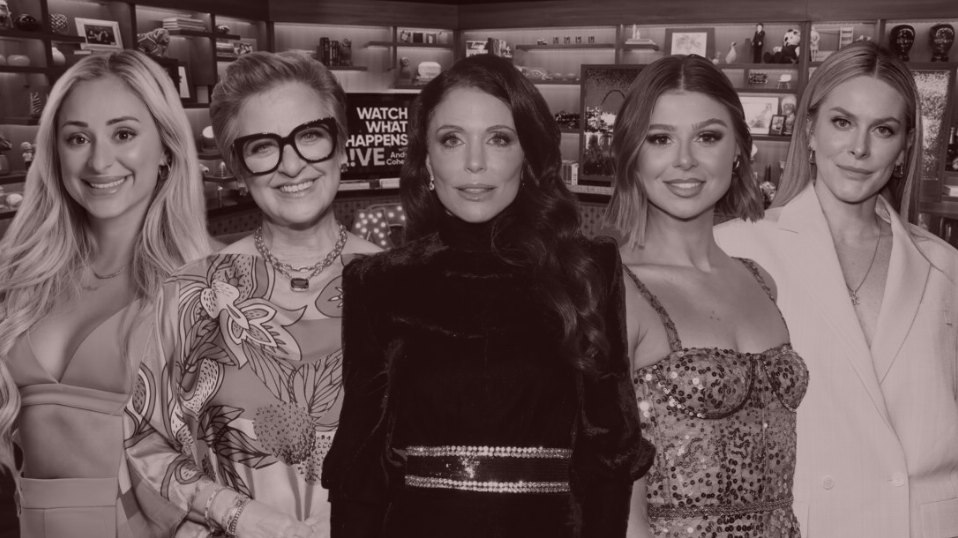
| With a cluster of high-profile lawsuits targeting the ‘Real Housewives’ universe, entertainment litigator Bryan Freedman is aiming to permanently shift the balance of power between TV producers and reality stars. |
|
|
|
| Like any great reality television drama, the wave of lawsuits targeting Bravo and other “unscripted” producers features a cast of heroes and villains—and has been immaculately choreographed behind the scenes. The latest entry in the franchise is the suit filed by Vanderpump Rules star Rachel Leviss, on February 29, accusing her cast mates Tom Sandoval and Ariana Madix of revenge porn, among other things. Notably, Leviss has enlisted veteran entertainment litigators Bryan Freedman and Mark Geragos, who are also wagging their fingers at Bravo, a division of NBCUniversal, for orchestrating the storyline to juice Vanderpump’s ratings.
The so-called “Scandoval” began last year, when TMZ broke the news that Sandoval had split with Madix, his longtime girlfriend, after it was discovered that he’d had an affair with Leviss. In her complaint, Leviss alleges that she was “a victim of the predatory and dishonest behavior of an older man [Sandoval] who recorded sexually explicit videos of her without her knowledge or consent, which were then distributed, disseminated, and discussed publicly by a scorned woman [Madix] seeking vengeance.” (Sandoval and Madix haven’t yet publicly commented about the new case.) Nevertheless, according to Leviss, producers wanted to make her the arch-villain on the show.
But let’s zoom out here for a moment, because this saga is really just one thread in a tapestry of legal battles plaguing reality TV—several of which are being woven by Freedman and Geragos. To wit: Last summer, amid the SAG-AFTRA strike and a campaign by Real Housewives of New York alum Bethenny Frankel to extend worker protections on reality TV, NBCU general counsel Kim Harris received a stern letter from the duo concerning the “grotesque and depraved mistreatment” of reality stars on Bravo. (Frankel, in particular, has been pushing to unionize the business, as she told my partner Matt Belloni on a November episode of The Town.) NBCU responded by announcing that N.D.A.s wouldn’t muzzle anyone from disclosing misconduct, if there were any such complaints. But this concession fell short for Freedman, who claimed to represent “a significant number” of people employed by or contracted with NBCU and its affiliates.
The lawsuits didn’t materialize immediately. From what I gather, SAG-AFTRA and some of the talent agencies have been encouraging this uprising behind the scenes but were wary of distracting from the demands of actors, who were striking at the time. Once that labor impasse was resolved, however, reality TV cases flooded the courts. Most notably, a pair of Housewives, Leah McSweeney and Caroline Manzo, have filed separate lawsuits alleging a hostile work environment and discrimination by Bravo and executive producer Andy Cohen, while several contestants on Netflix’s Love Is Blind have also sued over alleged abuse. And now, of course, the blockbuster “Scandoval” has landed on a judge’s desk.
These cases, it seems to me, are all related, perhaps indicating a need for industry-wide reform on issues like long shooting hours and free-flowing alcohol. That said, there also seems to be something going on beneath the surface: namely, the feeling that these stars are being financially exploited without the ability to rebalance those power dynamics or fully capitalize on their fame. |
|
|
| The primary roadblocks for these reality stars, which is not always obvious from the complaints, are the participation agreements that have been the status quo in the industry for years. Back in 2011, MTV was embarrassed when the Village Voice got its hands on the contract signed by cast members of The Real World, which stipulates that anyone joining the show agreed to possibly “be humiliated and explicitly portrayed ‘in a false light.’” Alas, not all that much has changed in 13 years. These agreements effectively strip reality TV stars of rights and force them to acknowledge the potential for humiliation, nervous breakdowns, and even death, without much recourse.
The contracts typically include restrictive financial terms, too. Producers can lock reality stars into reunion shows and other extracurricular activities without much step up in compensation. And when grievances arise, they are typically relegated to secretive arbitration proceedings—or at least, that’s how it’s supposed to work. Nowadays, exceptions to forced arbitration exist, including allegations of sexual assault and harassment, which may influence the types of lawsuits we’re witnessing.
Perhaps the most impactful of these cases involves Renee Poche, a contestant on the fifth season of Love Is Blind—the Netflix reality dating juggernaut in which cast members form romantic connections before ever meeting face-to-face. Last year, as Poche’s season streamed on Netflix, she stirred controversy by appearing on podcasts without permission and divulging spoilers. In response, Delirium TV, the show’s producer, launched an arbitration, seeking $4 million for breaching confidentiality.
Poche then enlisted, you guessed it, Freedman and Geragos, who promptly filed a lawsuit on her behalf, aiming to invalidate her entire participant agreement and halt the arbitration. The complaint paints a harrowing picture: Poche alleges that despite assurances of thorough screening for all Love Is Blind contestants, she wound up being matched with a homeless, violent, drug-addicted partner with whom she was forced to spend long stretches of time alone. Poche says she began to spiral emotionally, and now, after making limited remarks about her ordeal, Delirium aims to financially cripple her. (The first hearing in the case is scheduled for Friday.)
Delirium, staunchly backed by Netflix, presents the contrasting tale of a reality show wannabe who was desperate for fame. According to the company’s legal papers, Poche’s disappointment at not being featured in the fifth season led her to try to get herself on another reality series, Perfect Match, being produced by one of Delirium’s sister companies. In the course of doing so, she told an executive that she “had a blast” filming Love Is Blind. Meanwhile, unbeknownst to everyone involved in either show, Poche was already married—a pretty pivotal detail that she allegedly concealed from both production teams.
While the dueling narratives and plot twists are worthy of their own show, this case may turn on the question of whether Poche, who received an $8,000 stipend for her Love Is Blind appearances, was Delirium’s employee. Poche contends that as an employee, under California law, she can’t be compelled to waive tort claims or be coerced into confidentiality agreements regarding unlawful workplace conditions, nor can she be forced to resolve disputes in arbitration. However, the participation agreement itself disclaims any employment relationship, complicating Poche’s argument. Delirium’s lawyer, Larry Iser, is poised to highlight the limited scope of Poche’s “work,” while Geragos will emphasize that Poche received a W-2 and was under Delirium’s direction and control for the duration of the relationship. |
|
|
| A ruling in the Poche case, if it were to recognize reality TV stars as employees, would mark a profound and disruptive shift in Hollywood, akin to what we’ve recently seen in college athletics. For starters, it could catalyze unionization efforts across the reality TV landscape. And it would also likely cast doubt over the enforceability of participation agreements at Bravo, Netflix, and elsewhere. While these pacts have weathered challenges to their conscionability in the past, California’s progressive labor laws may provide a new avenue for reality stars to assert their rights, even if substantial hurdles remain.
Freedman, the Hollywood attorney on the speed dial of practically every agent and reporter in town, is hoping to make this a loud, public battle. He’s rarely shied away from taking public action when faced with arbitration demands, as evidenced by the UTA vs. Michael Kassan mess. And his ongoing skirmish with JAMS in Chris Cuomo’s $125 million termination fight underscores his aversion to private arbitration.
In the Poche case, Freedman and Geragos have highlighted the limitations of arbitration: scant discovery, the inability to secure punitive damages or recoup legal fees. But perhaps the greatest drawback, from Freedman’s perspective, is the lack of an audience. Secret proceedings remain just that—secret—depriving plaintiff attorneys of the leverage that comes with battling in open court and feeding embarrassing information to favored journalists. That certainly appears to be Freedman’s thinking in the Leviss complaint, which looks a lot like a Trojan horse to exert public pressure on NBCU and Bravo, despite neither being a defendant in the case. (Spicy comments to the press can also come back to haunt lawyers in court, as seen by this disqualification bid made against Freedman the other day.)
Ironically, of course, reality television is often anything but real. Behind the scenes, everything is stage-managed, from on-camera antics to legal maneuvers. In truth, what viewers see is carefully curated, just like the contents of a legal filing. |
|
|
|
| FOUR STORIES WE’RE TALKING ABOUT |
 |
|
 |
|
 |
|
 |
| Lemon’s Next Act |
| What’s next for Don Lemon after the Musk imbroglio? |
| DYLAN BYERS |
|
|
|
|
|
 |
|
|
|
Need help? Review our FAQs
page or contact
us for assistance. For brand partnerships, email ads@puck.news.
|
|
You received this email because you signed up to receive emails from Puck, or as part of your Puck account associated with . To stop receiving this newsletter and/or manage all your email preferences, click here.
|
|
Puck is published by Heat Media LLC. 227 W 17th St New York, NY 10011.
|
|
|
|