D.C. Does Hollywood, Watters vs. Sanders, and Beto! Returns
Good afternoon and welcome back to The Daily Courant, highlighting the latest and most important new journalism at Puck. Today, Dylan Byers reports on the strategic conversation taking place inside CNN, Fox, and MSNBC as the three rival cable networks align their economic models, if not their politics, around a series of notable programming decisions in anticipation of the larger industry pivot to streaming.
Then, below the fold, Peter Hamby examines Washington’s talent exodus; the Lovett-Sirota-Nuzzi-Obama-fication of Hollywood; and the diminished return of Beto O’Rourke.
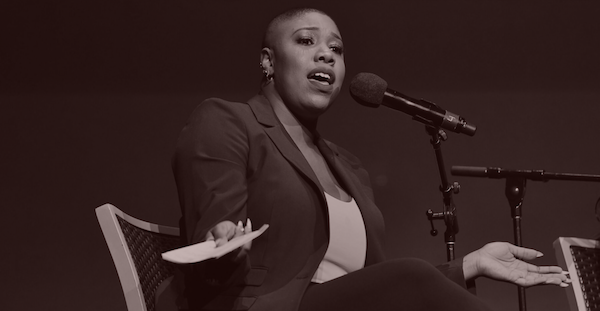
A number of recent personnel moves in the sharp-elbowed, rapidly declining, and soon-to-be-evolving cable news industry portend the next wave of deals, chaos, and a streaming afterlife. The media industry is always going through stages of upheaval and restructuring, especially in the fallow period after a presidential election, when cable news networks recalibrate their politics and loose-in-the-saddle talent begin to make moves. Nevertheless, the three large cable news networks made programming announcements of varying importance and magnitude this week that struck me as harbingers for the future of each network, and thus of American television news itself.
Fox News tapped Jesse Watters, the infamous highly-coiffured ambush interviewer-turned-gleeful mocker of liberals on The Five, to serve as host of its pivotal 7 p.m. hour. Meanwhile, MSNBC announced that Democratic strategist Symone Sanders, a former Bernie Sanders and Kamala Harris advisor, would host a weekend program on the network’s linear channel and anchor another show on one of its streaming services. And CNN, which has been rolling out new CNN+ shows at an increasingly rapid clip, added NPR alum Audie Cornish to a streaming roster that will be populated as much with cooking and travel shows hosted by the likes of Alison Roman and Eva Longoria as with hard news programs hosted by the likes of Chris Wallace and Kate Bolduan.
Each move follows an established pattern: Fox News, an unabashedly right-wing network (albeit with many independent and even Democratic viewers), is doubling down on its very successful strategy of conservative and anti-liberal programming; MSNBC, an unabashedly left-wing network, is doubling down on its less-proven strategy of progressive and anti-conservative programming; and somewhere closer to the middle, though still to the left of center, CNN is demonstrating that alongside its recent anti-Trump tenor it maintains a commitment to journalism and lifestyle programming that appeals to a well-educated liberal elite. (The New York Times, by the way, has largely charted this path—demonstrating through Cooking, Games, Serial, Wirecutter and, most recently, its $550 million acquisition of The Athletic, that lifestyle content converts in a paid ecosystem.)
But while none of this is terribly surprising, it got me thinking—and talking to cable news executives and other insiders—about how these varying strategies will play out...
FOUR STORIES WE'RE TALKING ABOUT 
A candid conversation about the legacy of Project Popcorn, the future of non-franchise films, CNN+, The CW, The Batman and more. MATTHEW BELLONI 
Notes on the Cruz-Carlson struggle session, the persistence of MTG, and the slow-motion fracturing of the Trump coalition. TINA NGUYEN 
NBCUniversal is now probably worth well north of $100 billion. So why the hell did GE sell it for $30 billion a decade ago? WILLIAM D. COHAN 
Scott has embarked on an utterly mysterious, totally disruptive, $9 billion-and-counting philanthropy spree. Here's how it works. TEDDY SCHLEIFER 
You received this message because you signed up to receive emails from Puck.
Was this email forwarded to you?
Sent to {{customer.email}}
Puck is published by Heat Media LLC.
For support, just reply to this e-mail. For brand partnerships, email ads@puck.news |


SHARE