{{ 'now' | timezone: 'America/New_York' | date: '%b %d, %Y' }} |
|
|
|
Welcome back to The Best & The Brightest. I’m Peter Hamby. You might have heard,
but if you haven’t: I have officially joined the Puck pirate ship full time and couldn’t be more excited about covering politics and campaigns with the rest of my brilliant colleagues. I’ll be writing more, podcasting more, and, unfortunately, you’ll be seeing my face on video more. Send me your tips and ideas—my inbox is open for business.
In today’s issue, a look
at the Democratic freak-out over last night’s election results in New York City—and why the promised socialist revolution probably has its political limits.
Plus, Leigh Ann reports from inside the tense Senate Republican luncheon with Trump, where Sen. Bill Cassidy lost his cool. We’ve also got fresh intel on how the Democrats’ Darializa Avila Chevalier disaster is playing on the Hill.
Also mentioned
in this issue: Zohran Mamdani, Cait Conley, Mike Lawler, Hakeem Jeffries, Mike Johnson, Bill Pulte, Liam Kerr, Nate Blouin, A.O.C., Nancy Pelosi, Bernie Sanders, Gregory Meeks, Pete Aguilar, Claire Valdez, Nydia Velázquez, Antonio
Reynoso, Dan Goldman, Brad Lander, Adriano Espaillat, Richard Hudson, Mari Manoogian, and many more… |
|
|
|

| Leigh Ann Caldwell
|
|
- The Trump-Scott lunch goes
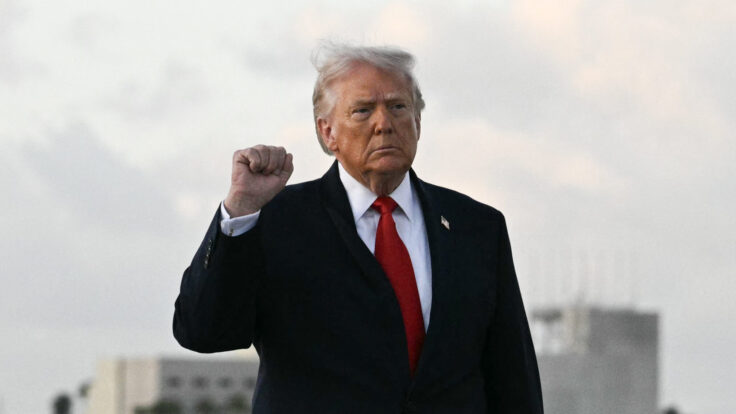
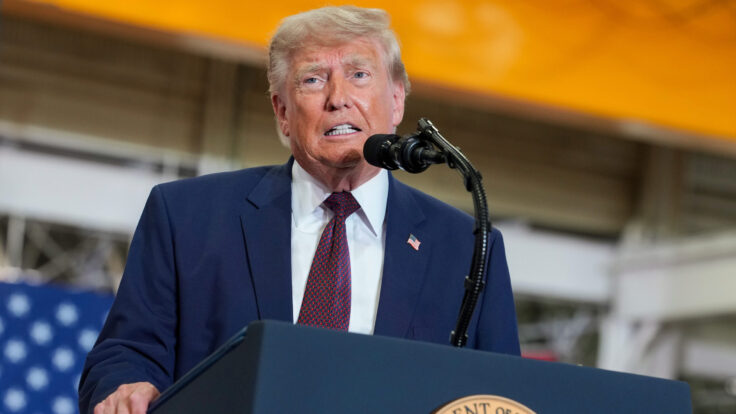
sideways: This afternoon, President Trump traveled two miles down Pennsylvania Avenue to meet with the opposition: Senate Republicans. Before the Rick Scott–hosted luncheon, Trump had planned to sign a bipartisan housing bill—the party’s one big attempt to address the affordability crisis before the midterms. The podium was in place, the
chairs had been arranged in Statuary Hall, the network cameramen were setting up their shots. Then, with no prior notice to Republicans, save for Speaker Mike Johnson, Trump abruptly canceled the event, saying he wouldn’t sign anything until the SAVE America Act is passed. Sure, Trump can choose not to sign a bill and it will still become law after 10 legislative days, but it’s not a great look for a party that is desperate to have something, anything they can tout on
the campaign trail. Republicans were beside themselves.
Alas, all Trump seems to care about these days is the SAVE Act (and the ballroom, and the reflecting pool, and the Kennedy Center…). So he went into his lunch with Senate Republicans determined to get that message across—as if they weren’t already aware. Last week, Trump refused to sign the FISA Section 702 reauthorization into law without SAVE attached, an absolute nonstarter with Democrats, who had been withholding their votes on a
clean reauthorization until a new, non–Bill Pulte D.N.I. could be confirmed.
As expected, Trump did all the talking during the hour-long lunch, according to senators inside the room. He said that they need to pass the SAVE Act and demanded that they get rid of the filibuster—the same arguments he’s been making, to no avail, for months. But senators, the same ones who fume privately about Trump’s refusal to move on, and even the few who fume publicly in the
hallways, didn’t push back. The only senator to speak up was Bill Cassidy, who lost his primary in part because of Trump’s refusal to support him. Trump was lambasting the senators who voted the day before to end the war in Iran. An exasperated Cassidy interrupted him and asked if he wanted an answer to Trump’s rhetorical question, a person familiar with the interaction said. Cassidy proceeded to “scream” at the president, a second person said, calling the exchange “very
intense.”
In short: There was no truce. In fact, one Republican said: “It didn’t move a single vote. If anything, it did more harm than good.” - Hakeem’s D.S.A. headache: Meanwhile, congressional Republicans are absolutely thrilled that three democratic socialist candidates won their primaries in New York City last night. A giddy Mike Johnson said he “gave the best locker-room speech I could muster” at his conference’s morning meeting,
expressing renewed optimism that Republicans will retain control of the House because of the type of candidates Democrats are electing. House Republicans plan to tie every race they can to Mayor Zohran Mamdani, whose endorsements help put all three candidates over the top.
Democrats, for their part, insist that the most important election last night was upstate in NY-17, where special ops combat vet Cait Conley won her primary to take on G.O.P. Rep.
Mike Lawler in one of the most vulnerable Republican districts in the country. It’s a majority-making district, unlike the NYC seats, which have zero chance of being occupied by a Republican.
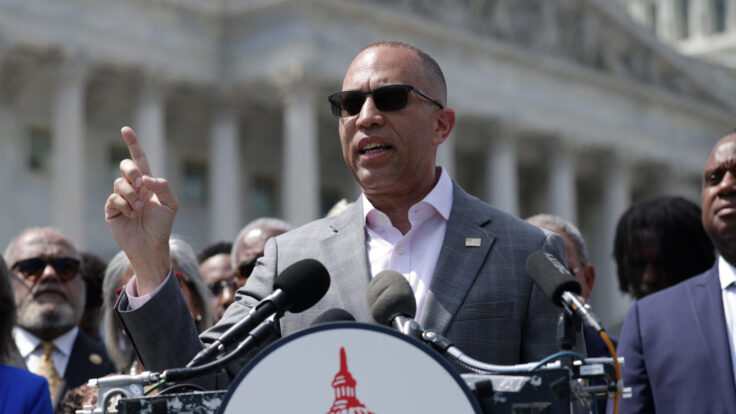
Still, the Mamdani-backed D.S.A. candidates could pose major problems for minority leader Hakeem Jeffries if Democrats take control of the House—especially if the margins are tiny. Democrats are most concerned about Darializa Avila Chevalier, a
political outlier who opposes prisons and private property and the Democratic Party itself. Like Alexandria Ocasio-Cortez in 2018, she defeated a long-tenured and powerful incumbent, and she is vowing to shred the status quo.
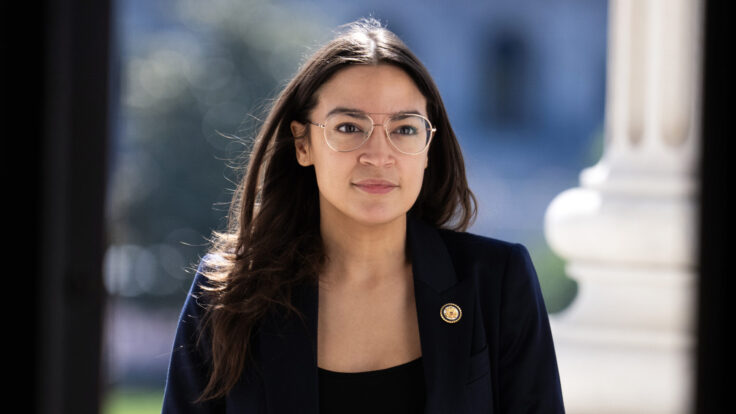
Notably, the 2026 version of A.O.C. is playing a much different game. She’s still nominally a D.S.A. member, but the former rabble-rouser, who protested in Nancy Pelosi’s office during her first week on the job, now has much bigger
ambitions. Notably, she didn’t cross Jeffries and stayed out of the New York House primaries entirely. She did, however, back six local D.S.A. legislative candidates who won Tuesday night. Some might call that political savvy. It might not be enough for others.
|
|
|
|
A little more on all of this… |
|
|
|
Hill Democrats are panicking over a trio of Mamdani-backed, socialism-brained congressional
candidates who make the A.O.C.-era Squad look like moderates. Will they help Republicans hold the House? |
|
|
|
On Tuesday night, a world-weary Democrat—decidedly not a D.S.A. lefty or social justice warrior—shot me a
text as the primary results in New York rolled in, signaling that Zohran Mamdani–backed leftists were on pace to rout their mainstream Democratic opponents in three deep blue congressional districts. “The nice thing about the Mamdanist purges is that they don’t believe in prison,” he said, joking.
Like many veteran Dems watching the primaries, this person was processing the news with a mix of condescension and anxiety. The condescension was familiar: National Democrats
love to roll their eyes at the New York democratic socialist stereotype—overeducated young transplants, most of them white, cosplaying as revolutionaries when they aren’t drinking matcha or hunting for deals on Depop in apartments once occupied by working-class Black and Latino families. A Portlandia sketch masquerading as a movement.
But the anxiety coursing through the party today—that feels new. Sure, left-wing progressives have prevailed here and there around the
country this primary season. But the trendline hasn’t pointed to a Tea Party–style socialist takeover of the Democratic Party. Even in deep blue California, candidates endorsed by Bernie Sanders or the D.S.A. achieved mixed results in this month’s primaries, and the party’s moderates won far more races than they lost, as I wrote a few weeks ago. But New York on Tuesday felt different—a body blow to the Democratic establishment, delivered in the world’s media
capital.
Maybe that’s because New Yorkers like to think they inhabit the center of the universe. Maybe that’s because it’s impossible to look away from Mamdani and his impressive political talents. Or maybe that’s because House Democratic leader Hakeem Jeffries went all in to stop the young insurgents from ousting his lieutenants—and he failed. Whatever the reason, Dems are spooked. “This was a massive win for the left, and the Democratic establishment should
absolutely be scared that they are going to be losing their power soon,” said Usamah Andrabi, a spokesman for the Justice Democrats, which backed two of Tuesday’s left-wing winners. “Democratic voters now realize they have more power than corporate interests have led them to believe.”
New York Rep. Gregory Meeks—who, like Jeffries, saw the House campaigns as a proxy war between young white gentrifiers and the less affluent Black and Latino voters
who used to rule outer borough politics—aired his concerns about the winners outside the Democratic National Committee. “The goal here is to win the majority, not being in a permanent minority,” Meeks said. California Rep. Pete Aguilar, the chairman of the House Democratic Caucus, assured reporters today that the races grabbing headlines on Tuesday were in safe blue districts, and the provocative socialist nominees won’t jeopardize the party’s chances of winning back the chamber
in November. “The mayor of New York doesn’t get a vote in the Democratic caucus,” Aguilar said. “The path to 218 isn’t through those districts that the mayor endorsed in. I understand the interest in these races. But our focus, our agenda, is 218. Nothing the mayor did helps or hurts us getting to that number. We look forward to welcoming the members that will serve with us in the next Congress.”
Those members will be far to the left of anyone else in the Democratic caucus. In
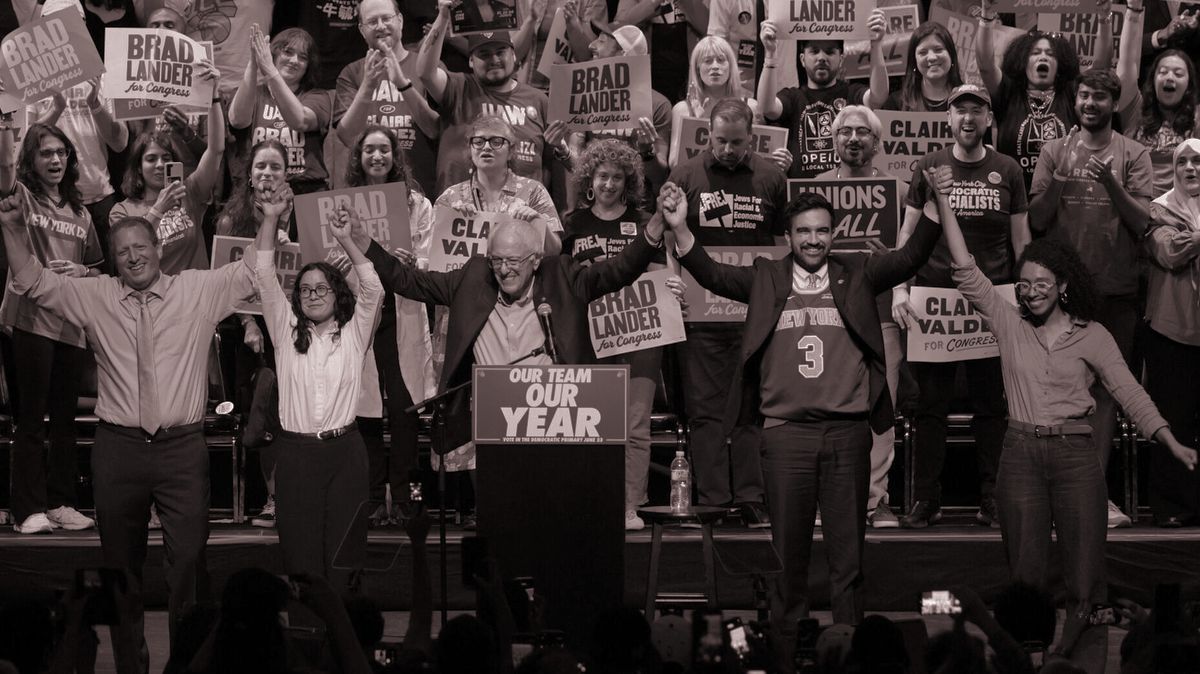
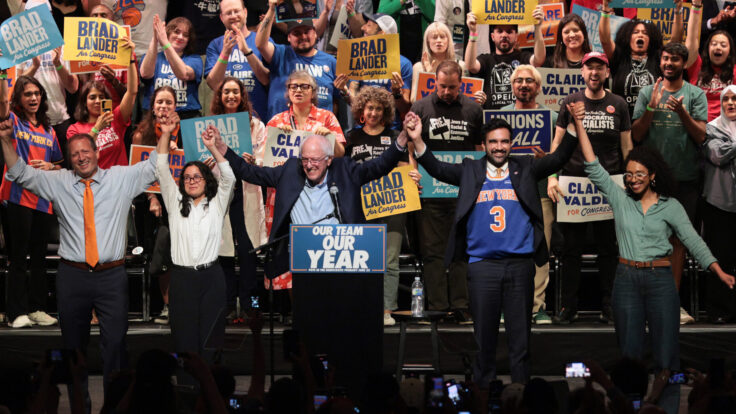
New York’s 7th district, Mamdani-backed Claire Valdez, a state assemblywoman and labor organizer, easily won an open Brooklyn-Queens seat being vacated by longtime congresswoman Nydia Velázquez, who endorsed Brooklyn Borough president Antonio Reynoso on her way out. Valdez hails from organized labor and campaigned on Medicare for All, protecting immigrants, and tenants’ rights. But she also frequently railed against AIPAC and repeatedly attacked
Reynoso for failing to call Israel’s war in Gaza a genocide. She won by more than 20 points. Israel was also a litmus test in another race Mamdani targeted, New York’s 10th district, represented by Rep. Dan Goldman, who made no apologies for his Jewish identity or support from AIPAC, even as he bragged about his progressive record in Congress. That wasn’t enough. Mamdani endorsed progressive Brad Lander, who used Israel as a wedge issue against Goldman. Lander
won by more than 30 points.
And yet the main source of concern for Democrats—and glee for Republicans—is Darializa Avila Chevalier, who surprised everyone by knocking off Adriano Espaillat, the chairman of the Congressional Hispanic Caucus, in New York’s 13th district, which spans parts of Upper Manhattan and the Bronx. Chevalier, a pro-Palestine veteran of the Columbia University tent wars, managed to win despite a long record of cartoonishly radical
behavior on social media. Chevalier, who deleted more than 3,000 tweets before running for office, has suggested that the October 7 attacks by Hamas were justified, called Joe Biden a rapist, compared a veteran to a “war criminal,” suggested white people not pursue interracial relationships, sympathized with Russia, and claimed to have wiped her dirty hands on an American flag. On Tuesday, as Espaillat faced certain doom, one G.O.P. operative in Washington told me he was
salivating over a Chevalier win. “Once A.P. calls it, I’m about to go crazy,” he said.
Richard Hudson, the chairman of the National Republican Congressional Committee, called me on Wednesday and made it known that his party will be borrowing liberally from the New York results in their campaign messaging this year. “Last night was the Bolshevik Revolution in New York,” Hudson told me. “The civil war in the Democratic Party is over, and the Mamdani radical wing has won.”
Hudson ticked through the issue set: Defunding the police. Free healthcare for illegal immigrants. Open borders. Abolishing all aid to Israel. “It’s a socialist fantasy land,” he said. “The voters deserve to know that is what the Democrats stand for and who will be in charge if you vote for a Democrat.” |
Is socialism on the march nationally? Are Bolsheviks coming to your town to force transgender surgeries on
your children? Does Jeffries need to up his daily Tums intake? As usual—especially when it comes to self-obsessed New York—panicked, politics-addicted Democrats might be overreacting to a single news cycle. One clear takeaway is that New York’s primaries have a lot in common with other Democratic races this year, in the sense that generational change is afoot and that the leaders in Washington continue to be out of step with the party’s restive base. “People are hungry for
something new and different and for a fresh take on how to tackle big problems. People are just sick of the status quo and very angry,” said Mari Manoogian, a former state representative in Michigan who now runs The Next 50, a group that recruits next-generation Democratic leaders.
In New York City, Manoogian said, the D.S.A./Mamdani brand and the Israel litmus test signaled to voters there which candidates seemed to have convictions and new ways of thinking. “People want
candidates who can channel their anger into action,” she said. But, Manoogian cautioned, the branding that works with primary voters in Bushwick and Morningside Heights is hard to export—especially to battleground congressional districts. Like many Democrats in D.C. today, Manoogian pointed to a House race north of the city in the Hudson Valley and Westchester—New York’s battleground 17th district—where the party establishment backed special ops combat veteran Cait Conley. She
coasted in her primary against multiple challengers, including a Working Families Party opponent who tried to make AIPAC an issue in the race. To state the obvious, a noisy D.S.A. candidate in the mold of Chevalier would likely be toast in a suburban frontline district like the 17th.
Mamdani is both immensely talented and genuinely famous. And he just helped make a few more socialists famous, too. But the Democratic heartburn over the D.S.A. party crashers and their keffiyehs does feel
confined to certain parts of New York City. In Manhattan, in the affluent and aging 12th district—populated by New Yorker subscribers on the Upper East and Upper West Sides—there was no D.S.A. champion in the primary at all. That race—ultimately between establishment choice Micah Lasher and A.I. regulation crusader Alex Bores—was mostly about fighting Donald Trump, standing up to tech titans, and whether Jack
Schlossberg’s “career” as a content creator amounted to real-world experience. (Lasher, proudly Jewish, won with the help of millions from former Republican Michael Bloomberg.)
Upstate, Gov. Kathy Hochul ably dismissed the threat of a left-wing primary challenge last year, in part by smartly cozying up to Mamdani on some issues while focusing her reelection campaign on affordability, crime, and housing. Then there’s Mamdani himself. The mayor, of
course, doesn’t shy away from his D.S.A. affiliation or his contempt for Israel. But he is governing pragmatically, as a pothole populist, focused on affordability, education, and making sure that city functions work, from snow plows to the police force he once vowed to defund. The big socialist promises from his campaign, just last year, sometimes feel like memories.
Elsewhere in the country, socialists tried to make moves but stumbled. In Utah’s newly drawn 1st district,
Bernie Sanders endorsed a young progressive, Nate Blouin, who got waxed by avowed moderate Ben McAdams, a former member of Congress. That outcome—an obvious counterpoint to the New York results—was cheered by party strategists who thought Blouin might jeopardize a relatively safe seat in November. “Ben McAdams literally had the most conservative voting record in the Dem caucus during his term,” said Liam Kerr of the centrist
Welcome PAC. “Blouin was a Bernie-backed boarding school alum in a city that just hasn’t gentrified to the NYC level.”
Meanwhile, in Maryland, Gov. Wes Moore went to bat for a variety of “solutions-oriented” Democrats who defeated socialists and other challengers in races around the state, including in Maryland’s safely Democratic 6th district, where Adrian Boafo (backed by AIPAC) prevailed over several opponents. Moore’s chosen candidates also defeated
more-left-wing candidates in several county supervisor races. Like Mamdani, the governor put his political capital to the test, cutting ads for his preferred candidates and getting them over the finish line in tough primaries. And like Mamdani, Moore was talking about affordability and quality education. He just did it with a different brand, to build a different political coalition in a different state. “What last night showed in New York and Maryland is that a lot of politics is just local,”
said Fred Yang, Moore’s pollster, who worked on four of the winning downballot races. “In Maryland, the focus wasn’t on left or right—it was about going forward. It was about bread-and-butter issues: affordability and costs,” Yang told me. “But our ads worked, similar to what we saw in New York, because Wes isn’t seen as a typical politician in an era when the Democratic electorate is just not enamored with typical politicians.” |
|
|
|
Puck sports correspondent John Ourand and a rotating cast of industry insiders take you inside the executive suites and owners
boxes where the decisions that shape the entire sports business are made. You’ll hear interviews with players, network execs, and everyone in between. The Varsity is an extension of John’s private email for Puck by the same name. New episodes publish every Wednesday and Sunday. |
|
|
|
Unique and privileged insight into the private conversations taking place inside boardrooms and corner offices up and down Wall
Street, relayed by best-selling author, journalist, and former M&A senior banker William D. Cohan. |
|
|
|
Need help? Review our
FAQ page or contact us for assistance. For brand partnerships, email ads@puck.news.
You received this email because you signed up to receive emails from Puck, or as part of your Puck account associated with {{customer.email}}. To stop receiving this newsletter and/or manage all your email preferences, click here.
|
Puck is published by Heat Media LLC. 107 Greenwich St., New York, NY 10006 |
|
|
|
|