Welcome back to Wall Power. I’m Marion Maneker.
Things are
kicking off in Basel, where art advisors are being targeted by A.I.-generated scam emails offering the works of a very hot artist. When advisors respond, they are prompted with invoices that are not connected to the artist’s gallery. So watch out, folks. The smart advisor who informed me of the scam said the very responsive person on the other side went cold once they asked for a video of the painting her client wanted.
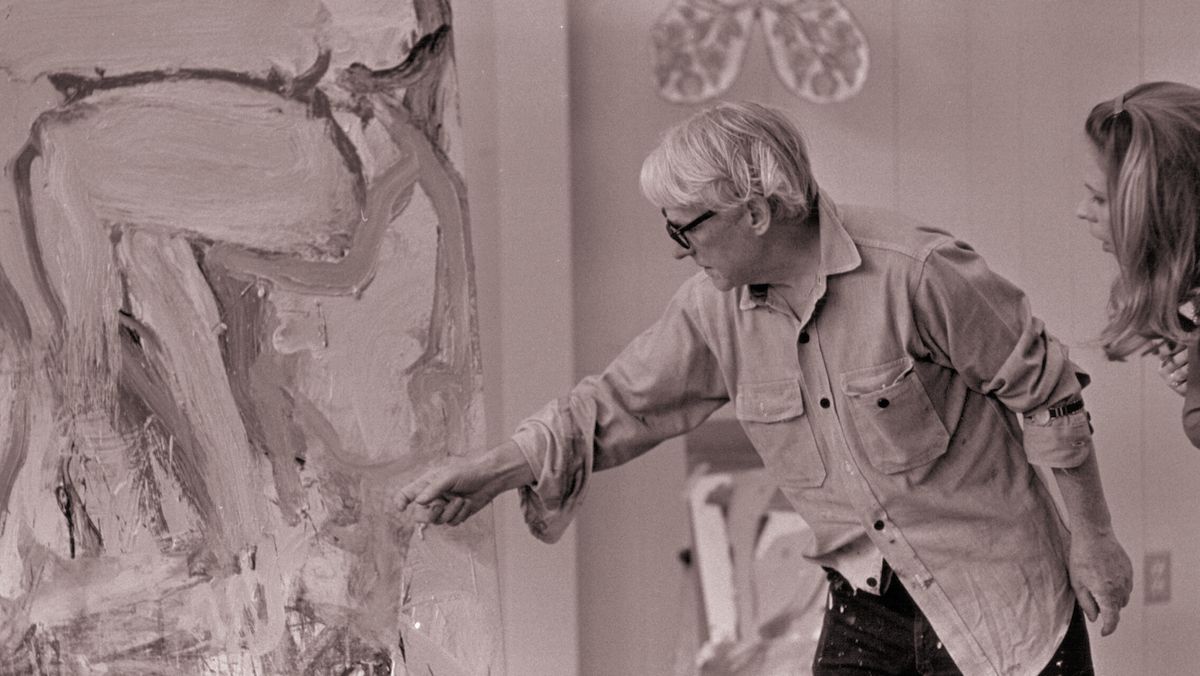
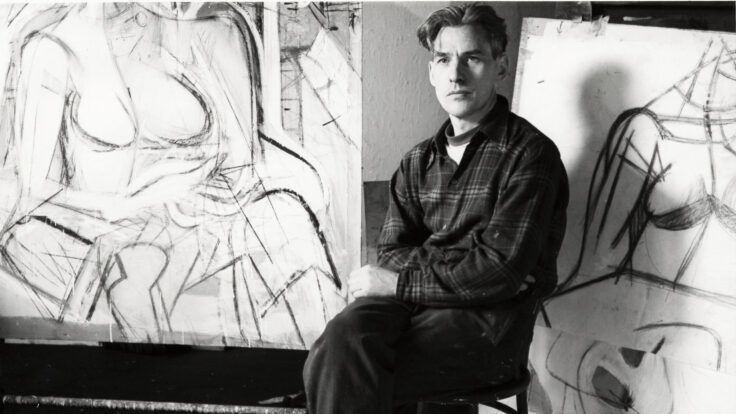
Tonight, I’m taking a closer look at Willem de
Kooning’s recent results at auction—and what it might tell us about the overall mood of the market. Up top, the New York watch auctions were blazing with more than $100 million spent on timepieces, and I’ve also got a bunch of early sales from Basel to report.
Also mentioned in this newsletter: Pablo Picasso, David Hockney, Pierre Soulages, Helen
Frankenthaler, Lucio Fontana, Josef Albers, Lynne Drexler, Doris Salcedo, Louise Bourgeois, Jonas Wood, Lynda Benglis, Victor Man, David Schrader, Steven
Cohen, David Geffen, Ken Griffin, David Pincus, Robert Mnuchin, and more. |
|
|
|
A MESSAGE FROM OUR SPONSOR |
A MASTERPIECE IN MOTION Unmistakable style. Undeniable attention to detail. Experience composition and craftsmanship at their finest in a Range Rover.
EXPLORE
|
|
|
|
-
New York’s watch sales have not disappointed: Phillips’s Bacs & Russo sold $75 million in watches over the weekend. The top lot was an F.P. Journe Chronomètre à Résonance that made close to $14 million. An additional 16 pieces in the sale sold for prices above $1 million, including four more F.P. Journe watches in the top 10 lots, along with two Patek Philippes, a Rolex, a Voutilainen, and a Richard Mille.
Meanwhile, Christie’s Friday sale totaled $17 million, with a
white gold Patek Philippe estimated at $800,000 selling for more than $2.75 million and an Audemars Piguet estimated at $30,000 selling for just over $1 million. And Sotheby’s sale on Monday totaled more than $18 million with a Cartier Paris
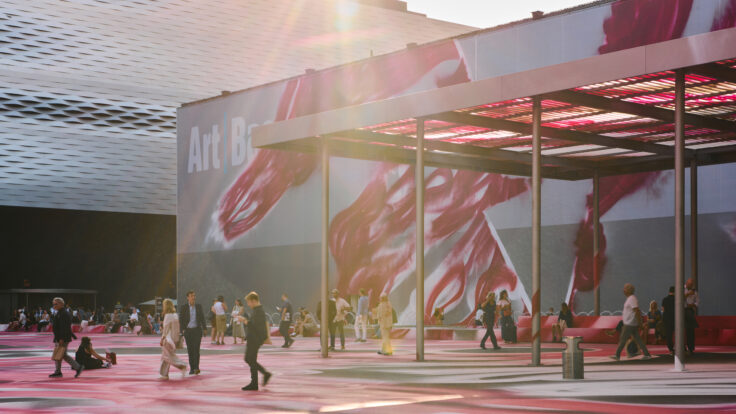
bamboo estimated at $8,000 selling for $140,000. - Early Art Basel sales: The annual Art Basel ritual is upon us, wherein we pretend that millions of dollars of art was sold in only a few hours of trading at the stand—rather than over weeks of emails and WhatsApp
missives. I’ll try to have a more detailed look at all of the reported sales tomorrow, but let’s start with the highlights from today.
Hauser & Wirth said they sold a Pablo Picasso from 1963 with a $35 million asking price along with 34 other works. Gray gallery reports they sold a David Hockney painting from 2014 for $8.5 million. Almine Rech said they sold a Picasso from the Basel Exclusive program for $6 million. Thaddaeus Ropac said they sold a
Pierre Soulages and a Helen Frankenthaler, each for $3 million, and a Lucio Fontana for $1.8 million.
Sprüth Magers said they sold a Josef Albers for €2.5 million. White Cube sold a Lynne Drexler for $2.5 million and a Doris Salcedo for $1.25 million. Xavier Hufkens reported a Louise Bourgeois sculpture sold for $2.2 million. Yares sold another Frankenthaler for $2
million and a Joan Mitchell for $1.2 million. David Kordansky reports they sold a Jonas Wood for $1.5 million. Pace sold a Lynda Benglis for $1.4 million. And David Zwirner sold two new Victor Man paintings, one for €1 million.
|
Now, let’s talk about the de Kooning market… |
|
|
|
Even after the robust volume of sales in New York, there are clearly still plenty
of serious buyers looking for de Koonings—and that wasn’t always a given. |
|
|
|
The art market is in the middle of a strange moment: Money is pouring back into high-value,
name-brand art while the market itself remains patient, and maybe cautious. The money is there and waiting to be spent, but buyers seem to be in no hurry, confident that the right work will eventually come along. The result is a market that can seem dull or disappointing, even as some records are set and an undeniable momentum builds.
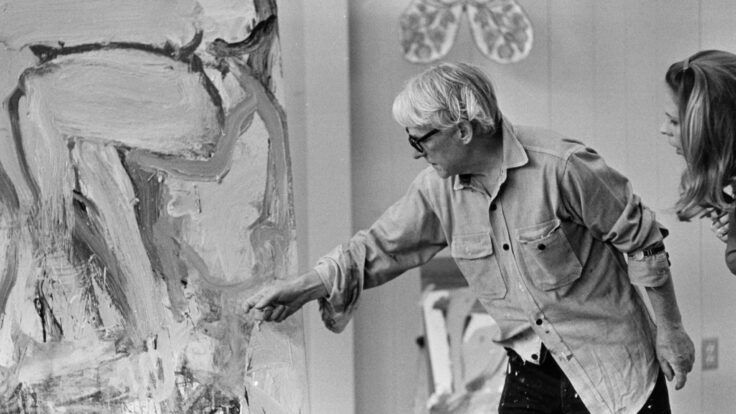
I came to this conclusion after looking at Willem de Kooning’s recent results at auction, and seeing today’s listing for some large, late
works debuting at Art Basel. Last month, 15 works by de Kooning were offered at the auction houses, 13 of which found buyers, for a combined total of $75 million. If you add the late de Kooning painting sold in a private auction at Lévy Gorvy Dayan for an additional, unconfirmed $10 million, that’s a total of $85 million, or an average price of more than $6 million per work. Keep in mind that during the recent art market drought, works over $5 million were the biggest variable. |
|
|
|
A MESSAGE FROM OUR SPONSOR |
A MASTERPIECE IN MOTION Unmistakable style. Undeniable attention to detail. Experience composition and craftsmanship at their finest in a Range Rover.
EXPLORE
|
|
|
|
There have been even more de Kooning works on the private market. At Pace Di Donna Schrader’s TEFAF
debut, the dealer had a small 1976 work priced at $4.25 million that sold. David Schrader told me de Kooning was among the most-requested artists by potential clients in the past two months. To follow that sale, Schrader had brought a large 1984 painting by de Kooning to Art Basel. Over at Gagosian, another 1984 picture with a pristine provenance sold within the first hours of the fair to an Asian buyer for a price in the high seven figures. Even after the robust volume of sales
in New York, there are clearly still plenty of serious buyers looking for de Koonings.
That wasn’t always a given. For comparison, look at the de Kooning auction sales in May 2025, when 10 works were sold for a little more than $12 million. Or last November, when de Kooning’s work all but disappeared from the auction market, with three works selling for less than $1.4 million. Last May, the stakes were lower but the bidding was higher: The work with the largest presale estimate that month
was offered at $4 million, and hammered close to $6 million. That’s a far cry from this May, when the top lot was priced at $25 million and sold to the guarantor with essentially no one bidding.
Of course, just because the painting was sold to the guarantor doesn’t mean no one wanted to bid. At Sotheby’s, on the first night of the May auctions, I spoke to a very well-connected art advisor after the 1975
abstract painting sold to the irrevocable bid for a nice, round $26 million with fees. The advisor had come to the auction with plenty of dry powder, but held fire when the chandelier bidding continued without a solid offer from a serious player. The advisor insisted that a prominent art dealer who happened to be seated in the same row in
the salesroom had also come to bid with determination. This happens sometimes when the market is cautious and no one wants to tip their hand.
Yes, it’s easy to say you were going to bid and had plenty of money to spend after sitting on your hands. But I’m inclined to believe the advisor, who claimed to know the identity of the third-party guarantor and noted that this person was also in the trade. It doesn’t get discussed much any more, but the trade still prefers to settle its business
in private. I’m sure if either the dealer or the advisor’s clients were keen on the picture, it would be easier to negotiate a reasonable profit for the guarantor rather than work out who wanted it most through aggressive bidding. |
The 1975 abstract painting is connected to de Kooning’s market upswing in other important ways.
Twenty years ago, a group of Russian buyers latched on to the landscape-inspired abstract paintings that de Kooning had made in the 1970s as an alternative to his untouchable works from the peak of abstract expressionism in the 1950s, most of which were either already in museums or sold for phenomenal sums. In 2006, Steven Cohen paid $63.5 million (about $100 million in today’s dollars) for a 1955 painting called Police Gazette. Nine years later, David
Geffen sold another 1955 painting, Interchange, to Ken Griffin in a deal that valued it at $300 million. It’s not apples to apples, but one reason these abstract paintings were so incredibly valuable is that de Kooning’s star had risen quickly in the 1950s. Most of the works from that period were snapped up by museums or sold to collectors who donated them to museums.
If you were a new collector flush with cash entering the market 20
years ago, your choices in the de Kooning catalogue were somewhat limited: Either compete with ferocious buyers like Cohen and Griffin for the few 1950s works available, or branch out into the maestro’s 1970s resurgence. After leaving New York in the early 1960s, de Kooning custom-built a studio in East Hampton that was completed in 1971, and a whole new phase of his work began, culminating in a period in 1975 when the artist painted some 20 large abstract canvases with fluid brushstrokes in
about six months. These were the works collectors started competing for at auction.
A 2005 sale at Christie’s began establishing a new price point for the 1970s works, with an untitled 1975 work that sold for $3.6 million. A year later, in the same November sale, Untitled XXIX from 1977 sold for $8 million, followed five lots later by the $27 million sale of Untitled XXV. Once the art market recovered from the global financial crisis of 2009, more of these works traded
publicly around the $25 million mark. Then, in 2016, Untitled XXV returned to auction and made $66 million. That’s a great art trade. |
|
|
|
In the following years, a few other works from the ’70s sold at auction for slightly higher prices
in the $30 million range, but there was no further acceleration in the de Kooning market. Indeed, the 1975 painting that Sotheby’s sold for $26 million last month sits among the top 10 auction prices ever paid for a de Kooning work. It wasn’t a bargain. |
I recently spoke to a gallery director who just sold a late de Kooning painting. “Auction houses
are trying to push prices up,” this person said. “But that’s not working.” Instead, the director said, the artist’s work is steadily selling for “solid middle-ground prices,” adding that people will pay great prices for great quality. And though there are still exceptional de Koonings in private hands, those owners are not looking to sell just yet. Buyers, on the other hand, are perking up.
The aforementioned director got calls after the auctions from collectors looking for de Kooning
works. The director also reminded me that the 2011 MoMA retrospective had sparked interest in the late paintings from the 1980s, which had previously been dismissed as the product of a fading master’s waning powers. One of the disappointments of last month’s auctions was a green 1980 painting that had been owned by collector David Pincus and sold for $14 million in 2012, but retraded again for a little more than $12 million.
Because of their abundance, these late
paintings make up the bulk of the market’s current supply. Some were selling for $4 million–$6 million just a few years ago, Schrader pointed out. Now, they seem to be selling from $7 million to $10 million. Like any good salesman, he concluded positively, “That’s up and to the right.” He also called attention to the fact that the de Kooning lot that performed so well in last month’s Robert Mnuchin sale was a 1970 work on paper mounted on canvas. Estimated at $4 million, it sold
for nearly $11 million with fees. That, Schrader said, is evidence of where the de Kooning market is repricing in works from the ’60s and ’70s, especially the works on paper mounted on canvas. There’s a very solid market for these shoulder works, Schrader told me: “I wish we could find more.”
Works on paper also play an important role in a new museum show that just opened at the Art Institute of Chicago, which focuses on the pervasive importance of drawing in all of de Kooning’s
work. Down at Princeton, the university’s art museum has a show of work from de Kooning’s breakout period in the late 1940s. I’m seeing the Chicago show early next week, so I can write about both soon.
As the director explained to me, there are great de Koonings in circulation that will remain in circulation, but unless there’s significant price movement or a major collector dies, we probably won’t see those works at auction. Like with the 1975 painting that the advisor decided not to bid
on, it’s easier to make a private deal. “If you have the money,” the director told me, “you can wait for the right thing.” |
That’s it for today. If you’re in Basel, let me know what you’re seeing or hearing. You can always
send an SMS or WhatsApp to 917.825.1391. If not, I’ll be back tomorrow in the Inner Circle with more.
Come join me,
M |
|
|
|
Puck founding partner Matt Belloni takes you inside the business of Hollywood, using exclusive reporting and insight
to explain the backstories on everything from Marvel movies to the streaming wars. |
|
|
|
Unique and privileged insight into the private conversations taking place inside boardrooms and corner offices up and
down Wall Street, relayed by bestselling author, journalist, and former M&A senior banker William D. Cohan. |
|
|
|
Need help? Review our FAQ page or contact us for assistance. For brand partnerships, email ads@puck.news. You received this email because you
signed up to receive emails from Puck, or as part of your Puck account associated with {{customer.email}}. To stop receiving this newsletter and/or manage all your email preferences, click here. |
Puck is published by Heat Media LLC. 107 Greenwich St., New York, NY 10006 |
|
|
|
|