Welcome back to Wall Power. I’m Marion Maneker.
Last week I took
a little inspiration from Herman Melville’s famous opening line in Moby-Dick: No, not “Call me Ishmael,” but the bit about how, having “nothing particular to interest me on shore, I thought I would sail about a little and see the watery part of the world.” A quick note at the end on what’s out in the watery part of the world.
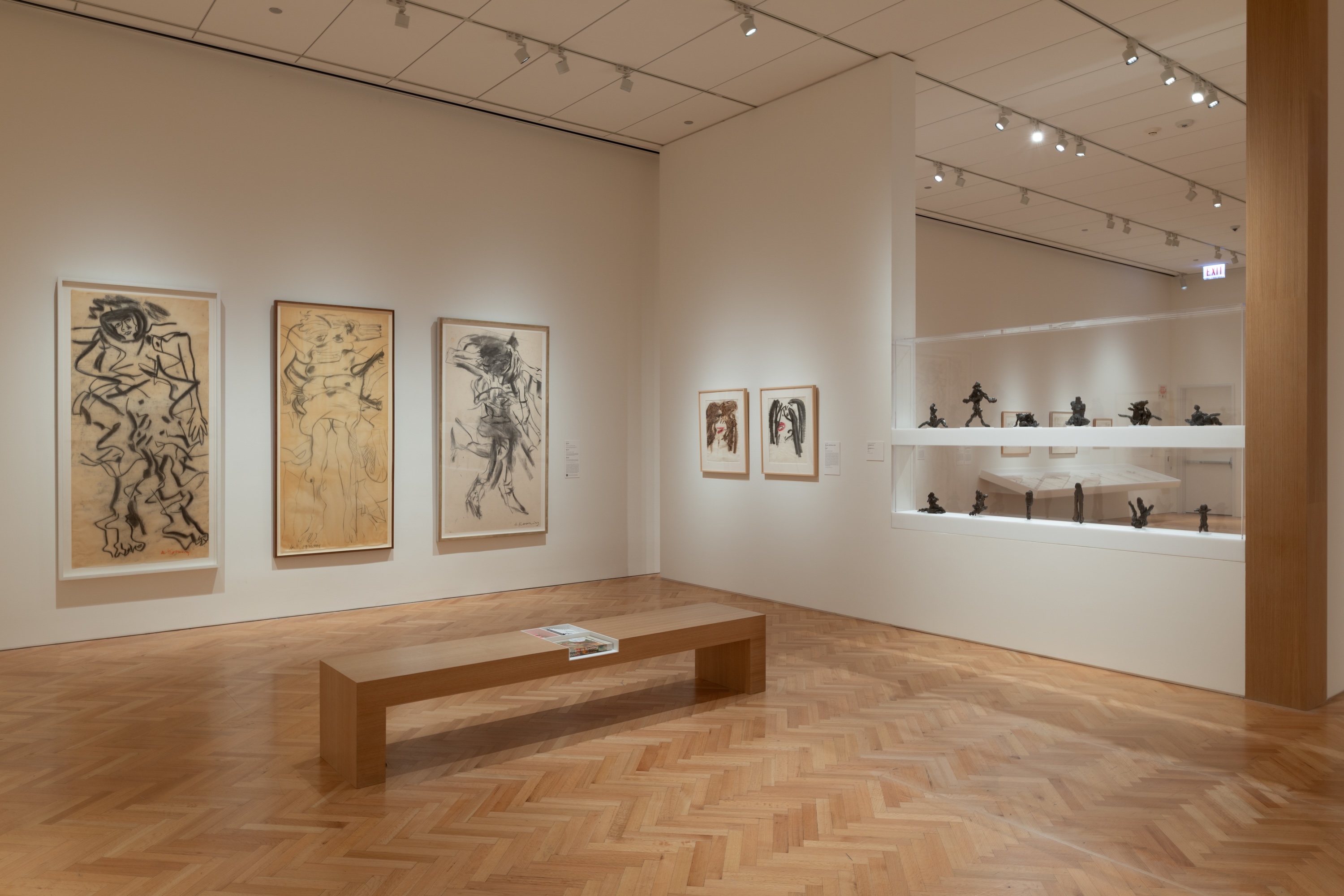
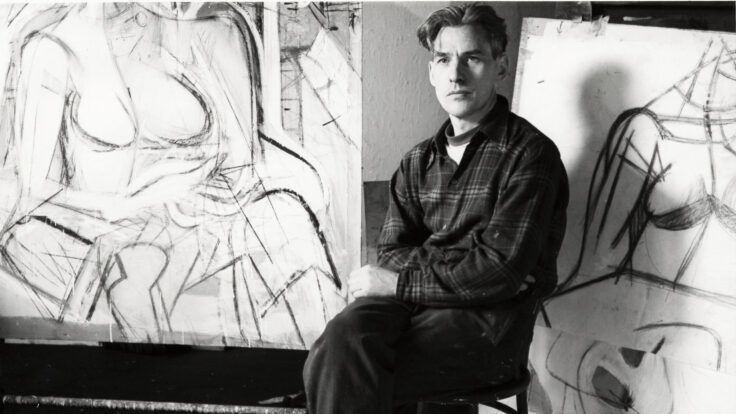
Tonight, I want to wind the clock back two weeks and share with you my impressions of the great Willem de Kooning Drawing
show that opened last month at the Art Institute of Chicago. This will also give me the chance to talk about curator John Elderfield’s important show at Princeton University Art Museum that focuses on de Kooning’s “breakthrough years,” from 1945 to 1950. Up top, the New Museum has a new director. We have H1 numbers from Phillips and a headline number from Heritage, with more to follow tomorrow. And Samsung has added some of the Whitney Museum of American Art’s masterpieces
to its Frame television sets.
But first… |
The Art of
Influence Is Back for 2026
|
Last year’s sold-out one-day
conference, co-produced with the FLAG Art Foundation, was so successful that we’re bringing it back again on September 23 and moving it to the Bowery Hotel. You can buy tickets here. (Inner Circle members will find a limited special offer in tomorrow’s newsletter. Upgrade
here.)
The event is a great way for collectors and industry professionals to spend some time together to talk about the important topics that don’t get discussed at auctions and openings. This year’s lineup will include frank conversations with Arne Glimcher, the founder and chairman of Pace Gallery, and Marc Glimcher, Pace’s C.E.O.; Christie’s C.E.O.
Bonnie Brennan; new Met trustee Jennifer Rubio; and the founder of Siren Projects and collector Sophia Cohen. FLAG founder Glenn Fuhrman and I will help guide the conversations. More speakers will be announced in the coming weeks.
Also mentioned in this issue: Massimiliano Gioni, Lisa Phillips, Edward Hopper,
Rockwell Kent, Agnes Pelton, Joseph Stella, Wayne Thiebaud, Willem de Kooning, Robert Mnuchin, Mel Becker Solomon, Jackson Pollock, and more.
Let’s get started… |
-
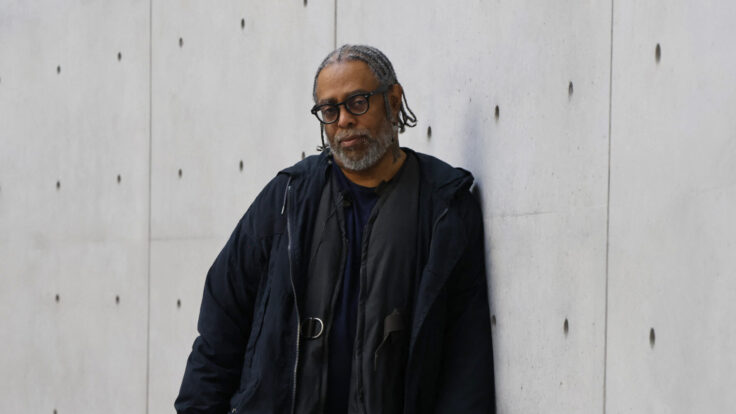
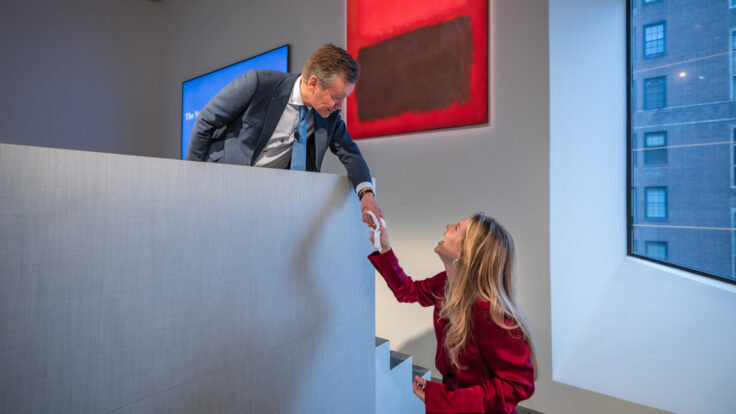
Massimiliano Gioni named director of the New Museum: After 20 years at the New Museum in New York, Massimiliano Gioni will become the museum’s director. Lisa Phillips, who is stepping down after her own 27-year run, hands the museum to someone who has already served as its artistic director for a dozen years.
- Phillips H1 = $507 million: Today Phillips announced sales of $507 million for the
first half of 2026, a 60 percent rise from the previous year. The company’s global sell-through rate has reached 90 percent, and new clients accounted for 40 percent of the collector base actively buying from the firm. These are very strong numbers. The sell-through rate is the highest of the three fine-art auction houses and is consistent with the first half of 2025.
- Heritage says, “Hold my beer”: Heritage will have more to say about its H1
2026 sales when it releases its first-half numbers tomorrow, but my source there did tell me earlier this week that sales were more than $1.4 billion. That’s a whopping 46 percent rise over the first half of last year, when sales were $962 million—and 2025 was already a record year for the company at $2.158 billion in sales. The Dallas-based collectibles trading house appears to be reaching escape velocity.
- Samsung x Whitney Museum: Samsung
continues to add artworks to its Samsung Art Store, which provides images licensed for more than 4,000 pieces by 800-plus artists to its range of Frame television sets, which can display images of art in a matte format. The company announced this week that it had accumulated rights to another 33 images from the Whitney Museum of American Art’s collection—including Edward Hopper’s Early Sunday Morning (1930); Rockwell Kent’s Moonlight, Winter
(c. 1940); Agnes Pelton’s Sea Change (1931); Joseph Stella’s Luna Park (c. 1913); and Wayne Thiebaud’s Pie Counter (1963).
|
And now let’s go back to Chicago… |
|
|
|
Two current de Kooning shows—one at Princeton and one in Chicago—feature different
eras and aspects of the Dutch-American artist’s mastery. But both make a similarly compelling case for de Kooning as the meticulous leader of abstract expressionism and set the stage for a market shift. And they help explain his market bounce. |
|
|
|
Earlier this year, I toured the Frederick Weisman collection in Los Angeles’s Holmby Hills, where
two very important works by Willem de Kooning are featured in the house’s former living room: Pink Angels, from 1945, and Dark Pond, from 1948. Those two works play pivotal roles in two exhibitions now on view at the Art Institute of Chicago and the Princeton University Art Museum. When I saw the two de Koonings in L.A., I had no inkling that I would be seeing each again months later in a very different context.
I also had no indication that we
would see a significant rise in the auction market for his work later in the year. So far in 2026, 56 de Kooning paintings and works on paper have sold for more than $77 million, the most for his auction market since the peak year of 2022, when $194 million was paid out for the abstract expressionist pioneer’s work. That year’s sales included three pieces from the artist’s estate, spanning different periods of a long and varied career, that brought in more than $58 million. There was also a
rare, important, visually arresting collage—with thumbtacks still in place—that sold for almost $34 million.
The alchemy that translates major museum exhibitions into market increases is difficult to discern. It’s even harder to take advantage of. But an axiom of the business is that critical focus and collecting interact in strange and unpredictable ways that tend to drive a market forward. At the moment, demand for de Kooning’s work is rising even while his price level is staying put.
(That’s a dynamic I discussed recently in another context.) But the question in the back of my mind is whether we’re seeing something that might help generate a new market theme around an undeniable giant of 20th century painting. |
I broke up a recent drive back from the Great Plains with a stop in Chicago to see the new
show, Willem de Kooning Drawing, that opened less than a month ago and will be up until mid-September. The detailed, almost forensic exhibition succeeds at casting the artist, whom banker-turned-art-dealer Robert Mnuchin used to refer to as the “chairman of the board,” in a new light while highlighting the museum’s holdings of his
work—including the seminal painting Excavation from 1950. In a sense, the Art Institute of Chicago is reclaiming its special relationship with de Kooning by repositioning our understanding of his work and, to some extent, the abstract expressionism movement. |
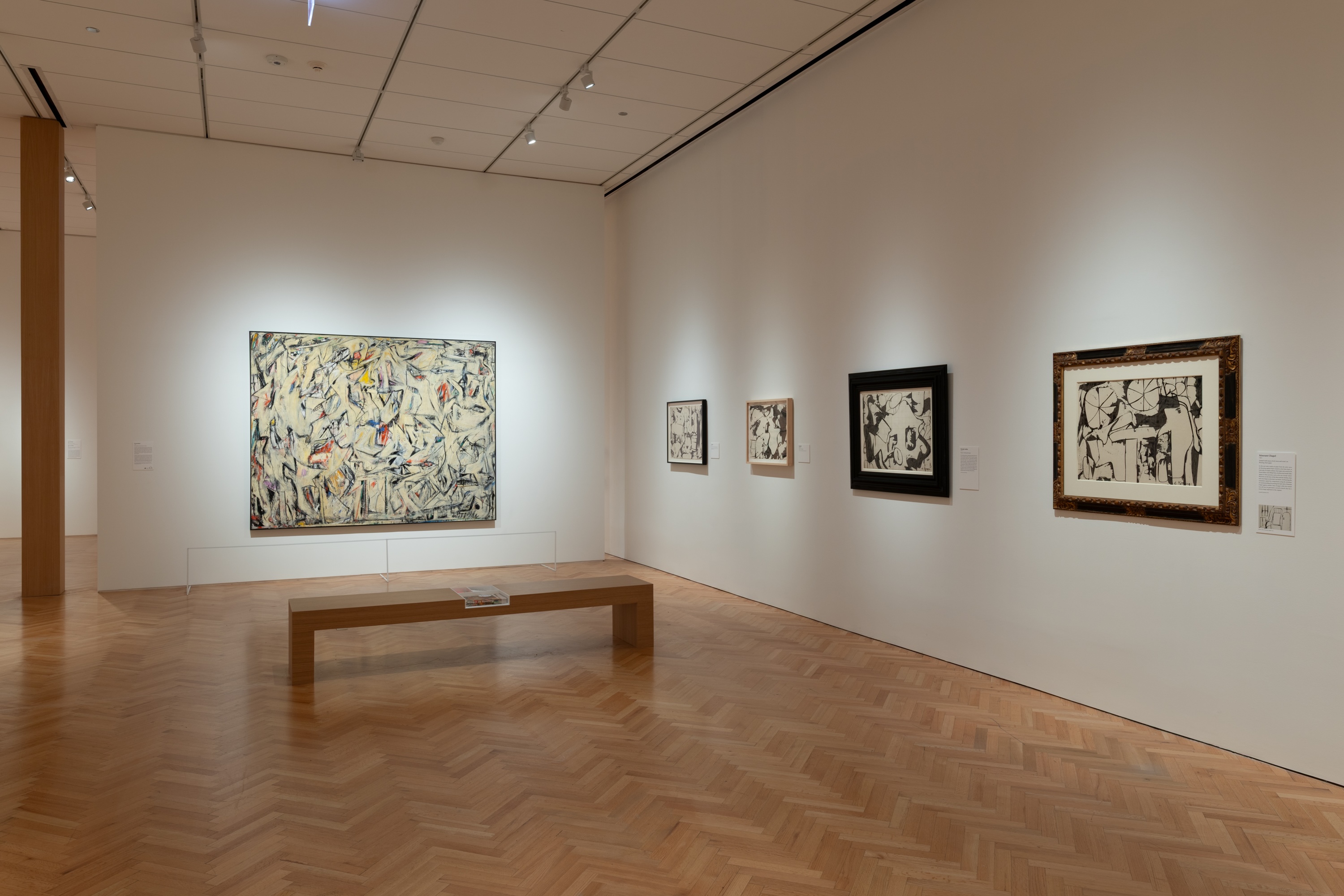
Willem de Kooning Drawing at the Art Institute of Chicago. Photo: Courtesy of the Art
Institute of Chicago |
By focusing on de Kooning’s training, tools, and process, the Chicago show makes the case that his
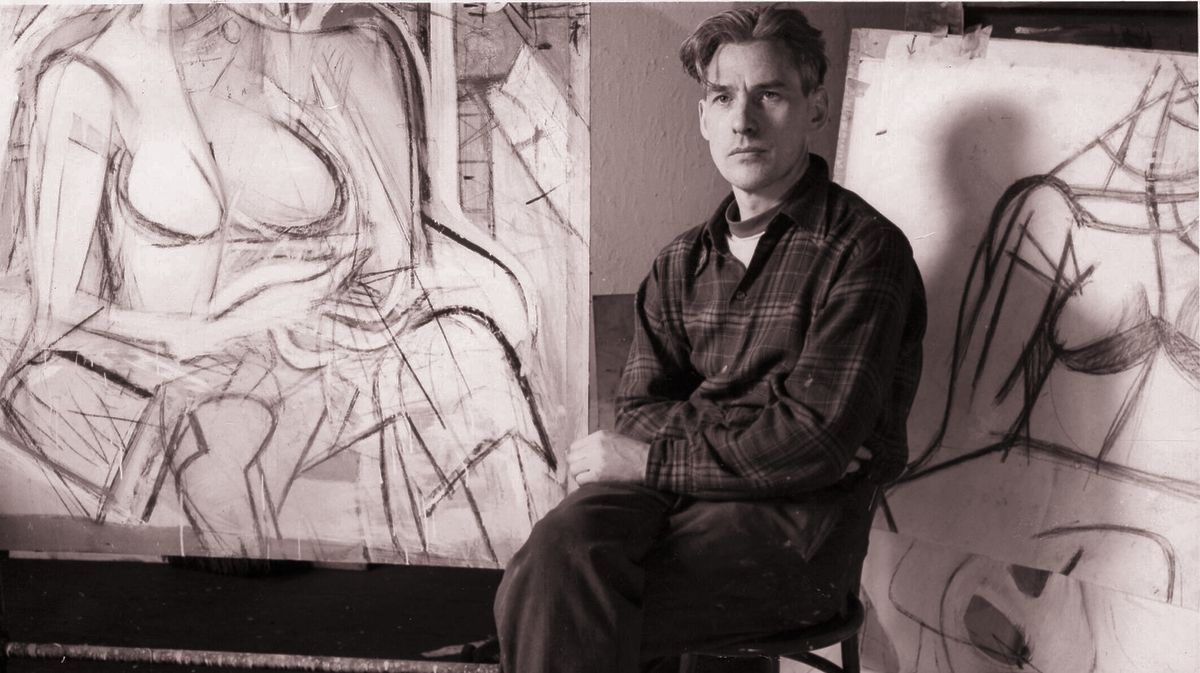
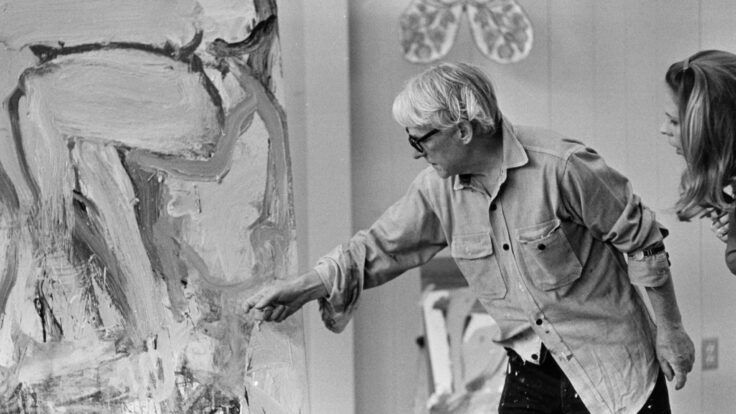
own work—and, by extension, the output of his peers—was the product of planning, meticulous trial and error, and revision. In this show, we see de Kooning’s extraordinary draftsmanship, honed in the repetition and transposition of images, shapes, and gestures. But we also see the tools and his training. Born into a working-class family in Rotterdam, de Kooning apprenticed to a firm of commercial artists, eventually getting academic training at night. In the old-school training method, he learned
draftsmanship through excruciatingly close work. Later, as a sign painter, he used tools like a liner brush to create a bold and steady line. |
Willem de Kooning Drawing at the Art Institute of Chicago. Photo: Courtesy of the Art
Institute of Chicago |
As an artist, de Kooning was endlessly experimenting and constantly adapting and saving images and
ideas. I walked through Chicago’s show with curator Mel Becker Solomon, who showed me how de Kooning transferred shapes and gestures across different works. Throughout this complex show, de Kooning is portrayed as more cerebral and strategic than emotionally expressive. And that seems to have been a theme with the ab-ex guys: Their work might look spontaneous, but it was meticulously planned. This entire show, which spans de Kooning’s whole career—with many phases, fixations,
and encounters with different materials—essayistically makes that very point. |
In his 20s, de Kooning stowed away on a British freighter and jumped ship at Newport News,
Virginia. He found work painting houses, then encountered enough success as a commercial artist to eventually devote his time to becoming a real painter. It was not until he was in his mid-40s, if you can believe it, that de Kooning decided to show his work. Even then, it’s not clear whether he did so of his own volition or because he was pushed into it, either in competition with Jackson Pollock or for the need for recognition beyond the coterie of artists with
whom he spent the Depression arguing about art in Automats and bars. |
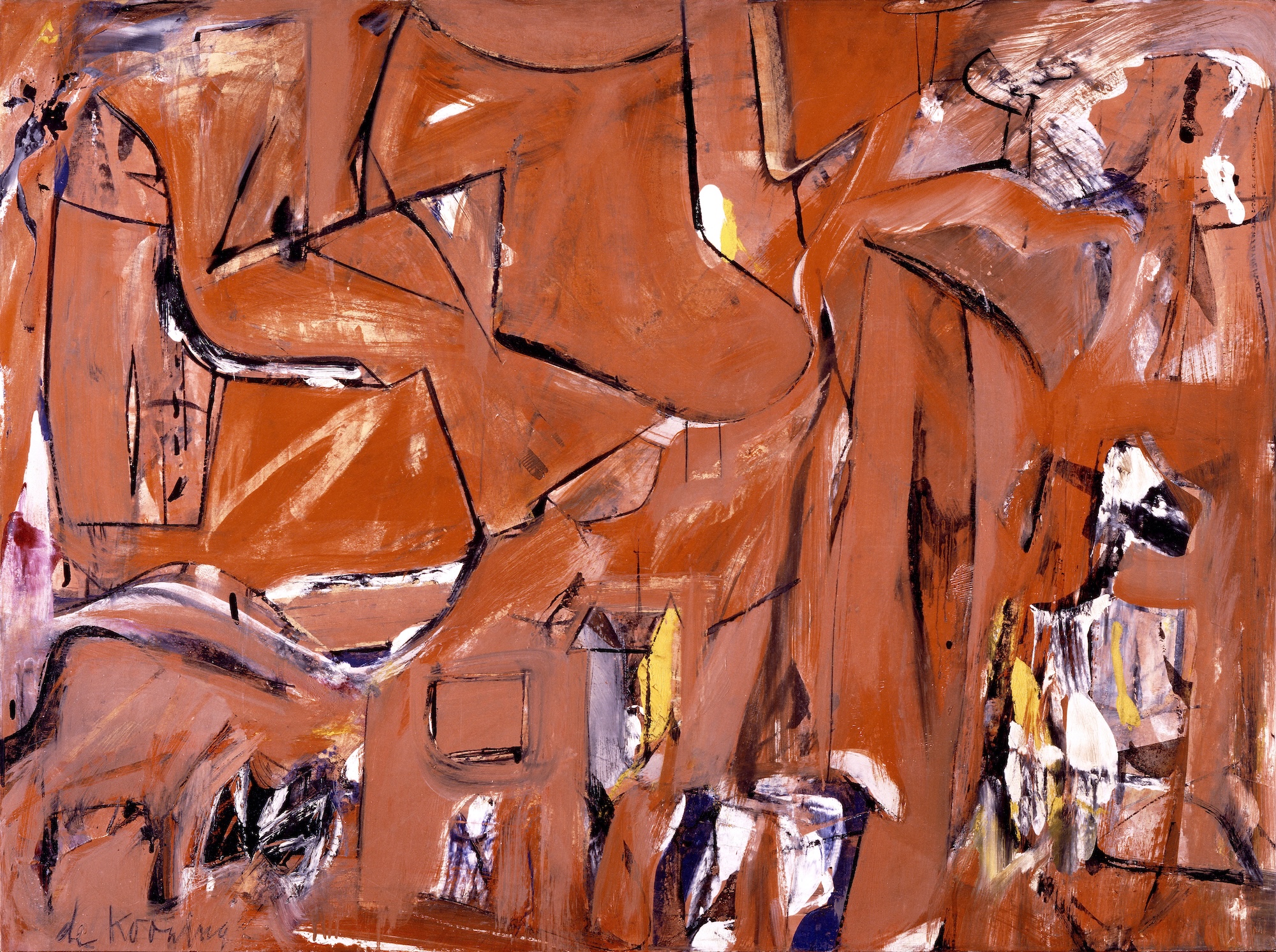
Willem de Kooning, Gansevoort Street (1949). Photo: The Willem de Kooning
Foundation/ARS/Courtesy of Princeton University Art Museum |
Whatever the impetus, de Kooning did finally show his work, at the Charles Egan gallery in 1948.
That debut would lead to some sales and more shows. Eventually, de Kooning would become the advance party, leading the abstract expressionists into the forefront of American art and, not incidentally, helping to create a market for “modern,” or abstract, art in the United States.
Willem de Kooning: The Breakthrough Years, 1945–50 at Princeton, which you can still catch if you get down
there within the next three weeks, is a small, intense chamber lined with 18 of the pivotal works made around the time of that first gallery show. John Elderfield isn’t very much concerned with that first gallery show itself but with the period between 1945 and 1950. That’s when de Kooning made great strides in
creating what Elderfield calls one of “the greatest short periods of radical change in modern art.” Using many of the techniques that he learned from his training and experience as a commercial artist, including those liner brushes, de Kooning created an abstract art that was built out of a dialectic interaction between figuration, drawing, and abstraction. Taken together, we can begin to see the radical importance of abstract expressionism while also rediscovering de Kooning as an essential
artist—all of which neatly frames for collectors his importance in the auction market. |
I spent four days last week sailing from Bermuda back to New York. The first two days were rough,
but the seas settled down to provide near-perfect conditions for the last 24 hours, after crossing the Gulf Stream before reaching New York Harbor. For me, it was great to unplug for four days and focus on nothing more than the wind, weather, and waves—not to mention numerous flying fish, a wide variety of seabirds, the barracuda we caught and released, and, finally, a pod of dolphins that leaped across the bow of our boat during that idyllic run home.
The sea life, as one of my shipmates
likes to point out, is always out there whether we’re there to see it or not. Here’s something else you’re probably not aware of that’s always out there: Mylar balloons! In four different places across 600 miles of ocean, I came across a clutch of Mylar balloons that had probably been bought for a special occasion and drifted away from someone’s hand. I’ve seen this many times before on the ocean. Those balloons will be out there forever before eventually finding their way to one of the five
great garbage gyres that besmirch our seas.
Please think about that the next time you celebrate a special event or decorate for one. Are those balloons really necessary? Think of the dolphins, please.
M |
|
|
|
Puck founding partner Matt Belloni takes you inside the business of Hollywood, using exclusive reporting and insight
to explain the backstories on everything from Marvel movies to the streaming wars. |
|
|
|
Ace media reporter Dylan Byers brings readers into the C-suite as he chronicles the biggest stories in the industry:
the future of cable news in the streaming era, the transformation of legacy publishers, the tech giants remaking the market, and all the egos involved. Also featuring a weekly dispatch from Puck’s crack streaming/media analyst, Julia Alexander. |
|
|
|
Need help? Review our FAQ page or contact us for assistance. For brand partnerships, email ads@puck.news. You received this email because you
signed up to receive emails from Puck, or as part of your Puck account associated with {{customer.email}}. To stop receiving this newsletter and/or manage all your email preferences, click here. |
Puck is published by Heat Media LLC. 107 Greenwich St., New York, NY 10006 |
|
|
|
|