 |
|
Welcome back to Line Sheet, and thanks for being here, as always. It’s a bizarre, smoky week for my swing through Manhattan—hope you’re all staying safe out there.
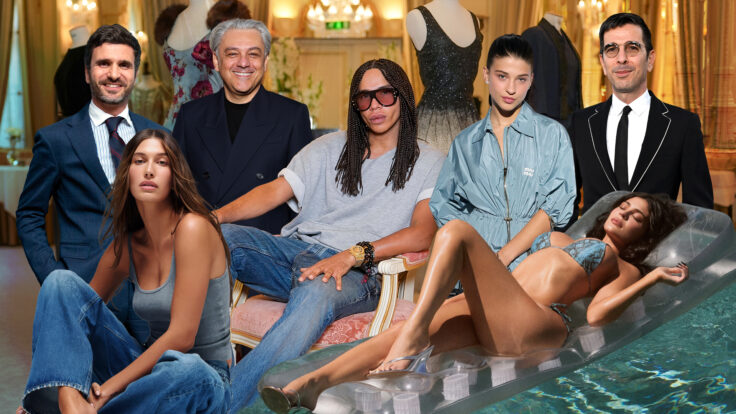
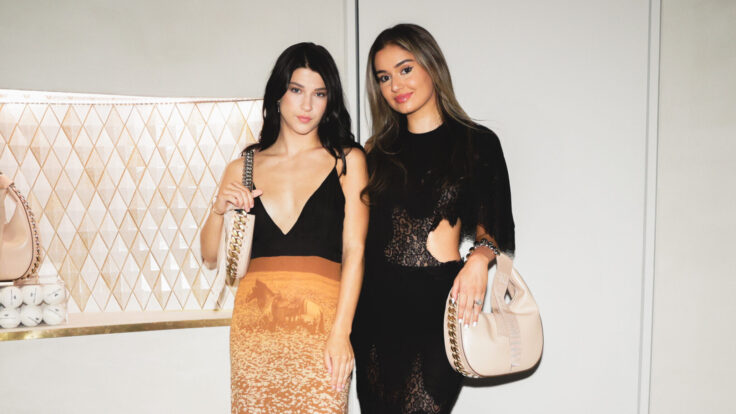
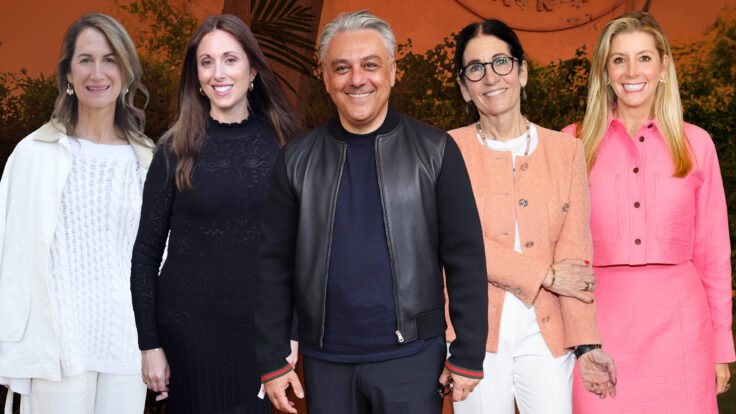
I’ve spent these 2.5 days (mostly indoors) at the Women of Impact Summit, on Wednesday, and at the French American Chamber of Commerce event, where it was great to reconnect with mass market and luxury friends, alike. I was also lucky to sneak in cocktails at the home of Maria McManus, whose line of wardrobe essentials has become a key sales driver at independent boutiques across the country. She was co-hosting a shopping party with stylist Clare Richardson, the proprietor of Reluxe, one of the niche resale sites shaping the experience of buying secondhand luxury goods online. Two examples of how “real” women are shopping today, linked together in an elegant way.
Also, thanks to all you Inner Circle members who joined my off-the-record conversation today with executive editor Ben Landy; you don’t want to miss the next one, so upgrade your subscription here.
Mentioned in this email: Vanessa Friedman, Burberry, Tim Cook, Rachel Tashjian, Chris Aysta, Gucci, Apple Martin, Ann Demeulemeester, Riccardo Tisci, Alessandro Michele, the Arnaults (of course), Jeremy Scott, Gia Kuan, Bryan Yambao, Laurene Powell Jobs, and many more...
|
| About Those Vanessa Friedman Murmurs… |
|
| The very minute I landed in New York I was absolutely pummeled with various rumors. (And I’m always happy to take a beating, on or offline: you can always find me on email, phone, Instagram, Signal, Whatsapp, etc…)
The one that rose up from the rubble was that Vanessa Friedman, The New York Times’ longtime chief fashion critic and fashion director, was headed to WWD as EIC.
Back when I first heard that proprietor Jay Penske was on the hunt for a new editor in chief, Friedman’s name came up, but more in the context of a dream candidate, rather than a reality. Recently, I’d heard that Friedman might be entertaining the idea, according to multiple people within the Times orbit. But then I heard it’s dead in the water. She’s not going anywhere, at least not now.
Friedman has been at the Times since 2014, a long time to stay in one place (except for the Times, where people regularly recede into the carpeting). During that period, she’s also cycled through three different editors: Stuart Emmrich (remember that guy?) Choire Sicha (hi, Choire!), and now Stella Bugbee, former architect of The Cut, who has made significant changes to the equally abhorred and adored section since her arrival in 2021—both in terms of staffing and tone. Not only have quite a few writers left Styles during the Stella Era (KatieRosman to Metro, AlexWilliams to obits), but she’s also hired several new editors, including NoreenMalone (formerly of Slate and New York) and Anthony Rotunno, a former Graydon Carter assistant, who migrated internally from the Weddings section. Rotunno is now the fashion news editor, a position that the paper had been looking to fill since the summer of 2019.
And yet Rotunno reports to Bugbee, not Friedman, to whom the other members of the Fashion desk—a pod within Styles—traditionally reported. (The Times’ organizational structure can be more complicated than The State Department.) I’m not going to speculate further on the rumored tension between Bugbee and Friedman. Knowing them and following their respective work closely over the past decade, I will say that they do approach things differently. My armchair analysis: Friedman is more of an industry newshound. Bugbee, meanwhile, wants Styles to lean heavily into fashion as a pop cultural force. As everyone who knows them knows, they’re different people with different sensibilities.
From what I know, Friedman has no interest whatsoever in decamping to WWD, even if it would mean wielding more control. She was approached several years ago, in 2016, but declined the overture. (The gig eventually went to the trade’s Paris scoop guy, Miles Socha, who moved to the U.S. for the job then left almost as quickly.) One of the challenges with the role is that it still reports into editorial director James Fallon. I’m not sure there’s a scenario where Friedman would say yes, but she—and most other accomplished people—would not entertain such an arrangement. (All the smart people I know still think they should hire Nicole Phelps from Vogue.)
But the fervor got me thinking: Why are people within the Times even talking about this? What sparked the rumor right now? It does feel like we’re right in the middle of a time of significant turnover in fashion media—Kristina O'Neill and Edward Enninful leaving their respective posts, new voices landing plum gigs (like Rachel Tashjian at the Washington Post), etcetera.
Friedman may be at the Times indefinitely, but when she does eventually decide to say goodbye, who knows what that role will even morph into. Fashion criticism has changed dramatically since she was appointed: show reviews, in the traditional sense, aren’t as interesting to readers as they once were; unlike a film or television show, it takes two seconds to look at a runway image and form an opinion. Whether or not the person would get the title of fashion critic, I don’t know. (There was talk when Sicha was still the editor that the position would be eliminated at the end of Friedman’s tenure.)
Down the line, someone like Tashjian, who once worked for Vanity Fair (as a publicist), but more recently established herself writing brilliantly for GQ and Harper’s Bazaar (and her own buzzy newsletter, Opulent Tips), would be a top choice. Jessica Testa, the still-new reporter on the Styles desk who doesn’t know the industry as well but has the writing chops, may grow into it. The pipe dream for many would be that Robin Givhan, who moved a couple years ago from her position as fashion critic at TheWashington Post to a broader critic role, might hop back on the show circuit again and take the crown. I doubt she’d be interested, but what can I say, fashion doesn’t like change. |
The Apple Keynote Glow Up:
A Very Important, Very Overdue Product Update! |
|
| I’ve been watching Apple’s product-launch keynotes for a long time, starting all the way back in 2007, when Steve Jobs introduced the iPhone at Macworld. This is thanks to my husband, a tech reporter and Apple fanboy (sorry, it’s true) who bought me an iPhone just weeks after we started dating. I was in the habit of buying cheap burner phones, and he was worried that he’d be on his iPhone so much that I’d get annoyed if I didn’t have one of my own. He was right.
Anyway, the keynotes of yore were all about the late Jobs, whose influence on fashion, with his uniform of Issey Miyake black turtleneck and gray New Balance 992s and well-worn 501s, is probably far greater than even Teddy Santis, New Balance’s current creative director and all-around streetwear cash machine, can fathom. I started paying attention to the clothes of Apple’s other executives around 2014, when they first presented the Apple Watch to a crowd that included plenty of fashion editors and operators, including Emmanuelle Alt, editor of Vogue Paris at the time, and Natalie Massenet, who was still running Net-a-Porter.
Back then, I wrote that “the sloppiness—wrinkled, ill-fitting, untucked shirts” of the presenters chipped away at their ability to convincingly sell an upscale accessory. The company was totally obsessed with the Apple Watch being fashionable—this was before they successfully leaned into utilitarianism and healthcare data—and while its c-suite never reached Steve Ballmer’s level of slovenly L.L. Bean remainder-bin style, anyone selling a luxury product should know how to use an iron.
Apparently somebody at Apple got the memo, if not my memo. Over the next decade, Tim Cook and his crew would start tucking in their shirts. During the pandemic, the production level of the keynote increased exponentially while Apple’s three-day, 4,500-in-person Worldwide Developers Conference was put on hold. During this period, the presenters also became more polished. Everyone’s clothes fit, their sneakers were free of dirt, their jewelry was carefully arranged. On Monday, I clocked top engineer Craig Federighi’s fresh haircut, the way the sleeves on Jennifer Munn’s mint green blazer were scrunched up just so to show off her Apple Watch, the coziness of Cook’s knitted polo—Loro Piana, maybe?—and the freshly applied makeup of the ASL interpreter.
What changed since 2014? Well, we’re more online than ever, and just as suits in Los Angeles are hiring stylists to help them get dressed for red carpet appearances, execs in other industries feel an obligation to look put together, especially when they’re going to be positioned in front of millions of people. (There were 1 million concurrent viewers watching on Monday when my husband checked YouTube—and that’s not even Apple’s main stream.)
These days, top business leaders will almost always hire someone to dress them for a big public event, like the Apple keynote or an I.P.O. But there’s also a whole racket around dressing people in Silicon Valley—a place where being interested in fashion beyond carrying a beat-up Goyard tote or Louis Vuitton Neverfull is still considered… how shall I put it … unnecessary. (Unless you’re Jack Dorsey in your Rick Owens.) The region’s discreet personal shoppers do their best to make their clients, mostly white men, look presentable without looking distinguished. (Brands like Acne, A.P.C., and my favorite, Officine Générale, work well there.)
As for who in particular is behind the collective Apple glow up? One longtime friend of Jony Ive suggested it was his and Laurene Powell Jobs’ lingering influence on the Apple culture. That seems far-fetched, though. It may very well be Bay Area-stylist Chris Aysta, who has dressed Tim Cook for numerous magazine features, from the cover of Time to the pages of Vogue. (Marcus Allen did the recent GQ cover, though.) Aysta’s portfolio includes a lot of on-air work, so maybe she’s leading the charge—in her bio, she says she has styled “the highest level of tech executive, to prison inmates, and all the midwestern moms and Mission hipsters in between.” That I’m just a regular person with clean shoes vibe is exactly what Apple is going for. Whoever it is who’s helping them, they really like skinny jeans.
I emailed Aysta and asked about the keynote, but have yet to hear back. An Apple spokesperson also ghosted me in the friendliest way possible.
And now, finally, the story of our moment: more designer musical chairs… |
|
|
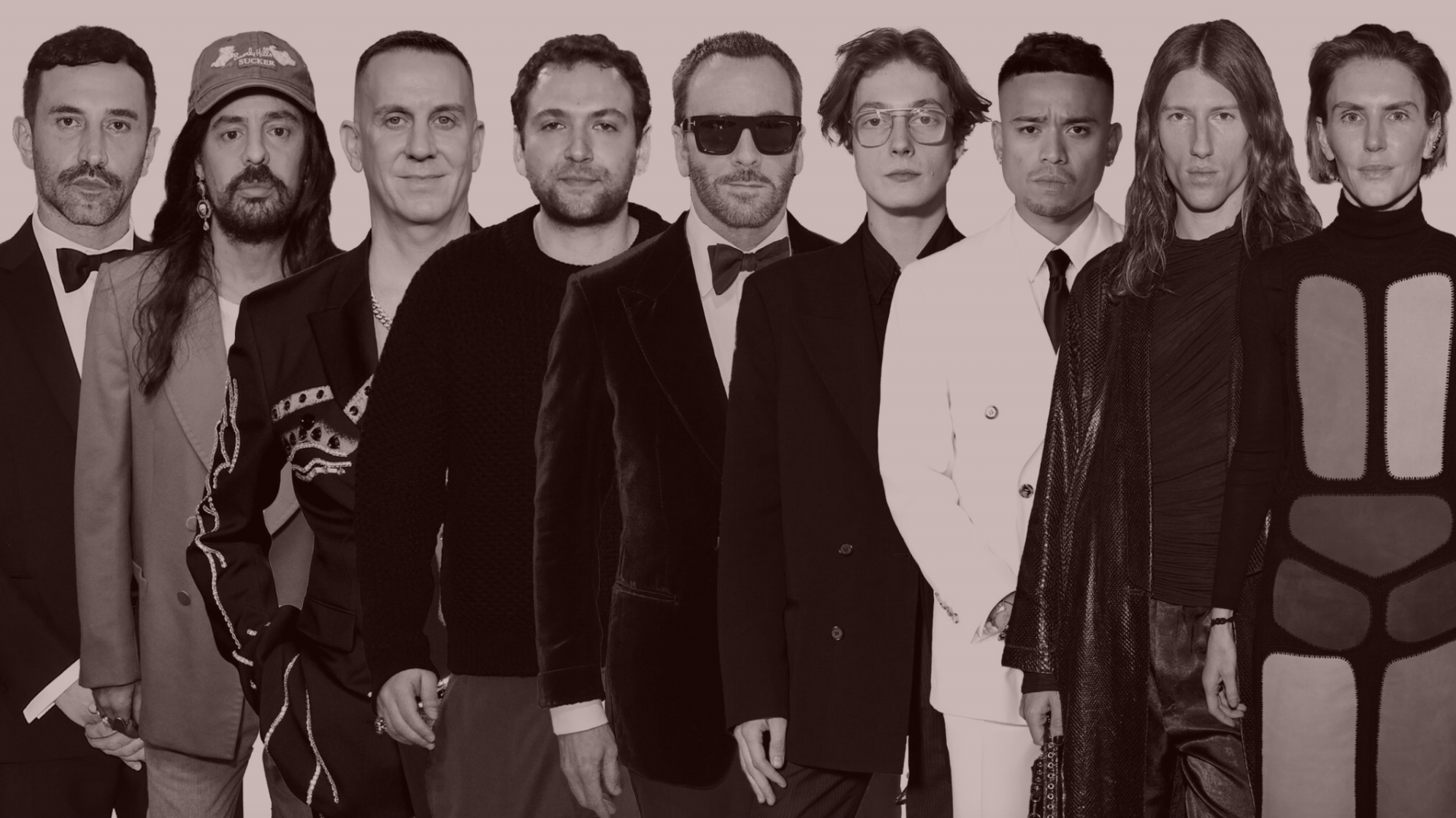
| Earlier this week, in the wake of the yet-to-be officially confirmed Gabriela Hearst-exiting-Chloé news, Twitter regular Linda @Itgirlenergy posted a list of star (and superstar) designers who had left their positions in the last two years: among them, Riccardo Tisci (Burberry), Alessandro Michele (Gucci), Jeremy Scott (Moschino), and Bruno Sialelli (Lanvin). Other members of this constellation would also include Tom Ford high-tailing it from his namesake house, Charles de Vilmorin saying goodbye to Rochas, and Ludovic de Saint Sernin leaving Ann Demeulemeester after one season. Linda didn’t even get to Rhuigi Villaseñor’s Bally departure or GmbH duo’s Trussardi exit, mentioned by LiveJournal O.G.-turned-TikTok star Bryan Yambao, better known as Bryanboy. As New York Times fashion reporter Elizabeth Patonnoted recently, “Does feel like a lot more designer churn than usual right now…”
To be clear, not all of these designers were fired. Even after selling to Estée Lauder Companies, Ford could almost certainly have stayed put as long as Karl Lagerfeld stuck around at Chanel… so, forever. However, most were fired, with some contracts even cut short. WWD later reported that Hearst would show her last collection in September, which explains why her departure hasn’t been officially announced yet.
Regardless of each oh-so-specific circumstance, the consensus is that designers are cycled in and out more quickly now than ever, especially at smaller fashion companies that don’t have the infrastructure to build machines around their creative leads. Burberry, a bigger company that derives most of its revenue from places other than the runway, gave Tisci five years. (His replacement, former Bottega Veneta head Daniel Lee, may get as much time.) But presumably, a brand like Ann Demeulemeester—owned by New Guards Group co-founder Claudio Antonioli—doesn’t have the luxury to let De Saint Sernin work it out for a few seasons. |
|
|
| This is a fairly new phenomenon, driven by the hyper-commercialization of fashion. Think about it this way: Back in the ’90s, when LVMH chairman Bernard Arnault hired Marc Jacobs at Louis Vuitton, Michael Kors at Celine, Narciso Rodriguez at Loewe, and John Galliano at Dior, the goal wasn’t to double sales of clothing in a season; it was to build awareness in order to sell handbags. Two out of four of those appointments worked incredibly well—Jacobs and Galliano—and it just so happens that those were the already-globally recognized brands: success feeds off success.
One of the other big differences between these days and the ’90s, which many like to call the Golden Age of Fashion, is that there used to be a lot of potential upside to putting in the work to resurrect a dusty label. Today, revitalizing a long-forgotten fashion house, like Alber Elbaz did at Lanvin in the early 2000s, would be a near-impossible task. The big players are just too big to make room for anyone else without the financial backing and/or existing cultural resonance.
And yet, executives keep trying, installing not-quite-right creatives into the top spots, hoping for success. The problem, as one designer friend who is contemplating his next move told me, is that a lot of executives are still chasing celebrity in some capacity: looking to hire designers with followings under the assumption that those eyeballs will convert. The truth though, is that it matters less and less if the customer has heard of the person designing the collection. Unless that person is truly famous, like Pharrell.
Companies with the financial means to back it up—Burberry, Salvatore Ferragamo—have a fighting chance, but things are changing. The preferred move now will be to hire an affordable second-in-command-type who really knows how to design, and hope for the best. (That’s what happened at both Bally and Ann Demeulemeester.) On the major stage, Kering has had a lot of success with this approach: Michele at Gucci and Matthieu Blazy at Bottega both fit this mold, as does Sabato De Sarno, the new guy at Gucci.
On his personal Instagram, Yambao suggested that the houses “stop announcing people as creative directors (and just hire them as part of their designer team) and leave it at that.” The question is: what happens to all this talent? Those with their own lines (like Hearst and Villaseñor) will go back to having a single focus, while others will float in the in-between, living off their generous severance packages and occasionally consulting. Think of all the free agents right now: Tisci, Haider Ackermann, Michele, just to name a few. |
|
|
| The Independents, the group that owns P.R. and marketing agencies including Karla Otto, Bureau Betak, and Prodject, raised $400 million backed by TowerBrook Capital and FL Entertainment. Many people have asked why and how this happened. The short answer: there’s big money in fashion events, and there’s plans to acquire more businesses. I smell consolidation! [Financial Times]
Nepo baby news: Apple Martin is interning at Interview magazine this summer. Perfect. I love you, Mel Ottenberg. [Max Berlinger’s Twitter, confirmed by me]
Cheers to Satoshi Kuwata of Setchu, who won this year’s LVMH Fashion Prize. [Vogue]
Speaking of the very prestigious LVMH Fashion Prize, the one-and-only Marc Jacobs posted a selfie with the other judges, including Jonathan Anderson, Stella McCartney, Delphine Arnault, Kim Jones, and Gal Gadot, who was also at the Tiffany store opening a few weeks back. Congrats to her agent? [Instagram]
This doesn’t really explain why all you jetsetters are drinking at the airport in the early morning, but it tries. [The Atlantic]
New York fashion publicist GiaKuan is getting married on Saturday and her pre-wedding portraits are incredibly newsworthy. [Instagram]
My friend’s husband, a former Supreme daddy, buys an estimated item per week from Drake’s, the youthful Savile Row brand. Now I know why. [Esquire]
Bummer for all of us waiting for the next season of Emily in Paris. [Variety via Chris Black’s Twitter]
BDG fired more people that have nothing to do with its fashion and lifestyle properties. [Adweek]
Patagonia is claiming Nordstrom was selling counterfeit items at its off-price stores. IDK. [Seattle Times]
Attention, Dimes Square brethren: Drunken Canal co-founder Gutes Guterman just launched Byline, an online-only pub. But you already knew that. [NY Times] |
|
|
|
| FOUR STORIES WE'RE TALKING ABOUT |
 |
| Goldman Brain Drain |
| Turnover is part of the firm’s D.N.A., but this feel different. |
| WILLIAM D. COHAN |
|
 |
| Licht’s Out |
| CNN is turning the page on Chris Licht. |
| DYLAN BYERS |
|
 |
|
 |
|
|
|
|
|
 |
|
|
|
Need help? Review our FAQs
page or contact
us for assistance. For brand partnerships, email ads@puck.news.
|
|
|
|
Puck is published by Heat Media LLC. 227 W 17th St New York, NY 10011.
|
|
|
|