Welcome back to Wall Power. I’m Marion Maneker.
I won’t pretend
to know anything about basketball—or the Knicks, for that matter—but as a lifelong New Yorker, I love these rare moments when a team galvanizes the city, erasing distinctions through shared pride and camaraderie. I’m still chuckling over the sublime viral motto for the NBA Finals: “My mayor Muslim / My bagel’s Jewish / My Christian Dior /
Knicks in four.”
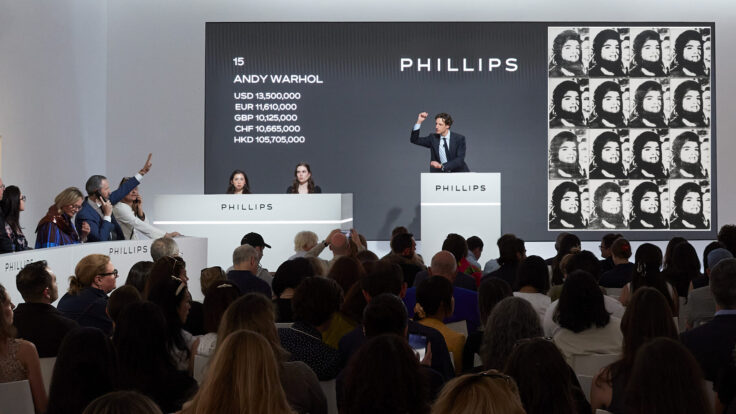
Tonight, I’m going to preview this week’s design sales, a segment that continues to lead the way in the art market’s recovery. Up top, I look at the Gerhard Richter market and David Zwirner’s show of Richter’s landscapes, which provides a new context for understanding his voluminous abstracts.
Also mentioned in this issue: Barbara Gladstone, Emmanuel de Bayser, François-Xavier
Lalanne, Richard Prince, Jean Prouvé, Jean Royère, George Nakashima, Mira Nakashima, Marlo Thomas, Charlotte Perriand, Pierre Jeanneret, Victoria Tudor, William Morris, Larry Gagosian, Joris Laarman, and many more. |
|
|
|
A MESSAGE FROM OUR SPONSOR |
Inspired by football fandom and Britain’s love of the beautiful game, the campaign captures the anticipation and
camaraderie of match day – come rain or shine – with an all-star cast of familiar faces.
Learn More |
|
|
|
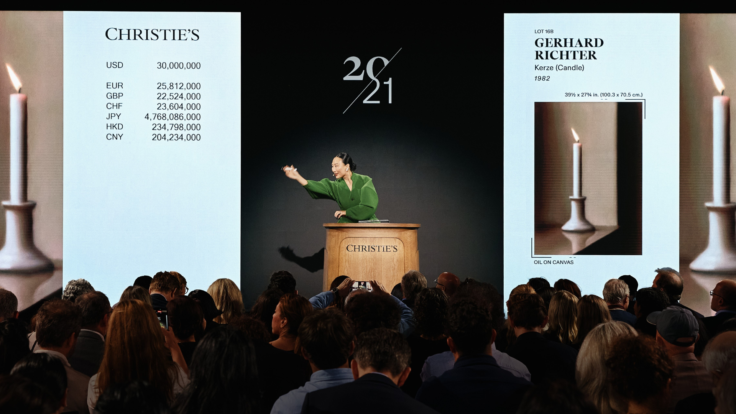
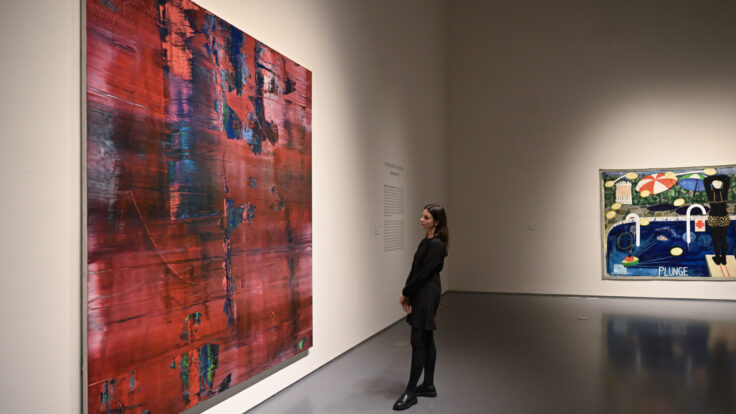
- How to sell a Richter: A confluence of developments—the death of the artist’s longtime dealer, a recent destination retrospective in Paris, and the artist’s transition to a new gallery—resulted in last month’s auctions featuring 20 different Gerhard Richter works on offer. They sold for almost $92 million, bringing the year’s auction total for the 94-year-old, semi-retired artist to $134 million. That puts him on pace to potentially reach the $220 million
range of his 2021-2023 public-market sales surge—though he’d still be far from his peak in 2012 and 2014, when his auction totals topped $310 million.
These numbers speak to the depth of demand for the German master’s work. But not every collector can find, let alone afford, a Richter on the secondary market. At the same time, David Zwirner gallery now represents the artist, and part of its job is to educate potential new collectors while shaping demand for his work. Secondary markets
don’t remain static; they’re governed by changing tastes, supply across an artist’s oeuvre, and collectors feeling like they’re making a discovery.
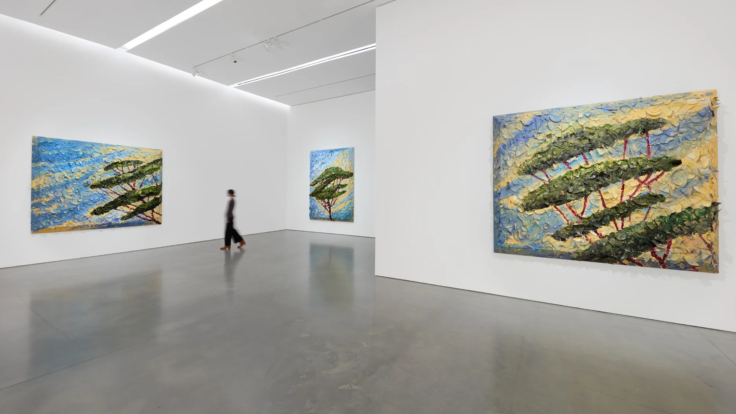
Zwirner’s show Gerhard Richter: Landschaften, which opened last month and runs until July, is a rare opportunity to see some of Richter’s best landscape works, gathered from museums and private
collections. It also helps explain how two seemingly unrelated bodies of work the painter pursued over decades actually overlapped and intersected. Richter made blurry landscape paintings from photographs, not life, though they’re true landscapes in the sense that they capture places without people or context. It’s as if he is painting the abstract idea of a mountain, farmhouse, iceberg, or sea. The works are sometimes desolate, always eerie, and often seem to arrange colors into patterns as
much as they present, as the artist once put it, “an analogy to what exists.”
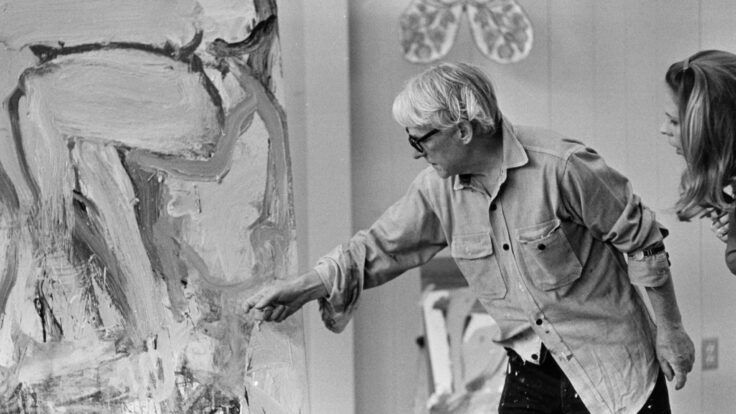
Where the show gets really interesting is in the works that started as landscapes but which the artist could not leave as they were. Throughout, you see paintings where Richter took his distinctive squeegee and scraped paint over the landscapes. In some, the scrapes are merely embellishments; in others, the original imagery only peeks out from beneath the multicolored smears. Last month, a 2008
landscape that Richter had covered with colored scrapes sold for $5 million at Christie’s, underscoring that these iterative, crossover works hold a valued spot within the artist’s practice.
|
Now let’s get to the design sales… |
|
|
|
The latest design sales commingle art and design objects in a way that
offers everyone a teachable moment: They educate art collectors on the potential value of design objects, while giving the design people a greater appreciation for high-dollar contemporary artworks. |
|
|
|
Over the past few years of slumping art sales, one overarching theme has been the enduring strength
of the market for design objects. Lately, though, it has become clear that the two diverging paths in the market were not an anomaly but the beginnings of a new phase of collecting—one that incorporates design as a grounding principle. This season, Sotheby’s is making that connection explicit with the installation of two collections that forgo the emphasis on individual objects, or even the unifying theme of the collectors behind them. Instead, they emphasize the integration of art and design
into a gesamtkunstwerk that is greater than the sum of its individual parts.
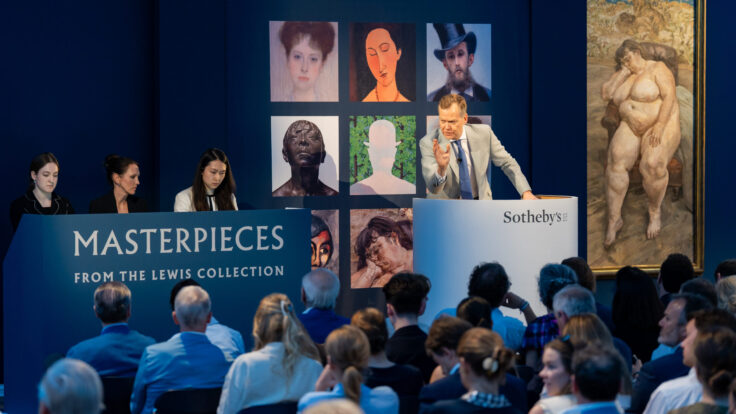
The fifth floor of Sotheby’s features a mix of artworks and design objects owned by Barbara Gladstone, who died in Paris two years ago, in thoughtful arrangements that feel more like a visit to an idealized version of the dealer’s home than an advertisement for her collection. On the third floor, they’ve re-created settings from the
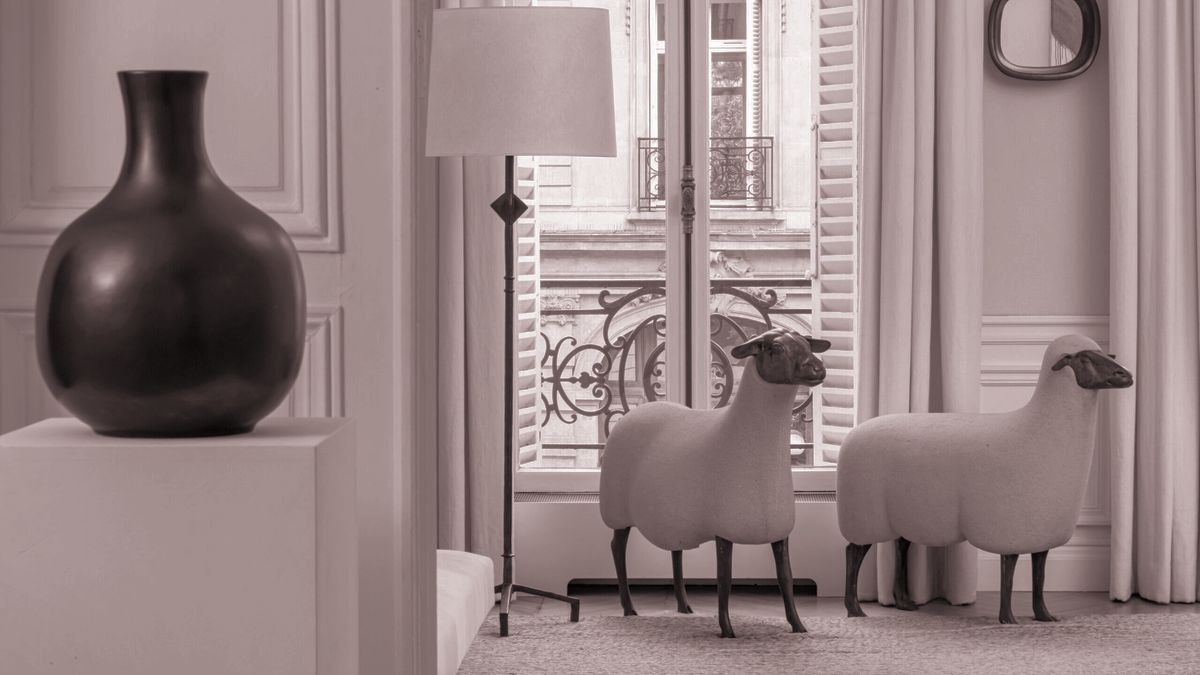
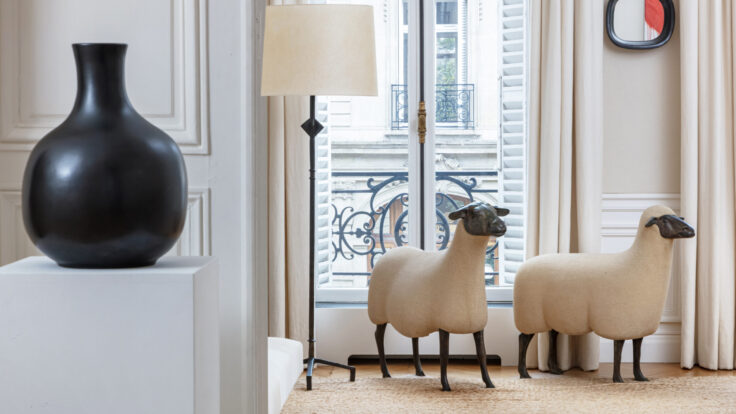
Berlin and Paris residences of merchant and collector Emmanuel de Bayser, where he mixed furniture from designers like Jean Prouvé, Jean Royère, Charlotte Perriand, and Pierre
Jeanneret with design objects by François-Xavier Lalanne, Georges Jouve, and Line Vautrin—as well as postwar art from Günther Förg, Daniel Buren, Anish Kapoor, and Jannis Kounellis (though the Kounellis works aren’t part of this week’s sale). |
|
|
|
A MESSAGE FROM OUR SPONSOR |
Inspired by football fandom and Britain’s love of the beautiful game, the campaign captures the anticipation and
camaraderie of match day – come rain or shine – with an all-star cast of familiar faces.
Learn More |
|
|
|
Beyond making the Breuer Building look like a much cooler version of a home store, the mix of art
and design cross-pollinates the two overlapping worlds—giving the design people a greater appreciation for contemporary artworks that often have price tags close to those of the design objects. Meanwhile, the art collectors are reminded that value in design is governed by the same principles of scarcity, condition, and provenance. |
The
Gladstone sale is as much a sale of contemporary art from the dealer’s estate as it is a design sale. The top work by estimate is a Richard Prince hood estimated at $800,000. (The most expensive hood sold at auction made $1.9 million in 2020; another example sold that year for $1.2 million.) There’s also a painting from
Kai Althoff—an artist who doesn’t really sell well or often at auction—estimated at $400,000, along with works by Alex Katz, Carroll Dunham, Elizabeth Peyton, Thomas Schütte, Amy Sillman, Francis Alÿs, Robert Bechtle, and Christopher Wool. Some of the pieces, like a group of small pumpkins by
Yayoi Kusama or a large re-creation of a cowrie shell by Simone Leigh, are more like design objects than solely artworks. There’s also furniture by Jean Prouvé, Franz West, Jean Royère, Ingrid Donat, Otto Schulz, and Émile-Jacques Ruhlmann.
The various-owners design sale at Sotheby’s is led by a Diego Giacometti console being sold by Marlo Thomas, with an
estimate of $3 million. Five of Giacometti’s top 10 auction prices are for console tables. Two of those—including Giacometti’s top price at auction of $10 million, achieved in December 2024—are for tables with the Promenade des amis tableau in patinated bronze. The sale includes a Jean Royère “oeuf” sofa,
estimated at $300,000, and a chair estimated at $100,000. A pair of “oeuf” chairs sold for $440,000 in December 2024.
There are also nine Harry Bertoia objects in Sotheby’s sale, five of them
sound sculptures. There’s a gossamer wire construction that Celeste and Armand Bartos once owned, which is now being sold by Detroit philanthropist Jennifer Gilbert with an estimate of $80,000. A “screen” that belonged to merchant Stanley
Marcus is estimated at $150,000—about the same price it last sold for six years ago. The most interesting lot to watch, though, is the 1958 “dandelion” with a small marble base. A similar work sold for $1.9 million five years ago, even though it was estimated at $150,000. Sotheby’s is playing it cool with another $150,000 estimate. Will
lightning strike twice?
In addition to all this, Sotheby’s also has 14 lots by both George and Mira Nakashima. Although chairs, tables, beds, and cabinetry by the Nakashimas are immediately recognizable, the emphasis on the wood used in making the furniture renders most of the pieces fairly unique. The objects are also surprisingly cheap. Mira’s Minguren II dining table is
estimated at $70,000 even though it sold six years ago for $107,000. And that’s the Nakashima lot with the highest estimate in the sale. |
After my Friday tour of the design sales—where I saw Larry Gagosian stroll through
taking a call—I headed down to Christie’s, where Victoria Tudor gave me a tour of her sale. The top lot is a set of four bronze frog fountains, patinated in light green, that François-Xavier Lalanne made for Houston designer Alexandra Marshall to adorn her pool. The set is estimated at $2.5 million—a bargain, perhaps, given that a
single black patinated frog sold earlier this year for more than $1.2 million. |
|
|
|
There’s also another F-X Lalanne work in the sale, a Bélier made in 2008 and
estimated at $800,000, comparable to what another one from 2008 sold for in 2023 with the premium added. Since then, a 2014 version of the same work sold for $1 million with fees, which is where the current one is estimated.
A year ago, Christie’s sold the Tiffany Studios Goddard Memorial Window from a church in Rhode Island for nearly $4.3 million. So it isn’t a
surprise to see the Boyd Family Memorial window from a church in Connecticut come to auction with an estimate of $1.5 million. The striking thing about this window is the prominence of the waterfall, which takes up most of the left panel. The waterfall fill isn’t rare in these Tiffany images, but what is rare is that it’s in the foreground, which gives the window its name, The Falls.
Some other notable lots include a Joris Laarman Bone Chair, which is
estimated at $300,000. (You might remember Laarman from Ingrid Abramovitch’s coverage a few weeks ago.) Several of these chairs have sold at auction for prices ranging from more than $900,000 down to half a million
dollars. I was also struck by an Ingrid Donat bronze gilt table, made in an edition of eight with four artist’s proofs and carrying an estimate of $100,000.
I was curious about the Charles and Ray Eames storage unit designed in 1950 that Christie’s placed in a prominent spot at the end of a short hallway leading
to the exhibition. Normally, Christie’s does this when they are trying to generate interest in a lot. But Eames storage units don’t sell for much more than the $7,000 estimate on this example. Still, there’s something special about this one. If I had a place for it in my house, I would think about leaving a bid. But something tells me it won’t sell for anything I could
afford.
Over at Phillips, the top lot in the sale is a William Morris—the glass artist, not the English designer. Canopic Jar: Sable Antelope, made in 1996, comes from the Tina Hills estate and is estimated at $150,000. Phillips has its share of Bertoia, Nakashima, Prouvé, and Jouve, too. |
Before I sign off, I just wanted to add one comment about last week’s
story in Artnet highlighting the losses on many of May’s significant lots, and the especially poor financial performance of some of the biggest lots, like the Jackson Pollock drip painting. I’m calling attention to the story mostly to point out that we’re nearing the end of the reeducation process where financial returns and art are finally
being separated. Could Si Newhouse have done better by putting his cash in the market instead of buying the Pollock? Of course. But the point was to own the Pollock.
You could easily have said the same thing about Condé Nast. Si should have sold the business at the same time, in 1999, and I’m sure the family would have much more money than the fortune it already has now. But the point was to own Condé Nast.
Let’s go one step further, though. As I tried to point out
recently, it’s actually a good sign when you see collectors sell at a loss. It’s capitulation, yes. But that capitulation often takes place when liquidity returns to the market after a significant down period. Chastened sellers don’t mind a loss if they can get some meaningful amount of money out of their holdings.
That’s it for this warm Sunday. I hope you all got some rest or distraction. I’ll be back again on Tuesday.
Speak then,
M |
|
|
|
Puck founding partner Matt Belloni takes you inside the business of Hollywood, using exclusive reporting and insight
to explain the backstories on everything from Marvel movies to the streaming wars. |
|
|
|
Unique and privileged insight into the private conversations taking place inside boardrooms and corner offices up and
down Wall Street, relayed by best-selling author, journalist, and former M&A senior banker William D. Cohan. |
|
|
|
Need help? Review our FAQ page or contact us for assistance. For brand partnerships, email ads@puck.news. You received this email
because you signed up to receive emails from Puck, or as part of your Puck account associated with {{customer.email}}. To stop receiving this newsletter and/or manage all your email preferences, click here. |
Puck is published by Heat Media LLC. 107 Greenwich St., New York, NY 10006 |
|
|
|
|