{{ 'now' | timezone: 'America/New_York' | date: '%b %d, %Y' }} |
|
|
|
Hello and welcome back to The Best & The Brightest, your daily politics dispatch from Puck. It’s
foreign policy Thursday and I’m your host, Julia Ioffe.
Everyone in Washington foreign policy circles knows Elbridge Colby as the pivot-to-Asia guy who wrote the same don’t-let-Iran-distract-you-from-China op-ed over and over and over. “Love him or hate him, Bridge has been writing and saying the same thing, consistently, for two decades,” one House Dem told me. So when Trump nominated him to be the undersecretary of defense for
policy, the third-most-powerful civilian job in the Pentagon, some Asia wonks were giddy. “When Bridge got the nomination, I texted him and said, ‘It’s great that you’re going in because we’re finally going to pivot to Asia,’” one person who knows Colby told me.
Fast-forward 15 months and Colby has been overseeing policy at an organization that has now twice executed regime-change operations in less than a year—the second of which is looking increasingly like the kind of Middle East war
he had warned about. So tonight, the story of Bridge Colby’s Washingtonian bargain—and how he became Congress’s newest, and best coiffed, whipping boy.
Also mentioned in this issue: Josh Hawley, J.D. Vance, Mike Rogers, Mike Turner, Don Bacon, Roger Wicker, Donald Trump, Jeanne Shaheen, Pat Ryan, Ro Khanna,
Sara Jacobs, Jeb Bush, Austin Dahmer, Jim Mattis, Dan Sullivan, Pete Hegseth, Susie Wiles, Tom Cotton, Alex Velez-Green, Samantha Power, Jake Sullivan, Tony Blinken, and… Pope Benedict XVI.
But first… |
|
|
|

| Abby Livingston
|
|
- Clyburn goes for round
18: Rep. James Clyburn, 85, announced today that he’ll be running for an 18th term. This was widely expected, even though seeking reelection as an octogenarian isn’t en vogue among Democrats these days: Amanda Litman, the co-founder and president of Run for Something, blasted his
decision as “peak Boomer brain or Silent Generation brain such as it is.” (Alas, as James Carville told me last spring, “If we’re sitting here waiting for people to willingly give up power, that’s gonna be a long wait.”)
Still, it’s easy to see why Clyburn isn’t ready to hang it up. He’s the de facto most powerful member of the Congressional Black
Caucus, outside of Minority Leader Hakeem Jeffries, and his power will only grow in the 2028 presidential cycle, with South Carolina expected to be one of the first states on the Democratic primary calendar. Clyburn is likely looking to play kingmaker once again, eight years after his endorsement all but delivered the nomination to Joe Biden in 2020.
|
|
|
|
How Elbridge Colby, a longtime critic of military adventurism in the Middle East, contorted
himself into a champion of Trump’s war in Iran—and became Congress’s new favorite whipping boy in the process. |
|
|
|
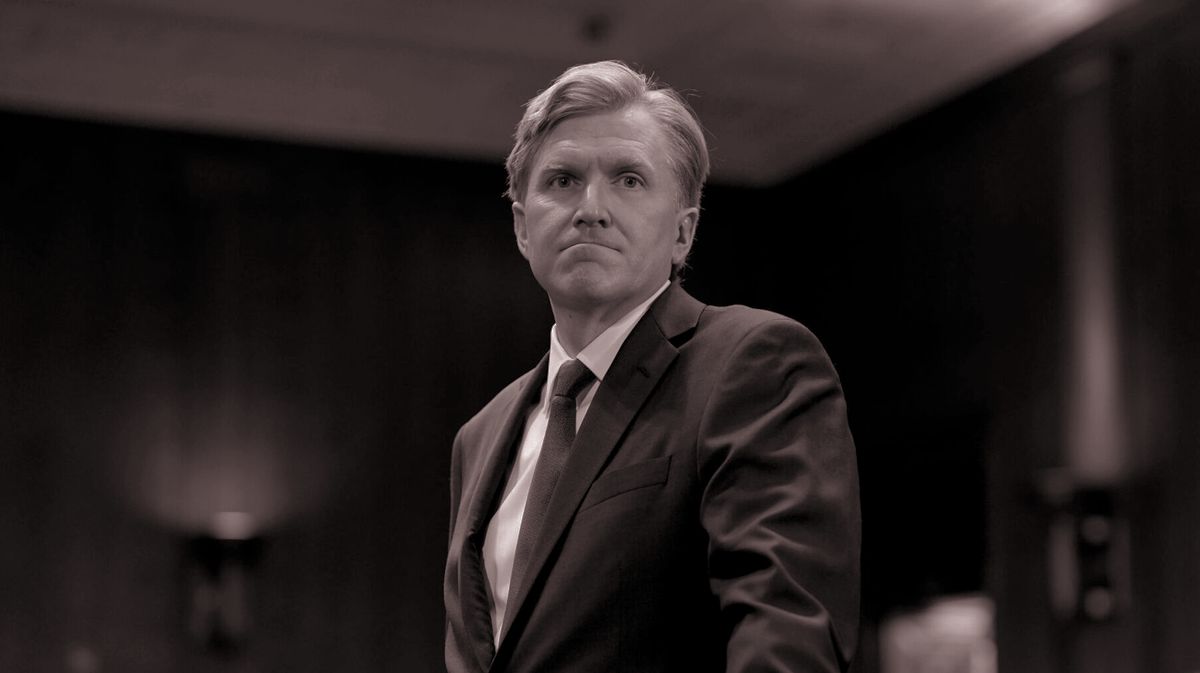
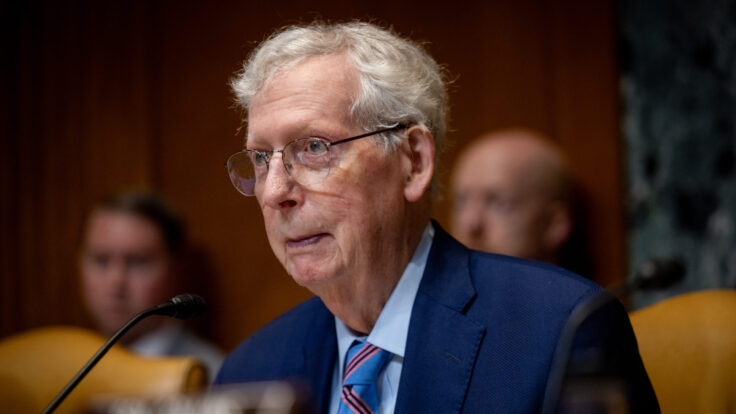
Twice last week, Elbridge Colby, the undersecretary for defense policy, set out from his
office in the Pentagon and schlepped across the river to Capitol Hill. It had been just over a month since his office had issued its long-awaited—and long-delayed—National Defense Strategy, the congressionally mandated strategic framework for the nation’s military. Colby had been slated to testify about it before the Senate Armed Services
Committee on Tuesday and the House Armed Services Committee on Thursday.
Neither appearance went particularly well. Alabama Rep. Mike Rogers, the very pissed-off committee chair, accused Colby of being “dishonest.” Rep. Mike Turner said Colby was “disingenuous” and that his
testimony was “kind of gross.” (Colby’s responses, Turner added, “make us all concerned about your commitment to the truth.”) Rep. Don Bacon dragged Colby for “communicating weakness” on Russia and China, and accused his office of “moral blindness.” Over in the Senate, Roger Wicker chided Colby for
various “flaws” in the National Defense Strategy. And those were just the Republicans. |
|
|
|
Instagram Teen Accounts: Automatic protections for teens
Instagram Teen Accounts have built-in protections for who can contact teens and the content they can see. Now, content settings are inspired by 13+ movie ratings, with a stricter setting available for parents who prefer extra controls. Nearly 95% of parents say Instagram Teen Accounts help safeguard their teens. We will continue adding features to help protect
teens online. Learn more |
|
|
|
Their problem wasn’t that Donald Trump, Colby’s boss, had ordered military strikes on Iran a
few days earlier. The congressional G.O.P. largely supported the move, even though Trump had done so without their authorization. For the Democrats, of course, it was a different matter. Colby was the first administration official to appear in Congress after the war began, and as the Pentagon’s No. 3 civilian, he had walked into an ambush. “It didn’t matter who was going to be up there,” one Senate national security aide told me, “They were going to get crushed.”
But it wasn’t just
anyone who was up there. It was Bridge Colby, the town’s preeminent advocate for foreign policy realism and restraint. Colby had, for nearly two decades, built his career and public persona on arguing that America needed to focus almost exclusively on China and pivot away from the Middle East, a region he called
“relatively unimportant” just five years ago. He had repeatedly warned against involvement in Iran in particular, even explaining “Why Not to Attack Iran” in The National Interest back in 2012, when he presciently remarked that hitting the country’s nuclear program would only inspire the regime to redouble its efforts to build a bomb. It was, Colby warned, “a recipe for perpetual war.”
Colby’s consistency on this point, now orthogonal to the war he was being forced to defend in public, gave Democratic members of Congress plenty of rope. Sen. Jeanne
Shaheen, the Senate’s foreign policy doyenne, quoted Colby back to himself, including from the 2012 article, and asked him if he still agreed… with himself. Rep. Pat Ryan spent his allotted time just reading blocks of text and asking Colby whether it “rings a bell.”
“How about this one?” Ryan asked, in a typical exchange. “Quote, ‘We simply cannot afford to get enmeshed in a large Middle East war.’”
“I defer to you on the sourcing,” Colby
responded.
“That was actually you,” Ryan said, adding that he remembered reading Colby’s pieces in the past and “largely agreeing.” Rep. Ro Khanna, the outspoken California progressive, noted that Colby’s long-standing opposition to military adventures in the Middle East “is one of the reasons I respected you.” When I spoke to Democratic Rep. Sara Jacobs, who sits on the committee and subjected Colby to a withering line of questioning, she offered a
similar view. “I’ve read a lot of his stuff in the past and while I didn’t agree with all of it, I agreed with some parts of it and I think he’s a smart guy,” she said. “But what’s clear to me is that the administration is not actually doing what they said, both on the campaign trail and in the National Defense Strategy.” |
Few things in Washington are considered more boring than pointing out someone’s hypocrisy—or, more
charitably, their change of heart. That’s because this is a town that runs on proximity to power, and acquiring and keeping it requires a certain flexibility. Political appointees are selected for their loyalty and ideological alignment with the principal, but they are there to do one job: implement the president’s agenda. This is especially true of Trump, and anyone who goes into his administration—especially at Colby’s high level—knows that perfectly well. As one person who knows Colby told me
of the war on Iran, “I’m sure he hates it, but it’s not his call.” (After I reached out to Colby directly, his team at the Pentagon declined to make him available for an interview. Nor did they respond to a list of questions in time for publication.)
Of course, part of the game is pretending that there’s nothing to see here and that one’s new agenda is entirely aligned with past principles. In between his appearances before the Senate and the House, Colby attended a town hall–style event
at the Council on Foreign Relations, where a journalist asked how he “personally felt” about the Iran war, given his “history in terms of restraint in military action.” Colby blithely batted it away. “Sometimes, I’m described as a restrainer,” he said. “I don’t see it in the mirror. I’ve never described myself that way. I’d go with ‘flexible realist,’ actually.”
In the past
year, “flexible” seems to have become the operative word in explaining his evolution. Colby comes from Washington royalty. His grandfather, William, was the head of the C.I.A. during the Nixon and Ford administrations. He grew up abroad, in Singapore and Japan, where his father worked as a lawyer and banker. From the elite American School in Tokyo, Bridge went on to Groton, then Harvard, then Yale Law School.
Between college and law
school, he spent some time working in Iraq as part of the Provisional Authority, which explains some of his disillusionment with America’s long, fruitless wars in the Middle East. He began to gravitate to the idea that U.S. foreign policy should be governed not by vague, ethereal values like human rights or democracy, but by the concrete interests of the concrete people who live in the United States. It was also becoming clear that China was rapidly gaining both economic and military strength,
and that it intended to displace the U.S. from its post–Cold War perch as global hegemon. Colby contended that this was unacceptable and must be prevented at all costs, even if it came to defending Taiwan militarily.
He was not alone in viewing the Middle East as a costly morass and China as the more urgent priority. The same theme animated Barack Obama’s campaign as well as his two terms in office, which is why Colby still has many ideological allies on the left. In
fact, his views were, until recently, a liability in Republican circles. Colby was dropped from consideration for a senior job on Jeb Bush’s presidential campaign over a 2010 op-ed in which he argued
that containing a nuclear-armed Iran was better than invading the country to stop it from getting the bomb. It wouldn’t be the last time his relatively dovish views on Iran would get him into trouble.
In the meantime, Jeb faded to irrelevance and Colby found a far better platform in Trump. Not only did the candidate’s instincts—nationalist, nativist, isolationist, hawkish on China, dovish on Russia—line up nicely with Colby’s own, but the unschooled political newcomer seemed to be
malleable on the policy details. Better still, once Trump won the election in 2016, most traditional foreign policy Republicans refused to work for him, and very senior posts were going to not very senior people. |
|
|
|
Instagram Teen Accounts: Automatic protections for teens
Instagram Teen Accounts have built-in protections for who can contact teens and the content they can see. Now, content settings are inspired by 13+ movie ratings, with a stricter setting available for parents who prefer extra controls. Nearly 95% of parents say Instagram Teen Accounts help safeguard their teens. We will continue adding features to help protect
teens online. Learn more |
|
|
|
Colby snagged a position as the deputy assistant secretary of defense for strategy and force development,
which allowed him to craft the 2018 National Defense Strategy. Finally, his view that China, rather than Russia or Islamic terrorism, was the primary national security threat was the official policy of the largest, most powerful military in the world. But he didn’t last long in the job. It seems he didn’t gel with Jim Mattis, the bookish Marine general and then-defense secretary, who apparently found Colby too wonky, pretentious, and condescending.
That’s a common
critique of Colby, who is rumored to take elaborate care of his abundant blond bouffant. He is formal, patrician, haughty. He unironically peppers his speech with terms like “heuristic,” “opprobrious,” and “noxious,” his favorite term for the Iranian regime. And worst of all for this town, he doesn’t hide his disdain for people. When Rogers, the Republican House Armed Services Committee chair, accused Colby of lying to him, Colby grimaced derisively, knowing full well the cameras were on him.
When he doesn’t agree with someone, he brusquely says, “I reject the premise of your question,” whether it’s to a think tank audience or a sitting U.S. senator.
He has also developed a reputation, starting in the first Trump administration, for not collaborating or sharing information, even with lawmakers of his own party. Republican Sen. Dan Sullivan complained at a November hearing that he couldn’t get Colby to return his calls, even though Pete Hegseth, Susie Wiles, and the president regularly did—and went on to call him “the worst in the administration.” (Colby wasn’t even in attendance.) One Hill Democrat told me that Colby doesn’t respond to queries from the minority, and another told me some offices have stopped trying to reach him altogether. “He’s just not a well-liked
guy,” said the Senate national security aide. “Colin Kahl was [undersecretary of defense for policy] under Biden. No one liked him. He was a jerk and pompous. Whereas Bridge is pleasant and pompous.” |
It’s not all bad, though. While testifying in front of the Senate on the 2018 National Defense Strategy,
Colby met two kindred spirits: Senators Josh Hawley and J.D. Vance, fellow conservative Yale Law grads who shared Colby’s skepticism of U.S. military excursions in the Middle East. The relationships would prove pivotal. In January 2021, Colby, then back in the think tank world, tweeted his support for Hawley’s vote not
to certify the 2020 election. Hawley, Colby wrote, “is all about speaking up for those who feel disenfranchised. That’s what he’s doing right now for millions of Americans.” (Colby quickly condemned the January 6 insurrection, which occurred just a few days later.) Colby’s current lieutenant, Austin Dahmer, was drawn from Hawley’s staff, as was Colby’s senior
advisor, Alex Velez-Green.
Vance, another conservative Catholic—Colby has said he considers Pope Benedict XVI an inspiration—became his sherpa in MAGA world. Shortly after Colby was nominated for his current role, in December 2024, Republicans nearly tanked his nomination over his noninterventionist views on
Iran. MAGA heavyweights like Donald Trump Jr. weighed in on Colby’s behalf online, and Vance actually showed up at his confirmation hearing and introduced him to the committee—a show of force that no other nominee received. |
|
|
|
At that March 2025 hearing, Colby “saw the light,” as a second person who knows him sardonically put it.
Under questioning from Sen. Tom Cotton, Colby agreed that Iran actually was an existential threat to the U.S. homeland, and that defending Taiwan was not an existential interest. He also committed to providing the president military options should he want to attack Iran. Those sharp departures from his entire corpus of work
were enough to get his confirmation across the line. “It’s exactly the opposite of what he’s advocated for for decades,” said this person, “but it was the price of admission.”
There’s a question that people in Washington have been asking themselves but, after a decade of getting the same answer, have grown tired of repeating: What happened to this otherwise reasonable Republican? The answer is always Trump, and the power that joining his movement confers. Colby isn’t the first to
strike this kind of Faustian—or simply Washingtonian—bargain over the past decade. But for him, as for everyone else, the MAGAfication cuts both ways. On one hand, he has political power and the kind of job that NatSec types dream of. On the other, that power is entirely subject to Trump’s whims. “He’s an ideological actor in an administration that has no ideology,” a Democratic member of Congress told me. “The president does whatever the fuck he wants one day to the next, and Bridge is trying
to rationalize it—and his credibility is being severely damaged in the process.” Or as a second Senate aide put it, “It’s very emasculating for him, and I don’t think he has a lot of power in the building.”
But this is a bipartisan tradition. “Bridge illustrates the irony principle of national security personnel picks,” said one Republican foreign policy veteran. “Hire Samantha Power, and you will preside over a genocide. Hire Bridge, and you will bomb Iran and surrender
Taiwan. Because you want to know the deep, dark secret about who is really behind every administration’s foreign policy choices? The president. The Afghanistan withdrawal, the drip-drip caution on Ukraine. That wasn’t Jake [Sullivan] or Tony [Blinken] or whoever. It was Joe [Biden]. So Bridge has ideas, and J.D. has ideas. But the president is the president. That’s it.” |
The talk in D.C. is that Colby hopes to ride Vance’s coattails into the White House in 2028 and become
President Vance’s national security advisor. But given how this administration is going, that seems extremely unlikely. “He’s definitely the intellectual powerhouse of the Vance wing of the G.O.P., which, it turns out, is not a very big wing,” said a foreign policy insider. “Vance has lost every foreign policy fight in this administration.” Colby, this person added, “is very irrelevant in this administration.”
Which explains why he got such a drubbing on the Hill last week, even from
Republicans who support the bombing campaign. “He’s become a bit of a scapegoat,” the second Senate aide admitted. All of those members were at pains to praise the military, the war, and, above all, the perfect wisdom of the president. The problem for them wasn’t the president, but the president’s advisors—people like Bridge Colby, who, of course, had done himself no favors in alienating almost everyone on those committees before he showed up. As Mike Turner
put it in last week’s hearing, “We’re all comfortable with President Trump’s decisions. We’re not comfortable with Mr. Colby’s.”
But as the second person who knows Colby pointed out, he isn’t the one making the decisions. It’s Trump. “The issue isn’t that Bridge doesn’t line up with Trump,” this person said.
“It’s that Trump doesn’t line up with what Trump was promising.” If anything, Colby is twisting himself into ever more extreme compromises to align with his boss. During both hearings, he made sure to repeat one line, in one form or another, over and over again. “I’m a loyal lieutenant to the president,” he kept saying. In this, he showed himself to be both incredibly flexible and utterly realistic. |
That’s all from me this week, friends. I’ll see you back here next week. Until then, good night. Tomorrow
will be worse.
Julia |
|
|
|
Need help? Review our
FAQ page or contact us for assistance. For brand partnerships, email ads@puck.news.
You received this email because you signed up to receive emails from Puck, or as part of your Puck account associated with {{customer.email}}. To stop receiving this newsletter and/or manage all your email preferences, click here.
|
Puck is published by Heat Media LLC. 107 Greenwich St., New York, NY 10006 |
|
|
|
|