 |
|
Hi, and welcome to the first-ever Wednesday edition of Line Sheet.
New York, I am back! So back that, yesterday, Instagram’s Eva Chen and I unofficially kicked off Fashion Week with a super-secret, teeny-tiny Puck private dinner in the West Village at San Sabino, a restaurant that is not even open yet. Thank you to the designers, editors, retailers, and stylists who came out to share John Galliano stories, debate the thesis of Filterworld, and discuss what the heck is happening at fashion’s new downtown canteen, the Water Street Associates Building.
What’s that, you say? Don’t worry, I’ll have more on WSA soon, but as usual when we do these things, last night was off the record. I hope everyone enjoyed the fashion real talk. (Even the person who cried.)
Thank you, also, to the incredible partnerships team at Instagram (Wenona forever) and my Puck partners Eric Van Gelder, Alex Bigler, and Liz Gough. (If you want to work with us, too, hit up alexandra@puck.news.) Thank you to Henry Zankov for designing custom scarves for the guests. Thank you to chef-owners Angie Rito and Scott Tacinelli for letting us test-drive the menu. And most of all, thank you to Eva for making it happen. As I mentioned at dinner, Eva and I met in the fourth row at a Marc Jacobs show more than a decade ago, and for some reason she’s been nice to me ever since.
Mentioned in this issue: Fabrizio Freda, the Lauders, Jason Wu, Joseph Altuzarra, The Ordinary, Tracy Chapman, Shana Randhava, Marni, Francesco Risso, The Row, Daniel Mahler, Stéphane de La Faverie, and many more…
Speaking of which: Today is our inaugural beauty send, featuring Puck contributing beauty correspondent Rachel Strugatz’s revealing look into what’s happening at Estée Lauder. This is going to be a year of difficult, but necessary, transformation at America’s leading beauty conglomerate, with succession questions looming as growing pains mire its M&A opportunities.
I’m obsessed with Estée because it’s one of the greatest, most undercovered companies around, and there’s no one better equipped to shed a little light than Rachel.
But first…
- Micro NYFW drama: There are too many shows happening during New York Fashion Week, always, but the CFDA does try to prevent overlaps. Unfortunately, something went awry with Jason Wu’s slot, because now he is showing at the same time as Area. (Sunday at 3 p.m.) Originally, Wu was slated to show at 2 p.m., but a person connected to the brand said that they chose to push it back an hour because models and makeup artists were tied up with Joseph Altuzarra, who is hosting two, 70-person, back-to-back shows on Sunday morning, in honor of his 15th anniversary.
There are two hours between Altuzarra and Wu, which is typically enough time to be able to use some of the same artists and models, if a little tight. However, Wu’s team clearly felt that they had no other choice but to overlap with Area.
I’d say the biggest problem here, besides no one wanting to show during the Super Bowl, is that there are a bunch of very nice-but-standard-issue brands doing presentations and runway shows that shouldn’t be, and it’s unfortunate that two designers whose clothes lend themselves to the runway must compete in one slot. I’d also say that mishaps like this are going to continue because America is a democracy—unlike the trade organizations in France and Italy, the CFDA is not going to butt in and dictate who can and can’t show. (They regulate a bit, but there are just so many independent brands here because… ’Merica.) Let’s hope it works out!
- The Row’s retail expansion: I hear from multiple people that The Row plans to open a store in Paris this year and probably another one in the U.S. (Where that one will be, I couldn’t tell ya. The company did not respond to a request for comment.) I haven’t been to the brand’s London store, but like everything The Row does, the space is destined to be excruciatingly particular and beautiful. It’s an indication of the brand’s confidence in the European market, which is always notoriously tricky for American fashion. (I can’t be the only person who has bought something from The Row in Paris even though the whole point of shopping in Paris is to get European designer goods tax-free.) Business opportunities aside, Paris seems to be where the designers’ hearts currently lie. A lot of the work on the label, including but not limited to the fashion show, is done there. And they are pretty much the only American brand to get top-billing on the Paris Fashion Week calendar.
|
| And now, a quick look from Rachel at Marni’s forthcoming beauty venture… |
|
|
| Are there any fashion brands without beauty lines in the works? Miu Miu’s fragrance and beauty with L’Oréal is said to be in development; Prada launched its first makeup and skincare last summer (also with L’Oréal); and about two years from now, we’ll start to see fragrance and other “beauty products” from Marni.
This week, Coty announced plans to “develop, produce, and distribute” perfume and more for Marni, which hasn’t done much in beauty in over a decade. The first products will likely go on sale in 2026, with fragrance undoubtedly the first category, as it always is, but I hope makeup comes soon after.
Usually, licensed beauty deals aren’t terribly interesting and centered on fragrance, which I get since perfume is the biggest moneymaker for fashion brands’ beauty divisions. Conglomerates like Coty and L’Oréal, which hold the licenses for brands like Armani, Gucci, Prada, Valentino, Saint Laurent, and Burberry, rake in billions, collectively, from their designer fragrance divisions.
Marni’s beauty will probably never be that big. The brand is tiny, compared to Gucci or Saint Laurent, but there’s room for something similar to what Dries Van Noten does in beauty (through a license with Puig). Marni’s irreverent and colorful fashion and accessories are made for cosmetics, and if Coty is adventurous with packaging and design, the makeup could be charming. Fragrance could also attract new customers for Marni, whose current designer, Francesco Risso, makes elevated art school-kid fashion for kid-at-heart types like Justin Bieber, who wore the brand’s cartoonish, pink and red polka dot coat to the NHL All-Star Game last week.
The first and last time Marni did beauty was with The Estée Lauder Companies’ now defunct Aramis and Designer Fragrances division over a decade ago. A Marni fragrance debuted in February 2013 that was described as having “voluptuousness” from some “dark, intense rose oil” (I love fragrance descriptions), but the brand went quiet on beauty pretty soon after. The license with ELC ended in 2016. |
 |
| Estée in Distress |
| After a series of disappointing quarters, how can America’s oldest and most prestigious beauty conglomerate get younger—and fast? |
|
|
|
| On Monday, The Estée Lauder Companies reported what seemed like jejune or even slightly bleak earnings: Sales declined for a sixth consecutive quarter, net sales dropped by seven percent, and the management team announced a restructuring plan to lay off up to 5 percent of its workforce, or roughly 3,100 positions. And yet, this not-good-but-could-be-worse performance delighted Wall Street analysts. The stock jumped 12 percent, itself an indication of the current state of affairs at America’s largest family-controlled beauty conglomerate.
Yes, yes, obviously the last few years have been fraught and complex at Estée for various reasons. Lauder has ignored how and where Americans shop for beauty. The company was reluctant to participate in the “specialty retail” channel (Sephora and Ulta Beauty operate close to 2,000 doors in the Americas) until it was practically too late. MAC Cosmetics, for example, didn’t enter Ulta until 2017, a good decade after many of its competitors were already there. By then, department stores—where Estée Lauder, MAC Cosmetics, Clinique, and Bobbi Brown thrived for decades—were in the midst of steep decline. And I’m not even getting into the company’s overreliance on the Asian market, where a weak travel retail business and the reselling of unregulated products continue to pose problems. (The latter led to the filing of a class-action lawsuit on January 22 alleging that ELC misled investors about revenue guidance last year.) In fiscal 2023, net sales were down 10 percent and net earnings totaled just $1 billion, down from $2.4 billion a year earlier.
The soft downward spiral does not reflect the industry at large, either. L’Oréal is seeing sizable growth (the conglomerate won’t report full-year 2023 earnings until Thursday, but sales were up over 9 percent for the first nine months of 2023); Coty on Wednesday reported sales increases of 13 percent in the second quarter; and E.l.f. Cosmetics is flying high after posting its 20th consecutive quarter of growth and an 85 percent increase in net sales Tuesday. According to Circana, prestige and mass beauty sales in the U.S. grew by 14 percent and 6 percent in 2023, respectively.
Naturally, the blame has fallen on Fabrizio Freda, the chief executive officer since 2009, who has overseen the 64 percent three-year dip in market cap from $133 billion to its current $48 billion valuation. Freda was a brilliant C.E.O. during the early part of his tenure. He’s responsible for taking the company from $7.3 billion in revenue in 2009 to nearly $15 billion a decade later. He also had the foresight to take on the Asian market early. Freda was widely expected to leave ELC last year, but he stayed to shepherd the company through a China turnaround. “I’m not going anywhere,” Freda told Bloomberg this week. “I’m very committed to take this company through the recovery.”
The real story, though, is how ELC ended up in this situation. The company’s profound and embarrassing misunderstanding of the American beauty customer—in its home market, nonetheless—provided the kindling. A highly combustible combination of failed acquisitions; acquisitions that were too expensive; compressed marketing budgets; outdated distribution strategies; lateness to social media; an ineptitude at speaking to young people; an overdependence on Asia, and more, lit the match. (A spokesperson for The Estée Lauder Companies declined to comment on this piece.) |
|
|
| ELC’s strategic missteps, on some level, stem from a fundamental misunderstanding of how “luxury” is defined by the average American consumer—you know, the sort of consumer who might buy a $200 perfume but also keep a CeraVe face wash in their vanity. (CeraVe, along with Deciem, represents the company’s greatest success at a mass-market price point.) Outside of China, where shoppers are still infatuated with a dated “American” idea of luxury, most consumers today follow the “high-low” mantra that expensive doesn’t always mean better in beauty.
As such, ELC has embraced mass retail in a roundabout way. When Ulta Beauty opened its Target shop-in-shops in 2021, brands like Too Faced, Clinique, and MAC Cosmetics, which were once only sold at higher-end stores, finally became available to the masses. A juicy Wall Street Journal story last November noted that chairman emeritus Leonard Lauder wasn’t pleased when he learned that the company was going to sell its products in Target (via Ulta) and on Amazon. “He said he believed they were bad decisions,” the article said.
That ambivalence is not unique to Esteé, which—setting aside Clinique’s viral hit Black Honey lipstick—has largely failed to communicate with (or understand) young consumers today. The problem is also endemic to companies like Macy’s and QVC. These organizations can’t decide whether to cater to an aging, ever-shrinking customer base, or figure out how to become relevant and potentially risk alienating their small, loyal core. So far, ELC appears to be taking the former approach, and you can see it reflected in everything they do. Last year, for example, Esteé Lauder released a bright pink “Nutritious” skincare collection that was supposedly for Gen Z but looked like it was made for my grandma.
It seemed like a bland innovation given the investment in the corporate layer of the company. “The amount of money being sunk into corporate teams is obscene,” a senior executive at ELC said of an abundance of “centers of excellence,” as well as transformation and corporate initiatives teams, which all fall under the purview of Daniel Mahler, executive vice president, strategy and transformation.
Mahler, who spent over two decades at A.T. Kearney, a consultancy, started as Freda’s adviser several years ago. Following the departure of Andrew Ross, who led strategy at the company until 2022, Mahler’s role was expanded to include facilitating the “ongoing evolution and execution around the company’s strategic processes, including the identification of ‘must win’ priorities for future growth through the development of ELC’s 10-Year Strategic Compass and Three-Year Corporate Strategy.”
Holding company structures are notoriously cumbersome in transformation industries—sweeping changes need to be made without cannibalizing revenue, and yet the mandates can be hard to manage on the business unit level. A few employees, current and former, told me that the ELC corporate layer took away brand-level budgets for go-to-market activities and affiliate and creative resources, and instead tried to do these things centrally, more like a P&G. So far, it's not working.
Sure, as part of the company’s “Profit Recovery Plan” announced Monday, ELC will increase investments in “consumer-facing activities,” which includes marketing. But that won’t be enough if the organization can’t learn how to attract the young people it’s trying to reach. “They have not evolved with the current play for play, and they dragged their feet for so long on TikTok,” a marketer at the company said, citing just one example. |
|
|
| Freda may be looking to Deciem, parent company of The Ordinary, as an internal model for success. Deciem, a true acquisition success story, is one of the few things working for the conglomerate right now. Much of this has to do with Deciem’s integration, or lack thereof, within the Lauder machine, but also the mass price point and hold that The Ordinary has on Gen Z.
It was one of the first multistep acquisitions not orchestrated by a private equity shop that worked. Shana Randhava, ELC’s global head of venture investments and incubation, was said to have been integral to the deal, which kicked off when ELC took a 29 percent stake in Deciem in 2017. In 2021, ELC upped its stake to 76 percent and agreed to buy the rest of the company after a three-year period. “It’s their way to go up against CeraVe,” a person with knowledge of Deciem’s business told me.
It’s apparently working. This person told me that Deciem is on track to hit close to $700 million in net sales in fiscal 2024. This is a staggering amount of money and units sold considering The Ordinary’s average price point is under $10. I can’t understand why Lauder doesn’t play more in mass, as there are a handful of approachable brands that fit a similar thesis. If The Ordinary has proved anything, a $7 product can look just as prestige as one that costs $50, and as we all know, there’s not that big of a difference between formulations.
Further M&A in this category seems unlikely in the near term. Lauder is low on cash flow (thanks to Tom Ford, which cost $2.8 billion, but that’s a story for another day…) and will likely have to sit out what’s expected to be a very active acquisition market over the next two years. In the meantime, though, the company has meatier issues to sort through. As Lauren has noted previously, it’s both hard and unfair to assess Freda without contemplating the role of the family in all this.
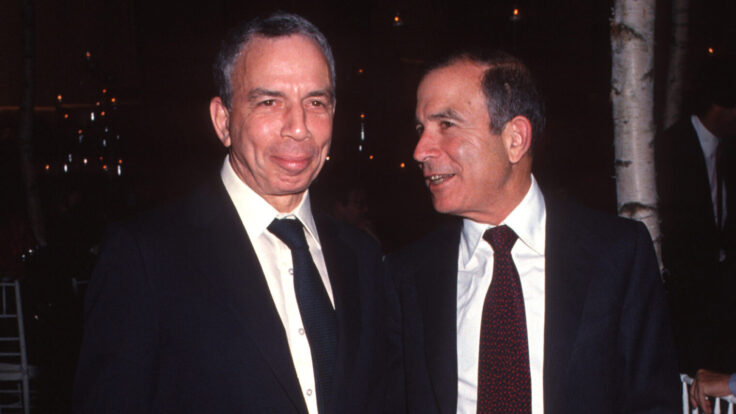
The company is led on the family side by William Lauder—the 63-year-old son of chairman emeritus Leonard—who has served as the executive chairman and chairman of the board of directors since 2009, when he transitioned from C.E.O. and handed the reins to Freda. Leonard, who is 90 and stepped down from the board last summer, is considered to be the great architect behind ELC and was the company’s C.E.O. from 1982 to 1999. But as is often true with family businesses, and particularly with family dynasties, the second or third generation rarely lives up to the greatness of their predecessors.
So what happens when Freda, eventually, steps away? A source with deep knowledge of the organization told me that the Lauder family wants to keep Leonard’s niece, Jane Lauder—who currently serves as executive vice president and chief data officer—involved at the highest levels, though not necessarily as Freda’s replacement. Jane could become the executive chairperson, according to this individual, who said that “Jane definitely plays a role in whatever happens.” (Her sister, Aerin, is currently style and image director of the conglomerate, and runs the Aerin brand.)
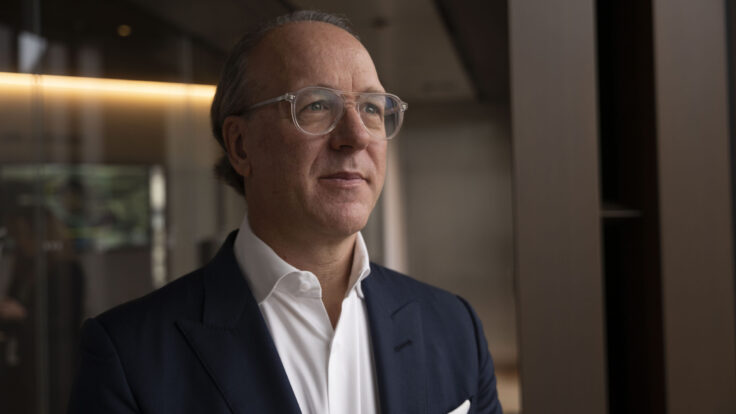
Then there’s Stéphane de La Faverie, the ex-L’Oréal general manager turned executive group president at ELC, whose name has been rumored as a potential candidate. He oversees Estée Lauder, the brand; Jo Malone London; Le Labo; Deciem; and others. I hear that he’s an unlikely successor, but we’ll take a pregnant pause on that for now. |
|
|
| That’s all for today, from Rachel and myself. Before you go: Does anyone know who hooked Tracy Chapman up with Prada? First person to respond with the right answer gets a cookie.
See you tomorrow,
Lauren |
|
|
|
| FOUR STORIES WE’RE TALKING ABOUT |
 |
| Zero Dark McGurk |
| Why everyone loves to hate the foreign policy star. |
| JULIA IOFFE |
|
 |
|
 |
|
 |
|
|
|
|
|
 |
|
|
|
Need help? Review our FAQs
page or contact
us for assistance. For brand partnerships, email ads@puck.news.
|
|
You received this email because you signed up to receive emails from Puck, or as part of your Puck account associated with . To stop receiving this newsletter and/or manage all your email preferences, click here.
|
|
Puck is published by Heat Media LLC. 227 W 17th St New York, NY 10011.
|
|
|
|