 |
|
Welcome back to Dry Powder. I’m Bill Cohan.
|
|
Longtime Morgan Stanley C.E.O. James Gorman will be exiting the job “sometime in the next 12 months,” and a succession bake-off is underway. In today’s issue, I tap my sources for an inside look at who might take the reins, plus why Jamie Dimon is holding on at JPMorgan Chase.
|
|
|
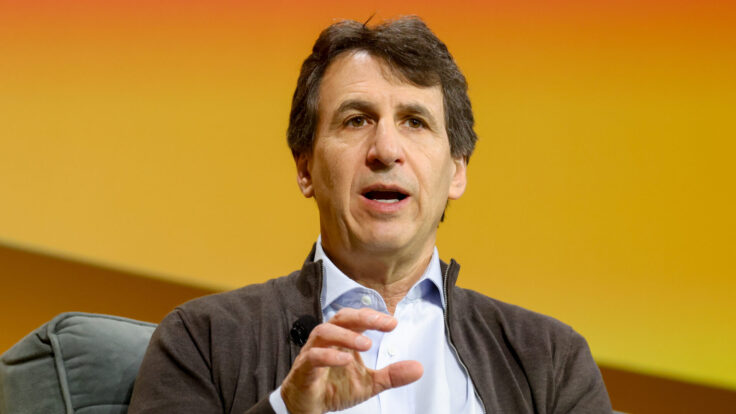
| During Morgan Stanley’s annual shareholders meeting, last Friday, C.E.O. James Gorman announced that he was leaving the job “sometime in the next 12 months” and that he would then become the firm’s executive chairman “for a period of time.” Notably, Gorman’s handling of the succession question at Morgan Stanley distinguishes him from his Wall Street rival, Jamie Dimon. Whereas Jamie has muddled the succession puzzle at JPMorgan Chase, Gorman has clarified it at Morgan Stanley, to his considerable credit. “An issue of paramount importance to shareholders, employees and clients is of course succession,” he told the annual meeting. “And, no, I’m not just talking about the TV series, and I definitely have no plans to go out like Logan Roy.”
But Gorman has set up a Succession-like race to succeed him. There’s Ted Pick, who runs Morgan Stanley’s investment bank; Andy Saperstein, who runs the largest part of the bank, its immensely successful and enviable wealth management division; and Dan Simkowitz, who runs the firm’s investment management division and is co-head of the firm’s strategy department. I have never met any of them. I assume they are all immensely well-qualified and any of them could be a worthy successor to Gorman. But there can be only one winner, one C.E.O. And given that this is Wall Street, a provincial village that operates on risk management and predicting the future, a stack-ranking has already begun and I’m getting the readout. Though I’ll keep you on the edge of your seat for a moment to contemplate the context of all this before delving into the personnel specifics.
C.E.O. succession is in the air on Wall Street, and, as Gorman suggests, not just because the 90-minute finale of the highly acclaimed HBO, er Max, series drops this Sunday. It’s Spring—a time for renewal, rebirth and replenishment, and occasionally new C.E.O.s. My old firm, Lazard, seems to be in the throes of a typical-Lazardian version of replacing its current chief executive, Ken Jacobs, who has had the job for nearly 14 years, with Peter Orszag, the former Obama-era budget director; the Journal reported the “news” on May 18, but nearly a week later, there is still nothing official out of 30 Rock, and no 8-K has been filed with the S.E.C. Well played, guys.
But it’s a very different succession story over at Morgan Stanley. Gorman, my old classmate at Columbia Business School, has been C.E.O. since January 2010, and transformed the bank from the post-TARP era into an entity larger than Goldman Sachs. During his more than 13 years at the helm, Gorman pulled Morgan Stanley back from the brink of disaster during the 2008 financial crisis and reoriented the firm to become a highly successful combination of investment banking and asset and wealth management. Before joining Morgan Stanley, Gorman ran Merrill Lynch’s vast brokerage business, back when Merrill Lynch was still an independent company. He was also once a consultant at McKinsey. He’s used those experiences to great effect at Morgan Stanley. He engineered the purchase of Smith Barney’s brokerage business as well as the acquisitions of Eaton Vance and E-Trade, among others.
In July 2012, as Morgan Stanley was still recovering from its brush with bankruptcy, in 2008, the now-legendary Wells Fargo research analyst Mike Mayo, then at an affiliate of Crédit Agricole, the big French bank, upgraded Morgan Stanley to Outperform, from Underperform, signaling that the stock, then at $13 per share, was a buy. He also predicted that either the stock would move higher or that Gorman would be replaced. “Either management improves the poor performance or the probability of a management change increases,” Mayo wrote, “especially since Morgan Stanley is yet again changing long-term strategy and the stock under the current C.E.O. has performed the worst of all large banks.”
It was a bold call. When I caught up with Mayo, this week, he recalled that nobody wanted to touch the Morgan Stanley stock at the time—that even “brand-name billionaire” investors wouldn’t go near the firm. “No way,” he said. “And adamant, too. It wasn’t like, ‘Nah, I’m not interested,’ it was we’re like, ‘No way. This guy’s not a banker. Not a trader. Not really a Wall Streeter. I mean he ran brokers. What does he know about running Morgan Stanley?’”
Mayo upgraded the Morgan Stanley stock in the middle of the trading day. When he got back to his desk after lunch, Gorman called him. In his native Australian accent, Gorman admonished him, somewhat jokingly, “Well that wasn’t very nice.” (Gorman was happy for the upgrade but not so psyched on the suggestion that he be replaced if the stock didn’t move up.) Mayo told him it was nothing personal. He just believed the stock price should be higher. Gorman told Mayo he agreed with him—the stock price should be higher. “Let me explain the mess that I inherited,” Gorman said. For Mayo, the call from Gorman that day was “the opposite of a red flag.”
Today, many people consider Gorman not only one of the best C.E.O.s on Wall Street but one of the best C.E.O.s in America. The Morgan Stanley stock is now around $83 a share. It has a market value of nearly $140 billion, some $30 billion more than its rival Goldman Sachs. That was all pretty much Gorman’s doing. |
|
|
| To handicap the race, I tapped into my extensive sources at the bank. The process is being run by the firm’s compensation, management development and succession committee (maybe George Orwell works in human resources), which is chaired by Dennis Nally, a former PricewaterhouseCoopers chairman. Nally’s committee reports to the full Morgan Stanley board, of which Tom Glocer, the former C.E.O. of Thomson Reuters, is the lead independent director.
My sources inside Morgan Stanley tell me that the succession process has been under way for years—no surprise—and that the bank has intentionally been testing each of Pick, Saperstein and Simkowitz (and also was testing Jonathan Pruzan, the bank’s former chief financial officer who took himself out of the running in January and “retired.”) Not only have the final three been graded on the performance of the businesses they run, but they have also been tested during board presentations, which are command performances, and during appearances on cable-TV business channels and other public appearances, which are obviously more informal but also an important test of C.E.O.-like qualities.
I was urged not to assume that Saperstein, who runs the bank’s largest division, would get the top job just because he runs the bank’s largest and most profitable business. Gorman has been “very deliberate,” I’m told, in coming up with the attributes that a C.E.O. needs to have to run a modern universal bank, such as Morgan Stanley, for the next 10 years and is trying to decide what development the three candidates need, if any, to put them in a position to be selected based on those attributes. “The James Gorman we see today is not the James Gorman who became C.E.O. 13 years ago,” explained one source. “So it’s a bit unfair to see the polished-toward-the-end-of-run C.E.O., with all this success, and compare it to people who are skilled in doing their operating roles.”
In other words, the board, it seems, will be taking into account the idea of who best can grow into the role of being the C.E.O. (Of course, Disney essentially tried the same approach and discovered that you can only become the C.E.O. of Disney if you were already the C.E.O. of Disney.) I’m told—no surprise—that being C.E.O. of Morgan Stanley is a stressful job and having the ability to stay calm under pressure is a key attribute for Gorman’s successor. Among other attributes under consideration: Who has a good understanding of risk and reward, since risk is an integral part of the way Wall Street banks make money; who is the best communicator; who has real smarts (as opposed to just some execution technocrat); who can work best with others. And, notably, the committee is looking at who has the best “followership,” a dreaded phrase that probably tries to capture the idea of who would be the best and most respected leader of the firm for the next decade, or so.
To my surprise, I was told that there is a “first among equals,” among Pick, Saperstein and Simkowitz, and that it will not be that difficult a choice for the board in the end. Perhaps this is why Gorman’s ascension could occur in less than a year, which is itself a relatively short time for a decision of this magnitude. |
|
|
| I decided to compare notes about the Morgan Stanley succession process with Mayo, who was his usual insightful self. It’s a race between Pick and Saperstein, he told me. Mayo said he and his team have been debating for months who the board will choose and there are colorable arguments in support of each man. Saperstein has done an amazing job running the bank’s biggest division, for instance, making it profitable year after year. “The argument for Andy Saperstein,” Mayo said, “is that he’s delivered the goods. It’s a major growth area. They’re looking at adding $1 trillion in assets every three years. It’s the annuity part of the firm. It’s the ballast we sought for decades. And it’s about two-thirds of the firm’s value. On the other hand, they've done such a good job with the wealth management business, it’s kind of a machine. It’s less about the people than it is about the processes and the processes are in place.”
The argument for Ted Pick, Mayo said, is that he runs a more complicated and volatile business—investment banking and trading—that is filled with any number of prima donnas who are difficult to manage. He added that since the 2008 financial crisis, when Morgan Stanley nearly went down the tubes because of yet another blow-up in its investment banking business, Pick has brought Morgan Stanley back into the “triumvirate” of leaders of investment banking worldwide—JPMorgan Chase, Goldman Sachs and Morgan Stanley—and that “triumvirate” in capital markets is “something that Morgan Stanley wants to preserve and is its legacy.”
Since its beginning in 1935, Mayo continued, Morgan Stanley has been “defined by its capital markets expertise,” and “Ted Pick is the one who has repaired, grown and nurtured the legacy business of Morgan Stanley.” He added that if Saperstein is not chosen it will be because he created a “business that is too self-sustaining; he could become a victim of his own success.” If Pick loses out, he predicted, it will be “indicative of the changing regulatory environment on Wall Street, that values [steady] fees [from managing money] above all else.”
We seemed to each be in the process of convincing ourselves that Ted Pick would be the one who will succeed James Gorman. “Ted Pick probably, from a pedigree and cultural and business standpoint, could be seen as a safe pick,” Mayo said. “Clearly, he brought Morgan Stanley back to the triumvirate of global investment-banking players, and you don’t do that without having the ability to interact with global corporate and government leaders. So, Ted Pick would be the safe choice, if you want somebody to be C.E.O.-esque.” |
|
|
| Meanwhile, over at another of my former employers, JPMorgan Chase, at 383 Madison, the question of when Jamie Dimon, the long-running Emperor of Wall Street, will finally relinquish his crown was of course a topic of conversation at the bank’s annual investor day on Monday. Dimon has been atop the nation’s biggest bank for nearly 20 years and what he has accomplished there is truly remarkable.
I know first hand, having spent seven years at the bank, or its predecessors, between 1997 and 2004, where I was head of the media and telecom M&A group. The bank Jamie took over, in 2005, was a mess, still reeling from the poorly integrated and Balkanized combination of JPMorgan and Chase, which closed less than a year before 9/11. That led to wave after wave after wave of layoffs and firings at the firm (including of me, in January 2004) and more chaos. Jamie joined the company in July 2004, as the No. 2 to Bill Harrison. Harrison’s decision to buy Bank One and merge it into JPMorgan Chase, largely to acqui-hire Dimon himself, was probably the only really smart thing he did during his own tenure as C.E.O.
In the years since, Jamie has somehow been able to get the warring factions inside the combined bank pulling in the same direction. He has made the firm formidable—a $3.7 trillion “fortress,” as he likes to say—when the idea that it could be a powerhouse on Wall Street was just a gleam in the eye of Jimmy Lee, the late rainmaker at Chase. With a market value of more than $400 billion, Jamie and JPMorgan Chase are the go-to saviors in tough situations, as we all know: in 2008, buying pieces of both Bear Stearns and Washington Mutual and then, this year, buying First Republic Bank from the FDIC. There have been more than a few stumbles along the way, of course: Who can forget the infamous London Whale debacle, or JPMorgan Chase’s own mistakes in the underwriting of mortgage-backed securities?
In the years since, of course, Jamie has done pretty much everything right at JPMorgan Chase except plan for his own succession. Wall Street is veritably littered with former JPM executives who got tired of waiting to see when, and if, Jamie would retire and if they might have a shot at succeeding him. The Dimon coaching tree is as extensive as the Coach K coaching tree: Among others, there’s Charlie Scharf, at Wells Fargo; Bill Demchak, at PNC Financial Services; Seth Bernstein, at AllianceBernstein; Frank Bisignano, at First Data; Matt Zames, the former president of Cerberus, the hedge fund; Mike Cavanagh, the head of NBCU and the number two executive at Comcast; Bill Winters, the C.E.O. of Standard Chartered Bank; and Jes Staley, the former C.E.O. of Barclays. The names in the envelope at JPMorgan Chase, should Jamie get hit by a bus, are three women: Marianne Lake and Jennifer Piepszak, who together run the bank’s consumer and community banking division and who are both 51 years old; and Mary Erdoes, the head of wealth management. In a real pinch, the bank could turn to Daniel Pinto, Jamie’s chief operating officer, who is around 60. But neither Pinto nor Erdoes are considered likely successors to Dimon.
For starters, Dimon, 67, has no plans to go anywhere, unless, after the debt ceiling debacle, Biden taps him to replace Janet Yellen as Treasury Secretary. Although Jamie doesn’t need the money—his net worth is estimated these days at around $1.6 billion, most of which comes from the stock he’s received over the years running JPM—he is entitled to receive a bonus of $50 million if he stays at the bank until 2026. So 2026 seems to be as good a target date as any for a Dimon departure from JPMorgan Chase, pending a call from Biden.
Dimon, of course, would be 70 by then. He’ll have collected his $50 million, which is still $50 million, even if you don’t need it. He will have accomplished everything he could possibly have wanted to accomplish at the bank. He will have survived both emergency heart surgery and throat cancer. And he will have cemented his reputation as the best banker of his generation. When Mayo asked Jamie on Monday about succession at the bank, it was clear, yet again, that he wasn’t planning to go anywhere soon. “My intensity is the same,” he replied. “I think when I don’t have that intensity, I should leave.”
Nevertheless, Dimon offered a few clues as to the character and qualities he would look for in his successor. First, Dimon said, it would be a “huge mistake” for a board to select a candidate with strength in just one particular area, such as marketing, technology or risk. That person, selected that way, would be “guaranteed to fail.” Instead, he continued, “I think the most important strength is that you're trusted and respected by people; that you work your ass off. That you give a shit. That you know you don’t know everything. They have curiosity. They have grit. They have courage. That you’re willing to change direction.”
As Dimon went on, his sketch of a perfect candidate began to sound more and more like, well, Jamie Dimon. Good luck to whoever can fill those shoes. |
|
|
|
| FOUR STORIES WE’RE TALKING ABOUT |
 |
|
 |
| Netflixonomics |
| A close look at the putative success of the streamer’s ad tier. |
| JULIA ALEXANDER |
|
 |
| Ronny on the Run |
| Lessons from a day shadowing the press-shy presidential hopeful. |
| TARA PALMERI |
|
 |
| The Chanel Spell |
| A rundown on the latest shifts at the storied fashion house. |
| LAUREN SHERMAN |
|
|
|
|
|
 |
|
|
|
Need help? Review our FAQs
page or contact
us for assistance. For brand partnerships, email ads@puck.news.
|
|
|
|
Puck is published by Heat Media LLC. 227 W 17th St New York, NY 10011.
|
|
|
|