Hi, and welcome to Line Sheet. There were lots of nice tributes to Giorgio Armani
this past weekend, which I’m sure will continue through the month. At the retail stores, employees were instructed not to play music until Tuesday—a moment of silence for the late king of fashion.
I’m happy to be back in New York and will see many of you over the next week at various events, including tomorrow’s live taping of Fashion People at the WSA building. Marisa Meltzer (author of the forthcoming It Girl: The Life and Legacy of Jane Birkin), Erika Veurink (author of the forthcoming Exit Lane), Kristen Naiman (chief creative officer of The RealReal), and our very own Sarah Shapiro will join me to discuss the state of resale: who is buying what, and what it means for Big Luxury. I’m excited! Doors open at 5
p.m. If you haven’t RSVPed yet, email PuckEvents@puck.news and they’ll set you up.
As we head into Fashion Month, I know the storylines I’m following—the designer debuts, Luca de Meo’s arrival at Kering, the ever-developing Saks Global situation, the Nike-Skims waiting game, etcetera—but tell me: What do you want me to cover? Send tips, questions, comments, and
complaints by hitting reply to this email. If you don’t have my phone number by this point, I don’t know what you’re doing.
In today’s issue, I went beyond Google Translate and did a little reporting on Hedi Slimane’s veiled threats regarding the use of his #aesthetic at Celine, where he was creative director until October 2024. Plus, industry legend Tiina Laakkonen ranked the best-dressed players at the U.S. Open, and I’ve got notes on
Demna’s upcoming Gucci debut and Edward Enninful’s bewildering attempt at indie publishing.
Programming note: Tomorrow on Fashion People, my guest is The Ringer’s Amanda Dobbins, host of The Big Picture and Jam Session. Amanda just got back from the Venice Film Festival, where she saw Emily Blunt’s lips up close and watched Marc by Sofia. And, on Saturday, we witnessed a YMC-cloaked Liam Gallagher shake his leather-covered maracas at the Oasis show in Pasadena. We discussed all this and plenty more, including fashion at the U.S. Open (on and off the court) and Meghan Markle’s jam redemption tour. Listen
here and here.
Mentioned in this issue: Hedi Slimane, Celine, Giorgio Armani, Michael Rider, Phoebe Philo, LVMH, Alessandro Michele, Valentino,
Jonathan Anderson, Naomi Osaka, Carlos Alcaraz, Nike, Demna, Gucci, Edward Enninful, Julia Roberts, George Clooney, Leonardo DiCaprio, and many more…
|
|
|
A MESSAGE FROM OUR SPONSOR
|
The end of De Minimis has already redefined global commerce - and most businesses aren’t navigating it alone. A recent Swap study found
88% of companies are already seeking partners to adapt cross-border strategy, mitigate tariff exposure, and protect profitability.
Swap’s latest tariff turmoil report gives leaders the playbook to stay compliant, defend margins, and unlock global growth in the new trade era.
👉
Download the full report
|
|
|
Three Things You Should Know…
|
- Tiina
Laakkonen on the best-dressed players at the U.S. Open: Consummate fashion person Tiina Laakkonen—model, muse, stylist, editor, retailer—is not one to hold back. (Listen to our epic Fashion People episode here.) She’s also a tennis fanatic—a player and a spectator—so she was game when I asked her to rank the
best-dressed players at this year’s U.S. Open. “Women’s tennis needs help!” she prefaced before diving in.Tiina noted that players’ body types vary drastically, and that the fit can be awkward if they don’t wear something custom. “Then there’s the issue of design, or the lack of it. Awful details like metal zippers and cutouts in strange places are both unnecessary and ugly,” she said. “I’m also questioning whether the designers take the venue into consideration. The court at the U.S.
Open is bright blue with green runoffs. This is an opportunity to create a visual impact with color. The more ‘mushy’ (Vuori!) colors look dirty and boring in this context.” (Ed. note: Great use of the word mushy.)
She liked the men’s outfits better. “Their options are simpler,” she said. “It’s mostly about small details, like the collar and sleeve length on the shirt.” However, just like in the women’s game, “the zippers and drab colors are a mystery to me.” Overall, she said
that both athletes and brands need to “think bigger and hit harder” when it comes to fashion. Herewith, Tiina’s favorites from the tournament…
|
-
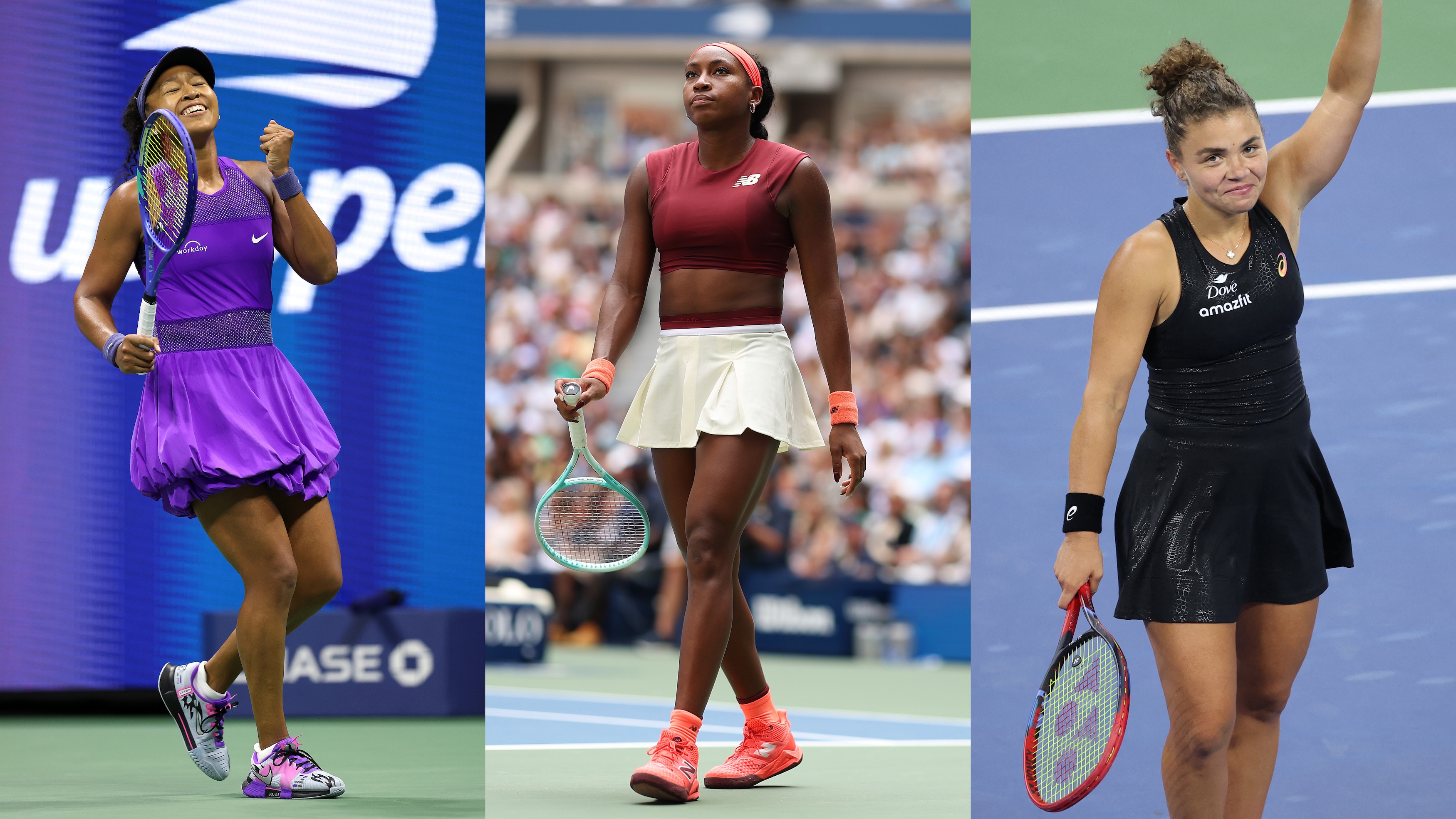
- Naomi Osaka (Nike): “She’s a unique example of a player who embraces fashion and uses it as a form of self expression. Nike is smart to collaborate with her on custom outfits. All eyes (and media) were on her purple sparkles, pouf skirt, glitter jacket, headphones, the roses in her hair, and last, but not least, the Labubus (although I’m not a fan of Labubus in general). That’s a lot,
but it all works on her because it’s genuine.”
- Coco Gauff (New Balance): “She brings her own flavor. The red crop top with burgundy and red accessories, matched with the perfect white pleated skirt, give a classic outfit a new flair. This is not part of her Miu Miu collaboration, but it has a little bit of that new look that suits her.”
- Jasmine Paolini (Asics): “Her black dress has the right
cut and proportions, and the subtle metallic print looked lit up under the lights. It has a vintage Alaïa feel, in a good way.”
|
Photos: Clive Brunskill/Sarah Stier/Charly Triballeau/AFP/Getty Images
|
-
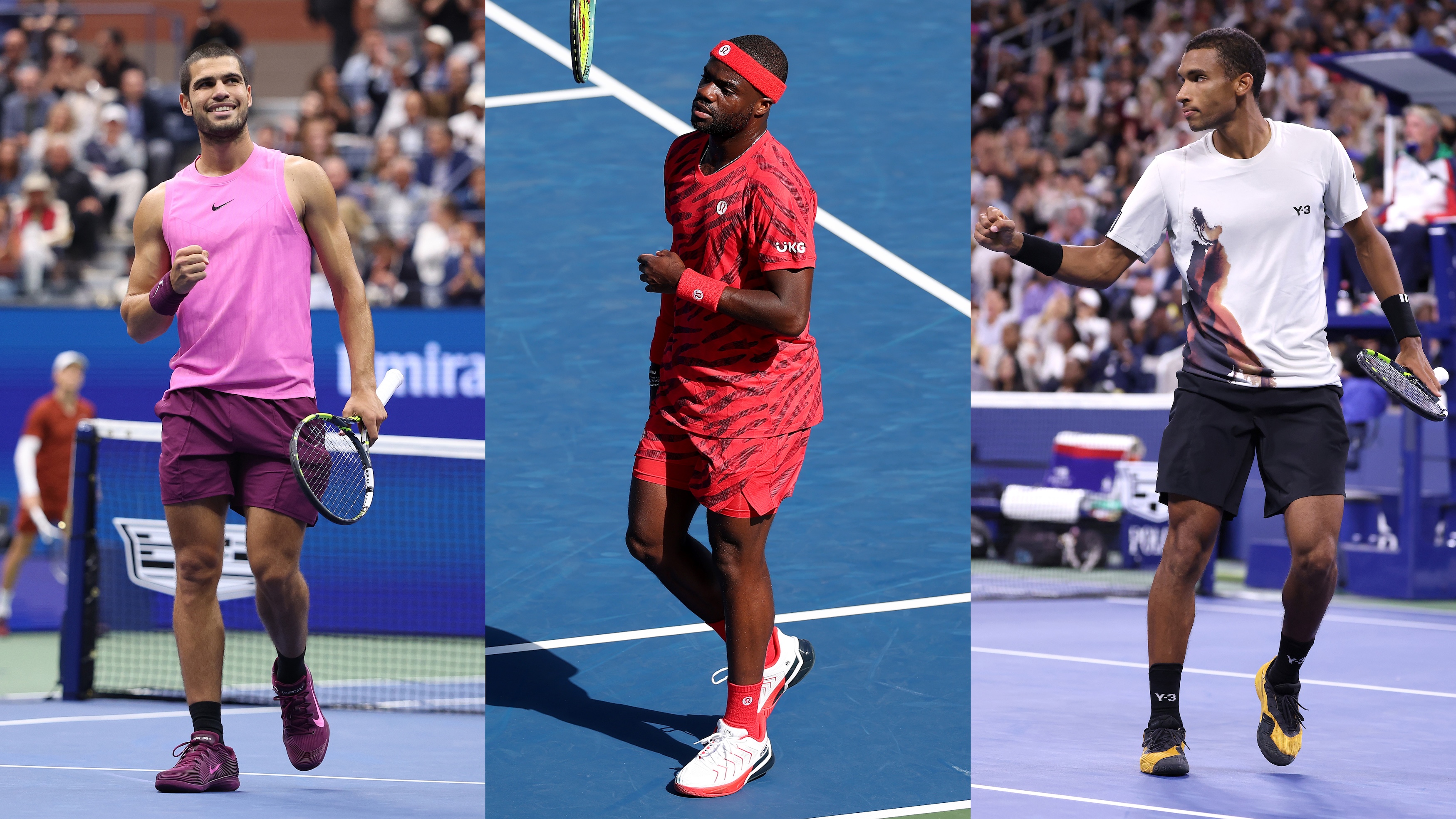
- Carlos Alcaraz (Nike):“Wearing a pink top and bordeaux shorts is a little unusual (in tennis, at least), but it looked fresh, especially with the matching sneakers. And the haircut adds an edge. Love it!”
- Francis Tiafoe (Lululemon): “The red print is perfect on him. It’s graphic and bold and pops on court.”
- Félix Auger-Aliassime (Y-3): “This was my husband
Jon’s pick. As much as I think the women’s Y-3 looks are a total bust, the men’s looked interesting and unique. Nice to see Y-3 in the mix.”
|
Photos: Sarah Stier/Elsa/Mike Stobe/Getty Images
|
- A
new dawn for Demna?: Last March, the announcement that Demna was going to Gucci prompted shock and, frankly, fear within the industry. There remains a lot riding on his appointment, not only for the designer but for the brand and its owner, Kering, which needs his proposal to work to help turn the entire operation around. But the early apprehension is transforming into hopefulness as the designer—who, like many of his peers, is now living in Los Angeles for part of the year—has
begun to crystalize his big idea in his debut this fall.I am hearing from inside Gucci that the developing product is strong, and we’re also starting to see early indications of this in broad daylight. To wit: Jannick Sinner’s custom Gucci duffle bag (and more) around the U.S. Open. As one editor-in-chief messaged me, “He looks cool. It’s that simple.”
The growing positivity around Demna’s debut—even if the actual runway show won’t occur until March—partly owes to
the fact that he’s an original. He may be poring over Tom Ford–era samples and feeling pressure to nail it, but he is never going to be too influenced by another designer (or a merchandiser, for that matter). The only way Demna knows how to work is by using history to inform his own ideas. At Balenciaga, his work was quite technical—and loyal to the archives—but unmistakably his. I suspect that the time he’s been spending in Los Angeles will make
Demna’s Gucci feel different than anything else, from the clothes to the message. And like Michael Rider’s Celine, which is already trickling into stores, I’m sure that Gucci is working to get Demna-tinged product to consumers as soon as possible, so expect more marketing to help that effort along.
- Edward’s thing is… real?: EE72, Edward Enninful’s new media venture, launched in earnest today with the first of its many
promised products: a quarterly print magazine, 72, named after the year he was born. It hits newsstands on September 12, and there’s a companion site, too. Enninful and his sister, Akua, have hired a pretty heavy bench to contribute: Sarah Harris, his former partner at British Vogue, is the editorial director; Simone Oliver, late of Refinery29 and The New York Times, is head of content. Sarah Brown,
the O.G. beauty editor who made Violet Grey so good for so long, is leading the effort on that front. For the first cover, Enninful bagged Julia Roberts, interviewed by George Clooney, shot by Craig McDean, and wearing Phoebe Philo, styled by her personal stylist, Elizabeth Stewart.Enninful clearly wanted a splashy debut. And he could probably pull this off for several issues to come: maybe
Oprah will be on the next cover, and then perhaps Leonardo DiCaprio. But I don’t quite understand why this cover isn’t more visually arresting. Roberts looks refreshingly human (her face moves, and the Phoebe Philo look is styled in a natural, unaffected way), but Enninful’s British Vogue was defined by the striking imagery. (I will save his first issue, December 2017, Adwoa in Marc Jacobs, until I die.) As much as this pains
me to say it, this debut falls incredibly flat for me, and it’s not just the name. There’s a small but meaningful opportunity in print media right now for the right kind of fashion brand, but it’s not yet clear Enninful will be able to capitalize.
|
And now, on to the main event…
|
|
|
While the world mourned Giorgio Armani, Hedi Slimane took to Instagram to warn Celine
against reusing anything he created while he was its creative director. Clearly, it was an overreaction to the work of Michael Rider. It also made him look a little out of touch with industry realities.
|
|
|
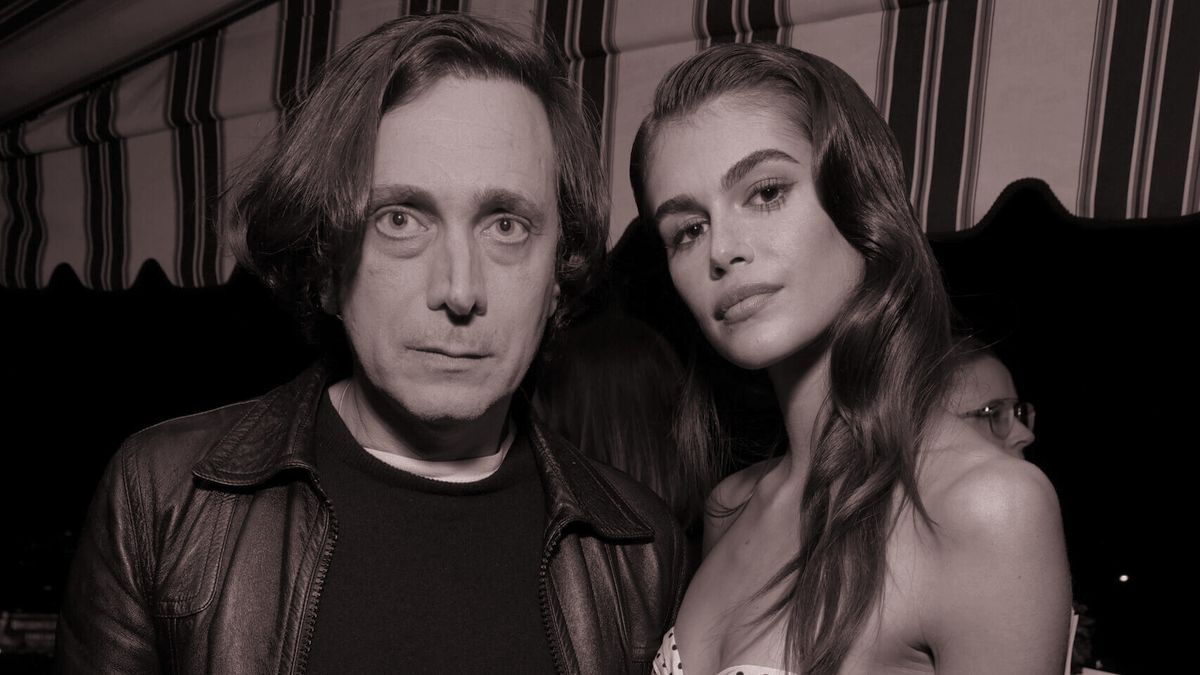
This past weekend, Hedi Slimane posted a note on his personal Instagram account that said,
in the most careful and passive-aggressive French, that the visual language he created during his tenure as creative director of Celine was his and his alone. Slimane, who left Celine nearly a year ago and has since been replaced by Michael Rider, added that he hoped the LVMH-owned house would “brilliantly reinvent its advertising campaigns as well as its corporate image” so that it could “promote a new chapter … free from any borrowing or any insistent
reference to my photographic style, including my advertising campaigns and films for Celine.”
It was a petty, funny, silly veiled threat, delivered at an inopportune moment. Just days earlier, Giorgio Armani had passed away. And while industry insiders were bemused by Slimane’s annoyance, his timing betrayed a profound lack of tact—Slimane and every other designer of his generation owe a great deal of gratitude to Mr. Armani. Many have hoped (and speculated) that Slimane
might one day succeed him. The least Slimane could do was let the industry sit shiva before kicking up a public and egomaniacal fuss.
|
|
|
A MESSAGE FROM OUR SPONSOR
|
The end of De Minimis has reset the rules of global trade. Every U.S.-bound shipment now faces tariffs, higher costs, and compliance
pressure—making margin protection more critical than ever.
Swap’s latest tariff turmoil report gives businesses the blueprint to adapt quickly, reduce risk, and turn disruption into growth.
Inside, you’ll learn:
🌍 Impact of the De Minimis suspension on global commerce
💸 How businesses and customers are adapting to rising costs
⚠️ Risks of inaction for margins and loyalty
🚀 Five strategies to protect profits and fuel growth
👉
Download the full report
|
|
|
On some level, though, it’s understandable that Slimane wanted to protect his work so closely: As he has
proudly admitted, it doesn’t change. There are no surprises with Slimane—not in his designs, not in his photographs, and not in the types of characters who intrigue him. He is a designer who is incapable of evolution, and I mean that in the best possible way.
|
That characteristic helps to explain his behavior—at least a little. When Slimane left Celine, I was told by
several people that he “took” all the imagery he created off the LVMH company drives, and that his legendary lawyer, Léon del Forno, had negotiated that the company could not use the images upon his departure. At the time, I dismissed this as a facile explanation of a far more complex situation and decided not to report on it further. But this Instagram spat made me wonder if there was at least some truth to it. (Del Forno declined to comment when I reached out about this
detail; a representative for LVMH did not respond to a request for comment.)
If it is indeed true, it’s also sort of a shame. Naturally, I can understand why Slimane would want to own his intellectual property: Authors own their books, singers fight for their publishing catalogs, and Ryan Coogler negotiated the rights to own Sinners after 25 years. But it’s also true that he wasn’t working for the house of Slimane, and financing his own vision or its substantial
infrastructure and marketing overhead. He was working for Celine, a brand that had many designers before him and will have many designers after him. Of course, his contributions added another dimension to the house and were unmistakably one of the reasons why Rider’s homage-filled debut collection has garnered so much praise. (After Rider’s first show, Slimane also took to Instagram, posting images of ring stacks he conceived for Celine that looked similar to the way Rider dressed his
model’s hands.) I understand the desire to be protective, but there’s an argument to be made that the work isn’t his to protect. There’s no one in the world who would say Rider is copying Slimane but Slimane himself.
Anyway, it’s sort of a hoot, but also sort of a dated way of operating, and it indicates that Slimane has no current plan for what’s to come next. Now I’m also doubtful that LVMH would back a future Slimane line similar to what they did with Phoebe
Philo, his predecessor at Celine. Plus, as the reinventions of Philo and Alessandro Michele have proven, it’s now harder than ever to break through, even when you have an incredibly devoted fan base. And much of Slimane’s core team has moved on, most recently Peter Utz, the beloved V.I.P. and events director, who retreated from Los Angeles back to Paris to work for Jonathan Anderson at Dior.
|
|
|
There is certainly a large group of people who would love Slimane to design Armani someday; both men
treat consistency like a religion. But one has to wonder: Are we all too old for this shit?
|
Right out of Sick Sad World: postal traffic to the U.S. has dropped 80 percent in a week because of the de minimis exemption. [NPR]
This is a comprehensive breakdown of the Armani bylaws, which will go into effect once the will is opened and the board can see who was afforded what.
Translates well into English. [ Corriere Della Sera]
Also worth reading this piece from July on the family accounts of the Arnaults.
[ Corriere Della Sera]
It’s nice to discover a profile of a designer who has never been profiled before. Welcome to public life, Michael Rider. So fun to learn that you worked at Ina in the 2000s.
[ W magazine]
Let the new celebrity ambassadorship announcements commence! First up: Mikey Madison at Dior. [ Dazed]
As Rachel reported more
than a year ago, Good Clean Goop, Goop’s lower-priced beauty line, massively flopped. Goop is finally shutting it down, an indication that the company is refocusing and moving in the right direction. [ Business
Insider]
My friend’s longevity doctor recently told her that a lot of us are going to live until we’re 120 years old, microplastics be damned. Get ready! [ WSJ]
The shoe designer and Sergio Rossi creative director Paul Andrew, beloved by many in the industry, told the story of how he worked through recovery from the
removal of a trigeminal meningioma brain tumor. [ Vogue]
|
Until tomorrow,
Lauren
P.S.: We use affiliate links because we are a business. We may make
a couple bucks off them.
|
Need help? Review our FAQ page or contact us for assistance. For brand partnerships, email ads@puck.news.
You received this email because you signed up to receive emails from Puck, or as part of your Puck account associated with {{customer.email}}. To stop receiving this newsletter and/or manage all your email preferences, click here.
|
Puck is published by Heat Media LLC. 107 Greenwich St, New York, NY 10006
|
|
|
|