{{ 'now' | timezone: 'America/New_York' | date: '%b %d, %Y' }}
|
|
|
Hi, and welcome back to Line Sheet. It’s a great day for fashion: Grace Wales
Bonner was named Hermès’s new creative director of menswear. I’ve got more on what it means and why it matters below, along with a health check on Grailed, ground zero for the secondhand designer menswear market. Grailed was acquired by GOAT, a sneaker resale site with backing from Kering and others, a few years ago, and now the future of the business is in question.
Plus, Sarah “ SShapiro@puck.news”
Shapiro is here with the story of belt gate—tacky belts are back in high fashion! She also takes a look at Malbon Golf, which just raised a bunch of money. The company’s founders, Stephen and Erica Malbon, represent a very particular flavor of Los Angeles entrepreneur. (I became interested in the story when Sarah informed me that Erica had trademarked the term
Alivegirl.) Golf apparel does feel like a big opportunity: I often run around the Rose Bowl and fantasize about being one of the ladies carrying her clubs around the course. I’m certainly not the only one!
Programming note: I was on Vox’s Today, Explained podcast last week to discuss the Victoria’s Secret Fashion Show.
Listen here.
Mentioned in this issue: Hermès, Grace Wales Bonner, Véronique Nichanian, Virgil Abloh, Grailed, Celine, Malbon Golf, Stephen and Erica Malbon, Venus Williams, Schoolboy Q, Aaron
Heiser, Lauren Sánchez, Kim Jones, Jo Ellison, Our Legacy, the Lakers, NeueHouse, Sarah Ball, and many more…
|
|
|
A MESSAGE FROM OUR SPONSOR
|
With new tariffs, shifting trade routes, and rising costs, resilience is the new growth strategy.
Swap’s Resilient Commerce
Report reveals how leading brands are strengthening global operations through agentic planning, smarter returns, and adaptive pricing — turning volatility into opportunity.
Inside, you’ll learn:
🌍 How tariff changes are reshaping supply chains
📦 Why returns strategy = margin strategy
🧠 Where AI is driving peak-season readiness
💡 What resilient leaders are doing differently
👉
Download the full report
|
|
|
Three Things You Should Know…
|
- Give
us Grace: As I mentioned yesterday, Hermès always has a plan. On Tuesday morning, Jacob Gallagher over at The New York Times broke the news that Grace Wales Bonner was indeed named the new creative director of menswear at the family-controlled, 187-year-old artisanal business. Wales Bonner’s appointment is both historic (she is the first Black woman to be named the creative director of a major fashion house) and
incredibly practical: She has the right sensibility, and will do a good job. Insiders are particularly thrilled about this one. As one industry executive said to me, “One of the reasons I love Hermès is that they are actually the most creative when it comes to bringing on talent.”Anyway, Wales Bonner has plenty of time to figure out what her idea of Hermès menswear will be. (Longtime designer Véronique Nichanian will show her last collection in January 2026, which means
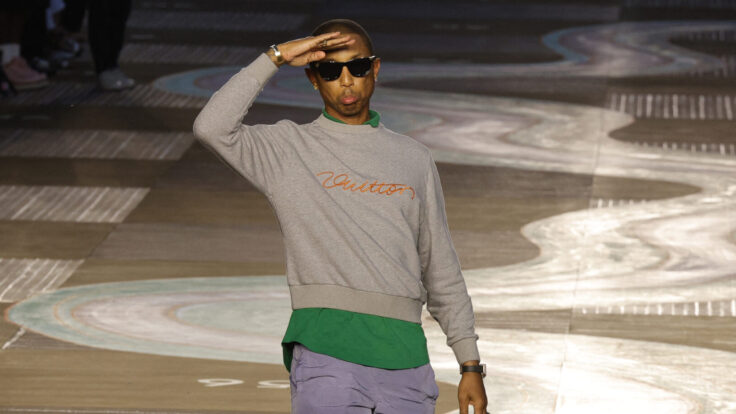
Wales Bonner will be up to bat in January 2027.) Whatever Wales Bonner proposes, I suspect that it’ll reshape the menswear landscape in one way or another. She is quietly directional, and there will be even more room for experimentation given the resources afforded by a house like Hermès.I couldn’t help but think this morning about Louis Vuitton, where Wales Bonner was rumored to be a candidate after the passing of Virgil Abloh (they went a different direction with
Pharrell), and I’m glad, for everyone’s sake, that didn’t happen. As for what will happen to Wales Bonner’s own line? Nothing has been communicated. We all know that the Adidas collaboration carries it, so perhaps that’ll continue.
- The end of grails at Grailed?: Something really interesting is happening in the secondhand market: Platforms are either gaining ground fast (The RealReal,
Depop, Vinted) or losing their grip (see: Vestiaire’s re-org, and the controversy at U.K. retailer Hardly Ever Worn It, which allegedly owes sellers
thousands of dollars). One of the larger challenges has been the sneaker and streetwear resale category, which was super hot a few years ago but subsequently cooled off as merch has become more normcore.The latest victim of this change seems to be Grailed, the pioneering secondhand menswear marketplace that was acquired by GOAT Group, a heavily funded sneaker resale site, in 2022. Grailed became known in fashion circles because it propelled the heavy trading of Raf
Simons, Rick Owens, Margiela, and Supreme that was already going on among die-hard men’s fashion fans. (Throwing Fits’s Lawrence Schlossman was an early employee.) The platform, which helped normalize straight male interest in fashion, was one of the first fashion brands to build a real community before that was a requisite term on fundraising pitch decks.Alas, after multiple rounds of layoffs since it was acquired three years ago, I am hearing
that Grailed has reduced its staff by 90 percent and paused collaborations with outside partners. As of now, the platform is still up and running, and perhaps it’ll continue. I reached out to GOAT Group co-founder and C.E.O. Eddy Lu multiple times about the situation; he has yet to respond.
|
|
|
 |
Sarah Shapiro |
|
- Big belt energy:
Logo belts are back—and they’re intentionally, almost aggressively tacky. Celine went first in June with the oversize Triomphe buckle, then Dior followed, recycling some flashy features of the currently ubiquitous Y2K aesthetic. The belts are also a bit of an unsubtle calling card for new creative directors: The tackiness is the
point, which may be a nod to the current political moment.As for the retail math of it all, the belts are an effort to hit the sweet spot between aspiration and accessibility, even for a designer brand—a gateway to handbags, shoes, and eventually apparel. They literally wrap the customer in the logo. Celine’s current Triomphe belt starts around $770. Proceed at your own risk.
|
|
|
Led by a recent $33 million Series B, and a Nike vet at the helm, Stephen and Erica Malbon
are betting they can transition Malbon Golf from a niche disruptor to a scaled lifestyle empire.
|
|
|
The moment Venus Williams walked onto the court at the recent U.S. Open in Flushing Meadows,
she demolished all notions of what tennis wear has been and could be. As Line Sheet readers know, she wore a different designer to each match, from the blue and white Khaite outfit in her opening doubles contest to the white ERL outfit that she donned as a tribute to Althea Gibson breaking the color barrier 75 years ago. While aspirational tennis nostalgia
has been in evidence for decades—with Prince, Wilson, Lacoste, and Sporty & Rich churning out tennis wear as a lifestyle choice off the court—Williams managed to serve up something new.
|
|
|
A MESSAGE FROM OUR SPONSOR
|
The rise of agentic AI is transforming how people discover, decide, and buy — and most brands aren’t ready for what’s
next.
Swap’s latest report breaks down how AI agents will reshape product visibility, payments, and consumer trust across the entire shopping journey.
Inside, you’ll learn:
🤖 What agentic AI actually means for commerce
🔍 How to optimize for GEO (Generative Engine Optimization)
💳 Why payments are going agent-native
📈 10 reasons to act now
👉
Download the full
report
|
|
|
It’s the kind of excitement that seems utterly foreign to golf, the latest formerly elitist sport currently
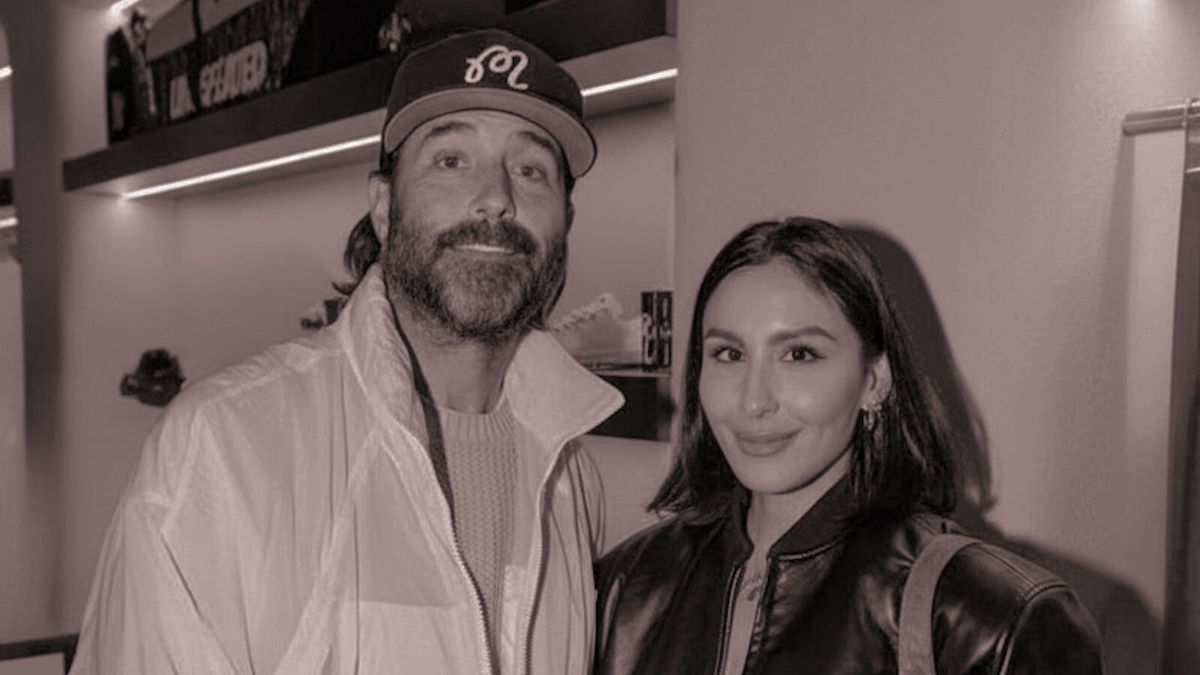
undergoing a pop cultural resurgence while simultaneously looking for a fashion upgrade. But that’s part of the goal for Stephen and Erica Malbon, the L.A.-based co-founders of Malbon Golf, who’ve built a $200 million gross annual revenue business, now with a $33 million Series B tailwind at their backs. To get there, they managed to transform golf’s country club aesthetic into a platform for identity expression. The Series B was led by Anthos Capital along with
rapper (and golfer) Schoolboy Q, and Australian golfers Jason Day and Minjee Lee. Late last year, the Malbons hired Aaron Heiser, who spent 17 years at Nike, as C.E.O.
Malbon Golf, which started as an Instagram mood board, was a serendipitous project for the Malbons, who met while Erika was in college in L.A. Erica founded The Now, a massage studio concept, and owns the trademark to AliveGirl™—a riff on Jeff Bezos’s
early texts to Lauren Sánchez that leaked in the underbelt selfie era. Stephen, who dabbled in golf growing up, had built a branding and creative agency, Frank151, which partnered with brands like HBO, ESPN, Toyota, Tanqueray, and Nike. In particular, he decided that Nike’s early focus on equipment left an open lane for dressing the newer generation of recreational golfers, who cared about how they looked when they played—and at the clubhouse afterward—and didn’t simply want to
wear their club shirt. As Stephen told me, “We saw this very authentic idea of where we envisioned the future of the sport.”
In many ways, the Malbons had brilliant timing. LIV Golf, the Saudi sports-washing pro tour venture, sucks up a lot of oxygen, but there has been a smattering of smart investment throughout the industry. TGL, the new next-gen golf league, has enjoyed prominent success on ESPN. Rory McIlroy and Bryson DeChambeau have become legit
YouTube stars. Meanwhile, nearly 3.5 million people golfed for the first time in 2023, per the National Golf Foundation, millions more than in prior years. Unsurprisingly, a profusion of new companies, like Pro Shop, Sugarloaf Social Club, Metalwood Studio, and Malbon, have sought to monetize the opportunity.
The Malbons envision fashion as a
bridge to category expansion and experiences—and that’s likely what the Series B proceeds will fund. Stephen intimated a future that includes hospitality and rental properties, which will be available in the fall of 2026 in locations such as Pebble Beach, Augusta, and Palm Springs. The team will be forced to invest in these new businesses—bringing in a whole new category of operator to run the show—all while maintaining brand heat, protecting margins, and growing wholesale accounts.
|
|
|
Of course, every lifestyle brand faces entropy once novelty fades. Ralph Lauren, Nike, and Lululemon
illustrate the curve from aspiration to ubiquity to re-curation. Sometimes the floor drops out—see: NikeSkims. The Malbons have to watch they don’t get too diluted through licensing deals—they’ve partnered with Fabletics, at a lower price point, and Gap—and remember why they got into the game in the first place.
|
What We’re Reading…
Looking at… and Listening To…
|
Since his exit from Dior and Fendi, Kim Jones has visited 30 out of 33 Aman hotels (I wonder
if he’s made it to Amangani?) and also designed a car—even though, as he noted in this interview with How to Spend It editor-in-chief Jo Ellison, he doesn’t drive. Honestly, good for him. This is worth the price of a subscription. [Financial Times]
Our Legacy just dropped a bag that looks just like Bottega Veneta’s SS26 invite. (They are
both flat, laser-cut pieces of leather that, when gathered up, act like a little tote for fruit or other stuff you aren’t worried about losing.) I wonder about the origin story; I’ll assume it’s a funny coincidence. [ Instagram]
Marchesa’s Georgina Chapman is facing foreclosure on her West Village apartment. Related,
Marchesa.com is still up and running.
[ Curbed]
It’s
cool that Revolve is now an official sponsor of the L.A. Lakers. [ WWD]
If you missed out on Jane Birkin’s Birkin this summer, you’ll have another chance to own one of her handbags at a December 5 Sotheby’s auction.
[ Town & Country]
There is a lot I would have done differently if I had written and reported this piece on the fall of NeueHouse, where I used to spend a couple of days a week. (They really missed the F&B catastrophe here.) But it’s still fun to read! I knew our monthly dues would never make up the costs of that super
expensive furniture. [ L.A. Times]
The RealReal’s Substack dug into the 100 most-consigned brands. One person’s consignment is our data insights—trendy brands like Miu Miu are consigned more frequently but also in demand on Lyst. And as we often write about on Line Sheet, creative director changes
drive searches. [ The RealGirl]
Sarah Ball, WSJ. magazine’s editor-in-chief, was interviewed on the podcast formerly known as Print Is Dead, Long Live Print. (They listened to us?!) [ Magazeum]
|
Until tomorrow,
Lauren
P.S.: We use affiliate links because we are a business. We may make
a couple bucks off them.
|
|
|
Puck fashion correspondent Lauren Sherman and a rotating cast of industry insiders take you deep behind the scenes of this
multitrillion-dollar biz, from creative director switcheroos to M&A drama, D.T.C. downfalls, and magazine mishaps. Fashion People is an extension of Line Sheet, Lauren’s private email for Puck, where she tracks what’s happening beyond the press releases in fashion, beauty, and media. New episodes publish every Tuesday and Friday.
|
|
|
Puck’s daily art market email, anchored by industry expert Marion Maneker, offers unparalleled access to the mega-auctions and
galleries, elite buyers and sellers, and the power players who run this opaque world. Wall Power also features Julie Brener Davich, a veteran of Christie’s and Sotheby’s, who provides unique insights into how the business really works.
|
|
|
Need help? Review our FAQ page or contact us for assistance. For brand partnerships, email ads@puck.news.
You received this email because you signed up to receive emails from Puck, or as part of your Puck account associated with {{customer.email}}. To stop receiving this newsletter and/or manage all your email preferences, click here.
|
Puck is published by Heat Media LLC. 107 Greenwich St, New York, NY 10006
|
|
|
|