Hi, and welcome back to Line Sheet. Happy publication day to Michael Grynbaum,
author of Empire of the Elite: Inside Condé Nast, the Media Dynasty That Reshaped America. In today’s issue, you’ll find an exclusive excerpt that points a microscope at Anna Wintour in the 1990s, when she truly began to consolidate power as editor-in-chief of American Vogue. Grynbaum chronicles her influence on the then-fledgling luxury industry in both Europe and
New York City society, where she assumed control of the Met Gala—her true legacy, as Michael’s account suggests.
Up top, Sarah “SShapiro@puck.news” Shapiro is back with an explanation for why you might’ve been handed a big duty bill after receiving that massive Ssense sale order, and whether anyone is still shopping at JCPenney. She also shares some data on what
happened with searches for Old Céline handbags after new-new Celine designer Michael Rider brought back the Phantom. (Coincidentally, I recently scored a Box bag in lipstick pink during The RealReal’s annual sale. It’s a great bag that I’ve
always wanted and never thought I’d be able to own. The power of the secondhand market!)
Mentioned in this issue: Anna Wintour, Vogue, Tina Brown, Vanity Fair, Art Cooper, GQ, Madonna, Si Newhouse, Bernard Arnault, Karl Lagerfeld, Graydon Carter, Sean “Puff Daddy” Combs, David Koch,
JCPenney, Celine, Michael Rider, Chanel, Versace, Ralph Lauren, and many, many, more… |
|
|
A MESSAGE FROM OUR SPONSOR |
The Cost-Cutting Playbook for Modern Brands Global commerce is only getting more complex—and inefficiency is getting more expensive. Swap’s Unified Commerce Report breaks down how forward-thinking brands are cutting costs and reclaiming margin by streamlining their operations from the inside out. Inside, you’ll find the 5 C’s of
Connected Commerce, plus real examples from brands like Zara, Nike, and Glossier. From fulfillment to compliance to inventory accuracy—it’s the growth-minded playbook your tech stack needs in 2025. 👉Get the full report and start scaling smarter:
Download Now |
|
|

| Sarah Shapiro
|
|
Three Things You Should Know...
|
- JCPenney in its zombie
era: There is, apparently, life after bankruptcy for JCPenney, which was named the number one department store by USA Today readers in each of the past three years, beating Macy’s, Target, and Walmart. Not the Robb Report, but not bad for a company that went through a restructuring during the pandemic. In the second quarter, store visits were up 3 percent year-over-year among younger, single shoppers (and as much as 18 percent in parts of Texas and Florida), according to
Placer.ai. In short: People are shopping there.
My recent visit to Concord’s Sunvalley Mall revealed why. Unlike the messy layout of many other entry-price stores, JCPenney feels intentionally merchandised: full but organized racks, clear signage, seasonally relevant inventory, etcetera. Major, on-trend brands like Levi’s and Adidas dominate the floor space, signaling a strategic shift toward recognizable names over private-label brands. After losing Sephora to Kohl’s in 2022, they’ve
rebuilt their beauty department with brands like e.l.f. Beauty and Too Faced.
Post-bankruptcy, and especially since joining SPARC Group this year to form the new Catalyst Brands (alongside Forever 21, Brooks Brothers, Eddie Bauer, and others), JCPenney has streamlined operations, closed a handful of locations, and targeted younger demographics with their recent “Yes, JCPenney”
campaign, which capitalizes on the fact that people are surprised to see on-trend looks from that particular retailer. JCPenney is surviving because they’ve returned to retail basics: good merchandising, strong brands, and clear positioning. - Whoa! The new-new Celine boom is
real: Michael Rider’s Celine debut has generated a major bump in demand for the brand, including for Phoebe Philo–era pieces from the 2010s. After Rider’s collection hit the runway, The RealReal registered an immediate 13 percent surge in Celine searches. The vintage Phantom Luggage bag, in particular, has become a must-have. By day seven, searches on The RealReal had exploded
almost 300 percent (296 percent, if you want to be precise), with units selling four times faster than the immediate pre-Rider period. On Fashionphile, Celine saw an over 40 percent increase week-over-week. Likes on The RealReal, referred to as “Obsessions,” jumped 123 percent for the Phantom Luggage style year-over-year.
The surge in interest reflects a newish resale phenomenon, wherein retailers and old brands get a boost from new runway moments. LVMH, Kering, Chanel, Hermès, etcetera
should take note: They’re potentially missing out on secondary transactions in the time between a product’s runway debut and its arrival in stores. - No more bingeing on the Ssense sale?: It’s Retail Psych 101 that customers hate surprise bills: You want to see the full cost (including taxes, tariffs, and shipping) upfront, even (or especially) if it’s higher than you thought. Hence the many complaints on social media from Ssense customers
getting hit with unexpected tariff bills they didn’t anticipate at checkout. Some didn’t even realize that Ssense was based in Canada, with orders subject to customs. (The website does disclose this, but who reads the fine print?)
This pricing transparency issue could shift shopping behavior, including by driving people back to physical stores, where they know exactly what they’re paying. Ssense is reportedly offering some affected customers 20 percent discounts on their next order, but
that’s a Band-Aid solution that cuts into margins—it could also just leave customers facing another customs bill. The challenge for retailers, of course, is that it’s hard to provide transparency if you can’t accurately predict final costs… and Trump’s tariff policies keep changing. Ssense didn’t respond to requests for comment.
|
|
|
And now, here’s Grynbaum… |
|
|
In this exclusive excerpt from Empire of the Elite: Inside Condé Nast, the Media Dynasty
That Reshaped America, Michael Grynbaum explores how Anna Wintour redefined fashion as a pillar of American influence—and transformed the Met Gala into her stage. |
|
|
In the mid-’90s, a decade after he brought aboard Tina Brown at Vanity Fair,
Anna Wintour at Vogue, and Art Cooper at GQ, Condé Nast chairman Samuel Irving “Si” Newhouse Jr. presided over an empire that had expanded well beyond expectations. At Vogue, Wintour was also wielding her power to shape the industry her magazine covered. The reach of Condé Nast allowed her to single-handedly determine the fates of many designers—and therefore whose clothes would be coveted by the new class of American
strivers.
Vogue had always maintained close relations with the luxury world; in the 1960s, Diana Vreeland wooed Seventh Avenue garmentos and even provided them with sketches of her preferred designs. Ruth Ansel, a Vogue art director, recalled an anecdote about Vreeland glancing out a window at women on a Manhattan sidewalk and pointing out their footwear. “You see those women in those go-go boots?” Vreeland said. “I made them!” |
|
|
A MESSAGE FROM OUR SPONSOR |
5 Steps to Winning in Q4 The
holiday rush is coming—but the smartest commerce brands are already preparing. Swap’s new guide lays out five essential strategies to get ahead of peak season chaos. From cross-border fulfillment to tax compliance and returns, it’s your blueprint for a smoother Q4—and stronger margins. Inside, you’ll find: 🎯 The key ops moves to make in July—not October 🌍 How to go global with zero surprises at checkout 📦 How leading brands are turning returns into retention This is the growth-minded playbook your ops team needs to win Q4. Download the full guide |
|
|
Anna went further: She not only placed her preferred designers in Vogue, she also recommended their
services to the executives who were forging today’s modern fashion conglomerates. Anna put John Galliano in touch with the mogul Bernard Arnault, who hired him to design for Givenchy and Dior. Marc Jacobs, another early Anna favorite, was later selected by Arnault to run Louis Vuitton. “She was the discoverer,” Arnault said of Anna’s influence. (Jacobs was never shy about being in Anna’s debt. After one runway show, he raced to Anna’s seat and
dropped to his knees, beseeching her, “How did I do?”) After Michael Kors, discovered by Anna back in her New York magazine days, ran into financial problems in the mid-1990s, Anna talked him up to her industry contacts and later helped midwife a $100 million sale of his company. When Anna organized Vogue’s 100th-birthday party at the New York Public Library, in 1992, Karl Lagerfeld made a 24-hour trip from Paris to attend. “I just came for
Anna Wintour,” he said. “For a one-night stand.”
For the cover of Vogue’s centennial issue, Anna winkingly restaged a classic Irving Penn photograph with a bevy of supermodels—but instead of couture, the women were clad in mass-market jeans and dress shirts from the Gap. This was the new high/low Vogue, the fashion corollary to Tina’s postmodern Vanity Fair: the imprimatur of Condé Nast updated for a more informal era of elite living. Debutante
balls and other vestiges of Mrs. Astor’s New York had yielded to Wall Streeters in Japanese suits ordering bottle service at Tribeca nightclubs. Inside 350 Madison, even Alex Liberman had taken to wearing Comme des Garçons. And Anna was about to project these social shifts onto an even bigger national stage.
The Costume Institute gala, held annually by the Metropolitan Museum of Art, was for years the kind of fusty, high-WASP ritual of philanthropy and
cheek-kissing that seemed to only exist in the pages of an Edith Wharton novel. Its roots dated to 1948, when the museum threw a midnight ball in the Rainbow Room and charged guests $50 a head. Vogue’s editor at the time, Edna Woolman Chase, was on the first organizing committee, and the magazine’s ties to the event deepened after Diana Vreeland became a special consultant to the institute following her Condé defenestration. Vreeland jazzed up the
soiree, but the scene remained a redoubt of aging fixtures of New York society, basically as parochial as an Upper East Side tradition could get.
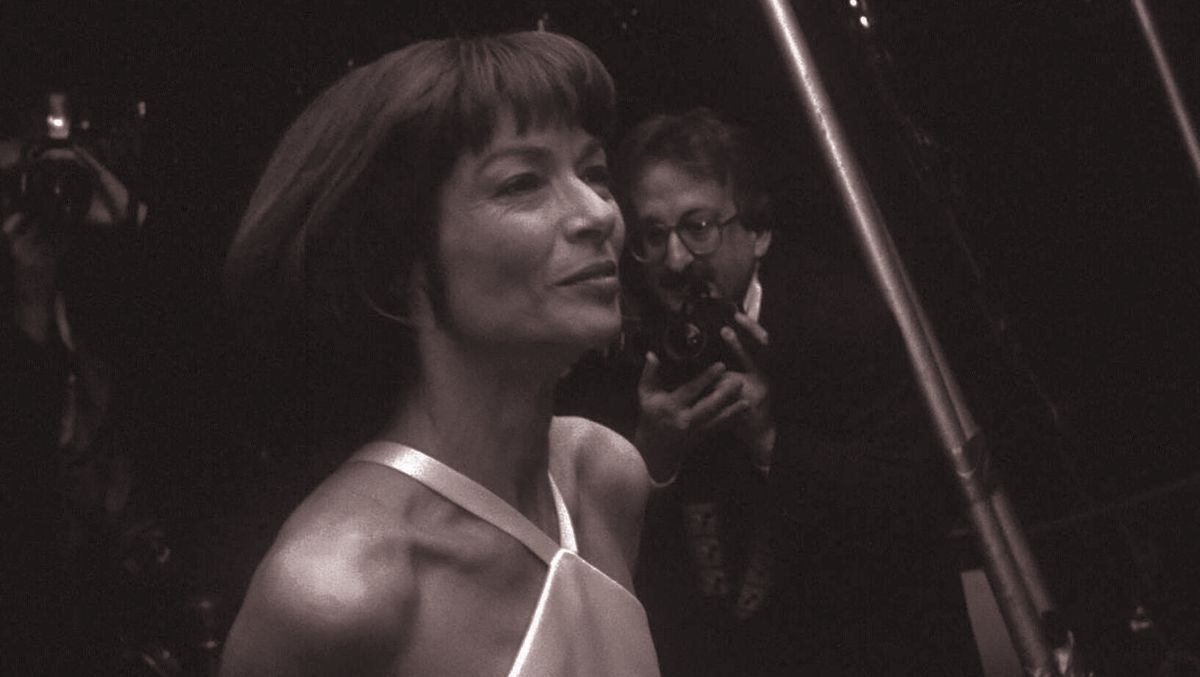
When Pat Buckley (wife of William F.) stepped aside in 1995, after 17 years in charge, Anna was asked to help reimagine the event for a new era. The idea stemmed from a pair of Anna’s best-connected friends: Oscar and Annette de la Renta, the fashion designer and his socialite
wife, who were donors to the Costume Institute and well acquainted with the Vogue editor’s skills. (For years, Anna has vacationed at a villa designed by de la Renta in the Dominican Republic.) Anna was an important figure in the fashion world, but conveniently not a designer whose presence might pose a conflict of interest as the museum decided whose clothes to feature in each year’s exhibit. Anna’s instinct was to re-create, in the decorous and imposing halls of the Met’s Fifth Avenue
home, the imaginative fashion fantasies that played out in the lavish pages of her magazine.
She persuaded Chanel and Versace—loyal Vogue advertisers, whose clothes Anna frequently wore—to contribute $500,000 to sponsor the event; Robert Isabell, the party planner who had devised several of Tina’s Vanity Fair fetes, confected a gigantic Christmas tree of roses. Anna also flexed her editor-in-chief powers to haul in several gossip columns’ worth of
fashion stars and celebrities as guests. Karl Lagerfeld, Ralph Lauren, and Calvin Klein turned up, along with Claudia Schiffer, Richard Gere, and Henry Kravis. Kate Moss vanished into a ladies’ room as her escort, Marc Jacobs, and a Vogue editor hollered her name outside, and Barry Diller struggled to reach his dinner table amid the sea of 800 well-groomed attendees.
André Leon Talley, the on-again, off-again Vogue editor and Anna’s on-again, off-again consigliere, coolly observed the proceedings and offered a reporter a prescient remark. “This,” Talley declared, “is Anna Wintour’s great ascension into the social firmament.”
Si Newhouse was there that night, too. His parents had attended balls like this, upper-crust events that were staples of the Park Avenue calendar. Now Si, as Anna’s patron and benefactor, had become the
event’s de facto host. The guests still joked about Si’s mumbling and his awkward mien, but it was a nervous laughter. Si was now the sovereign of this elite, his will carried in the fiefs of fashion, entertainment, and celebrity by regents like Anna Wintour. Increasingly, the American zeitgeist was produced, packaged, choreographed, and marketed by the forces of Condé Nast.
Frank DiGiacomo, who chronicled the Met Gala’s transformation for The New York Observer,
sensed “the collective coming-out for a new social order,” a contemporary elite “whose position in the food chain is determined not by bloodlines but by blood, sweat, tears, and a big bank account.” The night before Anna’s Met debut, the cable channel VH1 had staged the first live telecast of its fashion awards. The ceremony seemed to cement the marriage of fashion and mainstream popular culture that Anna had been driving forward with her celebrity-flecked Vogue. “The future is, after
all, getting the clothes and images to the masses,” one nominee told The New York Times. “My own personal goal is to go mass. I’m not interested in being limited, insidery.”
Madonna, whose Vogue cover in 1989 had irked Grace Mirabella and repulsed Richard Avedon, received an award as Karl Lagerfeld and Gianni Versace sat in the audience and applauded. The Times’s fashion critic, Amy
Spindler—whose role at the newspaper had only been created a year before, in recognition of the growing mainstream interest in the field—approved of the cultural amalgamation that the award show represented. “Fashion needs to be a part of a wider creative world,” she wrote, “or it’s only relevant to itself.” |
That the mainstreaming of fashion also happened to be the mainstreaming of Wintour was a testament to Anna’s
unusual combination of editorial and entrepreneurial skills—and, for Condé Nast, a very happy alignment of incentives. As fashion got bigger, Vogue got fatter: More and more advertisers flocked to its pages, including the new luxury conglomerates that benefited from the growing public fascination with designers and stylists. Anna, in turn, used the Met Gala to further expand her once-provincial world. After a year off in 1996, when her rival Liz Tilberis of Harper’s
Bazaar took over hosting duties, Anna returned to the gala in 1997 with the most potent weapon in her celebrity arsenal: Madonna. The Material Girl was a neat fit to perform at that year’s Costume Institute show, Gianni Versace, a tribute to the recently murdered designer. |
|
|
Both were agitators of Italian heritage who subverted Catholic iconography in their work. But the idea of
unleashing a provocateur like Madonna in the Met’s hallowed galleries proved too much for one doyenne. Jayne Wrightsman, a major collector and donor, took umbrage at this intrusion of low culture into high, and reportedly threatened to resign from the museum’s board. In a sign of the times, the Met sided with its newer patron, Anna Wintour. Madonna attended that year’s gala, and when a reporter asked about the dust-up, the pop star shrugged. “I don’t even know who Jayne
Wrightsman is,” she said.
Anna next took charge of the event in 1999, the year she turned 50, and she never again relinquished control. The 1999 edition was the fullest expression yet of how she viewed her role at Vogue: not merely an editor, but a grand convener of the culture. Her guests included Gwyneth Paltrow, Liam Neeson, Harvey Weinstein, Henry Kissinger, Jerry Seinfeld, and Ellen
Barkin, a crew that ranged well beyond the runway.
Perhaps Anna had sensed Si’s satisfaction with the success of Graydon Carter’s Oscar parties, and felt a need to compete. There are those around Anna who say she has an intrinsic need to outdo her own last act. Whatever the reason, Anna topped herself by arranging a performance by Sean “Puff Daddy” Combs, who sang his hit “I’ll Be Missing You” alongside a live children’s choir.
After Combs
left the stage, he was accosted by a towering white man in a tuxedo. “Hello, Puff Daddy,” the man said. “I’m David Koch.” The billionaire industrialist smiled at the rapper. “You’re a helluva performer.” Embedded in this moment were the seeds of what the Met Gala would become under Anna: a globally recognized spectacle and a staggering demonstration of Condé Nast’s cultural sway. Even as Condé shrank and its magazines’ influence ebbed—as Vogue itself drifted from its
central role in the fashion world—the Met Gala reached new levels of opulence. In 2010, Anna installed a 30-foot-tall hot-air balloon from South Dakota in one of the museum’s interior courts. Today, the red carpet is covered live on television and The New York Times dedicates more than a dozen staff members to a live blog of the proceedings.
As with its Condé cousin, the VF Oscar party, an invitation to the Met Gala is now among the most-coveted tickets on
earth. Minuscule details, like the order in which stars approach the carpeted staircase, are decided by Anna alone. George and Amal Clooney were granted a private bar so that they could decompress away from the crowd; a stash of European Coca-Cola was locked in an office so that Karl Lagerfeld could enjoy his favorite beverage. In total, Anna’s Met Gala has raised more than $250 million for the Metropolitan Museum’s Costume Institute, making the event one of the
world’s most successful philanthropic efforts in support of a cultural institution. As the excess increased, so did the prices; the ticket that cost $50 in 1948 was $75,000 in 2024. Even Nan Kempner, the wealthy socialite, eventually became uneasy about the sheer scale of it.
“I just think it’s terribly expensive, and I’ve been doing this party for God knows how many years,” she said in 2003. “It seems to me it’s gotten a little out of hand.”
Excerpted and
adapted from Empire of the Elite: Inside Condé Nast, the Media Dynasty That Reshaped America by Michael M. Grynbaum. Copyright © 2025 by Michael M. Grynbaum. Reprinted by permission of Simon & Schuster, Inc. |
What Sarah’s Reading…
and Looking at…
|
The British Fashion Council’s new boss, editorial vet Laura Weir, announced a slew of
changes to London Fashion Week in the hopes of attracting more designers and international buyers and press. [Style Not Com]
Meryll Rogge was officially named the new creative director of Marni, but you knew that, since Lauren broke the news in Line Sheet earlier this month. Congrats! [Inbox]
Casey Lewis’s recap on all the teen trends is a reminder that sometimes a trend has no sooner risen than it has given people the ick (see: Labubus, CorePower Yoga, and weighted vests). But we are aligned and pumped about the increased love for plimsoll
sneakers—more commonly known as Keds. [After School]
Zara Wong dissected Ashley and Mary-Kate Olsen’s jewelry style. I’ve always loved their necklaces and big chunky bracelets, but
the double earrings might be my new favorite. [Screenshot This]
Did everyone take this “Could You Work for Anna Wintour at Vogue in the ’90s” quiz? What was your score? [NY Times] |
Until tomorrow,
Lauren
P.S.: We are using affiliate links because we are a business. We
may make a couple bucks off them. |
|
|
Puck fashion correspondent Lauren Sherman and a rotating cast of industry insiders take you deep behind the scenes of this
multitrillion-dollar biz, from creative director switcheroos to M&A drama, D.T.C. downfalls, and magazine mishaps. Fashion People is an extension of Line Sheet, Lauren’s private email for Puck, where she tracks what’s happening beyond the press releases in fashion, beauty, and media. New episodes publish every Tuesday and Friday. |
|
|
The industry's go-to source for unflinching reporting on the trillion-dollar business of artificial intelligence - perhaps the
single most important technology of our time. Ian Krietzberg, the powerhouse journalist behind The Deep View, delivers twice-weekly insights into the latest dealmaking and breakthroughs in A.I., and how the intersecting worlds of finance, entertainment, media, and politics are being transformed in its wake. |
|
|
Need help? Review our FAQ page or contact us for assistance. For brand partnerships, email ads@puck.news. You received this email because you signed up to receive emails from Puck, or as part of your Puck account associated with {{customer.email}}. To stop receiving this newsletter and/or manage all your email preferences, click here. |
Puck is published by Heat Media LLC. 107 Greenwich St, New York, NY 10006 |
|
|
|