Welcome back to The Varsity. I’m John Ourand, writing to you from
Washington, D.C., the current epicenter of the international soccer world in anticipation of Friday’s 2026 FIFA World Cup draw at the Kennedy Center. On Wednesday night, I’ll be talking with MLS commissioner Don Garber for the University of Maryland’s 20th Annual Povich Symposium, organized by the school’s Shirley Povich Center for Sports Journalism. Stop
by if you’re in town. Go Terps.
Pod alert: I’ve assembled the Puck Super Friends—a.k.a. Julia Alexander, Dylan Byers, and Eriq Gardner—for a year-in-review podcast episode about the top stories, themes, and personalities that defined sports media in 2025. This special episode will post on Wednesday morning. In the meantime, make sure you listen to yesterday’s pod: Yahoo Sports’s Ross Dellenger gave his forward-looking take on the current college football chaos.
In tonight’s issue, some more of that chaos—including NBC’s plan to sell the Big Ten Championship game to Amazon next season—plus a rare bit of good news from the R.S.N front. We’ll also check in with Charter’s efforts to offload its Lakers R.S.N.
Before we get started:
Memo to any network looking for a college football insider: I have to highlight my partner, the indefatigable Peter Hamby, who finally got well-deserved validation regarding his November 18 scoop that Louisiana Gov. Jeff Landry was personally involved in wooing Lane Kiffin. Peter is a hopeless LSU fan, and makes an annual pilgrimage
from Puck’s Venice Beach bureau to the wilds of Tiger Stadium. He also hosts a damn good podcast that often dabbles in our trade. |
- When Kiffin went sniffin’: Lane Kiffin’s recent bombshell-yet-entirely-unsurprising decision to bolt Ole Miss for archrival LSU set the sports world ablaze. Of course, Kiffin is almost preternaturally prone to horrifically messy exits, from his brief stint with the Raiders and single-season foray with the Tennessee Vols to being canned from USC on the LAX tarmac and then prematurely exited from Alabama after taking the FAU job. But his intra-SEC move might
take the cake. As you all know, Ole Miss is riding an 11-1 record and a sure CFP qualifier. How could he quit on his team now?
The LSU gig is, arguably, a top-three job in the sport given the generous comp. And the alumni network’s bottomless lust for supporting the program, especially in the N.I.L. era, is certain to magnify expectations for Kiffin. Given his rollercoaster past, the recent examples of high-profile hires flopping, and LSU playing at Ole Miss next season,
the drama quotient will be through the roof.
On the latest episode of The Varsity, recorded after reports of LSU’s offer but before Kiffin announced his decision, Yahoo Sports senior college football writer Ross Dellenger predicted what to expect in the new college football coaching economy. “The trends you’ll continue to see, as we’ve seen in the last couple of years, is more of, We’re going to keep the coach and invest in the roster,” Dellenger said. “You’ll see that
new coaches will have shorter contracts—I don’t expect a whole lot of guaranteed, 10-year deals anymore. I think you’ll see more six- or seven-year deals like LSU offered Lane Kiffin. You’ll see shorter deals, where maybe the buyout is either not fully guaranteed, or maybe it’s mitigated or offset with new compensation, or other terms where the buyout can be reduced. That’s a lesson learned from these huge buyouts that we’ve seen from Jimbo Fisher to James
Franklin.” And Brian Kelly, Kiffin’s predecessor, too. - Take it to Congress: Virtually every institution affected by the introduction of N.I.L. money to college sports seems to agree that this new economy needs some kind of regulation—but where will that change come from? The feds? Power brokers like the SEC and Big Ten? I asked Ross during our conversation. “I think you will continue to have Congress, especially leading
Republicans, be at the center—like a Ted Cruz—of trying to get something done in the Senate,” Ross told me during our conversation. “You mentioned the SEC and Big Ten. Let’s be honest—they sort of make all the big decisions right now in college athletics. If they’re not on board with a decision, usually a decision doesn’t happen. About a year ago, the two leagues had a really good relationship, but that’s changed. And I think that hurts any kind of decision to do something
different with college athletics.”
- NBC’s Big Ten third and long: NBC is still talking with Amazon Prime about subleasing the rights to next year’s Big Ten Championship game. Indeed, the mere fact that the two sides are still negotiating is newsworthy, given that Big Ten Network majority owner Fox has signaled that it doesn’t support the idea of selling the game to a streaming competitor like Prime. Fox, naturally, would have to approve such a deal,
along with the conference.
Despite Fox’s reluctance, I’m told that NBC has remained in contact with the Big Ten, and the network is seeking somewhere in the neighborhood of $70 million for the 2026 game. (Of note, top Amazon executive Jay Marine is a proud Michigan alum…) NBC, of course, picked up the conference’s primetime rights three years ago, but still has some unresolved issues with the deal. More specifically, many of the Big Ten’s glamour schools have
historically resisted playing night games after November, which limited the quality of games that the network could access for its package.
What could sway Fox to allow this deal to go through? Well, Fox One is available via Amazon Channels, so maybe there are some triangular negotiating opportunities. Plus, top Amazon exec Mike Hopkins spent nearly 17 years at Fox and has deep relationships throughout the company. - Light in the
R.S.N. dark: Readers of The Varsity know all about the decline of regional sports networks, which have been grinfucked into taking cliff paths onto seldom-watched digital tiers, thereby tearing asunder the once-potent R.S.N. economy. Now get ready for the silver lining: R.S.N. streaming services are seeing a ton of growth, according to data released last week by Antenna. The company’s Q4 State of Subscriptions report finds that R.S.N. streaming signups grew 63 percent year
over year in the first quarter of 2025. That rose to 81 percent year-over-year growth in the second quarter.
Of course, streaming money pales in comparison to the affiliate revenue that cable and satellite distributors have paid during the past 30 years. But it’s at least heartwarming during this holiday season to behold that at least one sector of the R.S.N. business is growing. Antenna’s R.S.N. numbers track with those for other streaming services, too. The firm noted that
third-quarter signups for Sling TV, Fubo, and Hulu+Live TV dropped slightly from last year, but YouTube TV increased its market share to 44 percent of all signups—a 6 percent increase year over year, demonstrating its strength in the marketplace. - Disney’s bad dish: Puck’s legal ace, Eriq Gardner, recently provided an update in the ongoing Disney-Dish legal saga. The Southern District of New York declared a victory for Dish’s practice of selling short-term passes, underscoring the legal and strategic battles unfolding as legacy media giants adapt to the on-demand streaming landscape. “For the second year running, Disney has lost a key legal battle in the sports streaming wars,” Eriq wrote in his always excellent What I’m Hearing+. “Last year, FuboTV successfully
enjoined the launch of Disney’s planned joint streaming venture with Fox and Warner Bros. Discovery—leading Disney to acquire FuboTV and pivot toward ESPN Unlimited. This time, playing offense, Disney tried—and just failed—to stop Dish’s daily and weekend-long ‘Sling TV passes.’ The entertainment giant’s dire warning that daily passes would upend its entire business model didn’t sway Judge Arun Subramanian.”
Meanwhile, Eriq noted, “if you haven’t seen Subramanian’s
full opinion, it’s worth a read—not just for the parsing of what qualifies as a ‘subscription,’ but the rare treat of unredacted details. Among them: Dish doesn’t owe license fees for users not subscribed on the 21st day of the month. Subramanian’s response? Tough luck—next time, write a better contract.”
|
And now for the main event… |
|
|
As the Lakers’ regional sports network hits the market, Charter is getting to
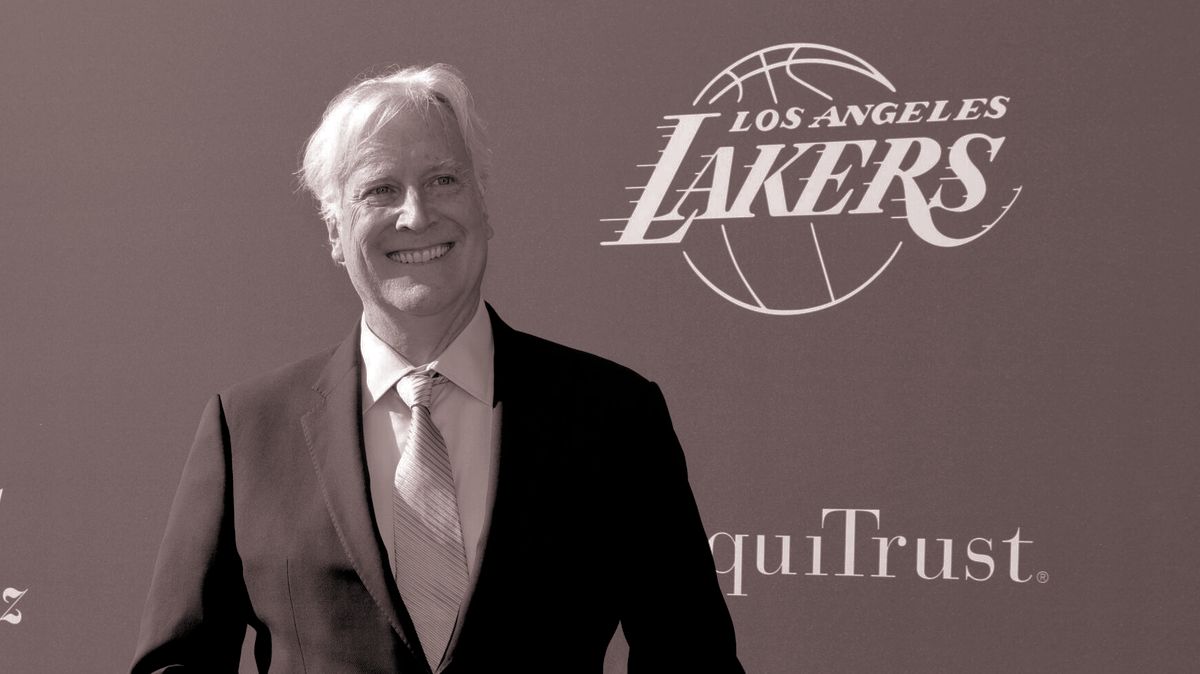
work separating serious bidders from rubberneckers. Which category does new team majority owner Mark Walter fall into? |
|
|
It’s been a month and a half since Charter hired The Raine Group to sell Spectrum SportsNet, the
Los Angeles cable home of the Lakers, and dozens of companies have seemingly expressed interest, from private equity firms to traditional media companies. Mark Walter, who recently became the team’s owner, has also shown openness to taking ownership of Spectrum SportsNet away from Charter, which doesn’t see a long-term play in keeping the R.S.N. in its portfolio. Now, the burden is on Raine to distinguish the real potential acquirers from those kicking the tires for
their own gain—to learn about the economics of the business to fuel some other investment thesis, say, or just out of morbid grinfucking curiosity.
Of course, the R.S.N. business is existentially challenged and Spectrum SportsNet bears its own unique burdens. To wit: The Lakers, which signed their deal with SportsNet in 2012, a veritable lifetime ago in the industry, collect an average annual fee of $150 million from the network. (In fact, that number was close to $200 million last
season.) In 2032, the Lakers have an option to extend the current deal to 2037, and why the hell wouldn’t they? The team would be hard pressed to find another company willing to pay that much for local rights. Frankly, few might even exist by then.
But this deal process has made many sports business veterans nostalgic for a bygone time—some mere six years ago, when Disney was in the process of selling the Fox Sports–branded R.S.N.s as a necessary consequence of its overall deal to acquire
21st Century Fox. Back then, scores of companies signed nondisclosure agreements to try to comprehend why Fox sold the business in the first place. In the end, though, Disney received only three serious bids: one led by Major League Baseball, one backed with private capital, and one from the eventual winner, Sinclair.
Raine is facing a similar scenario with Spectrum SportsNet, with potential bidders showing interest in data points, from the Lakers precise rights fees to ad sales
numbers. The merchant bank is presumably collecting N.D.A.s, offering access to data rooms, and providing financials on the business before culling the voyeurs from the legitimate participants. That much smaller group would get much more detailed information—which, of course, will also pertain to the challenges associated with the business. |
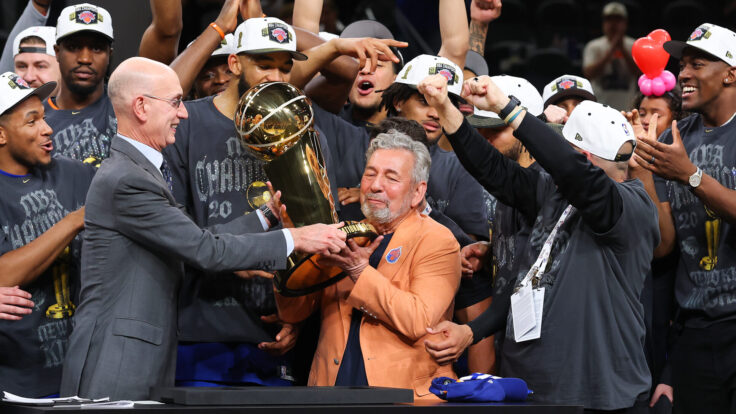
In some respects, Walter is the most logical buyer. He closed his purchase of a majority stake in
the team in late October, valuing the Lakers at $10 billion. He also owns the Dodgers, which is tied to Charter’s other L.A.-based R.S.N. Not coincidentally, the Dodgers have the most team-friendly deal in Major League Baseball, collecting an average of $334 million per year through 2038—an economic anomaly that helps explain their exorbitant ~$250 million annual payroll.
In fact, some of the companies interested in the Lakers’ R.S.N. have shown interest in the Dodgers’ network,
too, I’m told. Walter himself has apparently expressed interest in a deal that would bring both teams’ networks under his umbrella. Charter, too, would presumably prefer to sell both channels at once to a single bidder, minimizing headaches and fees, if the number was in the trading range. After all, the company inherited both R.S.N.s via its acquisition of Time Warner Cable, a decade ago, and sports has never been a core part of its business.
It seems likely that any deal to buy these
R.S.N.s would have to include a subsidy payment from Charter that would cover the expected losses of the R.S.N.s over the next 12 years. It’s not yet apparent whether Walter even really, truly wants to control these media rights. But if he shows any serious inclination, there’s a deal to be had, and a seller in the barrel. |
On last week’s Players Era tournament: “I came to Vegas to watch the Irish lose to Kansas
and then (thankfully) beat Rutgers. Between The Athletic’s excellent story and the overall vibe here, we should all expect this to evolve into a premier event. Fan attendance this week is definitely not overwhelming, but I would describe it as enthusiastic. The fans who did make the trip are all in, and many more will want to be here in the coming years—thanks in part to the great games we’ve already seen so far this week.” —A Varsity subscriber
On Nielsen
ratings: “Should all comparisons to TV ratings have an asterisk by them due to the changes that the leagues have pushed Nielsen to consider?” —A media executive
[Ed. note: Yes.] |
Have a great week. See you tomorrow.
John |
|
|
Ace media reporter Dylan Byers brings readers into the C-suite as he chronicles the biggest stories in the industry:
the future of cable news in the streaming era, the transformation of legacy publishers, the tech giants remaking the market, and all the egos involved. |
|
|
Join Puck’s chief political columnist, John Heilemann, as he roams the corridors of power and influence in America
on this twice-weekly interview show, taking you beyond the headlines with the people who shape our culture: icons and up-and-comers, incumbents and insurgents, moguls and machers in the overlapping worlds of politics, entertainment, tech, business, sports, media, and beyond. The conversations are rich and revealing, unrehearsed and unexpected… and reliably impolitic. A Puck-Audacy joint, new episodes drop every Wednesday and Friday. |
|
|
Need help? Review our
FAQ page or contact us for assistance. For brand partnerships, email ads@puck.news.
You received this email because you signed up to receive emails from Puck, or as part of your Puck account associated with {{customer.email}}. To stop receiving this newsletter and/or manage all your email preferences, click here. |
Puck is published by Heat Media LLC. 107 Greenwich St., New York, NY 10006 |
|
|
|