Greetings from Charlottesville, and welcome back to In the Room. Thanks to everyone who
sent me their solicited and unsolicited reactions to Scott Pelley’s hourlong New York Times interview—which, depending on your perspective, was either the most emotionally compelling indictment of Bari Weiss’s incompetence to date, or, alternatively, a hysterical and solipsistic self-own that underscored her rationale for firing Scott in the first place.
Reader, choose your own adventure, but remember this: Scott was right to note that he’d
received “thunderous applause” from colleagues for standing up to the front office. “The trend line is probably 70 percent Bari hatred, 20 percent Bari disappointment, 10 percent blind loyalists,” one CBS News insider told me, summing up the vibes inside the building. “Pelley is probably 75 percent beatific love, 15 percent wish he’d tone it down, 10 percent believe he is overplaying it and hysterical.” (After all, the guy is doubling down on the murder analogy…)
Either way,
Scott’s public remarks have drawn even more attention to the troubles plaguing Bari’s CBS. She has burned through an extraordinary amount of institutional capital in a remarkably short period of time, and the scrutiny of her leadership will undoubtedly continue to test David Ellison’s patience. He may still like her and her politics, but at the end of the day CBS News is a small chip in a $110 billion deal that is still vulnerable to pressure from Rob Bonta and
other Democratic attorneys general—and, of course, the whims of the president, who shit-talked CBS News before walking out on NBC’s Kristen Welker over the weekend. As we know, David will eventually bring in a seasoned executive to help manage operations. But might he go further?
In tonight’s issue, my partner Julia Alexander
talks to Peter Rothpletz, founder of the newly launched Verbatim Media, which hopes to elevate and monetize progressive creators—just as Fox’s Red Seat Ventures has done with Tucker and Megyn and Piers. It’s an ambitious project. For years, the left has tried, and mostly failed, to find some kind of answer to Joe Rogan. But if ever there was a time for a guy like Rothpletz to break through, it’s
now.
🎙️ Plus, on tomorrow’s episode of The Grill Room, Fox One C.E.O. Pete Distad joins me ahead of this week’s World Cup kickoff to explain how the streamer plans to leverage the tournament to attract and retain new subscribers. Pete, who has spent a career at the heart of the sports-streaming story—from Hulu to Apple to the extremely short-lived Venu—also reflects on the broader challenges and opportunities facing the ecosystem. Follow The Grill Room
on Apple, Spotify, or wherever you prefer to listen.
📣 Reminder: The Wednesday issue of In the Room will be exclusive to Puck’s Inner Circle tier beginning next week with our June 17 email. Don’t forget to upgrade your subscription for access to all of Puck’s most exclusive insider reporting, including our sister publication, Air Mail. It is well worth it and you can afford it. Join here.
Also mentioned in
this issue: Michael Fanone, Lesley Stahl, Bill Whitaker, Jon Wertheim, Don Lemon, Akilah Hughes, Satya Nadella, Varun Shetty, Lachlan Murdoch, Mark Lazarus, Joanna Stern, Hasan Piker, Mehdi Hasan, Nick Bilton, Colin Cowherd, Chris and Kevin Balfe, Abby Phillip, and more.
|
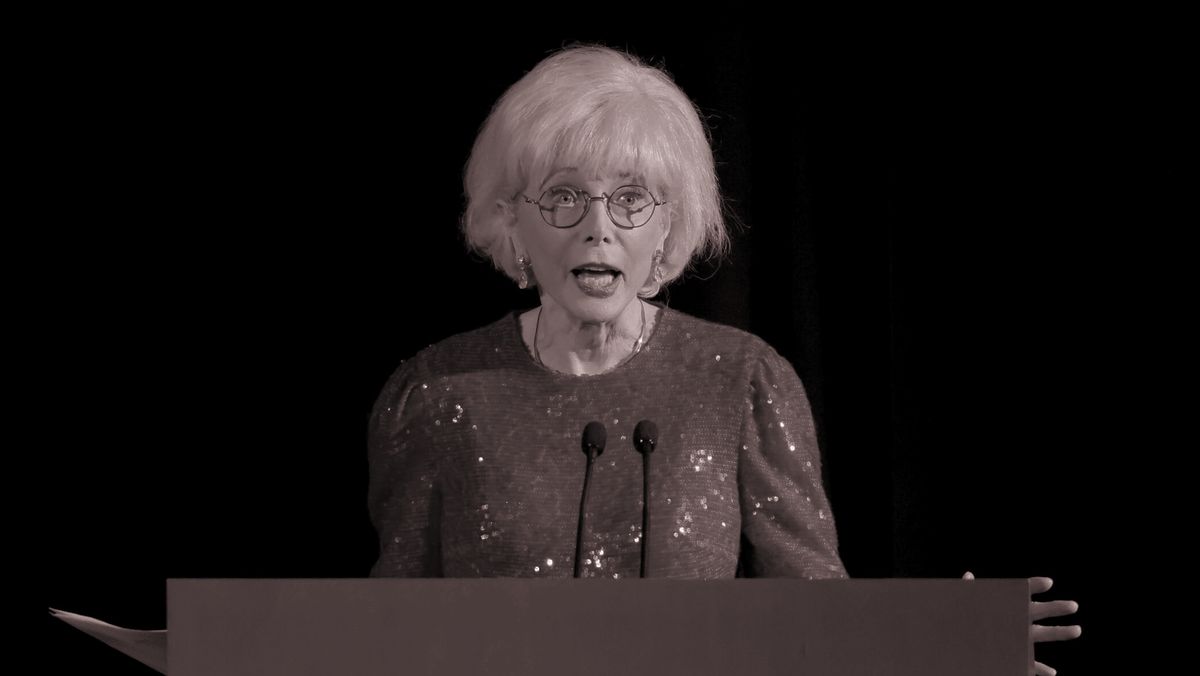
- Hello, Lesley: As I reported in Friday’s email, 60 Minutes correspondents Lesley Stahl, Jon Wertheim, and Bill Whitaker all elected to stay with the program amid the turnover and tumult that followed new executive producer Nick Bilton’s installation in late May—but not
before airing their circumspection in a public-private memo. Stahl, though, didn’t stop there.Later on Friday, she talked with my partner William D. Cohan for an interview that provided an even deeper look at her conflicted feelings about staying put (while, yes, negotiating a new two-year deal). “There’s a lot of pressure on me and Bill and Jon to step up and do more pieces than we’ve been doing, and do them at the same level,” Lesley told Bill. “We’re trying to explain
to Nick what the procedures are—all the layers of fact-checking and screenings, just layer upon layer of fresh eyes, always fresh eyes, looking over and over and over.”
Even before the chaos of recent weeks, Stahl had been weighing her future with the program, given her age and the amount of travel and work required on the show. As Bill wrote: “She told me she still has lots of energy, but is also trying to look at herself objectively to make sure she still has what it takes to fly around
the world for the kind of rigorous reporting that a 60 Minutes segment requires. ‘I watch myself all the time,’ she said. ‘I’m me, and then there’s me off to the side, looking at me, saying, Can you do it? I’m very, very, very aware of my age, and so far it’s been fine.’”
Read more from Bill’s full conversation with Lesley here.
|
|
|
|
 |
Julia Alexander |
|
- Sharing
is caring: Media people shouldn’t expect OpenAI to share the wealth any time soon—or perhaps ever. Varun Shetty, OpenAI’s vice president of media partnerships, noted at a conference in France last week that there aren’t any plans “at this point” to institute a rev share with publishers whose content appears in ChatGPT, according to the Press Gazette. Shetty also argued that referral traffic is not a “core value” for publishers appearing inside ChatGPT. I’d beg to
differ…
- And speaking of sharing…: When will all the big A.I. and software companies start working together so that these tools actually become useful? Sure, you can now connect ChatGPT and Claude to Microsoft Office, but it’s not as easy to integrate into Google Workspace. It’s a problem that affects A.I. agents, too: Last week, Microsoft’s Satya Nadella announced “Project Solara,” a new platform designed to allow A.I. agents to work
across devices and services—although all within the Microsoft ecosystem, at least at first.The issue of interoperability also came up last week on The Grill Room during my conversation with author and former Wall Street Journal tech columnist Joanna Stern. “Companies will have to be somewhat forced into this,” she predicted. But executives also know that “A.I. sucks without data. And if I can’t make my new glasses useful without tapping into someone’s
A.P.I. or someone’s data, well, that might make my product suck.”
We’ll see. Either way, it’s an issue the media industry should be watching closely—especially as A.I. agents comprise a growing share of web traffic. To wit: What happens to ad impressions if consumers start instructing Solara A.I. devices to scan their news subscriptions and just synthesize the highlights? Better start thinking about it now.
|
|
|
|
A conversation with Peter Rothpletz, founder of the newly launched Verbatim Media,
which hopes to do for progressive creators what Fox’s Red Seat Ventures has done for Tucker Carlson and Megyn Kelly.
|
|
|
|
Chris and Kevin Balfe’s Red Seat Ventures is one of those media
companies that everyone knows, but whose business is still a bit hazy. Acquired by Lachlan Murdoch in 2025 as part of Tubi’s push into the creator space, Red Seat is ostensibly a multichannel network (MCN) for a new era of independent talent. Podcast hosts like Tucker Carlson, Megyn Kelly, Bill O’Reilly, and Piers Morgan were some of their early, attention-grabbing clients, but Red Seat Ventures works with other
creators and brands, including the New York Post and Colin Cowherd, to grow their own businesses through advertising deals, live events, and any other avenue you can think of to make a modern media business work.
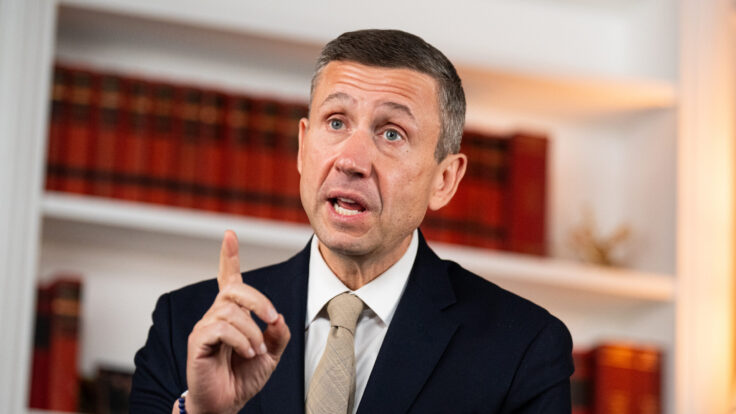
Red Seat’s success with mostly conservative voices raises the obvious question: Could their business model be replicated on the left? Peter Rothpletz aims to find out. He’s a writer and producer who previously worked for Don
Lemon, created newsletters for Mehdi Hasan’s Zeteo, and was a journalist at legacy institutions including CBS News and MSNBC. Last week, Rothpletz launched Verbatim Media, a consulting-meets-brand-development company that will work with creators, journalists, and other emerging talent to strengthen or develop new voices on the left and figure out how to monetize them.
Rothpletz’s initial talent partners include Akilah Hughes, who developed an audience through her time with Crooked Media, and Michael Fanone, a former Metropolitan Police officer who was attacked during the January 6 riots.
It’s an ambitious project. For years, the left has tried, and mostly failed, to find some kind of answer to Joe Rogan. But if ever there was a time for a project like Rothpletz’s to break through, it’s now. Rothpletz
and I had a lengthy conversation about his ambitions, his concerns about the media’s future, and the current state of the creator economy. As usual, the following has been lightly edited for length and clarity.
|
A
Post-Legacy Media Crisis
|
Julia Alexander: What do people get wrong in comparing Verbatim
Media with Red Seat?
Peter Rothpletz: I like the “blue answer to Red Seat Ventures” framing insofar as it’s quite straightforward and cuts to what we’re trying to do. But I also think it slightly skews the mission of our company. Ultimately, we want to try and re-create the newsroom. My fear is that as legacy media continues to die, and whatever we want to call this thing that’s taking its place—whether it be a creator economy, or the
vertical-video star ecosystem—I feel a duty to try and make sure that we still have accountability, and we still have real trust in our information systems. My great fear is the death of truth, and no longer being able to cut through the cacophony of all these different personalities and voices and petty grievances to get a sense of what is actually happening in the world.
The left already has a sizable and growing creator space. Why do you think it doesn’t have the same impact
that right-wing or right-wing-adjacent culture podcasters, video creators, and writers seem to have?
Diamonds are formed under pressure. The left has experienced such an advantage in legacy media for so long; the right was forced to adapt and find these new avenues. Now they’ve had a decade-plus advantage and actual runway of figuring out how to make these operations work. The left is now experiencing a type of crisis that may feel existential,
and they’re working and adapting, and they’re trying to evolve in a way they should have 20 years ago.
You’ve worked with two of the biggest, and perhaps most prominent, legacy–turned–new-media creators: Don Lemon and Mehdi Hasan. Were there any lessons you took away from working with them that you’re bringing to this new batch of creators?
One difficult lesson that [Don and I] had to learn together—as I’m also a
product of legacy media—is the old adage that a rising tide raises all boats. If you think back to that hard media of yesteryear, it was verboten to speak of your competitors who aired in your same time block. If you uttered the letters “CNN,” for example, you would immediately risk losing eyeballs to a counterpart. You kind of pretended they didn’t exist, so your focus was insular and on your program. What Don and I, and then Mehdi and I, learned is that’s not the case now.
I’ve seen the
YouTube and Substack statistics: There are certain creators I represent who have audiences that are, perhaps not overwhelmingly, but significantly female heavy, for example. Some audiences are overwhelmingly between the ages of 50 to 70. Then I have other clients who have audiences that are surprisingly majority male, and their average ages trend between, say, 30 to 50. The more collaboration you can have to connect audiences that come for one personality, but are now being introduced to another
personality through that channel, the more it helps everybody.
We have to try and break folks out of the legacy media mindset of, It’s a dog-eat-dog world, or pretend the opposition doesn’t exist. That’s not how this works. That’s why Tucker regularly goes on with Megyn Kelly. Now they have beef, but normally, Ben Shapiro would cross-pollinate on their platforms all the time. The left needs to adapt and learn that this is just the way that things work now.
|
How are you actually monetizing right now? Is it a percentage of ad sales? Is it ownership
in I.P.? Is it on a retainer basis?
It’s a mixed bag. There are some clients who may pay monthly in a six-month contract. I have other clients who are particularly confident based on their previous interactions with me and have committed to longer. I have one client who signed for 12 months. Then I have other folks who understandably don’t necessarily have the same means, and so they have offered a 7.5 percent or a 10 percent stake, for example,
in new shows that we produce for them, new projects that we produce for them.
When you’re thinking about the world in which your venture can do the most good for what you’re trying to accomplish, is it as an independent company that works with your clients, or is it potentially in-house somewhere with the backing of a larger infrastructure? If Versant’s Mark Lazarus calls you up, do you take that call?
My earnest answer is that I
don’t think so, but I’m also not going to close the door on anything in the future. We don’t have investors right now because we don’t think we need them, but if investors were to come, that would be great. If in three or four years’ time, someone does look to acquire us, I’m not going to immediately say no. But it’s not something that I am currently entertaining. But also, how could I? We launched the company two days ago.
An earlier version of this story misstated Rothpletz's physical proximity to Don Lemon during the anchor's coverage of the Minnesota ICE protests earlier this year. Rothpletz was producing from New York at the time. |
|
|
|
Unique and privileged insight into the private conversations taking place inside boardrooms and corner offices up and
down Wall Street, relayed by best-selling author, journalist, and former M&A senior banker William D. Cohan.
|
|
|
|
Join Puck’s chief political columnist, John Heilemann, as he roams the corridors of power and influence in America on
this twice-weekly interview show, taking you beyond the headlines with the people who shape our culture: icons and up-and-comers, incumbents and insurgents, moguls and machers in the overlapping worlds of politics, entertainment, tech, business, sports, media, and beyond. The conversations are rich and revealing, unrehearsed and unexpected… and reliably impolitic. A Puck-Audacy joint, new episodes drop every Wednesday and Friday.
|
|
|
|
Need help? Review our FAQ page or contact us for assistance. For brand partnerships, email ads@puck.news.
You received this email because you
signed up to receive emails from Puck, or as part of your Puck account associated with {{customer.email}}. To stop receiving this newsletter and/or manage all your email preferences, click here.
|
Puck is published by Heat Media LLC. 107 Greenwich St., New York, NY 10006
|
|
|
|
|