{{ 'now' | timezone: 'America/New_York' | date: '%b %d, %Y' }} |
|
|
|
Hello and welcome back to The Best & The Brightest. I’m Leigh Ann
Caldwell.
It’s been an incredibly busy couple of days. Last night, I got to fete my colleague Peter Hamby at the swanky new Goodlove in downtown D.C. It was a welcome party of sorts, now that he’s full-time at Puck—though of course he’s been contributing to this email and hosting The Powers That Be, our flagship podcast, for years. Anyway, we’re thrilled to have Peter now writing twice every week.
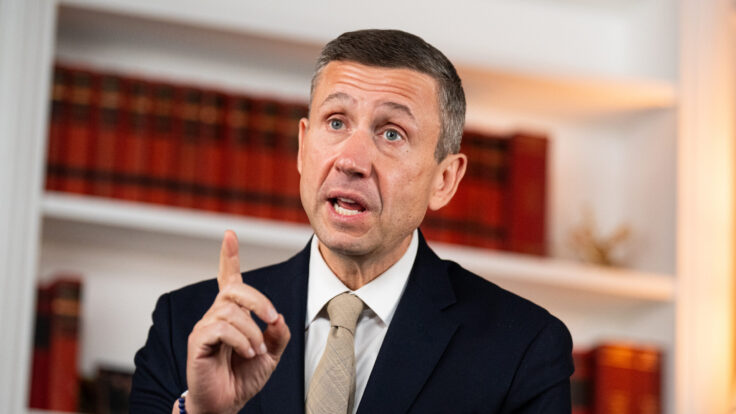
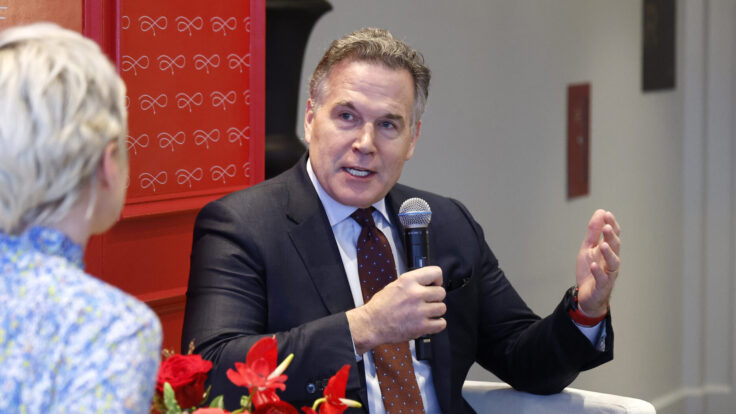
Meanwhile, Sen. Dave
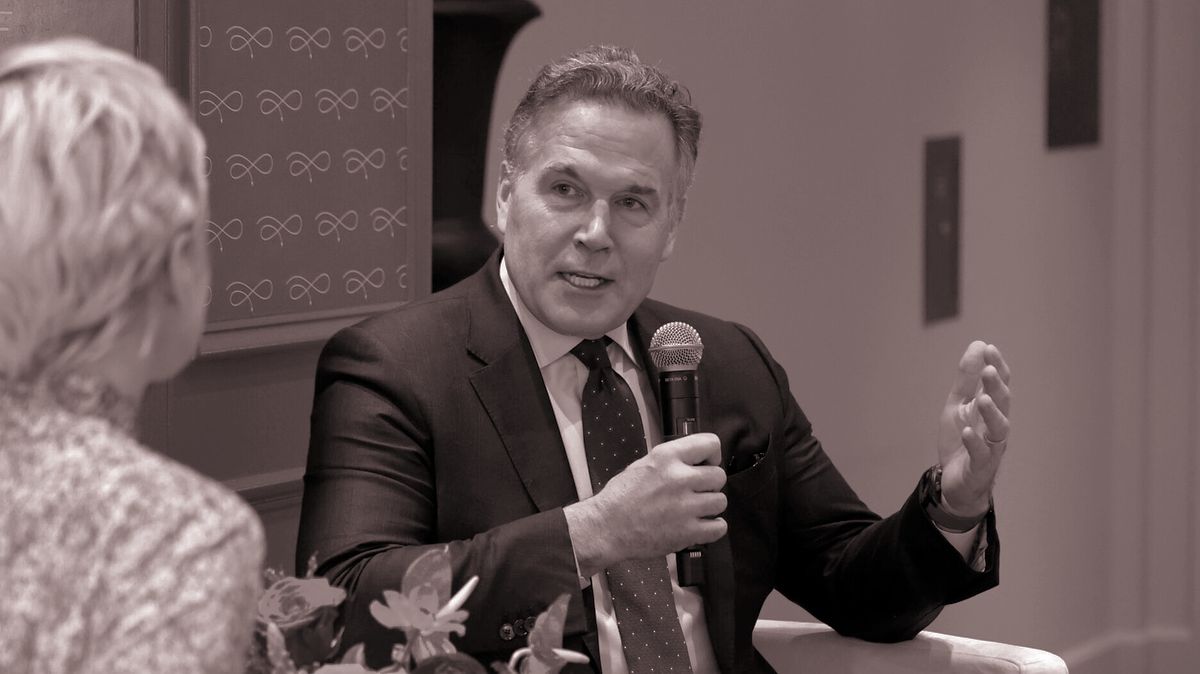
McCormick joined me at the top of the Riggs hotel this morning for a Puck Power Breakfast sponsored by the Edison Electric Institute. The Pennsylvania Republican is hyper-focused on energy, of course, as he represents the second-highest energy-producing state. But we also talked about the Iran war, permitting reform, and his very interesting relationship with his Democratic colleague Sen. John Fetterman. (McCormick got a little testy when I asked him about
President Trump’s national address last week on 2020 election security…) Make sure you’re signed up here, because you won’t want to miss it. Also mentioned in this issue: Tulsi Gabbard, Bill Pulte, Joe Biden, Brian Fitzpatrick, Mehmet
Oz, Bob Casey, Shelley Moore Capito, and… the FISA fears hanging over Jay Clayton’s confirmation. |
|
|
|
A MESSAGE FROM OUR SPONSOR |
At Wells Fargo, we're dedicated to making housing more attainable while making a positive impact in the community.
That's why we provide billions to advance housing access and
affordability, including:
• Donating over $830 million since 2019 to support efforts that help keep people housed, increase affordable and workforce housing supply, and open doors to homeownership.
• Providing $360 million in financing toward Willets Point, the largest 100% affordable housing project in New York City in 40 years.
• Giving $102 million to Habitat for Humanity International and local affiliates since 2015 through The Wells Fargo Foundation.
Learn more.
|
|
|
|
- Will
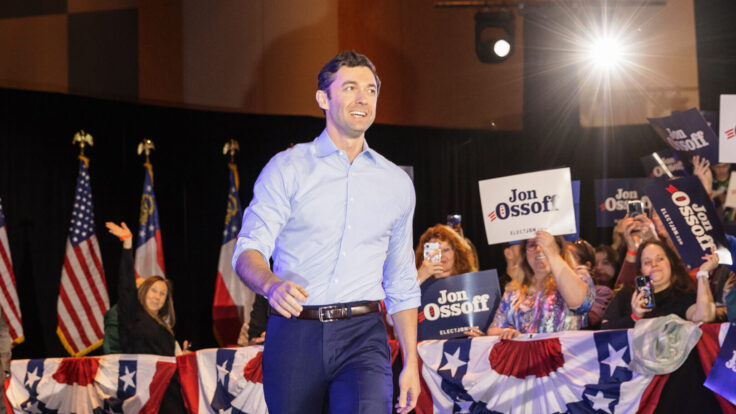
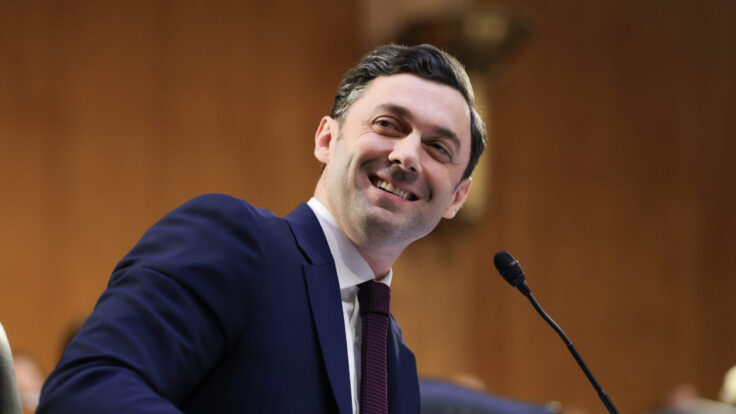
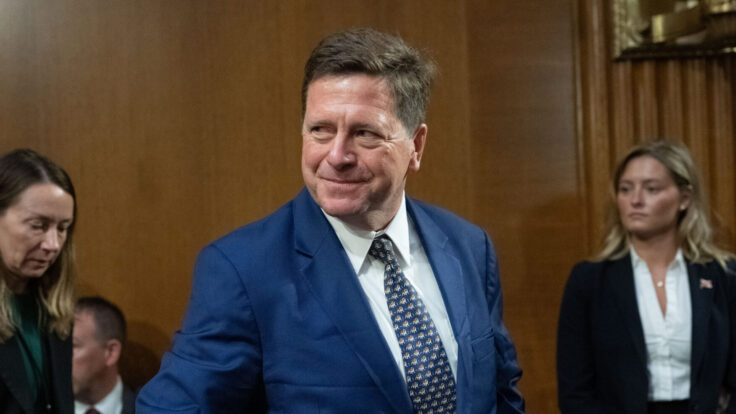
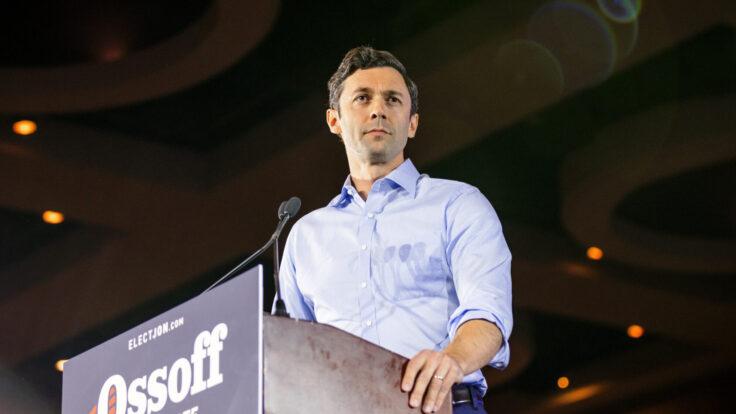
FISA fears get Clayton over the line?: Jay Clayton, the latest Trump nominee for director of national intelligence, had a less-than-stellar hearing last week—he pleaded ignorance about former D.N.I. Tulsi Gabbard’s presence during the F.B.I. raid on voting machines in Fulton County, Georgia, and refused to say whether Joe Biden won the 2024 election (giving Sen. Jon Ossoff’s reelection
campaign yet another viral clip). Nevertheless, he took another step forward today as the Senate Intelligence Committee advanced his nomination along a party-line vote. The full Senate is expected to vote next week.
While Democrats had viewed Clayton as a slightly less objectionable alternative to Trump loyalist Bill Pulte, fewer are now likely to
vote for him, though his appointment would presumably remove their current opposition to reauthorizing FISA Section 702—the critical intelligence gathering tool they’d blocked in protest of Pulte’s nomination. The clock is ticking. “If we don’t reauthorize 702, there’s not a 99 percent chance we’ll be hit,” an emotional Rep. Brian Fitzpatrick told me today. “There’s a 100 percent chance we’ll be hit with a terror attack. One hundred percent.”
Perhaps, though a
growing coalition of critics—including some Republicans—argue that Section 702 violates Americans’ privacy, and its lapse has proven that it’s inessential. Fitzpatrick, a former F.B.I. agent and member of the House Intelligence Committee, disagreed in the strongest possible terms. “702 allows intel and law enforcement to work together seamlessly,” he told me, adding that he brings up the threat in every Intelligence Committee meeting. “We have just reconstituted the wall that existed before
9/11, so we’ve now effectively put ourselves on pre-9/11 footing.”
Either way, the House is about to leave for recess until the end of August, so Section 702 will remain dark for at least another five weeks. - The South Carolina race is on…: The window to replace the late Sen. Lindsey Graham on the ballot in South Carolina is now open and will remain so for the next week. So far, five candidates have filed papers, with at
least three more expected: Rep. Ralph Norman, Rep. Russell Fry, and Sen. Darline Graham, who was appointed to her brother’s post last week. Graham would be running with Trump’s endorsement, although one Republican senator told me that some of her new colleagues worry about the emotional toll of a campaign, especially so close to losing her brother.
Meanwhile, earlier today Norman picked up the endorsement of Rep.
Nancy Mace, who opted not to run. The two ran against each other in the gubernatorial primary, a race Norman described as a “friendly” competition, welcoming her support. “She’s got a hardcore base that sticks with her,” Norman told me. But there’s no escaping the broader political context: Trump’s endorsement of Graham is another test of his grip on the party. Mace is sensing weakness.
|
|
|
|
A spicy conversation with Pennsylvania Senator Dave McCormick on choking out Iran, reversing
Biden-era energy policies, and his unlikely friendship with fellow senator, and fundraising partner, John Fetterman. |
|
|
|
I first met Dave McCormick in 2023 during a party for his book, Superpower in
Peril, hosted at the offices of a white-glove law firm in Philadelphia. At the time, he had recently stepped down as the C.E.O. of Bridgewater Associates, one of the world’s largest and most secretive hedge funds, and was clearly telegraphing his continued interest in higher office. The firm’s partners included both Republican and Democratic donors, most of them searching for clues about whether McCormick, a decorated military veteran with Princeton and Bush administration
accolades on his résumé, was going to make another run for Senate after losing the 2022 G.O.P. nomination to Dr. Mehmet Oz.
Of course, you know the rest of the story: Oz lost to John Fetterman; McCormick raised more than $27 million for another campaign (including $4 million of his own money); and went on to beat Democratic Sen. Bob Casey, a veritable Pennsylvania institution, by a mere 15,115 votes. Not that the election’s razor-thin
margin has dulled his ambitions: Amid all the talk of J.D. Vance and Marco Rubio battling it out for the 2028 presidential nomination, there’s plenty of speculation in Washington that McCormick could be a contender down the line. |
|
|
|
A MESSAGE FROM OUR SPONSOR |
Our housing programs and initiatives are tailored to help individuals and families alike — and aim to create thriving
neighborhoods where everyone can find a place to call home. That’s why we provide billions to advance housing access and affordability.
Learn more.
|
|
|
|
Anyway, like many successful senators, McCormick has honed his expertise on a few pet issues—in his case,
U.S. energy dominance and permitting reform. So, naturally, those were among the topics that I put to him this morning for my latest Puck Power Breakfast in Washington. We talked about whether Congress can actually pass reforms to unleash energy development, now stalled for three years and counting, and how the war in Iran is impacting those goals. Plus, he dished on his unique relationship with Fetterman, and got pretty testy when I asked him about Trump’s primetime spiel on
election security. As always, the following has been lightly edited for length and clarity. |
Leigh Ann Caldwell: We’re on our 10th straight day of renewed hostilities
with Iran. Do you think the administration needs to do more militarily?
Sen. Dave McCormick: I think we’re at a fork in the road. Iran has a choice. We’ve done dramatic damage to their missile capability, to their drone capability, to their manufacturing capability. We’ve certainly set back their nuclear program, but they haven’t given up their commitment to a path toward nuclear weapons.
I’m hopeful that they will do that, and
that will allow us to have an economic relationship that’ll be great for the Persian people. And so I hope Iran still has a path to some sort of peaceful negotiation. But I think we should look at Iran with deep skepticism as a country that has lied to us for 47 years. We should look at any potential deal with skepticism, and trust but verify.
If this war continues, how can the country sustain a closed or nearly closed Strait of Hormuz—and its impact on oil, gas prices, and
inflation?
I wouldn’t give up on the possibility of a peaceful resolution. Iran’s economy is highly dependent on oil, so imposing that economic pressure through military pressure is what we should be doing: choking out Iran to get them on a reasonable path.
But let’s assume it is prolonged. The starting point is that America is better positioned for any oil shock associated with the Strait than any other country in the world, because of
our strategy of energy dominance. We’re the number one energy producer in the world.
That said, if you’re in Pennsylvania and gas is $4.10 a gallon, you’re feeling it. It’s an impact on working families living paycheck to paycheck, and it’s an input into inflation. But the trade-off is: Do you want Iran to have a nuclear weapon, or take steps to mitigate that impact? That’s what the president decided.
Does Congress need to authorize this
war?
We’ll have to see. I’ve voted consistently to make sure the president can exercise his constitutional authorities. They’ve notified Congress that we’re back in combat operations, and we’ll see how it progresses over the next 60 days. |
U.S. energy demand was flat for decades. In 2025 it rose for the first time, and it’s expected to
rise exponentially, largely because of A.I. and data centers. Is the U.S. capable of providing the energy to meet that growing demand?
The short answer is yes, but it depends on what we do. We’re in the most profound moment of change in our lifetimes, maybe in human history. The A.I. revolution is uniquely an innovation that innovates on top of itself—we haven’t experienced anything like it. And you can’t say A.I. revolution without
saying energy revolution, because A.I. requires enormous energy and compute. So you have to ask: Does America need leadership in the world? Yes. We don’t want China setting the rules for A.I. or disproportionately reaping the benefits. The A.I. revolution offers enormous benefits to society and also enormous disruption. How we guide A.I. in America will determine how it benefits all Americans. It’s creating a lot of anxiety, understandably—about jobs, energy prices, national security.
My goal as a policymaker should be to embrace the revolution in a way that ensures the benefits are shared and the risks are mitigated.
A big part of that debate is data centers. These are decisions that need to be made within communities. Data centers are clearly economic engines: They create thousands of jobs to build, hundreds of jobs to run them, plus hundreds of jobs to support them in terms of the hotels and restaurants around them. But when a data center comes into a community,
there needs to be a formal covenant around five things: protection on energy for local consumers, water, jobs, taxes, and any other infrastructure commitments that come with it…
This administration has been hostile toward wind and solar. Is it the time to pick winners and losers in the energy space?
I think you got that backwards. The previous administration put its finger on the scale for alternatives, and this administration has
essentially rolled back those incentives. It’s the time to embrace all forms of energy and let the market decide where the capital goes.
Well, the government is still subsidizing nuclear, which also has federal loan guarantees. Oil and gas also have tax incentives.
The Biden administration was hostile to fossil fuels, and this administration has brought much more balance. I’m not saying complete balance, but much
more balance to that, and unlocked the possibility of natural gas and fossil fuels. Nuclear power still has subsidies. I agree with that, because you want to use incentives in places where there’s a market breakdown, and nuclear power is one of those areas. The biggest thing we could do for energy, in my opinion, is permitting reform. |
|
|
|
Can you explain permitting reform? What specifically needs to happen? There are many ideas on the
Hill.
There are many ideas, but here’s the basic concept: For energy projects across the board—pipelines, natural gas, drilling, even solar—getting a permit takes five to six years on average. To put that in perspective, it took three and a half years to win World War II. And our primary competitor, China, has none of those problems. I’m not saying there shouldn’t be environmental review. I’ve introduced comprehensive permitting reform
legislation with three goals. One, the review period to get a permit should be constrained—let’s say a year. Two, once a permit is granted, it can’t be litigated after the fact, because endless litigation makes it hard for capital to invest. And three, if you turn a permit down, you have to give a clear justification for why the denial is consistent with the law and the public good.
By most estimates, there’s a trillion and a half dollars of capital sitting on the sidelines. So this isn’t
just energy policy, it’s economic policy.
The House has passed a narrow permitting reform bill. What’s the holdup in the Senate with permitting reform?
There’s an ongoing negotiation, with Senator [Shelley Moore] Capito leading on the Republican side. Various degrees of optimism, but three things make this moment more plausible than past ones: One, there’s largely agreement that all sources of
energy are necessary given this spike in demand; two, it’s not viable politically to be against all forms of energy; and three, the demand we’re seeing and the pressure on prices create a moment for real progress. |
You made news last week when you and Sen. John Fetterman created a joint fundraising committee. What
are you going to do with the money—are you planning to give some of the money you raise to Democrats?
My relationship with Sen. Fetterman is probably the biggest surprise I’ve had since coming to the Senate. He campaigned against me, and he was a very good, very snarky campaigner. We sat down after I won and just hit it off. We had dinner with our spouses at a Brazilian restaurant in Pittsburgh, and people were lined up around the
restaurant for selfies with John Fetterman. We’ve found ways to work together on fentanyl, shipbuilding in Philadelphia, U.S. Steel, the border. Our voting is very different, but on things that matter to Pennsylvania, we work together. I trust him. A couple of big donors said, I like what you’re both doing—can I give to both of you? So we created the J.F.C. as a mechanism to do that. Whatever we raise, we split. I think it’s indicative of a thirst, at least in Pennsylvania, for knowing
that the people you elected are working for you.
Have you talked to him about changing parties?
No, never. I never want him to do anything that’s not what he wants to do. One of the things that brought our relationship together was, three or four months into my term, when there was a series of clearly orchestrated stories attacking him—many from within the Democratic Party—saying he wasn’t healthy or cognitively there. It was very
nasty, and nobody was defending him. I texted him: You’re getting killed. I’d like to defend you, but I don’t want to hurt you. Would you like me to? He said, Yeah, nobody else is going in.
Last Thursday, the president gave a speech claiming there was more election fraud in 2020. You’ve said Biden won that election. Can you explain why Republicans are so scared to say Biden won?
I mean, there’s so much good you
could have talked about instead of asking me a question which I’ve answered many times. So why you’re asking me again is interesting. I’m not going to speculate about what other Republicans do. I don’t know why it’s hard. I know what I’ve said: I thought President Biden won the 2020 election. But I want to focus for a second on Pennsylvania in 2020 and 2024—there were certainly election irregularities. Acknowledging those irregularities doesn’t mean you think they would have overturned the
results. I absolutely understand why people want reform, and that’s why the SAVE Act is so important. Eighty percent of Americans think we should have voter ID, 80 percent think we should have registration. People can disagree on the outcome of an election and still agree that we need to bring confidence back to our elections.
Do you have confidence in the 2026 elections?
We’ll have to see, but yes. I have no reason to believe
otherwise. I do think mail-in ballots offer lots of opportunities for uncertainty—in my case, I lived through two recounts, with ballots coming in weeks after the election. I lost my first election by 900 votes out of 1.5 million and won my second by 15,000 out of 7 million. It doesn’t take many fraudulent ballots to change an outcome. So we need to squeeze out the uncertainty and bring confidence back—and voter ID and proof of citizenship seem like things most people should agree on. That’s why
the president is so focused on it, and why I’ve been focused on it. |
|
|
|
Join Emmy Award-winning journalist Peter Hamby, along with the team of expert journalists at Puck, as they let you in on the
conversations insiders are having across the four corners of power in America: Wall Street, Washington, Silicon Valley, and Hollywood. Presented in partnership with Audacy, new episodes publish daily, Monday through Friday. |
|
|
|
Unique and privileged insight into the private conversations taking place inside boardrooms and corner offices up and down Wall
Street, relayed by best-selling author, journalist, and former M&A senior banker William D. Cohan. |
|
|
|
Need help? Review our
FAQ page or contact us for assistance. For brand partnerships, email ads@puck.news.
You received this email because you signed up to receive emails from Puck, or as part of your Puck account associated with {{customer.email}}. To stop receiving this newsletter and/or manage all your email preferences, click here.
|
Puck is published by Heat Media LLC. 107 Greenwich St., New York, NY 10006 |
|
|
|
|