Welcome back to The Varsity. I’m John Ourand, fat
and happy in D.C. following a weekend filled with steamed crabs and sweet corn. Reminder: We’re now less than a week away from college football’s unfortunately named Week 0, highlighted by one game in Dublin (Kansas State vs. Iowa State) and another in Honolulu (Stanford vs. Hawaii).
🚨 Programming note: There’s been a lot of buzz around our In the Arena event that we’re hosting with
MoffettNathanson on October 16 in New York. The first batch of Inner Circle tickets sold out quickly. Tomorrow, though, we’ll release a few extra Inner Circle tickets at preferred pricing. Click here to upgrade your subscription to the Inner Circle, and here for more on the event. Hope to see
you there.
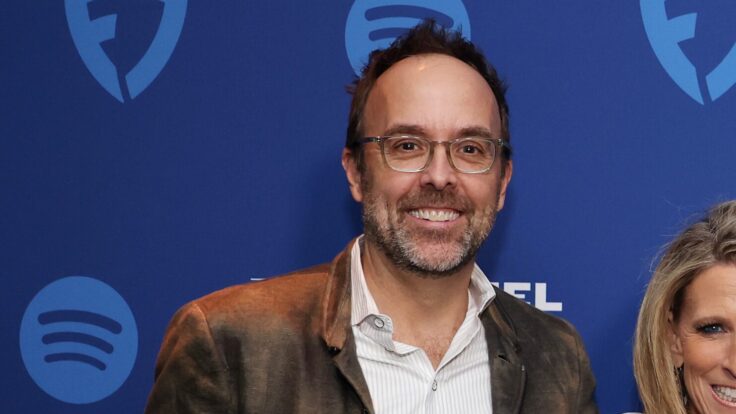
🎧 Pod alert: Yahoo Media president Ryan Spoon, who was hired to expand the company’s sports business, is swinging by the pod tomorrow to discuss growing the Yahoo brand in a very crowded marketplace. And if you missed yesterday’s pod with ESPN’s Jeff Passan, about the tensions between the MLB owners and the players union, it’s also
worth a listen. You can find The Varsity podcast here and here.
Let’s get to it… |
|
|
A MESSAGE FROM OUR SPONSOR |
Forever at the top of its game, the trailblazing BMW 7 Series. Engineered to win. Learn more at
BMWUSA.com |
|
|
- Pitaro’s
ESPN teaser: Jimmy Pitaro will host a press briefing tomorrow morning in New York to unveil all the bells and whistles around its direct-to-consumer app (née Flagship) before its official launch on Thursday. The exact details will be embargoed, but you can expect onscreen overlays for stats, fantasy, betting, and merch information. (It’ll likely be a Bloomberg-esque L-shape overlay instead of a traditional chyron.)
While the big news will be the screen—how the app
looks and feels—I’m more interested in the bigger picture, post-launch. For ESPN’s streaming product to become indispensable, Pitaro will need to work closely with competitors. Right now, that’s happening outside the app, through bundling deals with NFL RedZone and Fox’s streaming service, which also launches Thursday. But Pitaro’s image is of a future for ESPN that would include not just exclusive sports rights, but also rival channels—like how you can subscribe to HBO Max from within
Apple TV.
For now, of course, ESPN and Fox Sports remain competitors for viewers, ad dollars, and sports rights. But as they launch their new products, they’ll have to cooperate to compete against Netflix, Amazon Prime, YouTube, etcetera. (The enemy of my enemy…) How that partnership develops, and who else joins that Venu-ish bundle, is one of the biggest storylines to watch going forward. - Kaepernick’s creative differences: Alas, it
looks like Spike Lee’s Colin Kaepernick documentary series has been killed… at least for now. I first wrote about the problems facing the project in March 2024, almost a year and a half ago; ESPN originally
planned to air the series in the fall of 2023. At the time, insiders I spoke with blamed the delay on “creative differences” between Lee and Kaepernick—which Reuters also cited as the reason behind the series’ cancellation.
So what exactly are those creative differences? Well, last September, my
partner Matt Belloni noted that Lee’s documentary told a story of Black athletes in professional sports, but that “Kaepernick, who is a producer on the project and maintains approval rights, is said to have wanted the film to be more limited to his experience. He also asked that certain things be added after Lee finished his final
cut.”
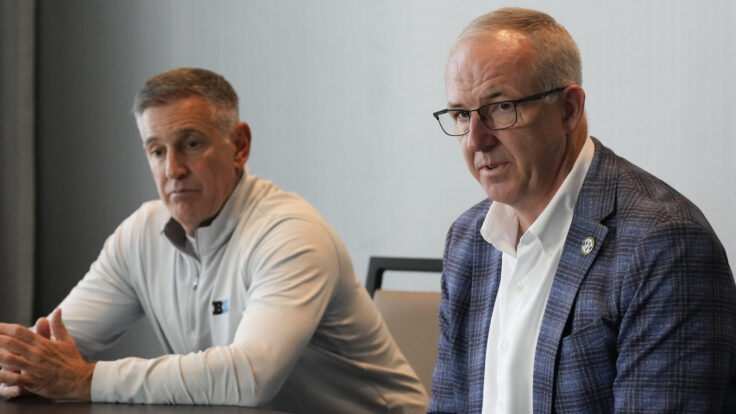
In any case, the news comes less than a fortnight after ESPN announced the NFL was taking a 10 percent stake in the company, as part of the deal for NFL Network, RedZone, etcetera. The timing might raise some eyebrows, but for their part, my ESPN sources insist the NFL did not pressure ESPN to kill the series, even though it was expected to be tough on the league. - A CFP micro-scandal: The Big Ten is in damage control mode after
Pete Thamel’s weekend scoop that the conference considered expanding the College Football Playoff to as many as 28 teams from its current 12. Thamel wrote that commissioner Tony Petitti ran the idea by his conference last Wednesday, which is presumably how the news started leaking
out.
Sources told me this wasn’t a “trial balloon”–style leak. But if the conference were interested in some sort of gut check, they now have their answer. Media executives, who hold a lot of power in college sports, won’t support a plan that devalues college football’s regular season. And if the CFP has to take a minimum of seven teams from the SEC and the Big Ten each season, that would make top conference games, like even the Michigan–Ohio State rivalry, much less important.
- The Kobe-M.J. $6 million trading card: For those looking for more info on the dual Michael Jordan–Kobe Bryant card that just sold for $6.16 million—a record price for a basketball card—Puck’s Julie Davich has you covered: “The
Jordan-Bryant card is, of course, one-of-one. Upper Deck only produced Dual Logoman Autograph cards between 2004 and 2009, and while several player pairings were created in multiples, this is the only card featuring M.J. and Kobe. The condition rating is just 6 out of 10, but condition matters less to collectors for unique cards like this one,” she wrote. “To increase value, Upper Deck started adding NBA logo patches from gameworn jerseys and signatures to cards in the early 2000s, and this card
includes both.”
- Spotted in the news: My favorite part of this Mark Shapiro profile in the Journal is definitely Steve Bornstein’s quote that Shapiro should succeed Bob Iger. “He’d be a great C.E.O. for Disney,” Bornstein said. …
Meanwhile, the best line in this New Yorker profile of Bill Belichick was from the writer, Paige Williams, who noted, “Everywhere I went in Chapel Hill, people wanted to talk about ‘the girlfriend,’ or, as one woman, a highly educated medical professional, put it, ‘that Jordon person.’” … NBC Sports
analyst Jimmy Roberts has set up a new company, Big Swing Media, that will focus on the business of lifestyle sports—golf, tennis, skiing, etcetera—which will debut next month; former ESPNers Fred Bucher and Spence Kramer will serve as Big Swing’s C.E.O. and C.O.O., respectively.
|
|
|
Baseball is facing a generational challenge amid labor unrest, the
salary cap debate, Rob Manfred’s search for a new rights deal, and an industry-wide reckoning with the death of the R.S.N.s. ESPN baseball insider Jeff Passan has a few thoughts on how it might all shake out… |
|
|
Right now, professional baseball has a lot of momentum cruising into its
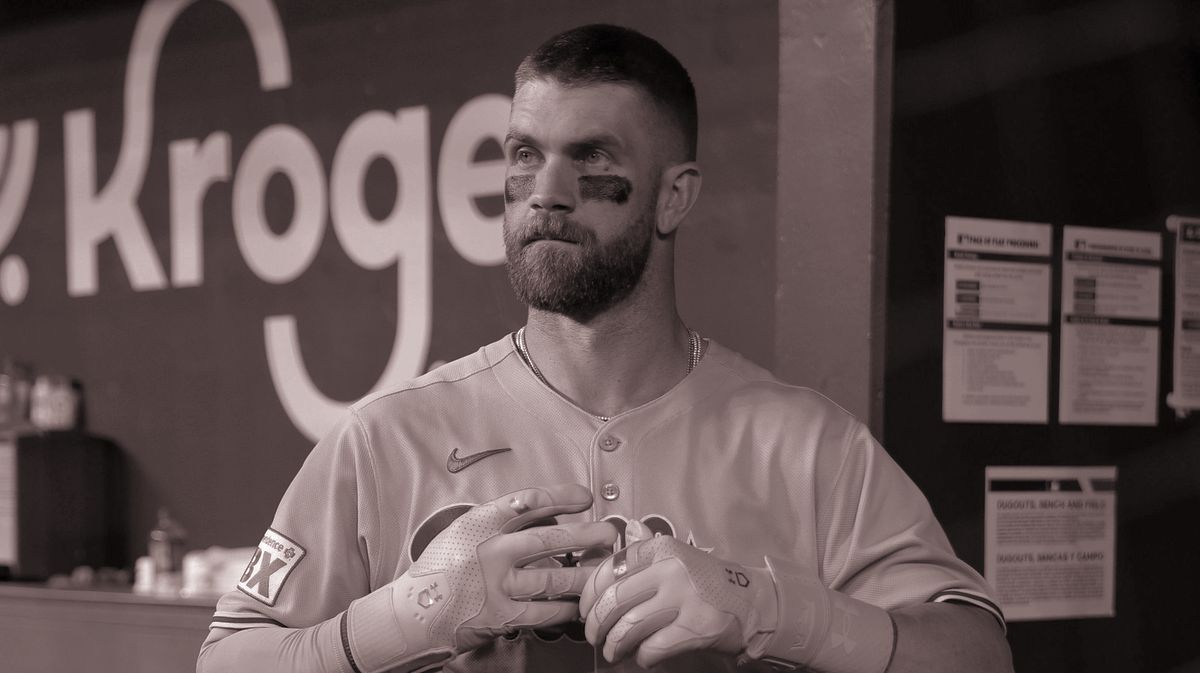
September pennant drive. Attendance and TV viewership are both on the upswing, and teams are tracking to bring in record revenue. And yet, these green shoots have been overshadowed by tensions between MLB owners and the players union—best encapsulated by Bryce Harper’s recent confrontation with Rob Manfred,
in which he told the commissioner, to his face, that “if you’re talking about a salary cap, you can get the fuck out.”
It’s true that, on the field, the divide between the big spenders and everyone else is more glaring than ever. Meanwhile, the salaries for MLB’s top 1 percent keep ballooning. For owners, the solution is simple: Institute a salary cap, just like the NFL, NBA, and NHL. But that’s always been a third rail for players, who’ve long argued that limiting their earnings will
hardly solve the league’s more existential problems. (Also, for all the focus on the Dodgers’ and Mets’ free spending this season, MLB’s best record is in the small market of Milwaukee.) |
|
|
A MESSAGE FROM OUR SPONSOR |
Forever at the top of its game, the trailblazing BMW 7 Series. Engineered to win. Learn more at
BMWUSA.com |
|
|
The divide between the two parties has become so stark that a lockout at the end of
next season seems a certainty. At this point, the main question is whether the league will miss games next season. On yesterday’s The Varsity podcast, ESPN baseball insider Jeff Passan joined me to walk through where things stand, and how this all might affect MLB’s hopes for a national rights deal in 2028. Here are the highlights of that conversation, lightly edited for clarity… |
Solidarity & The Status
Quo
|
John Ourand: Three weeks ago, Bryce Harper and Rob
Manfred had a verbal altercation in the Phillies clubhouse. What is the big picture we should draw from that story?
Jeff Passan: A salary cap is the existential divide between Major League Baseball owners and the players. It can torpedo the sport. Owners don’t like hearing that because they firmly believe a salary cap is good for the health of the sport, in addition to all of the benefits it would bring to ownership in terms of franchise values. But I don’t see it
happening without a catastrophic outcome for Major League Baseball. In order to get a salary cap, owners would essentially have to shut down the sport for at least one year, potentially multiple years.
The national television contracts expire following the 2028 season. The league is looking at a transformative deal that could buoy the sport in the same way new stadiums did back in the 1990s and early 2000s, and R.S.N.s did in the 2000s and 2010s. You’re telling me that, amid all of this,
Major League Baseball is going to risk one of the most important moments in its modern business history? I have a hard time seeing that.
Let’s get back to the Harper-Manfred tussle. Harper is a well-paid superstar. Of course he doesn’t want a salary cap. What about the players who aren’t superstars—the middle class? Could that be a wedge within the Players Association?
Potentially. But if you’re an MLB player, you’ve
already surged through all sorts of roadblocks to the point that you believe in yourself. What’s keeping you from being Juan Soto or Bryce Harper? Still, a lot of players recognize that careers are not very long, and the likelihood of becoming one of those players is minimal. The reason that the union preaches solidarity is because they recognize this is a natural way for Major League Baseball to try to bifurcate the players. That’s a huge pressure
point.
MLB is going to lean into the idea that the minimum salaried players—who represent close to a majority in the big leagues—could see an extra few hundred thousand dollars a year with a salary cap, and more money could go into the pre-arbitration bonus pool.
How does the union counter that argument?
The union is continuing to preach that all this can happen inside the current financial structure, which is why the MLBPA wants the status quo. They like
the system the way it is right now. |
“The Owners Have More to
Lose”
|
I also think that Major League Baseball has been effective in communicating the
need for a salary cap.
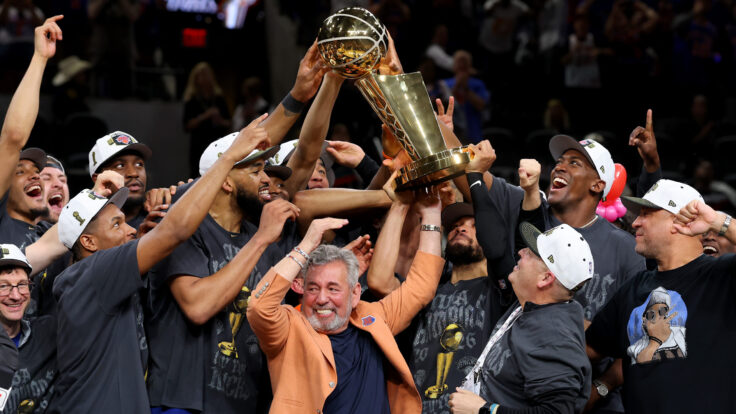
MLB’s messaging has been effective. Look at the tailwinds that the league has behind it: All three of the other major men’s North American sports have salary caps, and beyond that, look at the World Series winners over the last decade. Kansas City won in 2015, but then it’s been all bigger-market, higher-dollar franchises. If you look at teams that are in the playoffs this year or in line for playoff spots this year, a majority of them are over the
competitive balance tax threshold.
But then you’ve got the counterargument, which is really difficult for me to argue against. If you’re Major League Baseball, can you deny the existence of the Milwaukee Brewers, Tampa Bay Rays, and Cleveland Guardians? Three franchises that consistently have bottom-third payrolls and exist in smaller markets, but are among the most consistent winners in baseball’s regular season?
The two sides are going to talk past each other. MLB is going to
focus on championships, and the MLBPA is going to focus on who gets into the playoffs, and who has the most wins over a particular period of time. It’s just a matter of how fans value success. Is it championships alone—or is it competitiveness with the opportunity to win championships?
What’s the likelihood of a work stoppage?
98 percent.
What’s the likelihood of missing games?
A lot, lot, lot lower than that. I keep coming
back to the TV deal. I don’t think that necessarily means the owners are going to buckle—I just think the owners have more to lose in this situation than the players do.
Why should ownership be optimistic then?
We saw it during the last labor negotiation. The eight members of MLBPA’s executive subcommittee voted against the deal that was eventually accepted. But 26 of the 30 teams, in turn, voted for the deal. The idea that players are going to stand as a fully
united front and follow leadership—the MLBPA would love that, but I don’t put it past players to acknowledge that they have finite careers and a limited time to make money. Are they really going to let what amounts to percentage points potentially derail their personal, financial well-being? I can very easily see a scenario where players say, with the prospect of missing games at hand, Forget this. It isn’t worth it. |
On baseball’s labor issues: “A salary cap won’t help MLB owners’ valuation
problems because player salaries aren’t the issue. Mismanaging and devaluing your media rights to the point your main partner opts out of a deal is their biggest issue, and will be until 2028, apparently. Excitement around the game is higher than it’s been in years—TV ratings, attendance—and yet they’re desperate to (probably) hide games on Apple TV+ and lock out players for a season.” —A brand strategist
More on baseball’s labor issues: “The problem with a salary cap in MLB
is, sure, it will help the owners in the smallest market. But it’s going to eliminate 25 percent of the fans. What 1994 showed is a whole hell of a lot of people won’t come back. It also ignores the fact that if those cheapskate small-market owners invested more, they’d make $$. The real question here is whether the big-market owners are really going to accept taking a massive hit financially to lose a season, lose 25 percent of their fans after that season, etcetera. If it were me, I’d get
together a group that’s one more than it takes to veto a labor deal, and say, If we miss regular season games, we’ll veto your precious cap deal. This is all going to be fascinating, because I don’t think Manfred wants his legacy to be the guy who presided over a lost season.” —A Varsity subscriber |
|
|
Ace media reporter Dylan Byers brings readers into the C-suite as he chronicles the biggest stories in the
industry: the future of cable news in the streaming era, the transformation of legacy publishers, the tech giants remaking the market, and all the egos involved. |
|
|
Join Emmy Award-winning journalist Peter Hamby, along with the team of expert journalists at Puck, as they let you
in on the conversations insiders are having across the four corners of power in America: Wall Street, Washington, Silicon Valley, and Hollywood. Presented in partnership with Audacy, new episodes publish daily, Monday through Friday. |
|
|
Need help? Review our FAQ page or contact us for assistance. For brand partnerships, email ads@puck.news. You received this email because you signed up to receive emails from Puck, or as part of your Puck account associated with {{customer.email}}. To stop receiving this newsletter and/or manage all your email preferences, click here. |
Puck is published by Heat Media LLC. 107 Greenwich St, New York, NY 10006
|
|
|
|