Welcome back to The Varsity, coming to you live from the center of the dreaded heat
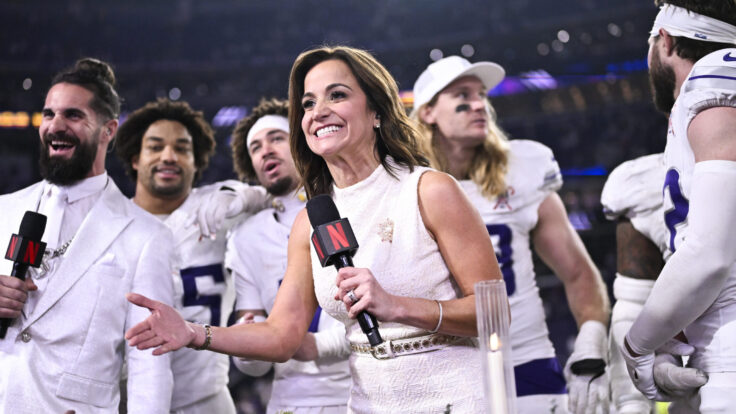
dome: Washington, D.C. Let’s get started with the body-cam footage everyone’s talking about today: Dianna Russini talking her way out of a ticket earlier this year. For the record, I only name-checked Marchand to try to get out of a ticket one time, and all I ended up with was an extra glass of crisp sancerre. (Never tart, you
philistines…)
In today’s issue, Fox Sports C.E.O. Eric Shanks offers his take on the World Cup—why this year’s iteration has been so successful, the controversial hydration breaks, and whether Fox will go whole hog for the next World Cup in 2030. Also, I examine the other topic on everyone’s mind: how Comcast’s decision to spin off NBC will affect the NFL. Plus, news and notes on Paul Rabil’s next round of financing for the PLL hits, and
Serena’s power TV ratings.
Also mentioned in this issue: Cristiano Ronaldo, Glen Powell, Thierry Henry, Warren Zeiders, Ajla Tomljanović, Alexi Lalas, Rebecca Lowe, Lionel Messi, Tony Cavalero, Zlatan Ibrahimović, Colin Cowherd, Joe Tsai, Gerry
Cardinale, Danka Kovinić, Rich Greenfield, Rob McElhenney, and more.
This issue was created with contributions from Curtis Rowser. |
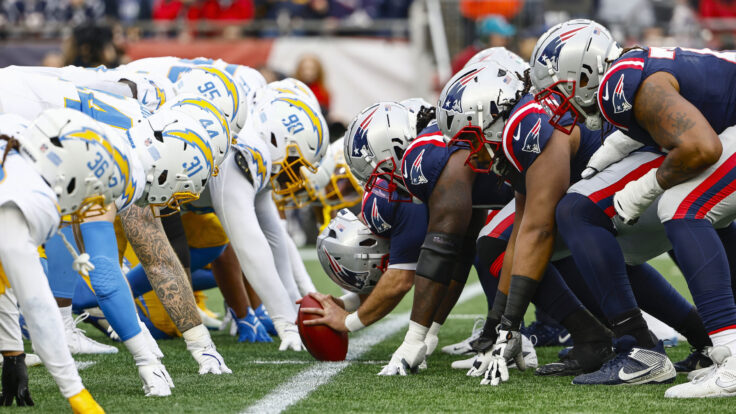
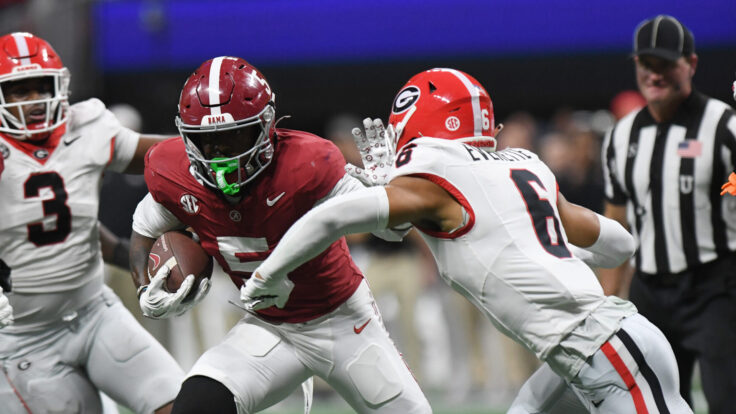
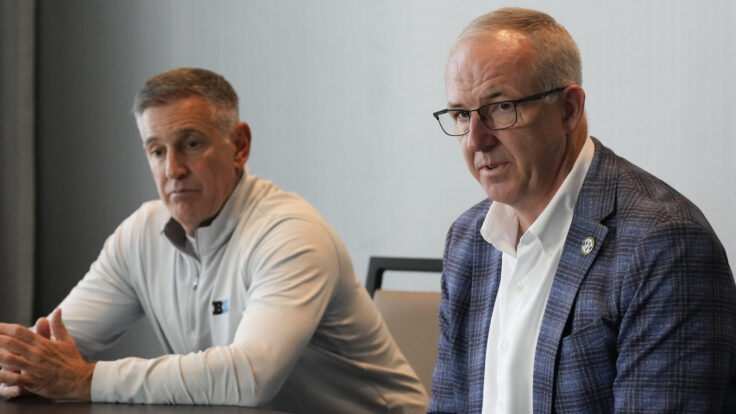
- Comcast’s NFL fallout: NBC was always going to do whatever it took to retain the rights to Sunday Night Football, television’s top primetime show for the past 15 years. Yesterday’s news that Comcast plans to spin off its media and tech businesses into two different companies only raised the stakes. In a research note today, LightShed’s Rich Greenfield argued that keeping the NFL has become even more critical for NBC. “The NFL was never an
existential priority for Comcast as a whole,” he wrote. “Splitting out NBCUniversal changes that dynamic, and maintaining NFL rights becomes far more important for a stand-alone NBCU. That shift in dependency moves leverage toward the NFL.”
The NFL had hoped to work out extensions with its network partners before the 2026 season begins on September 9. That timetable now appears increasingly unlikely, considering the league hasn’t embarked on formal negotiations with any network besides
CBS, whose change-of-control clause allowed the NFL to open its deal immediately. In his note, Greenfield suggested that the renegotiations will occur before the end of the 2026-27 season. (For more of Puck’s signature analysis of Comcast’s bombshell, check out Matt Belloni’s perspective on a preemptive deal here, and Dylan
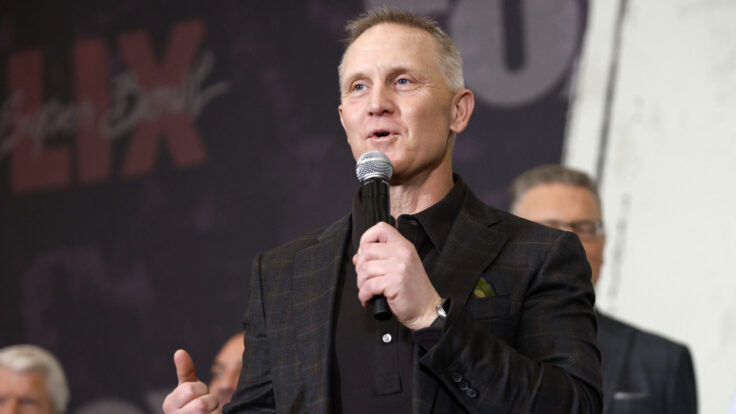
Byers’s view of the M&A playing field here.) - Doubling down on pro lacrosse: The Premier Lacrosse League has just announced a $100 million Series E fundraise led by billionaire Alibaba chairman Joe Tsai and Ares. Not long ago on the Varsity podcast, PLL co-founder and president
Paul Rabil told me that the league’s next phase of growth might include selling individual teams for the first time. The PLL currently operates as a single-entity league, owning all eight of its men’s clubs and all four of its women’s teams. “When sophisticated capital starts moving toward an asset class, that tells
you something about where the market thinks value is headed,” Rabil said. Other investors include ESPN, Wrexham AFC co-chairman Rob McElhenney, country singer Warren Zeiders, and actors Glen Powell and Tony Cavalero.
- The Serena effect: Serena Williams returned to Wimbledon this afternoon, losing an exciting opening-round match in three sets.
Williams’s return to Centre Court prompted Nielsen to revisit the numbers at the 2022 U.S. Open, her last appearance at a major before today. During that tournament, her opening-round, straight-sets victory over Danka Kovinić averaged 2.7 million viewers—four times the opening-round audience the previous year and even larger than the prior year’s championship match. Her third-round, three-set loss to Ajla Tomljanović averaged 4.8 million viewers and
peaked at 6.9 million in the final set, making it ESPN’s most-watched tennis telecast. Can’t wait to see the numbers from today…
|
|
|
|
With World Cup ratings smashing expectations, Fox Sports C.E.O. Eric Shanks opens
up about his network’s long bet on soccer, the Zlatan phenomenon, and the virtue of hydration breaks. |
|
|
|

| John Ourand
|
|
|
|
The World Cup has taken over America—filling stadiums, dominating news feeds, and flooding social
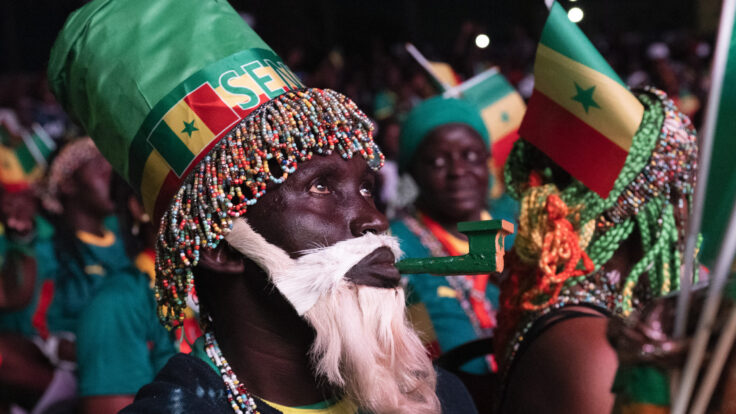
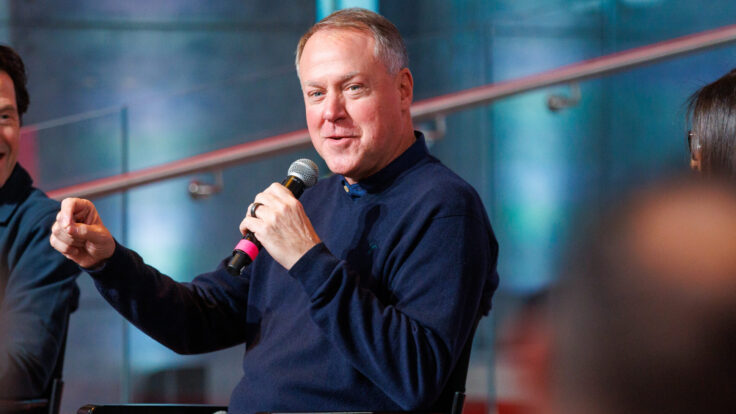
media with footage of foreign visitors marveling at waffles, gravy, and beef ribs. It has also quickly become the most-watched World Cup that Fox has ever carried, and a validation of its decade-long bet on the sport. So I sat down with Eric Shanks, the C.E.O. of Fox Sports, for Wednesday’s episode of the Varsity podcast, which will be posted tomorrow. He shed light on the biggest surprises for him thus far, Fox’s always-on approach to coverage,
Zlatan’s unlikely TV career, and much more. As always, I’m previewing the highlights for loyal Varsity readers tonight; the following conversation has been lightly edited for length and clarity. |
John Ourand: This is the first World Cup held in the States since
Fox acquired the rights. What’s been the biggest surprise?
Eric Shanks: Besides the ratings, which have been tremendous, the thing that’s surprised me most is how obsessed the rest of the world is with coming to visit America. It’s taken over everyone’s social media feeds, which feeds back into people wanting to watch: Why are all these people from all over the world coming to watch soccer in the United States and enjoying their time here?
There
were real questions about early-round ratings when FIFA expanded the tournament from 32 to 48 teams. What were Fox’s internal expectations?
Honestly, that’s one of the biggest surprises. The expansion means you’re adding 16 countries that wouldn’t have qualified before. But these countries have really shown up. Darlings like Cape Verde and Ivory Coast have come in and captured the nation’s attention, and they’re very competitive. This tournament has been absolutely fantastic. It
really is like March Madness, having a 15-seed versus a 2-seed and playing to a draw. And the great thing about soccer is you still get a point for a draw. It feels like a win for some of these countries to come in against Spain, get a draw, and earn their first-ever World Cup point. It’s been a smashing success, and that’s been one of the biggest pleasant surprises for me.
I know you read everything. How does it affect you when you read reviews—particularly the criticisms around
the studio show with Zlatan, Alexi, and Thierry?
I’m not obsessed with reading about it, because you need the power of your conviction that you’ve put the right group together. I feel like we have an amazing team. We have a pretty good tradition of our studio shows being a big part of our brand, whether it’s Fox NFL Sunday, the World Series team, or Big Noon Kickoff. Getting that chemistry right is hard. When we put this group together, we think it’s a great
blend of American voices and top international stars. And what makes great television is taking the sport seriously but not taking yourselves too seriously.
Locker rooms are pretty much the same around the world—a lot of busting chops, a lot of one-upping each other. That’s the beauty of working in sports: You get to see these athletes who are at the top of their game poking at each other. That’s what we were hoping for with Thierry Henry, Zlatan, and
Alexi, and bringing over Rebecca Lowe. They’re having a ton of fun, whether it’s in the avocado room, which is our green room, or on air. We enjoy it, and it seems like the country is enjoying it.
Alexi has been a known quantity at Fox for a long time now. But I’m interested in Zlatan. How did you identify him as a potential studio analyst?
Lex has been the cornerstone of our soccer coverage for as long as I can remember. He’s the
straw that stirs the drink, and he’ll be the cornerstone for many years to come. As for Zlatan, he works with Gerry Cardinale at AC Milan, and Gerry told me, “He should work for you.” So over the course of a lot of months, we recruited him, because he’d never done television and didn’t want to. We got some of the other members of the Fox Sports locker room to recruit him, and he finally signed on. He’s been a tremendous teammate and brings the world’s most unique personality
into the studio. There is no “on air” and “off air,” there is just Zlatan. Hopefully America has fallen in love with somebody whom a lot of them had no idea existed.
The hydration breaks have become so controversial. I’m a casual soccer fan, and I don’t hate them. How do you view them? Will they stick around?
I don’t know if they’ll stick around, but hydration breaks are nothing new in soccer. I think it’s just the consistency FIFA planned that’s probably new even
to hardcore fans. There have been coaches, pundits, and talk show hosts who’ve said that these actually have some incredible benefits. Colin Cowherd put it well the other day: You’ve got players whom we all want to see do well, who are in their late 30s and early 40s, and these breaks arguably help them stay fresh.
On top of that, coaches can address strategy at certain points for the first time ever. Colin even argued that the breaks could be credited with why you’re
seeing such high scoring—it’s the highest-scoring World Cup ever. I know there are naysayers, but there’s an argument that these breaks are part of why the action is so good, especially from players like Messi and Ronaldo. |
The rights for the 2030 World Cup are open. When does that negotiation
start?
It’s in FIFA’s control, and historically it’s a pretty unique process. It’ll kick off when they say it kicks off—probably sometime in the next six to eight months. Based on this World Cup, I’d think there’d be a pretty good market for it. We’ve grown very fond of international soccer here, with the Gold Cup, the Euros, Copa América, and now the Nations League in Concacaf—we just announced an extension of that partnership. So, yeah, based on the success of this year’s World
Cup, I think 2030 will get a lot of people’s attention.
How will your coverage change over the next several weeks?
When American studio shows go on the road, we make it a spectacle and a big party. With this World Cup, we’re doing something nobody else in the world is doing: setting up big stages outside the stadiums to get really large crowds. The logistics and planning that went into setting that up inside of security over the past two or three years is an effort
only Fox Sports is doing. You’ll see more starting July 4, when we’re on the road in Philadelphia, and then on the road the rest of the way. We’ll have a smaller footprint in the L.A. studio and a much bigger one out at the biggest matches every day. Moving people around the country has been by far the largest thing we’ve ever done, and so far it’s all worked according to plan.
You own pieces of properties like IndyCar and the UFL. Why is having an ownership stake so important to
your overall strategy?
I loved being in business with the UFC, and we put everything into the seven years we had with it. The result was that it became so popular we couldn’t afford the rights at the end. One strategy we took was: If we’re going to put everything strategically into making something grow, we need to figure out a way to benefit from that sweat equity. Ideally, we keep IndyCar forever. But there’s another scenario where we make it so popular that somebody wants to
pay a higher rights fee than Fox, so at the end of it we end up getting a third. The same goes for the UFL. The biggest one over the years has been our 20-year partnership with the Big Ten through BTN, which has provided enormous strategic and economic value to the conference, probably more than any partnership with a league in the history of media. |
On Alexi Lalas: “One question I have about all the hate coming Alexi
Lalas’ way: Are some of the complaints due to the fact that he’s tried to cast himself as a member of the manosphere—dabbling in politics and sparring with people on social media?” —A journalist
On the World Cup: “It is a really curious decision by Fox to keep cutting away from the stadium in key moments to take us back to their studio. They lose the natural sound and buildup of the real place in the key moments.” —A media type
On sports-betting scandals: “Sportsbooks talk a good game about integrity, but what sucks is that nagging feeling that results are produced rather than won. It’s terrible to say that and suck the relative joy out of athletic performances.” —A Varsity subscriber
On the market for sports docs: “You should know that the Evert–Navratilova doc on Netflix is definitely worth a watch.” —A sports comms exec |
|
|
|
Puck sports correspondent John Ourand and a rotating cast of industry insiders take you inside the executive suites
and owners boxes where the decisions that shape the entire sports business are made. You’ll hear interviews with players, network execs, and everyone in between. The Varsity is an extension of John’s private email for Puck by the same name. New episodes publish every Wednesday and Sunday. |
|
|
|
The ultimate fashion industry bible, offering incisive reportage on all aspects of the business and its biggest
players. Anchored by preeminent fashion journalist Lauren Sherman, Line Sheet also features Rachel Strugatz, who delivers unparalleled intel on what’s happening in the beauty industry, as well as Malique Morris on retail, D.T.C., and more. |
|
|
|
Need help? Review our FAQ page or contact us for assistance. For brand partnerships, email ads@puck.news. You received this email because you
signed up to receive emails from Puck, or as part of your Puck account associated with {{customer.email}}. To stop receiving this newsletter and/or manage all your email preferences, click here. |
Puck is published by Heat Media LLC. 107 Greenwich St., New York, NY 10006 |
|
|
|
|