Welcome back to Wall Power. I’m Marion Maneker.
All eyes in the
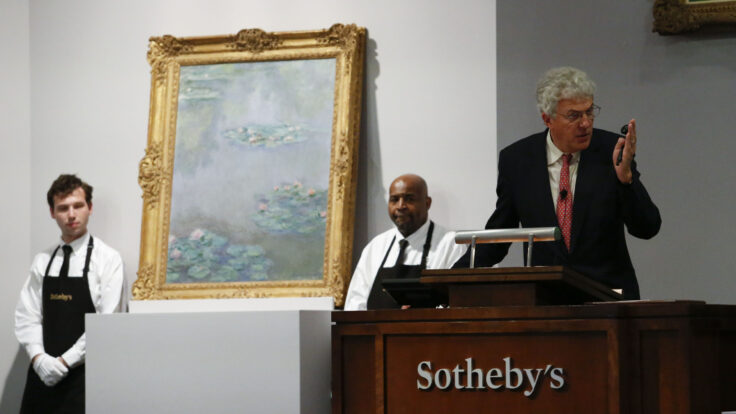
Old Masters world will be on two drawings to be auctioned in the next few days. At Sotheby’s tomorrow, at 2 p.m., we’ll find out whether anyone is willing to pay $15 million for a Rembrandt drawing of a lion. Then on Thursday, Christie’s has its Michelangelo study of a foot for the Sistine Chapel. The estimate is $1.5 million, but it
should go for much more if the bidders really believe the work was created by the Renaissance artist.
Meanwhile, there’s also a lot of interesting art being sold in the Old Masters paintings sales. Tonight, I’m going to take you through what I found most compelling when I toured the exhibitions on Friday.
As always,
subscribers go to heaven; readers of copies passed along by subscribers have a special place reserved for them elsewhere. If you want access to
the Inner Circle, upgrade here. If you want to tell me what I got wrong, reply to this email or hit me up at +1.917.825.1391 on SMS or WhatsApp.
Mentioned in this issue: Jasper Johns, Leonard Lauder, Matthew Marks, Kiran and Shiv Nadar, Manuel Rabaté, Noah Horowitz,
Mohammed Al Saleem, Safeya Binzagr, Ali Banisadr, M.F. Husain, Abdulhalim Radwi, David Hockney, George Condo, Roy Lichtenstein, Ingrid Donat, Diane A. Nixon, Stanley Moss, J. William Middendorf II, Lester Weindling, and many more…
Let’s taxi down the runway…
|
-
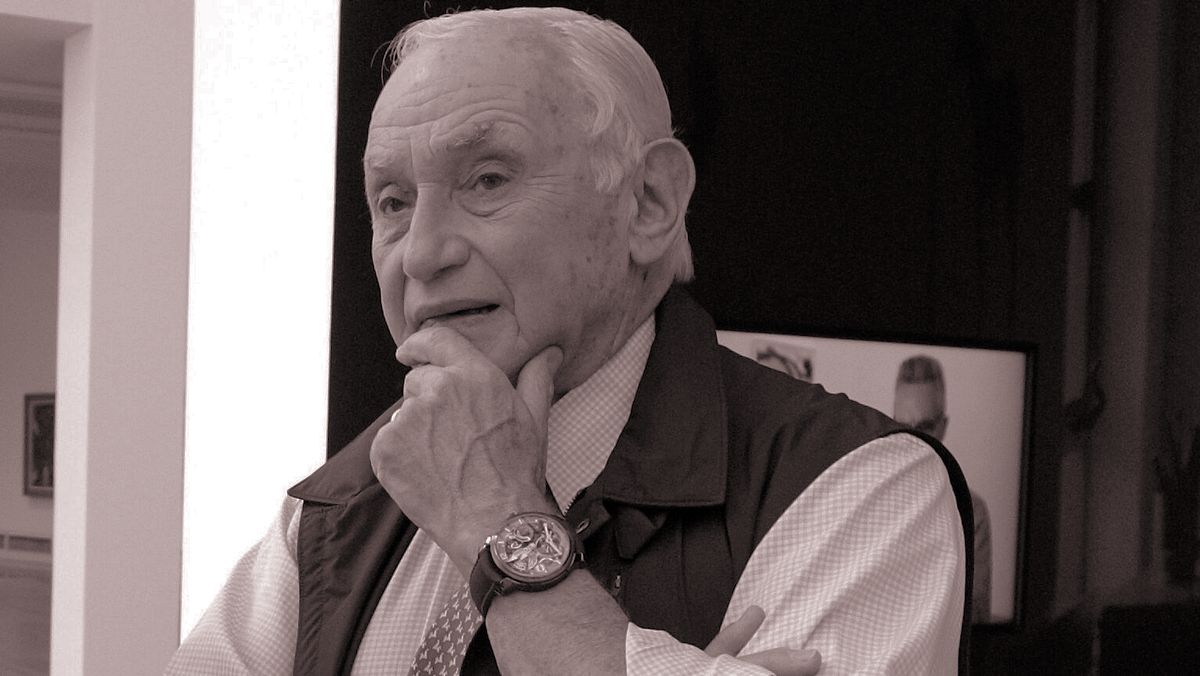
About those Ballantine ale cans: In my recent post about the Jasper Johns show at Gagosian, I made passing reference to the fact that the artist sold one of the two editions of his famous
Painted Bronze, from 1960, to Leonard Lauder in 2021. The work depicts two cans of Ballantine ale on a plinth, and the sale was noteworthy for a few reasons.
First, Lauder paid a hefty price—I remember it being discussed as $20 million, but I’d be happy to be corrected. Second, the sale took place during the two-museum Johns retrospective, Mind/Mirror, which pitted the Philadelphia Museum of Art against the Whitney, with both institutions
claiming the mantle of the artist’s legacy. With the Painted Bronze sale, Philly lost a prized work—which had only been on loan—in a somewhat humiliating way. (I guess Johns isn’t very sentimental.) And the sale, brokered by the artist’s dealer Matthew Marks, revealed the remarkable extent to which Johns still owns—and loans—much of his work, including many of his most important pieces.
This is important because the 95-year-old Johns has been preparing for almost
a decade to have his place in Sharon, Connecticut, become an artists’ residence after his death. To support the conversion, his estate will have to be turned into investable assets. I doubt it will take much in the way of sales to fund the foundation, but what will become of all that art? Before the sale of Painted Bronze, institutions that have had the benefit of Johns’s generosity might have hoped his loans would become donations. That now seems naive. There’s a long list of potential
buyers waiting to get their hands on one of his works, especially a major historical one. It will be interesting to see how this all plays out. - Kiran Nadar Museum appoints former Louvre Abu Dhabi head: At a planned 1 million square feet, the Kiran Nadar Museum of Art in Delhi hopes to be the largest cultural center in South Asia. To achieve that very ambitious goal, Kiran Nadar, spouse of software
billionaire Shiv Nadar, has hired the director of Louvre Abu Dhabi, Manuel Rabaté, to realize the building project. Rabaté will start this spring. The museum was designed by David Adjaye and originally planned to open this year. It’s built on Nadar’s personal collection, which dates back to an earlier Indian art boom more than a dozen years ago, and features important works by S.H. Raza and F.N.
Souza.
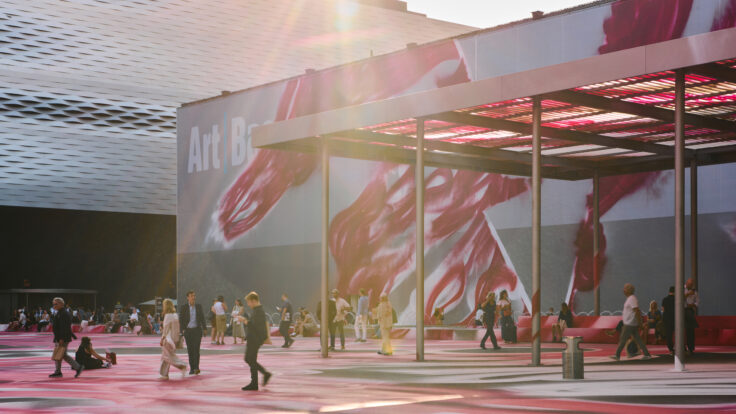
- Doha field report: Yesterday, I had a longish conversation with a dealer who was in Doha for the day. “It looks great,” he said of Art Basel Qatar. “Looks serious.” That’s high praise from someone paying a lot of money to meet new clients rather than the same folks who pop up on the global fair circuit. This dealer was paying respects to Sheikha al-Mayassa, but leaving the
highly manicured fair to his staff; he was hopeful that the new event would cultivate collectors not only in the Gulf region, but also from the growing collector base in India. Art Basel, for its part, was doing its best. “It may look like a biennial, but everything is also for sale,” C.E.O. Noah Horowitz said at a press briefing. Although the Qatari royal family had early access yesterday and, according to reports, reserved a number of works, no sales were
reported on the first day—which is kind of refreshing.
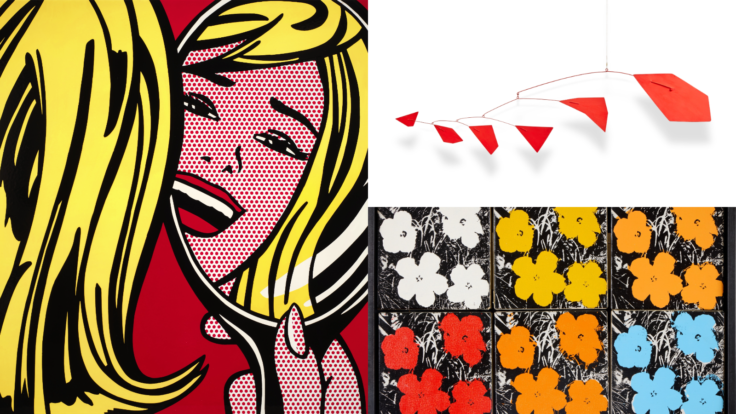
- Sotheby’s second Saudi sale makes $19.5 million: On Saturday, Sotheby’s held its second sale in Saudi Arabia, which totaled $19.5 million from a variety of works. The most successful sales were for pieces by artists from the region, including
Mohammed Al Saleem, Safeya Binzagr, Ali Banisadr, M.F. Husain, and Abdulhalim Radwi. There was also solid bidding on works by David Hockney, George Condo, Roy Lichtenstein, and Ingrid Donat.
|
Tray tables and seat backs in the upright position, please. Here we go…
|
|
|
The category can be intimidating for its blizzard of names spanning hundreds of
years of art history. These days, though, it’s also notable for another thing: low, low prices. |
|
|
In January, I had lunch with an advisor who is deeply entrenched in contemporary art, which is what
his clients collect and where his expertise lies. But we spent much of the meal discussing his burgeoning interest in Old Masters paintings. The advisor was hyperaware of his amateur status in the category, but he was combing through this season’s catalogues with enthusiasm—and kept coming back to the low, low prices.
Case in point: Last week, after touring the exhibitions of Old Masters paintings and drawings at Sotheby’s and Christie’s, I sent the advisor a
shot of a small red chalk drawing by an artist known as Il Pomarancio. I initially misread the estimate as being a paltry $4,000. But even at the $15,000 that Sotheby’s was asking for the work, from the portfolio of the well-respected collector Diane A. Nixon,
the drawing seemed like a steal. The advisor texted me back: “One for your collection?”
If I’m being honest, the Old Masters are beginning to grow on me, too. Sure, the category can be intimidating. It’s a blizzard of names in multiple languages from across hundreds of years and dozens of civilizations. So much of what gives each work relevance, value, and meaning—culturally and financially—depends on a complex web of social, economic, political, and religious history. And yet, the point
of art is that while it can be better understood with more knowledge and erudition, it must nevertheless speak to the viewer directly, without any of that mediation. In other words, a great picture is a great picture for reasons we usually cannot fully articulate. That’s the fun of it. You see something different every time you look at the work. If art is a luxury good, the experience it affords the owner is the value acquired—and Old Masters paintings offer very good value these days. |
Sotheby’s decision to move its galleries to the Breuer Building on Madison Avenue really seems to
have paid off with these Old Masters sales. The spaces for displaying art are intimate and varied. A two-sided German work sits in the middle of one small gallery to great effect—and the building affords numerous similar moments of discovery.
Which is useful, because the house has a lot to highlight this
season. There are works on offer from numerous named collectors, including the estate of dealer Stanley Moss, as well as that of former ambassador and Navy Secretary J. William Middendorf II. (Christie’s, too, has works from the Middendorf estate.) A number of works from the Bass Museum in Miami are being sold to fund new acquisitions.
But the single largest collection on offer this week—all of the lots are now covered by irrevocable
bids—is made up of the dozen paintings assembled by real estate investor Lester Weindling, the former owner of the Newsweek Building on Broadway. Sotheby’s David Pollack told me that Weindling was the kind of collector who refined his holdings and traded up when better works became available; he acquired some of these paintings as early as the 1980s, and some as recently as 2017 and 2019. A Jan Jansz. den Uyl the Elder
still life, featuring impressive reflections and glints of light, is estimated at $2 million, as is a Jan van de Cappelle shipping
scene. I was partial to the two Pieter Claesz still life paintings, each estimated at $800,000: one a lush
table filled with ripe fruit, and the other tobacco-themed. And who doesn’t like an Abel Grimmer
cathedral interior, estimated at $200,000?
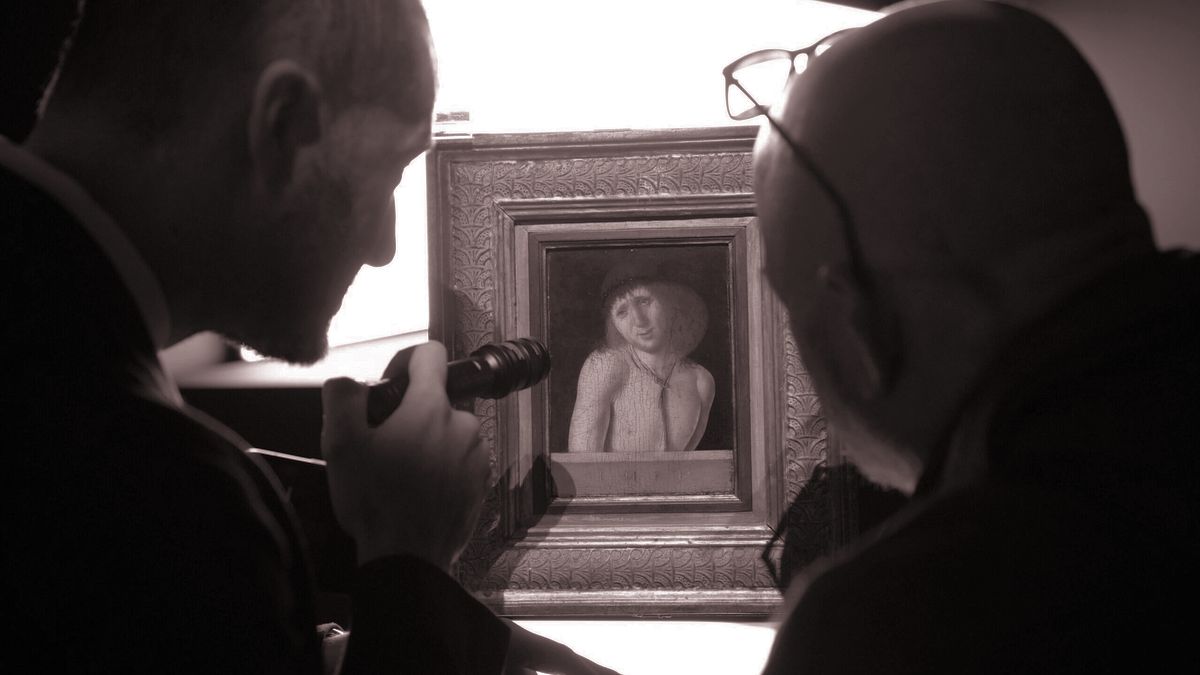
The top lot in the main sale is Antonello da Messina’s Ecce Homo, estimated at $10 million, which Wall Power has already previewed. Works by this artist are extremely rare—this may be the last of his paintings in private hands—but more to the point, the piece is just incredible in its pathos. Someone recognized this, because it, too, has an irrevocable bid. Jan Lievens’s
Allegory of the Five Senses is estimated at $2 million and likewise already covered, as is a painting estimated at $700,000 and attributed to the
workshop of Andrea del Verrocchio, about whom little is known, though Leonardo trained with him, as did Ghirlandaio and Perugino. Finally, a Jean-Honoré Fragonard study for the Head of a Bearded Man, estimated at $600,000 and covered by an
I.B., could easily be collected by someone who owns the work of Lucian Freud or Frank Auerbach.
One last interesting story at Sotheby’s: This Portrait of Cecilia Killigrew, on offer for $400,000, has no guarantee or irrevocable bid because the consignor had
bought the painting on a hunch in 2023, when it was attributed to the “Circle of van Dyck.” Cleaning revealed that the work had pentimenti, or changes made during the painting process—a telltale sign that it was made by Anthony van Dyck himself. (A copy made by van Dyck’s studio wouldn’t have had evidence of the artist’s path to the final image.) The work is now attributed to the artist. |
At Christie’s, the top lot for the Old Masters sales is Canaletto’s
depiction of Venice during the feast of Ascension Day, with the glory of the Venetian barges on view. The whisper estimate is $30 million, because Christie’s managed to sell another version of the same image—painted for Robert Walpole, the first prime minister of Great Britain—for nearly $44 million last year.
Other notable works include a
Madonna and Child painted by Sandro Botticelli and his workshop, offered for $4 million. Artemisia Gentileschi’s Self-Portrait as Saint Catherine of Alexandria is coming to market for the first time with an
estimate of $2.5 million, having been sold privately in 2016 and again in 2018, when there was a flurry of market activity around the painting. Another version of the same image sold for $4.7 million that year—a record for the artist—and the next year someone paid slightly more, $5.3 million, for Gentileschi’s
Lucretia. That work eventually found its way to the Getty Museum in Los Angeles.
There is also a great Pieter Brueghel the Younger painting of a village scene, estimated at $1 million; a stunning small portrait
of an anonymous man by Jacometto Veneziano, estimated at $500,000; a pair of portraits by Élisabeth-Louise Vigée Le Brun, also priced at $500,000; and a very small Frans Hals, estimated at $400,000. Of course, there are a number of other striking images available at prices well below that level. Take this portrait by Anton Woensam, for example, with an estimate of only $30,000. Perhaps that’s one for your collection? |
I’ll be sticking close to the results of these sales, so I’ll let you know what happens later in
the week. Until then, Inner Circle members are going to get some data from the second half of last year revealing what sold at the middle-market auction houses. Sign up here if you want access.
M |
|
|
Puck founding partner Matt Belloni takes you inside the business of Hollywood, using exclusive reporting and insight
to explain the backstories on everything from Marvel movies to the streaming wars. |
|
|
The ultimate fashion industry bible, offering incisive reportage on all aspects of the business and its biggest
players. Anchored by preeminent fashion journalist Lauren Sherman, Line Sheet also features veteran reporter Rachel Strugatz, who delivers unparalleled intel on what’s happening in the beauty industry, and Sarah Shapiro, a longtime retail strategist who writes about e-commerce, brick-and-mortar, D.T.C., and more. |
|
|
Need help? Review our FAQ page or contact us for assistance. For brand partnerships, email ads@puck.news. You received this email because you
signed up to receive emails from Puck, or as part of your Puck account associated with {{customer.email}}. To stop receiving this newsletter and/or manage all your email preferences, click here. |
Puck is published by Heat Media LLC. 107 Greenwich St., New York, NY 10006 |
|
|
|