Hi, and welcome back to Line Sheet. I’m running around today, but will be back Monday with more
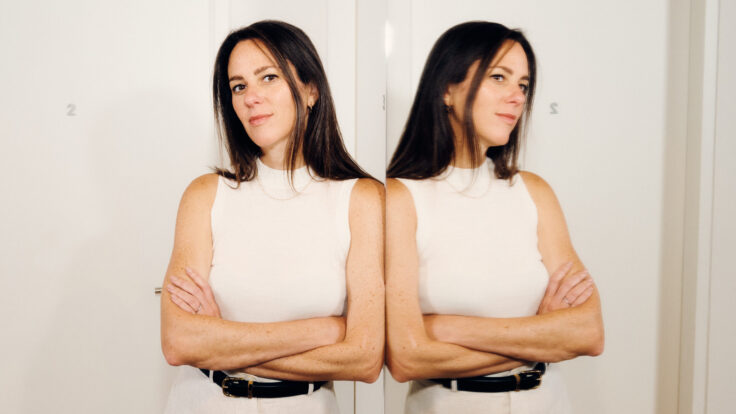
reporting from Paris, where everyone is talking about how The New York Times’s latest on Amy Griffin dropped during the Schiaparelli show—where she was obviously sitting front row. A refresher: The validity of The Tell, the socialite-investor’s memoir, was called into question
last fall—also during Fashion Week (because it’s always Fashion Week). Now, Griffin’s former classmate is suing her for allegedly basing The Tell “on assaults the classmate herself suffered at their Texas middle school in the 1980s.” (Tom Clare,
Griffin’s bulldog attorney, vehemently denied the accusations.)
Today, Rachel Strugatz explains The Estée Lauder Companies’ latest acquisition, and Sarah Shapiro has data on how GLP-1s are impacting retailers and why Lululemon is flooding the resale market. Plus, Malique Morris has an update from North London, where Net-a-Porter warehouse employees are threatening to go on strike, as well
as an interview with Elizabeth von der Goltz, Poshmark’s new chief revenue officer. They chat about the secondhand market, branding a platform, the state of multibrand retail (she was in the trenches at Net-a-Porter, Bergdorf, Farfetch, and Matches), and plenty more.
Also mentioned in this issue: Stéphane de La Faverie, Saks, Stella McCartney, Love Story, Calvin Klein,
Richemont, Carolyn Bessette, Calvin McDonald, Guggenheim Partners, Emmanuel Macron, the “Mango Murder Mystery,” Namsun Kim, Mytheresa, Depop, Forest Essentials, Narciso Rodriguez, Stitch Fix, and more…
|
Four Things You Should Know…
|
|
|
|
 |
Malique Morris |
|
- Net-a-Porter’s peeves: There’s more workforce tumult at Net-a-Porter. On Friday, a group of 100 employees at the e-tailer’s warehouse in Charlton, London, said they were voting on a potential walkout, according to a press release from the GMB Union, a membership-based organization for workers’ rights. (GMB didn’t respond to a request for comment.)The strife stems from a promise the company made in 2021, when it was still owned by Richemont, to pay London’s living wage. New owner
LuxExperience, the parent company of Yoox Net-a-Porter and Mytheresa, is proposing to pay its lowest-tier staff £14.49 per hour, which the union said is below the previously agreed-to threshold. (A LuxExperience spokesperson confirmed the company is engaged in a “constructive and ongoing dialogue” with employees, and is working “to reach a positive, sustainable resolution for our teams and the company.”)
This all comes on the heels of the company laying off about 100 people last
Friday—part of an ongoing restructuring that LuxExperience teased last September, as I first reported on Wednesday. According to the union’s press release, some warehouse staffers had been willing to leave voluntarily, but “were refused because they were considered ‘too valuable’ to the business.” The labor unrest could become a wrinkle in an otherwise standard restructuring, as LuxExperience aims to make YNAP profitable and reach €4 billion in sales for the group by 2030, from €2.7 billion in
2025.
|
|
|
|
A MESSAGE FROM OUR SPONSOR
|
|
|
|
 |
Rachel Strugatz |
|
- E.L.C. M&A:
Stéphane de La Faverie, C.E.O. of The Estée Lauder Companies, just made his first acquisition since stepping into the role early last year. The conglomerate will acquire the remaining 51 percent of Forest Essentials, an Ayurvedic beauty brand based in India. E.L.C. first invested in the brand almost 20 years ago, eventually laddering up to a 49 percent stake by 2020. No one was terribly surprised: De La Faverie hinted at forthcoming M&A during an appearance on Bloomberg
TV last week. And, as a person familiar with the situation reminded me, E.L.C. has “been in India for a very long time with stable leadership and very important share in prestige there.”Anyway, it’s exciting that Lauder is getting back into M&A, even if some people close to the company believe the acquisition is “safe” and unlikely to “move the needle.” On the other hand, safe is exactly what de La Faverie is going for right now. Forest Essentials does more than $60 million in
business with a strong network of close to 200 freestanding stores, and Lauder already had a substantial stake. I’m sure we’ll see flashier luxury acquisitions once E.L.C. is able to divest a more sizable asset that frees up more cash.
|
|
|
|
 |
Sarah Shapiro |
|
- Ozempic in the fitting
room: GLP-1s are wreaking havoc on retailers’ sizing strategies. According to a source at Stitch Fix, the online personal styling and shopping service, user mentions of “weight loss” have tripled in the last three years and surged 75 percent year over year in the last quarter. Meanwhile, Stitch Fix customer demand for bottoms—pants, skirts, and shorts—has shifted from larger sizes down to size 10 and below, according to the source, with size small seeing the most significant growth. (Data
from Insight Analytics suggests this is a nationwide trend.) Whereas previous weight loss journeys were often melodramatic tales of diet, exercise, and relapse, today they’re generally one-directional narratives by influencers shedding pounds, thanks to Ozempic and its cousins.
- The Lululemon ick factor: In a recent research note, Guggenheim Partners flagged that activewear maker Lululemon has blown past domestic “brand saturation” levels, generating
roughly $6.5 billion in U.S. revenue in 2024 against a historically healthy ceiling of $3 billion to $4 billion—primarily by selling more, rather than better, merchandise. What does that look like exactly? Listings for Lululemon on Depop, the British resale platform, are up 97 percent year over year. A quick scroll identified about $11 million in available inventory on that platform alone.It doesn’t help that the brand has been without a C.E.O. since
Calvin McDonald stepped down in January: The company needs a new strategy, and the stock is down 50 percent over the last 12 months. Anyway, good news for Gen Z and Gen Alpha consumers, who are apparently perfectly happy to buy secondhand leggings. If the product isn’t innovative, there’s no reason to shop retail. And right now there’s plenty of Lululemon to go around.
|
|
|
|
As the resale market booms and consolidates, new Poshmark C.R.O. Elizabeth von der Goltz has
been charged with building her platform’s cultural cachet. So what’s her plan?
|
|
|
|
Multibrand retail has weathered endless industry storms over the last decade, from the rise of e-commerce and
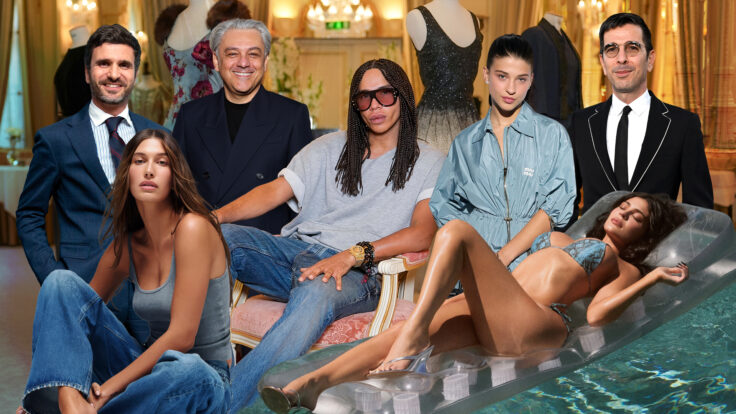
the pre-pandemic brick-and-mortar apocalypse to the post-pandemic e-commerce slowdown and brick-and-mortar resurgence. The last five years have been particularly demoralizing, punctuated by the fire sales of Farfetch and Matches, the Saks Global bankruptcy, the Ssense restructuring, etcetera.
Elizabeth von der Goltz has been around for all of it, and worked for almost everyone. She got her start at Bergdorf Goodman in the early 2000s before transitioning to
e-commerce in the 2010s with stints at Yoox Net-a-Porter, Matches, and Farfetch. In January, she joined the peer-to-peer reseller Poshmark as its new chief revenue officer.
|
|
|
|
A MESSAGE FROM OUR SPONSOR
|
|
|
|
Poshmark had a soaring I.P.O. in 2021, but was taken private the following year by South Korean e-commerce
giant Naver after consecutive quarterly losses and declining sales growth. Von der Goltz told me that Poshmark is profitable now, likely buttressed by the broader resale boom. Her unusual remit encompasses defining the platform’s brand identity as it chases a broader cultural footprint.
In a recent conversation, von der Goltz told me why Poshmark needs a brand refresh, what eBay acquiring Depop revealed about the state of resale, and what it will take for the embattled traditional retail
industry to rebound. As usual, our conversation has been lightly edited and condensed for clarity.
|
Malique Morris: What was Poshmark’s pitch to
you?
Elizabeth von der Goltz: In my time consulting and meeting with a lot of startups, resale kept coming up. The other thing that came up was social commerce.
When the Poshmark opportunity came, it was actually really funny, because they’re a Silicon Valley tech business. They haven’t had this merchant, brand, creative marketing side of the business. The C.E.O. [ Namsun Kim], who led the acquisition for Naver, had this vision of where this
business could go, and so they reached out to me. It was kismet. I was like: resale, peer-to-peer, Silicon Valley–tech enabled. It checked every box.
What’s been your biggest takeaway about Poshmark’s position in the resale market?
Ever since I started, or it was announced that I was joining, all of a sudden every single person I know has been on Poshmark forever. My 10-year-old goddaughter has her own shop on it. All of a sudden, all the fashion people are like,
“We love Poshmark. We’ve been using it.”
How do I now take all this and build the brand? How do we bring it to the forefront of everyone’s mind? In week two, I turned to my team and said, “We’re going to do an event for New York Fashion Week.” They’d never done anything like that before.
How do you give a platform like Poshmark a fresh brand identity?
The rest of the world does use it as a verb—to posh something. There are poshers.
Our demographic is wider than just the fashion industry. My job is now to make it ubiquitous. We’re going to build our brand by bringing the idea of human curation and taste, but letting the machine learn from us, and algorithms learn from that. My role, and why I joined the business, is to bring that idea of fashion authority and inspiration into our experience, and then how we show up physically.
What are Poshmark’s biggest challenges, and how are you navigating
them?
We’re actually a growing, healthy, profitable business. A lot of my past experiences have been coming in and having to fix businesses. I’m here to build.
|
|
|
|
If it’s already in a place of strength, why does the company need a branding
refresh?
Accelerated growth. Think about what’s happening in the resale space right now. You’ve got the ThredUps, which are much lower price point and a very targeted generational audience. Then you have these luxury players that can’t even sell things under a certain price point. There’s this whole white space in between that’s a very large market share. That’s kind of where we sit, and from there we can go up.
|
Etsy just sold Depop to eBay for $1.2 billion. How does Poshmark view that type of
consolidation?
It was really interesting, because the sector has been quite fragmented.
What that sale did is really validate the importance and value of the secondary market in fashion today.
Has this sparked any internal conversations of, “Do we need to buy something? Do we need to acquire somebody?”
I can’t talk about that now. But I do want to be a solution to the inventory that’s out there.
What lessons
did you learn from Farfetch, Matches, and YNAP that you’re applying to Poshmark?
When you think about some of these businesses I’ve worked for, they built themselves on their brand from the beginning. Because I come from a luxury background, in that world, what we’ve done across those other platforms is really to build the idea of trust, a very clear point of view and curation.
But I’ve also learned from some of these businesses that it’s really important to have a very
clear brand identity and integrity and framework of how we grow our business. There’s a lot of growing for growth’s sake, and just expanding, expanding, expanding—and not thinking about putting the customer at the heart of the business.
As a retail veteran, what do you make of all the bankruptcies and closures? What are some plausible changes the industry can invest in?
Everyone kept knowing what was coming next, and where the
consumer was going, but a lot of these traditional retailers didn’t grasp how fast everything was moving. As much as they were trying to change, they really weren’t changing enough, and not necessarily thinking about how to structure their business to survive the future.
We think about how stores used to run themselves in the past. Every year we grew and were extremely profitable. When you really think about how you curate, how you partner with brands, how you have an amazing experience
for your customer and make sure that you’re changing with how their consumer patterns are changing, I do think there’s an opportunity now.
|
What We’re Reading…
and Looking At…
|
Finally, someone did the Mango-murder story!
[The Cut]
Macron awarded Stella McCartney the Légion d’Honneur in Paris this week. It feels like these various honors are doled out on a regular basis. Who decides who gets them? What are the different distinctions? How many do they give out each year? How do I get one?
[ Vogue]
The LVMH Prize is pretty great for designers and even better as a feeder into LVMH. If I were a designer, I would skip the Fashion Fund and just do this. It’s more valuable.
[ WWD]
A lot of people are talking about Ryan Murphy’s Love Story this week: what they got right, what they got wrong, why it’s good, and why it’s dumb. The one thing everyone can agree on is that Calvin Klein required everyone to use black paperclips. Here’s more on what the Calvin office really looked like back then, as well as a very nice interview with Narciso Rodriguez about Carolyn Bessette’s wedding dress.
[ WWD and The Cut]
|
Until Monday,
Lauren
P.S.: We use affiliate links because we are a business. We may make a
couple bucks off them.
|
|
|
|
Puck fashion correspondent Lauren Sherman and a rotating cast of industry insiders take you deep behind the scenes of this
multitrillion-dollar biz, from creative director switcheroos to M&A drama, D.T.C. downfalls, and magazine mishaps. Fashion People is an extension of Line Sheet, Lauren’s private email for Puck, where she tracks what’s happening beyond the press releases in fashion, beauty, and media. New episodes publish every Tuesday and Friday.
|
|
|
|
The industry’s go-to source for unflinching reporting on the trillion-dollar business of artificial intelligence - perhaps the
single most important technology of our time. Ian Krietzberg, the powerhouse journalist behind The Deep View, delivers twice-weekly insights into the latest dealmaking and breakthroughs in A.I., and how the intersecting worlds of finance, entertainment, media, and politics are being transformed in its wake.
|
|
|
|
Need help? Review our
FAQ page or contact us for assistance. For brand partnerships, email ads@puck.news.
You received this email because you signed up to receive emails from Puck, or as part of your Puck account associated with {{customer.email}}. To stop receiving this newsletter and/or manage all your email preferences, click here.
|
Puck is published by Heat Media LLC. 107 Greenwich St., New York, NY 10006
|
|
|
|
|