 |
|
Hi friends, welcome back to Line Sheet, your biweekly peek under the fashion industry’s hood. It’s really summer now, which means that, within the next month or so, some out-of-this-world M&A deal is bound to be announced. If we’re lucky, that is. Send tips!
Today, for you, an exposition on Kering’s business strategy and the unfairness of all the LVMH comparisons, plus a rundown of the latest celebrity stylist moves.
Also mentioned in this issue: Guram and Demna, Gucci, Margot Robbie and Pantone 219C, Andrew Mukamal, Kate Young, Law Roach, Jennifer Lawrence, Balenciaga, Jamie Mizrahi, CAA, Max Stein, the Pinaults!, Luca Solca, the return of the motorcycle bag, Matthieu Blazy, YSL, Line Sheet favorite Matt Scanlan, and many many more…
|
|
|
- A bit of news: the Victoria’s Secret streaming video show debuting this fall features Doja Cat and Naomi Campbell, among other already contracted famous models. (Victoria’s Secret declined to comment.) Early reviews are tepid. More on this soon…
- Damn, can we talk about Vanessa Friedman’s bonkers profile of Vetements designer Guram Gvasalia in the Times last week? As Friedman said on her own social media, “Sometimes it’s startling what subjects say to you when there is no publicist involved.” I assume most of you have already read it, so I won’t go too deep on details. (Gvasalia, the brother of Demna, outright said that the Balenciaga designer’s streak is over, and honestly that was the most level-headed moment in the story.) What I wish to know: Where is Gvasalia’s money coming from? What retailers, other than Ssense, are buying Vetements? Why did Madonna ask him to design her tour costumes in the first place? Fashion media, unlike politics, rarely bothers with hangers-on stories, probably because there is no clear financial incentive—I’m glad Friedman knows better.
- I’m hearing that the Wall Street Journal—and specifically the new WSJ. magazine editor-in-chief Sarah Ball—listened to my pleas and is reaching out to former Naadam Group employees, asking them about their experiences working with founder Matt Scanlan. It’s on!
|
JLaw’s New Groove & Barbie Fashion Mania:
The Latest Adventures in Celebrity Stylist Musical Chairs |
|
| Any follower of Just Jared’s Instagram account knows that Margot Robbie is on a Pepto Bismol-hued tear promoting Greta Gerwig’s forthcoming Barbie movie, sporting tailored-within-an-inch-of-her-life looks from Versace, Moschino, Valentino, and more. At this point, the flood of Pantone 219 C is having the opposite of the desired effect on me. (All that pink is making me queasy. From what I can recall from my own childhood, Barbie did wear other colors.)
Regardless of whether or not you’re responding as viscerally to the onslaught—thankfully, Robbie wore black custom Schiaparelli to the world premiere yesterday—you’ve surely noticed that her looks are just hitting differently in general: fewer random Chanel column dresses, more body-con Versace pulled from the 1990s, a Pucci print we can all get behind. You can attribute that to her still-new stylist, Andrew Mukamal, with whom she started working earlier this year after a long run with Kate Young, one of the top players in the field.
Mukamal is primarily known for two things: styling Zoë Kravitz, and playing a supporting character on the riveting late-aughts reality television show Kell On Earth, about the loud publicist Kelly Cutrone. (Does Mukamal hate people mentioning Kell on Earth as much as Glossier founder Emily Weiss cringes when anyone brings up her star turn on The Hills? I’m just providing context….) Anyway, Mukamal’s alliance with Robbie, formed just in time for her major Barbie promotional tour, is just one example of a major movie star switching stylists in recent months. Something is up.
Other examples: Julianne Moore, a longtime client of Leslie Fremar, recently teamed up with Young. (Fremar has consciously pulled back on the number of clients she’s working with regularly, I’m told: her roster still includes Jennifer Connelly and Charlize Theron.) Selena Gomez, also a longtime Young client, has been working with Erin Walsh. (Young’s bench is still quite deep, and includes Dakota Johnson and Scarlett Johansson.) Anne Hathaway, a former client of Law Roach and others, finally hit it big on the red carpet with Walsh, who has given her music-theater dork persona some sex appeal.
The most notable makeover, however, has been Jennifer Lawrence, who began working with her friend, the stylist and socialite Jamie Mizrahi, in time to promote No Hard Feelings, a raunchy comedy designed to reset her career. I personally don’t like Lawrence’s makeover: she looks as if she’s playing dress-up in Dior (a long-term contract deal), Loewe, and even The Row off-duty. (She’s more convincing in Sambas, low-rise cargo pants and a Polo baseball cap. Put this woman in some Celine and Bottega on the red carpet and call it a day.) Mizrahi is more successful styling Adele, another friend, whose ultra-feminine and manicured personal style better suits her own. And yet, I can’t deny that people are paying attention to Lawrence’s headbands as never before. As one stylist’s agent said to me, Mizrahi may not be the perfect match for Lawrence, but she does have a knack for identifying (and calling in) of-the-moment fashion, and that goes far on the internet.
Lawrence’s stylist switcheroo is part of a larger rebrand. For her peers, the decision to work with a new stylist is an increasingly common tactic, instigated by the rising importance of brand deals to a star’s overall financial health. (If you look good on the red carpet, you can develop a relationship with a fashion house that could eventually turn into a multi-million dollar deal. Look at Timothée Chalamet and Chanel.) I’m not sure who set off this current round of stylists dominos—maybe Robbie?—but when one star shakes it up and gets good feedback online and in the press, others start to mimic the behavior. After all, these relationships mean a lot more than they did even five or 10 years ago.
As for who stands to benefit the most? “It’s a win for the next generation of stylists,” said my friend Max Stein of Brigade Talent, who has some skin in the game as the manager of rising star Danielle Goldberg (she styles Greta Lee, Kaia Gerber, Olivia Rodrigo, and others). However, holding onto a (lucrative) girl is going to be harder than ever for these stylists—and as we know, day rates are not what they used to be. And there simply aren’t that many A-list stars left.
And now, for what you’ve all been waiting for… |
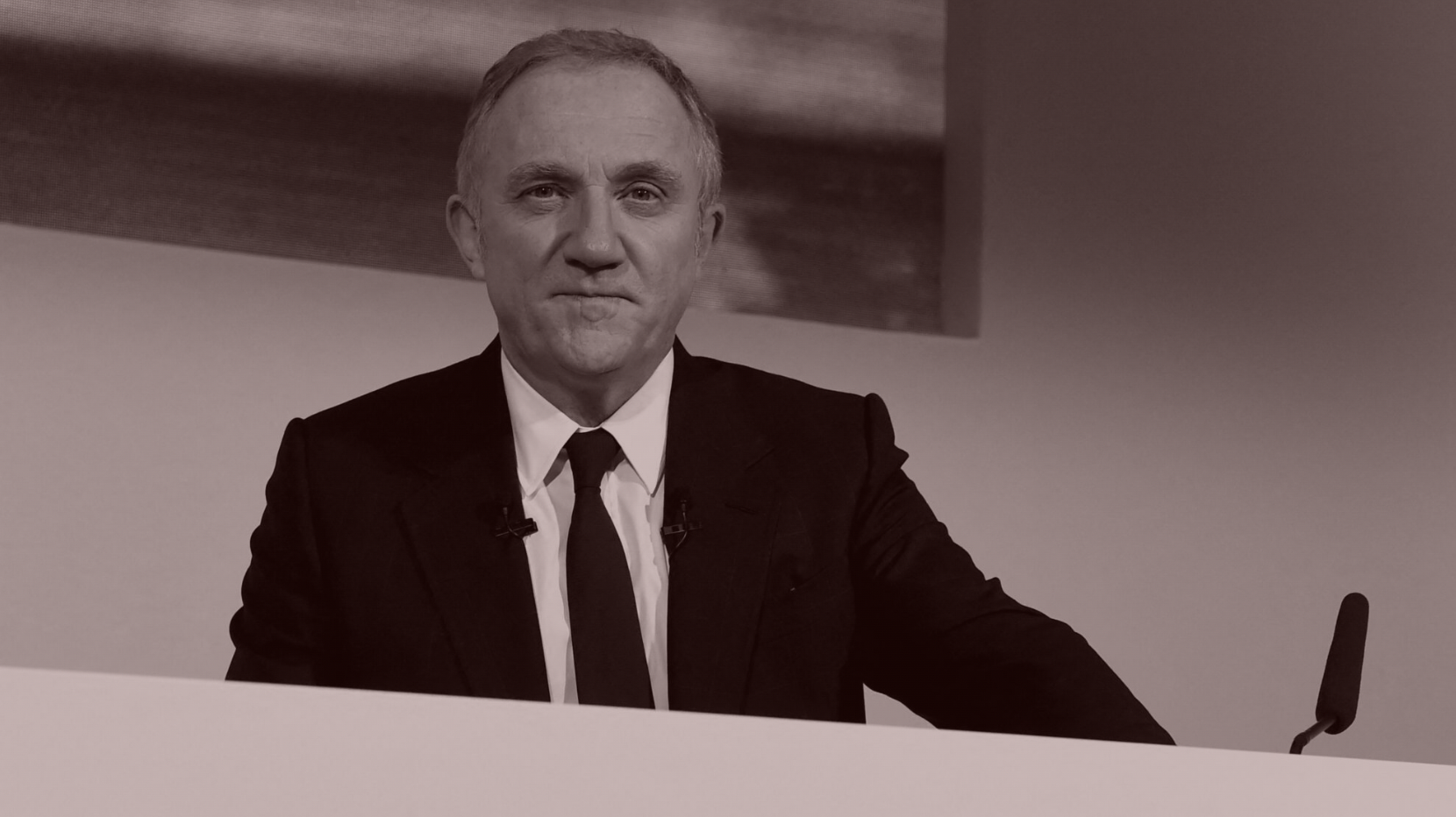 |
| Kering in the Age of LVMH |
| Is this even a competition anymore? A look at how Kering, LVMH’s biggest rival, is navigating the era of big luxury. |
|
|
|
| As omnipresent as LVMH felt at the men’s shows in Paris a few weeks ago, Kering’s absence from the discourse was nearly as noticeable. Some of that was by design. Two of Kering’s biggest brands, Gucci and Bottega Veneta, typically show in Milan during the women’s season. Saint Laurent opted to stage an off-calendar show in Berlin more than a week before Paris got going. By the end of the couture shows, of course, Kering was once again top of mind, not only thanks to Balenciaga’s formidable showing, but also Guram Gvasalia’s strange and revealing interview in the New York Times, in which he inadvertently positioned his brother Demna, Balenciaga’s designer, at the center of the conversation.
But there’s no doubt that Kering has been lying a bit lower when it comes to communication. For years, it was quite the opposite. In fact, it’s been exactly 10 years since the company changed its name to Kering from PPR (Pinault-Printemps-Redoute) as it morphed from a retail conglomerate (founded in 1993 by François Pinault, a former wood trader turned corporate raider turned brand manager) into a pure luxury play. The “Ker” in Kering—yes, it’s pronounced “caring”—is a nod to Pinault’s family origins in Brittany, where that word means “home.”
It turned out to be one of the savviest, and most successful, rebrands I’ve witnessed in fashion. Under François-Henri Pinault, the son of the founder, Kering aligned itself with more modern, and resolutely more American ideas, emphasizing transparency and clarity of vision—being nice, focusing on Corporate Social Responsibility, etcetera—while still managing to grow rapidly and without limits. (The modern big company dream is to be less-bad, all the while getting richer.) As I noted last week, Kering’s brands are more emotional, and less tied to tradition, for better and for worse.
The younger Pinault started streamlining the PPR portfolio soon after he became C.E.O. in 2005, at the age of 42, but it wasn’t until he spun off Puma in 2018 that the group’s pure-luxury vision felt fully realized. At the time, favorite industry analyst Luca Solca said in an investor note that the consolidation was a positive sign that the luxury industry was maturing. In 2013, annual sales at Kering were €9.8 billion, with the luxury division representing something like €6.5 billion; by 2022, the company had more than doubled its revenue to over €20 billion. Operating income increased by close to 220 percent.
In some ways, comparing LVMH and Kering is impossible. One is still run by the father, the other by the son. One is a group of 75 businesses, the other has less than 15. LVMH started in luxury nearly 20 years earlier, and has a market cap of some €423 billion, whereas Kering is valued at €63 billion.
But the way Kering entered the category, by white-knighting the Gucci Group away from LVMH, positioned them as rivals from the beginning. And prior to the pandemic, that rivalry was formidable, in no small part thanks to Kering’s communications strategy. Kering may not own as many brands, but the designers and executives leading those brands appeared to be more obsessed with capturing the mood and spirit of the time. When he was appointed in 2016, Gucci’s Alessandro Michele ushered in a period of baroque, gold-foiled fashion that fully captured the excess of the Trump years, while Demna, through his evisceration of the classic wardrobe, captured the fear and loathing that was happening simultaneously.
That ability to seize mindshare not only helped to boost sales, but it also created intangible value. Coming out of the pandemic, however, much of that goodwill has been vacuumed away by two events that occurred at the end of 2022. First, the much-discussed exit of Michele in November, amid an uncomfortable slowdown in sales after years of “explosive” growth, followed basically a week later by the Balenciaga-Demna-QAnon catastrophe.
One of those things would have been bad enough, but it seemed unimaginable that two creative pillars of Kering’s let’s-be-the-zeitgeist strategy could wobble in lockstep. And because Kering’s corporate posture has relied on openness, it has continuously been forced, or at least felt compelled, to address these missteps time and again. |
|
|
| The transparency is manifested plainly in how the company reports earnings: it breaks out sales for Bottega Veneta, Yves Saint Laurent, and Gucci, which means there’s more to directly brag about to the market when there’s good news, but it’s impossible to hide the bad. The group’s “Other Houses” category, which includes Alexander McQueen and Balenciaga, is shrinking, which the group has equated directly to lagging sales of Balenciaga in the U.S., post-advertisement scandal.
Of course, European luxury groups claim to have a long-term mindset, and these situations will resolve themselves. In September, Gucci will debut its new, expanded outlook under the purview of Sabato De Sarno. The goal, as I understand it, is to lead with tradition, and give Gucci a more universal appeal. At Balenciaga, he-who-goes-by-first-name-only Demna has delivered remarkable couture collections in the wake of several bad decisions. September’s ready-to-wear show will be a true test of his ability to move Balenciaga forward and move forward, himself.
When there is a cancellation of some sort, the consumer reaction has less to do with whether or not they approve of what happened and more about what they think about the product and the person. Consider what happened when John Galliano was ousted from Dior: pretty much nothing. There are definitely still people out there who buy Dior and think Christian Dio, the man, who died 66 years ago, is still the designer. Or consider Dolce & Gabbana: Clients don’t care if one of those designers is racist or homophobic, they just want to wear pretty, well-fitting clothing. With Balenciaga, despite Demna’s skill and insightful design approach, my instinct is that sales were slowing here anyway after the tremendous success of its puffed-up sneaker collection, and that the QAnon stuff just made it easier for people to turn away. If Demna and his team can make products that feel relevant, then people will buy them. (The motorcycle bag of the early aughts, for instance, has been building back up slowly and steadily, but is primed for a major return.) |
| The Cultural Relevance Wars |
|
| There is little doubt that Kering can get Gucci and Balenciaga back on track. In recent years, the company has shown that its system, while far less intricate and robust than LVMH’s, continues to work, in part because it’s so nimble. (It can flip a designer, and an aesthetic, pretty quickly, and the customer typically responds well.) For instance, when Bottega Veneta creative director Daniel Lee abruptly exited in 2021, the company acted fast, enlisting Matthieu Blazy—once Lee’s No. 2, but also known for his work at Calvin Klein and Margiela—to remake a brand that had only recently been remade.
The results were, I would argue, even stronger than when Lee overhauled the brand in 2018. Lee is trendy and sharp, but his designs are often too of-the-moment. Blazy was able to reinstate some of the timelessness that Bottega was known for while making it feel new, too. Women (and men) wearing his collections always look like they’re walking through very fresh air.
The Yves Saint Laurent success story under Anthony Vaccarello and C.E.O. Francesca Bellettini is even more impressive. At first, the worry was that Vaccarello, who had a very narrow design purview prior to joining Kering, would not be able to expand Hedi Slimane’s vision for Saint Laurent. But instead he organized the right team under him, leaned into 1980s nostalgia, and designed accessories and handbags that appealed to a broad range of customers. (You can buy a cross-body “phone holder” bag for $795.)
Still, it’s hard to imagine Kering’s influence to be as intense and obvious as it once was, unless the company morphs once again. In 2023, it’s dealing with a whole new landscape, one dominated by LVMH not only commercially, but culturally as well. There’s Pharrell Williams at Louis Vuitton. There’s a likely sponsorship of next year’s Summer Olympics in Paris. These are the major cultural events that are dominating the news cycle, and to get back in there in a significant way, Kering needs to figure out how to be top of mind.
How can Kering regain its foothold on the zeitgeist? One way would be to buy another big fashion or jewelry brand in order to further increase its market and mindshare. At the moment, many people working within the walls of Richemont-owned Chloé believe it’s being readied for a sale to Kering, although that’s a long-standing investor fantasy that may never bear out. It’s looked at Burberry (too focused on off-price, although that could change). A few years ago, there were rumors of discussions with Ralph Lauren. (That company isn’t selling until the eponymous Mr. Lauren wants to sell it, and why would he want to do that?) Salvatore Ferragamo is a good one, but the family is tricky. Brunello Cucinelli, doing so well still, is another, but again: why would he?
These targets aren’t always so easy to predict. However, as Solca has noted, Kering’s return on invested capital over the past 20 years is high, but not as high as Hermès, the industry’s gold standard. He thinks that Kering should continue to focus on financial discipline, telling me that the company’s most recent additions have been outside the core—eyewear, and most recently, its first beauty brand, the extremely profitable fragrance line Creed for a fairly whopping $3.8 billion—and that he doesn’t anticipate “major moves any time soon.” Of course, the acquisition of Creed is about more than Creed: It’s about making Kering’s other brands more profitable by using the Creed knowhow to create a bigger beauty imprint for Bottega Veneta, Alexander McQueen, etcetera.
It could be that we do need to stop comparing Kering to LVMH, and understand that Pinault is not racing to catch up, but instead forging his own path. This week, Pinault is invited to attend the Allen & Company annual conference in Sun Valley, where executives from the talent agency CAA, which he has expressed interest in buying, will also be present. If a deal like that were to happen down the line—through Group Artémis, the Pinault family office, not Kering—it could change the dynamic once again. (TPG, the majority investor in CAA, is also an investor in Puck.)
The commonality, at this point, between Kering and LVMH, is that they believe they are makers of culture. Both the Arnaults and Pinaults have opened art museums in Paris in recent years. And keeping with their brand identities, The Pinault Collection is far more easy to access—in the center of the city in the historic Bourse de Commerce, rather than all the way out in the 16th arrondissement like the Fondation Louis Vuitton, freshly designed by Frank Gehry. That says it all. |
|
|
| This September, Ralph Lauren will once again be on the New York Fashion Week schedule. I’m personally grateful. [WWD]
I heard from a watch geek that the new Louis Vuitton Tambour is really good. “The very early returns from the watch community are excellent, which is unusual for watches from ‘fashion’ brands,” they explained. [Hodinkee]
I rely on Beka Gvishiani more than ever for lovey-dovey fashion news: it feels like a brain massage. There is a place for everything in this world! [New York Times]
Following @tinachencraig, @sartoriallyinc, and @thatadult on Threads. I’m exhausted. See you there?
My cool friend Tina recommended that I take a look at the line Rier. [Hypebeast]
The majority of the fine jewelry market remains unbranded. Here’s what it takes to develop an icon. [Financial Times]
Rich hippie or hobo? A look at Magnolia Pearl, the favorite shabby-chic fashion brand of Johnny Depp, Betsey Johnson, and the enemy of TikTok. [New York Times]
Jason Del Rey, who just published a book about Amazon and Walmart, talks to Dan Frommer (my husband, for your information) about why Amazon can’t get physical retail right. (I.M.O.: Physical retail is all about physical feeling, and Amazon is unfeeling in everything it does.) [The New Consumer]
Track and field stars Noah Lyles and Sha’Carri Richardson represent another subset of athletes embracing fashion. [Runner’s World]
I’ve been low-key trying to dress like a character from The Sandlot since I was about 10. Apparently I am not alone! [Byline] |
|
|
Until Thursday,
Lauren |
|
|
|
| FOUR STORIES WE’RE TALKING ABOUT |
 |
|
 |
|
 |
| ESPN Anxieties |
| Assessing the network’s uncertain trajectory. |
| DYLAN BYERS |
|
 |
|
|
|
|
|
 |
|
|
|
Need help? Review our FAQs
page or contact
us for assistance. For brand partnerships, email ads@puck.news.
|
|
You received this email because you signed up to receive emails from Puck, or as part of your Puck account associated with . To stop receiving this newsletter and/or manage all your email preferences, click here.
|
|
Puck is published by Heat Media LLC. 227 W 17th St New York, NY 10011.
|
|
|
|