{{ 'now' | timezone: 'America/New_York' | date: '%b %d, %Y' }} |
|
|
|
Hello and welcome back to The Best & The Brightest. I’m Leigh Ann
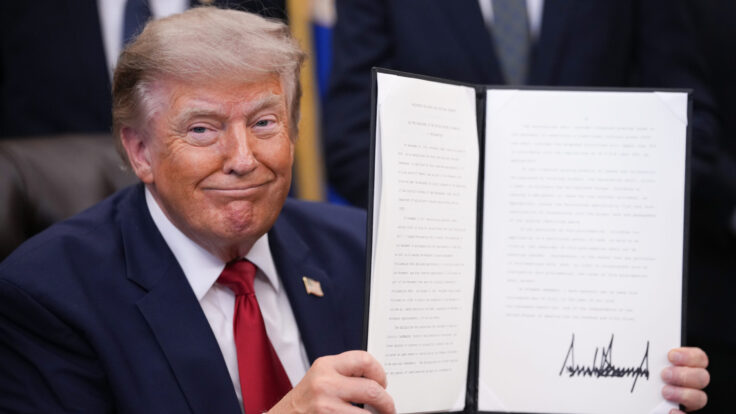
Caldwell. It’s President Trump’s 80th birthday and he’s throwing himself a $60 million U.F.C. fight. An estimated $12 million of taxpayers’ dollars have gone toward security and logistics, and the fighters are being paid, at least partially, in crypto from Trump’s family crypto company, World Financial Liberty. Happy birthday, America…
The president is also claiming, once again, that the U.S. is about to enter into a “peace deal” with Iran. Naturally, the
agreement is actually just a framework to negotiate a larger deal over major issues, including obtaining Iran’s nuclear materials. We’ve seen this movie before, as my partner Julia Ioffe reported brilliantly earlier this week. But if the Strait of Hormuz reopens and the fighting in Lebanon ends, that’s at least
something.
In today’s issue, I take a look at the anger percolating among voters that is giving rise to self-declared “angry” candidates, including Graham Platner. Tapping into voters’ rage is proving to be a successful strategy so far, but it could also backfire: Some Democrats think the party is losing the moral high ground by backing Platner, and the late Sen. Harry Reid’s chief of staff detailed a feisty breakfast with Sen. Chuck Schumer
wherein he gave the Democratic leader a piece of his mind.
Also mentioned in this issue: Jared Golden, Joe Biden, Susan Collins, Jon Ossoff, Obama, Randy Villegas, Jasmeet Bains, Chris Rabb, Ami Bera, Mai Vang, Doris Matsui, Jake Auchincloss,
David Krone, Bernie Sanders, Elizabeth Warren, Chris Murphy, Josh Turek, Roy Cooper, Mary Peltola, Gabe Amo, and more. |
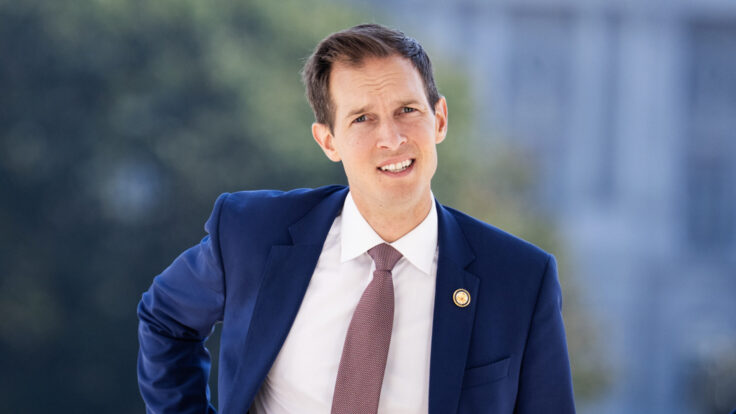
- Golden dome: Rumors are swirling in D.C. that Rep. Jared Golden is being recruited for the Maine Senate seat as new scandals continue to plague Graham Platner. Golden, 43, a moderate Democrat who will retire from Congress at the end of this term, has successfully won Maine’s red, rural 2nd congressional district when both Joe Biden and Donald Trump were on the ballot. But Golden told me late
last week that there’s no truth to the speculation. “I have not received a single call from a senator,” he told me. When I asked if anyone called to recruit him, he said, “It’s all tweet storms.” (Platner won the Democratic primary last week, but Maine election rules allow the party to name a new nominee if Platner were to drop out before July 14.)
Golden and incumbent Sen. Susan Collins are quite close—he worked in her Senate office for two years, and it would be hard to
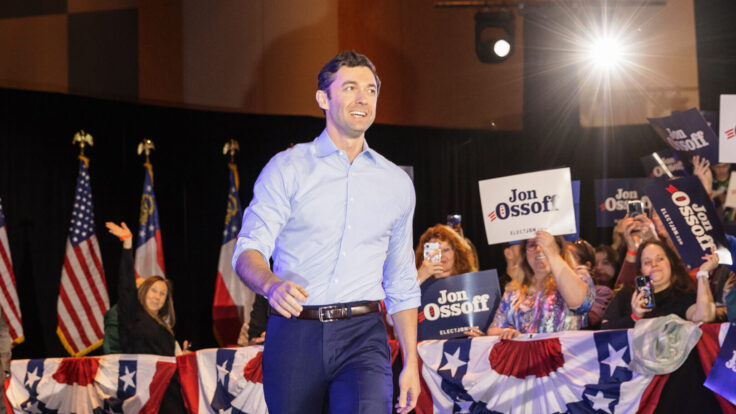
see him take on his mentor. Platner is one of Golden’s constituents, but he refused to say if he voted for him in last week’s primary. “I’ve never answered that question. I didn’t even tell people how I voted for the presidential race,” he told me. (More on the Platner crisis below…) - Georgia on Dems’ minds: Champagne bottles are likely popping inside Sen. Jon Ossoff’s reelection campaign after President Trump endorsed
Rep. Mike Collins in the Georgia Republican Senate runoff over former football coach Derek Dooley. Collins had already been leading Dooley in polling, but the endorsement likely cements his victory. Collins is more authentically MAGA, but he is facing a House Ethics investigation and has a controversial social media feed, all of which will get airtime in Ossoff’s attack ads.
- Sorry, FISA: Trump is apparently in
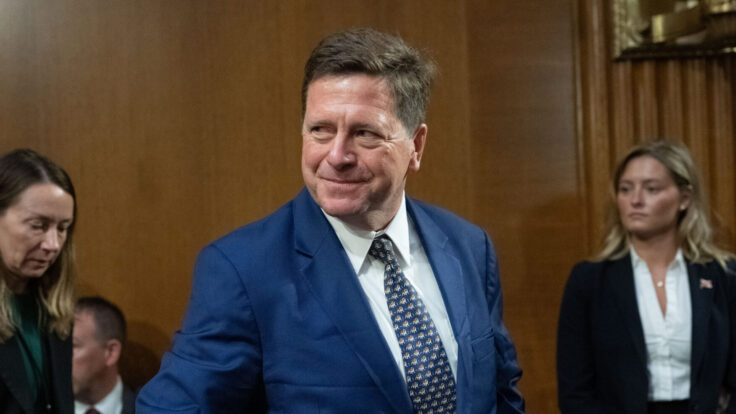
middle-finger-to-Congress mode. Late last week, the president announced that he would nominate Jay Clayton to serve as director of national intelligence, hoping to satisfy senators who protested Bill Pulte’s role as D.N.I. by holding up an extension of Section 702 of the Foreign Intelligence Surveillance Act, which expired last Friday. Alas, he is now saying that he will reject FISA reauthorization unless it is paired with the voter and citizenship I.D.
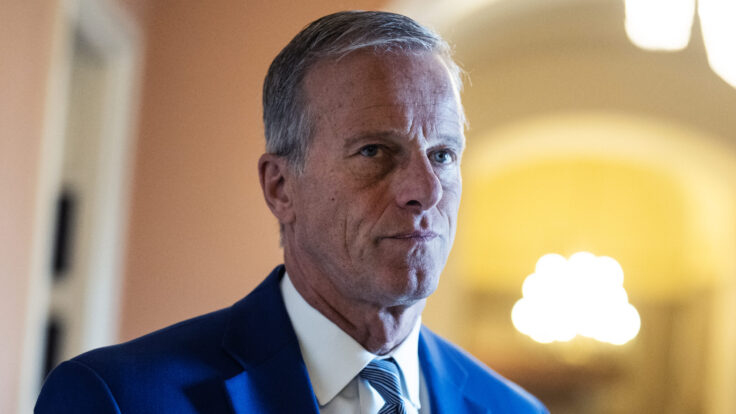
bill, the SAVE Act. Good luck, John Thune.
|
|
|
|
With his unrepentant populism and problematic past, Graham Platner’s polarizing Senate run has tapped into a wellspring of Democratic anger that could upend the party establishment, if the old guard doesn’t strike first. |
|
|
|
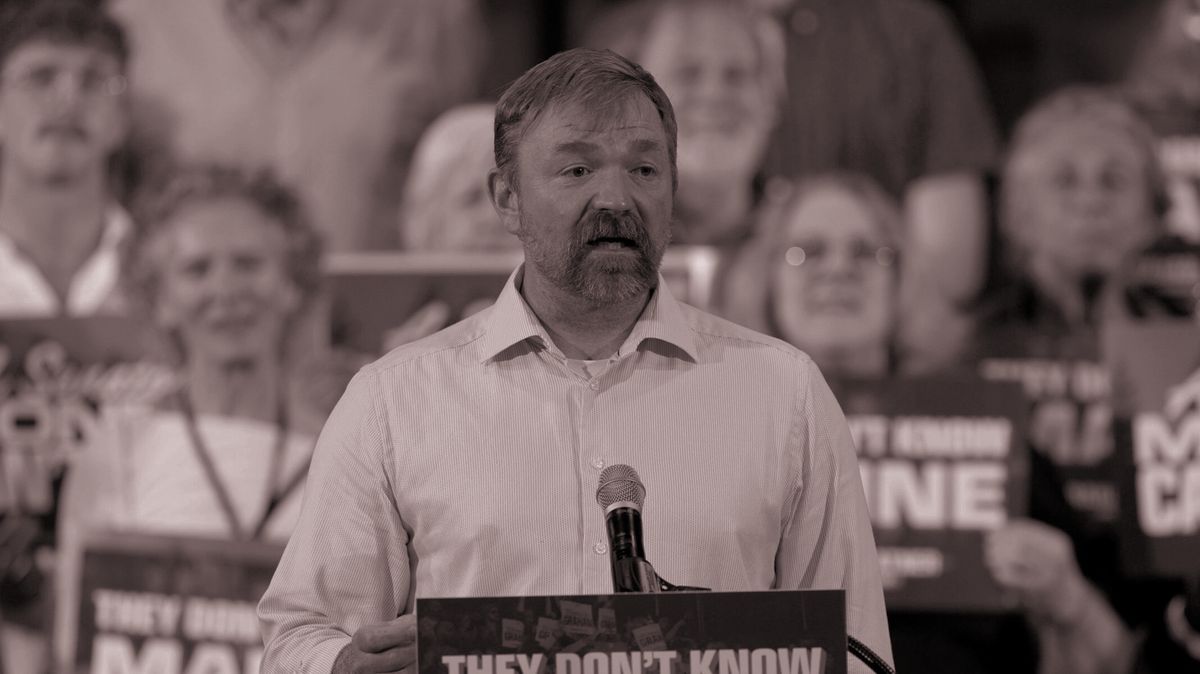
Last Tuesday night, during his primary victory speech in Blue Hill, Maine, the
scandal-plagued Graham Platner repeatedly insisted that his Senate candidacy reflected a larger phenomenon beyond his enticing yet deeply flawed character—one that, he seemed to suggest, transcended the allegations about sexting or creepy behavior or whatever. “They fail to understand that this is not about me at all. This is a movement about us,” he said, evoking an Obama-esque message and the ancient mandate of populists everywhere. But instead of emanating
hope for better days ahead, the undercurrent of Platner’s message was laced with fury—the animating message of his insurgent campaign. “We have watched this state become virtually unlivable for working-class people, and it makes me deeply angry,” the oyster farmer said in his launch video last year, piloting a boat in a dirty blue hoodie as he spoke imploringly to the camera.
And for Democratic voters and lawmakers alike, there seems to be plenty of anger to go around these days. Pew,
which tracks voter sentiment, found in December that Democratic vexation with the government had reached an all-time high—even higher than during Trump’s first term. Among Democrats and Democratic-leaning independents, 44 percent reported feeling anger toward the federal government, with
another 47 percent saying they were frustrated.
They’re not just angry at a president who has insulted their sense of civility, ignored any constraints of legality, vastly enriched himself, and bullied other branches of government—they’re also harboring resentment toward their own party. Many Democrats still feel gaslit by Joe Biden’s White House, still view the party as weak and feckless, and remain furious with leadership for not doing enough to push back against
Trump.
In yet another sign of the times, many Democrats have chosen to overlook Platner’s own past transgressions in order to send a message to both parties in Washington. Last week, in a rebuke to the sort of political timidity embodied by Chuck Schumer, Platner offered his supporters a vision of Democratic retribution. “We will take back our power,” he said shortly after the Maine primary was called. “And when we do, I want you to imagine what it will feel like when we
hold Trump and his criminal enterprise to account.” |
Platner may be the most high-profile anti-establishment candidate, but he’s not alone among
Democrats running explicitly dissident grudge campaigns. The Working Families Party, the pro-labor progressive group, has surged this election cycle, advancing in five congressional races in California—including in Central California’s most competitive swing district, where Randy Villegas just upset D.C.C.C.-backed legislator Jasmeet Bains. In Philadelphia, Democratic Socialist and W.F.P.-backed State Rep. Chris Rabb won his
primary.
California Rep. Ami Bera described these leftward wins as “fueled by anger.” He pointed to his neighboring district where Working Families Party candidate and Sacramento City Council member Mai Vang bested Rep. Doris Matsui, who is twice Vang’s age and has held the seat—along with her late husband, whom she succeeded—since the 1970s. Bera argued that there is not much policy difference between the candidates, and that Vang’s
victory instead came down to “style, online presence.” He continued: “When Democrats are yelling at me, it’s like, ‘You’re not fighting hard enough!’”
Indeed, Democratic voters are putting a new premium on candidates’ combat readiness. It has certainly benefitted the inexperienced Platner, a Marine Corps veteran whose rough-around-the-edges affect has resonated with the left, even if his blue-collar personal story is a bit shaky. In many ways, Democrats appear to be going through some of
the same mental contortions that Republicans experienced a decade ago with Trump—convincing themselves that it was better to have a fighter than a paragon of virtue, or someone who kept their locker room talk to themselves. For months, Maine voters have had to digest a series of revelations about Platner’s unpalatable past: the totenkopf tattoo, the crude Reddit posts, extramarital sexting, infidelity, and abuse alleged by ex-girlfriends.
So far, however, the Democratic base has
largely chosen to hold its nose and embrace Platner, if that’s what it takes to finally defeat Republican Susan Collins, the Trump-accommodating senator whose performative centrism has enraged Democrats of all stripes. “Susan Collins is only bipartisan when it doesn’t matter,” Platner said in his primary victory speech. |
It’s a more complicated story in Washington, where Platner’s ascension has caused no small amount
of agita for Democrats who fear his known scandals are a dark sign of future headaches. A number of Democratic senators have endorsed him, even as others privately worry he’s not the type of candidate they want in D.C.—even if he is channeling the party’s animal spirits and has a real shot of taking down Collins. There’s a significant faction of the Democratic caucus who will not endorse him, but also many who are unwilling to say so publicly. (Lawmakers took note of how badly Rep. Jake
Auchincloss of Massachusetts was raked over the coals after he called on Platner to drop out.)
The tension has created a problem for Schumer. David Krone, the highly sought-after political strategist (including by Democrats considering a presidential run) and former Hill titan, described a run-in he had with the Senate minority leader earlier this month over breakfast at the Regency in New York. When the topic of Platner came up, Krone, the longtime chief of
staff to the late Democratic leader Harry Reid, said the conversation got heated when he told Schumer that Reid wouldn’t have supported Platner. On the contrary, he told me, Reid would have doubled down on Democratic Gov. Janet Mills when she was down in the polls and struggling to raise money, and nuked Platner with oppo research. He said Reid would have called in Platner’s Senate endorsers—Bernie Sanders, Elizabeth Warren, Chris
Murphy, etcetera—and chastised them for setting themselves up for failure. And if they resisted, Reid would have said, “You got him here, now he’s on you,” and emptied his campaign coffers elsewhere. (See also: Then-Senate Republican leader Mitch McConnell refusing to back Blake Masters in Arizona’s competitive Senate race in 2024, citing candidate quality. He redirected resources to other competitive seats.)
People close to Schumer insist the
calculus wasn’t so simple. Mills’s polling was bleak—millions of dollars might not have helped—and there was risk in beating up Platner, who was most likely to become the nominee anyway. Moreover, these people say, Schumer reluctantly got behind Platner because he couldn’t afford to divide an easily combustible caucus. “It is really unbelievable how they’ve rolled over him,” Krone said of Schumer’s inability to corral the Senate’s left faction. “I said to him, “Chuck, all you are desperate for is
to be leader, so you can retire as majority leader. That’s it. That’s all you care about.”
This week, Schumer embarked on a state-of-play tour, touting in a series of interviews that his decisions have put the party in a stronger position to win the Senate in November. He boasted to Politico that his recruits, Josh Turek in
Iowa, Roy Cooper in North Carolina, and Mary Peltola in Alaska, are poised to flip seats. Schumer is also bullish on Maine, attempting to focus entirely on Collins without fully embracing Platner.
“Leader Schumer is focused on taking back the Senate because winning the majority is how Democrats stop Trump’s devastating agenda, protect American families, and block him from stacking the Supreme Court with more MAGA justices,” a spokesperson for Schumer told
me. “That mission is his sole motivation.” A D.S.C.C. spokesperson echoed the Schumer party line when I asked if the party is going to help Platner: “This will be hands down the worst environment Susan Collins has ever faced,” the spokesperson said. “She’s voted with Donald Trump 96 percent of the time and was the decisive vote for the justices who overturned Roe, and any voter who’s angry about Trump, high prices, or politicians in general will come out to defeat her.”
Of course, anger
alone doesn’t win elections. Candidates are expected to inspire voters to envision a better future if they want to win or hold seats. And when angry, burn-it-all-down populists do take power, as the Tea Party did in 2010, they sometimes prove ungovernable. In the end, the angry new Republicans who arrived in Washington ultimately deposed two House speakers, helped normalize constant government shutdowns, and created endless headaches for party leadership. Who’s to say how this wave of Democratic
discontent will manifest in the future? “While anger might get you elected, it didn’t lead to good policy outcomes for the Republicans,” Rep. Gabe Amo warned. “Democrats should be conscious of this.” |
|
|
|
Join Emmy Award-winning journalist Peter Hamby, along with the team of expert journalists at Puck, as they let you in
on the conversations insiders are having across the four corners of power in America: Wall Street, Washington, Silicon Valley, and Hollywood. Presented in partnership with Audacy, new episodes publish daily, Monday through Friday. |
|
|
|
Unique and privileged insight into the private conversations taking place inside boardrooms and corner offices up and
down Wall Street, relayed by best-selling author, journalist, and former M&A senior banker William D. Cohan. |
|
|
|
Need help? Review our FAQ page or contact us for assistance. For brand partnerships, email ads@puck.news. You received this email because you
signed up to receive emails from Puck, or as part of your Puck account associated with {{customer.email}}. To stop receiving this newsletter and/or manage all your email preferences, click here. |
Puck is published by Heat Media LLC. 107 Greenwich St., New York, NY 10006 |
|
|
|
|