Welcome back to The Varsity. As this hits your inbox, I will be sipping a sancerre
(crisp, not tart, Marchand) at Fox Sports’s FIFA World Cup kickoff party here in D.C.
I’m no longer surprised by the popularity of the NFL Draft every April, and I’ve long been desensitized to the amount of coverage devoted to the Combine every February. But the NFL’s domination of upfronts week still takes some getting used to. Officially, the Shield releases its schedule on Thursday, but we’ve seen the drip… drip… drip… of specific game announcements at all of
the upfront events all week long. Who needs an offseason anymore?
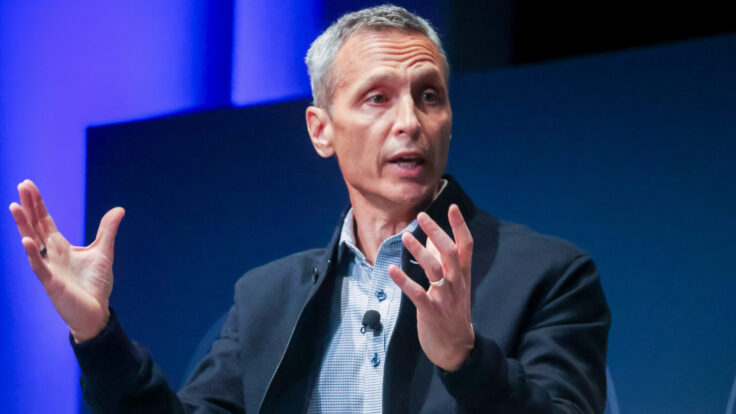
In this issue, we feature a conversation with investor Jason Stein, who is close to Maverick Carter and LeBron James and serves as a special advisor to their SpringHill Company. The co-founder and managing partner of SC Holdings discusses his bullishness on the business behind pickleball despite my personal cynicism. This issue also dives into Netflix’s sports strategy,
reads the tea leaves on Fox’s NFL relationship, and touches on the biggest rivalry in college sports.
Also mentioned in this issue: Tony Petitti, Mike Morris, Draymond Green, Josh Harris, Dana White, Ted Sarandos, Anna Leigh Waters, Rupert Murdoch, David Blitzer, Tom Brady, Donald Trump,
Kevin Love, Greg Sankey, Tyson McGuffin, Kevin Durant, and more… |
- Sarandos speaks: When Netflix hosts its upfront presentation tomorrow, Ted Sarandos will highlight the company’s NFL offerings: its Christmas games, new Blackout Wednesday game, Week 1 Australian game, and a late-season contest. But Sarandos reiterated that he’s not interested in a full season’s worth of games—from any league. The Netflix co-C.E.O. went on Fox
Business this morning to outline his live-events strategy. And yes, dear reader, he used the term “eventized.” (Drink!) “We’re leaning into the eventized event,” he said. (Eventized event!) “We’re not bidding on whole seasons of sports, including the NFL.”
He also highlighted the pitch that Netflix makes to leagues when it negotiates for rights: that their audience is younger and more international than the typical broadcast TV viewer. “So we’re able to expand the audience
for the NFL, and we bring those games to the public in unbelievably economical ways,” he said.
Sarandos, who bested YouTube to get the latest batch of games, also took the opportunity to throw some water on the controversy of NFL games moving to paid streaming services. “With viewers moving from linear more and more into streaming and on demand, if the games aren’t there, it seems kind of ridiculous,” he said. “Don’t run in the opposite direction of the American consumer. Of course, you
want to follow where the people are going.” - Nothing to see here!: Speaking of manufactured controversy, NFL officials have long suspected that Fox has been the driving force behind D.C.’s newfound obsession with the number of games the league has sold to streaming services. Just last week, a WSJ story had
Rupert Murdoch directly lobbying Donald Trump on the matter during a February dinner at the White House.
Sure enough, Fox revealed on its Q3 earnings call that the NFL had bequeathed two additional regular-season games to the broadcaster during the upcoming season. “Importantly this is indicative of an open communication channel between the league and Fox, despite recent headlines of a possibly more contentious relationship,” Guggenheim’s
Mike Morris wrote in a report. “We do see the potential for a broader NFL renewal as early as this year (though we do believe the window is closing).” In fact, Morris estimated that the two games would add $50 million to $70 million in incremental annual advertising revenue to Fox’s bottom line. - Rivalry week: In remarks to AP sports editors yesterday, SEC commissioner Greg Sankey showed he’s clearly still skeptical about the idea of expanding the College Football Playoff to 24 teams. “We’re open to the conversation, but there are a lot of ideas out there that have to be supported with analysis and information, not speculation,” he said.
Sankey’s stance on CFP expansion is perhaps less interesting than his tug-of-war with Big Ten counterpart
Tony Petitti, who supports growing the field. In fact, Sankey vs. Petitti is turning into one of the best rivalries in sports. The fact that the two most powerful administrators in college sports disagree on so much suggests the road forward will be bumpy. We’ll see how that plays out.
|
And now for the main event… |
|
|
|
SC Holdings’ Jason Stein on the private-equity money gusher flooding the sports
world, the commercialization of the NCAA, and why he (and LeBron and Draymond and K.D.) are still bullish on pickleball. |
|
|
|

| John Ourand
|
|
|
|
Private equity is all over the sports world these days, with leagues allowing firms to take
ownership stakes in teams, and the Big 12 becoming the first college conference to cut a deal with a fund. Jason Stein, who has devoted his career to investing in sports, recently told me that this trend was still in its infancy; he expects all sports to eventually become more commercialized and professionalized. Stein, the co-founder and managing partner of SC Holdings, walked me through his investment thesis and offered a smart viewpoint on how such investments
will change everything from the NCAA to youth sports to pickleball. He joined the Varsity podcast this week in an episode that posts tomorrow, but you’re getting an early look today.
What follows is a transcript of our conversation, lightly edited as always. |
NCAA’s
Trickle-Down Effect
|
John Ourand: One of the trends I keep writing about is the growth
of P.E. in sports. It seems like an overcrowded market right now.
Jason Stein: I don’t think it’s overcrowded. I think it’s just the beginning. Sports as an asset class is absolutely massive now, and it’s becoming commercialized and institutionalized in a really thoughtful way. Look at the NCAA. They’re starting to do deals with private equity. These are academic institutions, not commercial animals with sponsorship salespeople and media
rights people and agents around the table. The ability to turn NCAA sports into professional sports is one of the big trends we’re going to see trickle down from pro to college, to high school, to youth sports around the world.
Also, a lot of the money coming in has gone toward team ownership. There hasn’t been a ton of money that’s gone into the operating businesses around sports: the facilities, the technologies. That’s where you’re going to start seeing a lot more money flow, where
there’s real cashflow and growth opportunities as opposed to buying a trophy asset. Real operating companies—that’s where we try to play.
That’s been a surprising P.E. trend: buying ownership stakes in teams. They have such little control of the teams, they may as well put it in the S&P 500.
The S&P 500 is a lot less fun than owning a professional sports team. Look, if you buy right, you’re gonna beat the indexes by a lot. Look at
the 76ers’ ownership when Josh Harris and David Blitzer bought in at a $250 million valuation. That’s over 20, arguably 30 times that as a return. That’s better than what you’re going to see in an index, better than what you’re going to see at a venture firm, a private equity firm. And in this A.I. world we’re living in now, where everything is disruptable, I think sports and physical entertainment properties—concerts, amusement parks—are probably the safest
place you could put your money at this point.
A lot of universities and college conferences are looking into adding P.E. What is that going to look like?
It’s going to change a lot, and we don’t know what it’s going to look like in its entirety yet. But I think these schools need to become businesses. It takes a lot of sophistication and horsepower and capital. You’re going to start to see colleges bring in partners who can help.
Whether these are structured as credit or convertible debt or equity is to be determined. You’re sitting on massive brands and businesses that could be as big in valuation as a lot of these professional sports teams. In a lot of cases, the passion of the fandom exceeds a lot of professional sports franchises. They’re sitting on multibillion-dollar assets that are still functioning as part of an academic institution. |
I have to bring up your pickleball investment. I’ve been pitched on doing pickleball
stories for a full decade. It’s always the next big thing.
One of my biggest indicators that I should seriously consider investing in something is when media is at its peak of skepticism in that category. If you look at Apple headlines in 2008—the skepticism about mobile ads and social media ads not working—those are the best times to buy.
In the case of pickleball: We announced that Apollo has made a $225 million investment into
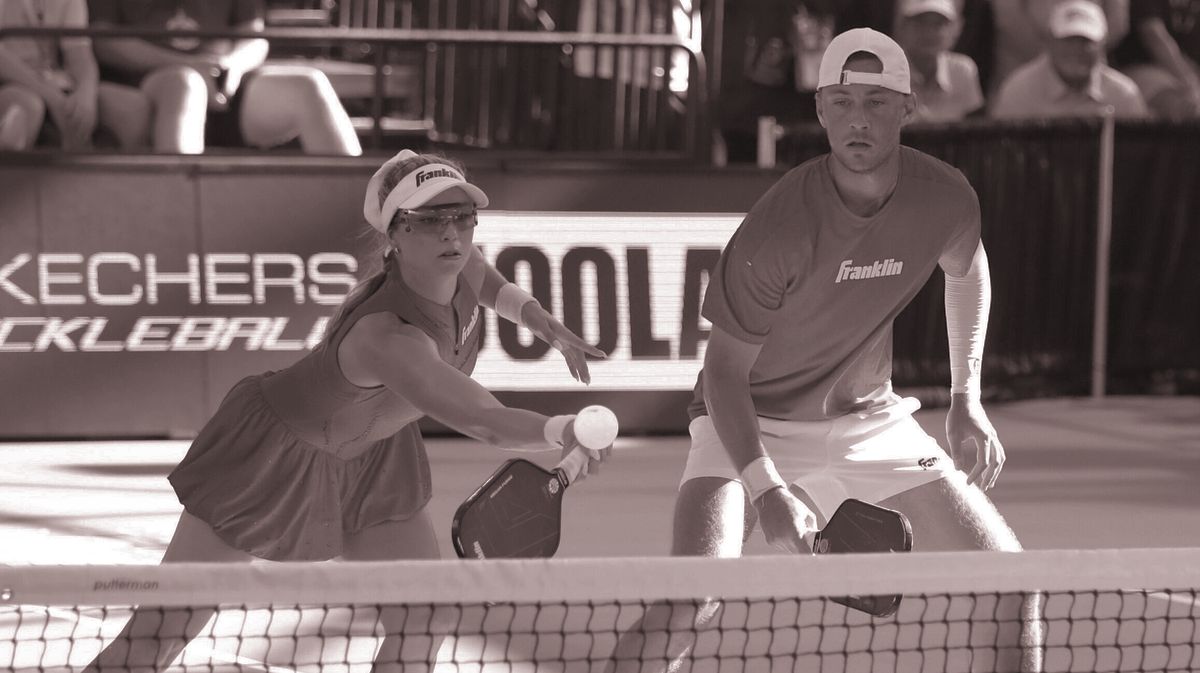
Pickleball Inc., which is the holding company for Major League Pickleball and the PPA Tour, our amateur event operator; Pickleball Central, a large-scale retail and e-commerce platform; and Pickleball.com, the biggest digital media property for pickleball in the country. You have a full-stack sports platform and sports league for the first time I’ve ever seen in sports—maybe UFC is the closest thing to it. We announced over $140 million of revenue just three years into this platform.
When
we bought one of the first pickleball teams, it was announced that LeBron was buying with us, along with Draymond Green and Kevin Love. Then a few weeks after that, Kevin Durant bought a team and Tom Brady bought a team. There was a lot of skepticism about the sport—people saying it’s not a real sport and nobody’s going to watch it. At the time, teams were valued around $1 million. They’re well into the high 10s
now. This is a real platform now. When you have 25 million people in the U.S. alone playing a sport, you have an opportunity, because participation drives viewership.
How do you see its growth? Is it a media play? A league play?
It’s really all of the above. Turning this into a media property is the goal, as it is for any sports league. We just released a documentary series on Amazon called Partners, about the partners in
pickleball, because it’s largely a doubles sport. It got over a million views in its first 48 hours. You’re seeing that Drive to Survive element.
The other interesting thing people don’t appreciate is that it’s co-ed. You have mixed doubles in many of the formats and in the league. I remember watching a match a year ago: Anna Leigh Waters, arguably the best pickleball player in the world, was 17 at the time, had just signed a Nike deal, and was playing against
the alpha male Tyson McGuffin—30-plus, covered in tattoos, has a mullet, drinks a beer after the game. They’re screaming at each other on the court, and she won. She didn’t back down at all. This is one of the only sports where you have men and women competing, all ages competing, and anyone could win. That makes it really fun from a media perspective.
Who are you modeling this after? Who’s doing it well?
I look at
Dana White and UFC as the holy grail. They’ve done the best job of owning exactly who they are, being authentic, completely controlling the narrative and storytelling of their athletes, and just grinding through it for the long haul. If you ever go back and watch the first UFC fight on YouTube, it gives you huge insight into how much sports leagues evolve over time if you stick with it. It looked nothing like what you see today. It looked like a B-level WWE fight. Things change
a lot when you start investing in the production and the product, and learn what fans care about most. |
On Netflix’s NFL deal: “Assuming Netflix closes on your reported five-game package with no
European dates, the NFL has its answer: Global streamers are pricing the 9:30 a.m. ET window differently than Australia and Brazil. If the NFL reaches 16 international games, I can’t see more than eight in Europe. Could the NFL use its international package as a broadcast retention option for a partner that can’t keep pace with rising rights costs?” —A sports business executive
On the NFL’s broadcast commitment: “The NFL likes to claim that nearly 90 percent of
its games are available for free on broadcast TV, but that’s not true market-to-market. In each individual market, there are four Sunday games available on the local CBS, NBC, and Fox affiliates. On many Mondays, but not all, there is a game available on the local ABC affiliate. That’s five games out of 16 on non-bye weeks. Thursday night games require an Amazon subscription. In years past, the Sunday morning international games and many Monday night games have required a cable subscription for
ESPN and NFL Network. There are the occasional games that require a subscription to Peacock, Netflix, or ESPN’s streaming services. The remaining Sunday afternoon games require a Sunday Ticket subscription on YouTube. Occasionally, there are additional games available for free on broadcast—Thanksgiving, for example—but most weeks it’s roughly 65 to 75 percent of the games that require a paid subscription to watch in each market.” —A sports media professional
On the NFL media
deals: “I’m really curious to see what the broadcast networks end up doing, because nobody knows what the future looks like. We know Netflix and YouTube will be around when these deals are up. Who knows what combination of the broadcast networks will?” —A Varsity subscriber
On World Cup viewership: “Have you heard anything from FIFA’s media partners about what they’re expecting for World Cup viewership? It seems like every day I read something about how the
ticket prices are too expensive, there are still unsold tickets, unsold hotel rooms, etcetera. Do media partners view this as a good sign, since fewer fans might be at games? Are international partners optimistic since fewer fans might travel to the U.S.? Is this negative media attention bad for the excitement for the tournament? Or is this all negligible?” —A former local TV sports anchor
On the Stephen A.–Bayless reunion: “This is my first time tuning into First
Take in forever. S.A.S. vs. Skip is electric.” —A sports business reporter’s 26-year-old son, who obviously has way too much time on his hands |
Thanks for reading. See you on Thursday,
John |
|
|
|
Puck sports correspondent John Ourand and a rotating cast of industry insiders take you inside the executive suites
and owners boxes where the decisions that shape the entire sports business are made. You’ll hear interviews with players, network execs, and everyone in between. The Varsity is an extension of John’s private email for Puck by the same name. New episodes publish every Wednesday and Sunday. |
|
|
|
The industry’s go-to source for unflinching reporting on the trillion-dollar business of artificial intelligence -
perhaps the single most important technology of our time. Ian Krietzberg, the powerhouse journalist behind The Deep View, delivers twice-weekly insights into the latest dealmaking and breakthroughs in A.I., and how the intersecting worlds of finance, entertainment, media, and politics are being transformed in its wake. |
|
|
|
Need help? Review our FAQ page or contact us for assistance. For brand partnerships, email ads@puck.news. You received this email because you
signed up to receive emails from Puck, or as part of your Puck account associated with {{customer.email}}. To stop receiving this newsletter and/or manage all your email preferences, click here. |
Puck is published by Heat Media LLC. 107 Greenwich St., New York, NY 10006 |
|
|
|
|