{{ 'now' | timezone: 'America/New_York' | date: '%b %d, %Y' }} |
|
|
|

| WELCOME BACK!
|
|
You’re receiving a complimentary version of The Best & The Brightest as a welcome gift to new readers.
Start a free 14-day trial to unlock access to Puck. |
|
|
|
Hello and welcome back to The Best & The Brightest. I’m Leigh Ann
Caldwell.
Well, it’s finally clear why the Trump administration tried to slip its $1 billion request for ballroom security into a D.H.S. funding bill. The Washington Post got its hands on the building contractor’s documents and found that more than $300 million of taxpayer dollars are needed for the project. (Oh, and the cost is actually
$600 million, according to the Post.)
In tonight’s issue, I have some exclusive and scoopy reporting about a MAHA Action event last night, where administration officials felt the need to reassure the crowd that R.F.K. Jr. is not getting fired. Do they protest too
much? Plus, my colleague Ian Krietzberg has the inside story on the Trump administration’s moves toward taking large stakes in A.I. companies—and the unusual coalition of political actors debating outright nationalization.
Also mentioned in this issue: Cheryl Hines, David Sacks, Mehmet Oz, Lee Zeldin, Tony Lyons, Casey Means, Sam
Altman, Bernie Sanders, Vinod Khosla, Dario Amodei, Elon Musk, Andrew Metrick, Robert Winterton, Adam Thierer, Peter Harrell, Brendan Carr, and more. |
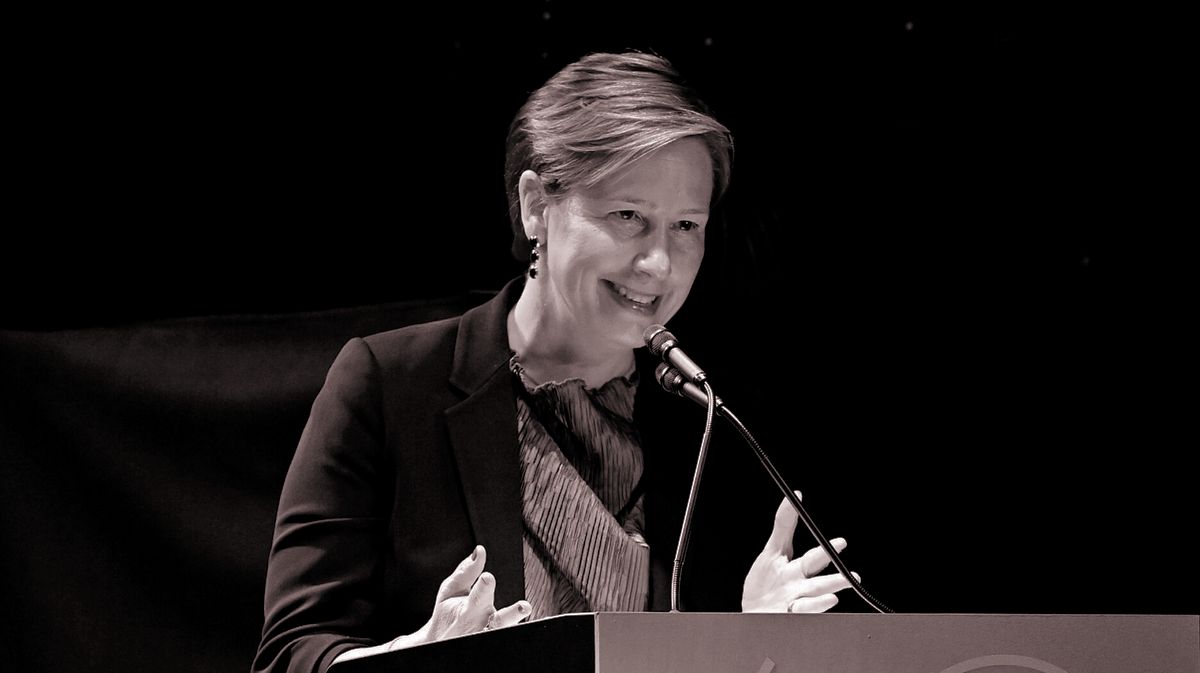
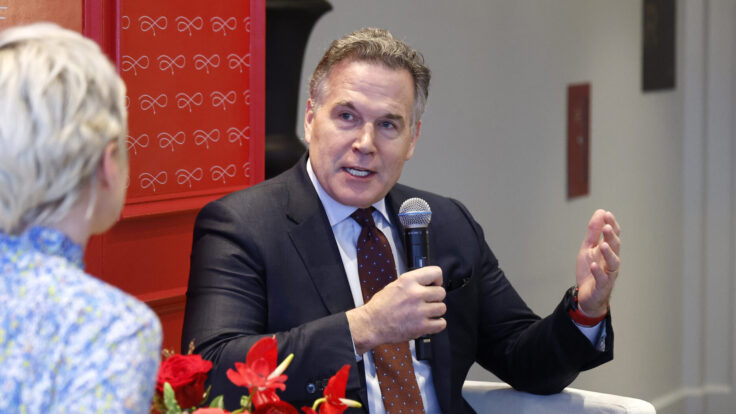
- MAHA faces the R.F.K. rumor mill: Is Robert F. Kennedy Jr. on the ropes at the U.S. Department of Health and Human Services? Not according to Trump officials Mehmet Oz and Lee Zeldin, who were among the speakers at a MAHA Action event at Ned’s Club last night to vigorously assure the crowd that R.F.K. is definitely not leaving the administration. “The best thing you can do when you hear a
rumor is to let it go wither on the vine and not give it any oxygen,” declared Cheryl Hines, Kennedy’s wife, according to an audio recording that I received. “That’s absolutely, utterly false. No truth to it,” added MAHA Action president Tony Lyons, who also addressed the gathering.
For months, rumors have swirled that the president has had it with R.F.K., whose anti-vaccine advocacy has generated a series of negative headlines. Several sources have told
me that Kennedy’s time is indeed limited, though each presented a different timeline for when the axe might fall. Some suggested Kennedy would leave in the coming months, others said after the midterms. When I put the question directly to Oz at a White House Correspondents’ Dinner event in April, he insisted that Kennedy’s relationship with the president was in good standing.
Alas, the rumors have only grown louder since then, and are now so rampant that Kennedy’s wife and other
administration officials felt the need to reassure his supporters and the monied movement behind him. “The reason that we are where we are is because Secretary Kennedy was able to create a political movement which moved the needle and got everyone to pay attention,” Oz told the crowd at Ned’s. “That’s why Bobby Kennedy is here to stay.” (MAHA Action did not respond to requests for comment.)
Embracing R.F.K. was one of Trump’s great 2024 masterstrokes, fortifying his voting coalition with
millions of MAGA-curious glyphosate-truthers, anti-vaxxers, and various other science skeptics. But Kennedy’s time as H.H.S. secretary has been tumultuous. Trump pulled Kennedy’s ally, Casey Means, from consideration for surgeon general when her nomination stalled in the Senate. Kennedy has lost multiple battles with Zeldin, the E.P.A. chief, over many of the environmental issues he once espoused. And The New York Times has repeatedly reported that Kennedy is
“checked out” of most issues at H.H.S. Indeed, a person who works with MAHA Action said that the group is despondent over Kennedy’s diminished standing inside the White House. His relationship with 1600 Pennsylvania Ave is “nonexistent,” this person told me.
At the MAHA Action event, Oz portrayed himself as one of Kennedy’s biggest
advocates, telling the crowd that he’s been to the Oval Office “countless times” and insisting that the president is “embracing and supporting” what Kennedy has done. But, of course, much of the speculation in Washington posits that Oz himself would take over for Kennedy. When it was her turn to address the crowd, Hines joked that Oz’s protestations might not be so sincere. “I’ve heard the same rumors,” she said, chuckling. “Mehmet, what are you up to?”
|
|
|
|
You’re receiving a complimentary version of The Best & The Brightest at
{{customer.email}} as a welcome gift to new readers. For access to Puck, and to each of my colleagues, subscribe today. |
|
|
|
The idea of the U.S. government taking a stake in the major A.I. labs—to mitigate
economic disruption, or just to spread the wealth—is gaining traction on both sides of the aisle. But is it the best solution, or even feasible? |
|
|
|
Back in April, when Sam Altman
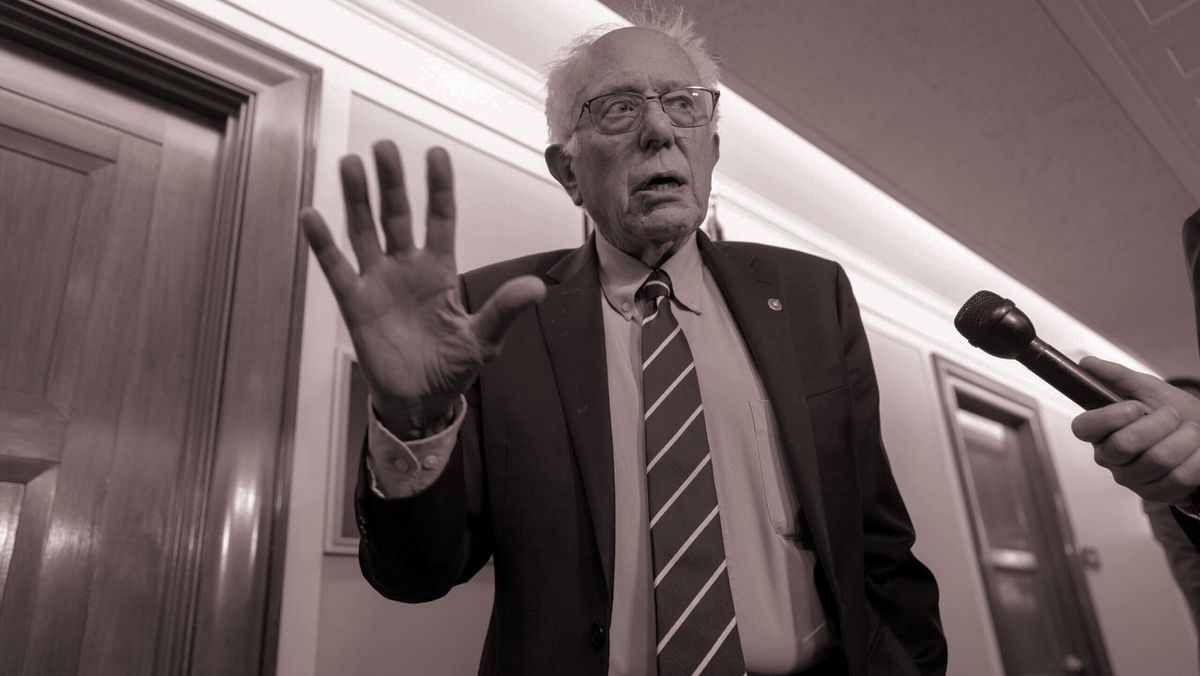
floated the idea of a sovereign wealth fund to provide U.S. citizens “with a stake in A.I.-driven economic growth,” he probably didn’t expect to capture the interest of both Bernie Sanders and Donald Trump. Altman had been on something of a goodwill tour, testing a
softer, more human policy message in Washington. But where OpenAI offered an inch, Sanders wanted a mile. On June 1, the Vermont senator pitched a one-time, 50 percent tax on the largest A.I. companies in the U.S.—paid in stock, not cash. “The federal government would have the power, through its voting shares and an equal
representation on each company’s board, to block decisions that hurt our citizens and to push for policies that help them,” Sanders wrote. Nationalization, in other words.
Less than a week later, Altman met privately with Sanders on Capitol Hill, where he expressed his general agreement with the notion that the
public should have equity in A.I. companies, although he couldn’t support a number as high as 50 percent. And, naturally, he doesn’t want his company to be nationalized. According to an industry source, OpenAI’s preference would be for the government to establish something akin to the Alaska Permanent Fund, which invests the state’s oil and gas revenues into a diverse range of assets and pays each resident an annual dividend. OpenAI, which didn’t return a request for comment, has also proposed
new safety nets, investments in workforce development, and tax modernization—all solid ideas that seem designed to stave off the pitchforks.
Whatever form an eventual partnership might take, the idea itself seems to have reached escape velocity. On June 5, aboard Air Force One, Trump told reporters that he planned to meet with major A.I. firms to discuss taking “pieces” of their companies (although this was news,
apparently, to the A.I. firms). “There’s something very interesting about it, where it almost becomes a partnership with the American public, where the American people can benefit from the success of A.I.,” the president said. The White House didn’t respond to a request for comment on whether the meetings have taken or will take place. |
In some ways, these conversations aren’t entirely surprising. As one industry source told me, A.I.
developers have long believed that nationalization was inevitable, even though the concept hadn’t gained any real political traction until now. Vinod Khosla, the legendary venture investor, broached the topic in October, although his pitch was for 10 percent stakes rather than 50. Meanwhile, in a recent
essay by Dario Amodei, the Anthropic chief argued that if A.I. does end up having a permanently negative impact on employment, “long-term income support” would likely be necessary. “Universal basic income could be financed through taxes on relevant companies or raising the capital gains tax,” he wrote. “Universal
capital accounts offer another vehicle. Broadly speaking, fast economic growth should create the tax base for shared prosperity.” Elon Musk, for his part, has endorsed the idea of a universal basic income—an idea that Altman had also supported until very recently, when he started talking up the idea of universal basic… access to
compute.
Anyway, not everyone thinks the idea is so clear-cut. Andrew Metrick, the prominent Yale economist, told me that the government tends to make “poor investment decisions and is a lousy overseer of private companies,” adding that “government ownership of private firms often leads to corruption, mismanagement, and lots of wasted taxpayer money.” Despite this, he believes we’re “still in the early stages of what is the most significant technological transformation in
human history. If we are going to survive as a society, we’ll need to figure out some way to transfer some of those windfall returns to ordinary people.” Metrick would prefer this done through taxation of corporate profits, but the scale of the predicted societal impact of A.I. has him “willing to seriously consider a heretical position that would include some government ownership of private firms during this massive transition.”
David Sacks, Trump’s former A.I. czar, is
also staunchly opposed to nationalizing these companies. “The C.E.O.s of the leading A.I. labs have told us repeatedly that they will cause massive job loss,” he wrote on X, adding that it’s unsurprising that Sanders’ proposal is resonating across the political spectrum. But, he said, the “nationalization of A.I. will accelerate the corporate-government fusion we’re already sliding
toward.” Robert Winterton, the V.P. of public affairs at industry group NetChoice, agreed: “This kind of backdoor nationalization is a direct threat to free speech, giving bureaucrats the leverage to censor viewpoints and control how Americans get their information,” he told me.
If these conversations move forward, Adam Thierer, a senior fellow at the R Street Institute, told me that he expects the administration to face resistance from corners of his
coalition that bristle at anything resembling socialist policy. “It’s unclear what happens next,” he said. Once you start nationalizing industries, where does the project end? |
In some ways, Trump has already crossed that Rubicon. Since 2025, his administration has inked more
than a dozen such deals, including paying $8.9 billion for a 10 percent stake in Intel. In most of those cases, however, the government was ostensibly trying to orchestrate some kind of industrial policy—supporting chipmakers and mining companies that are strategically important. The same argument might be made for A.I. on national security
grounds. But unlike those other sectors, Big Tech hardly needs government backing to thrive. As former White House economics advisor Peter Harrell told me, A.I. companies clearly have no trouble raising money—and they’re not earning much revenue in the form of government contracts, either.
The pursuit of equity stakes, Harrell continued, would also raise a bunch of thorny legal and political questions. Would Republicans be okay with Sanders being seated on the board of
OpenAI? Conversely, would Democrats be okay with, say, Brendan Carr on the board of Anthropic? And would the equity be a gift to the government, or would the government pay for it? The latter, Harrell said, would make any agreement start to resemble a bailout. “I’m actually quite willing to believe we are about to have some fairly substantial societal transformations as a result of A.I.,” Harrell said. “I’m skeptical that government equity stakes in the A.I. companies are the
right way to raise that revenue.”
He continued: “This idea of equity seems to be a shiny object that policymakers are latching on to because they think it’ll somehow magically deliver money for the government, and seems easier than taxing and regulating,” he said. “I think, at the end of the day, we’re not likely to see the government taking a lot of equity here, and over the long term, it would be more effective for policymakers to get their act together and pass some taxes and
regulations.” |
|
|
|
Join Emmy Award-winning journalist Peter Hamby, along with the team of expert journalists at Puck, as they let you in
on the conversations insiders are having across the four corners of power in America: Wall Street, Washington, Silicon Valley, and Hollywood. Presented in partnership with Audacy, new episodes publish daily, Monday through Friday. |
|
|
|
The industry’s go-to source for unflinching reporting on the trillion-dollar business of artificial intelligence -
perhaps the single most important technology of our time. Ian Krietzberg, the powerhouse journalist behind The Deep View, delivers twice-weekly insights into the latest dealmaking and breakthroughs in A.I., and how the intersecting worlds of finance, entertainment, media, and politics are being transformed in its wake. |
|
|
|
Need help? Review our FAQ page or contact us for assistance. For brand partnerships, email ads@puck.news. You received this email because you
signed up to receive emails from Puck, or as part of your Puck account associated with {{customer.email}}. To stop receiving this newsletter and/or manage all your email preferences, click here. |
Puck is published by Heat Media LLC. 107 Greenwich St., New York, NY 10006 |
|
|
|
|