Welcome back to Wall Power. I’m Marion Maneker.
Greetings from
Bermuda. I flew down on Saturday only to turn around and sail back to New York over the next few days. That won’t get in the way of you receiving all the important art-related news.
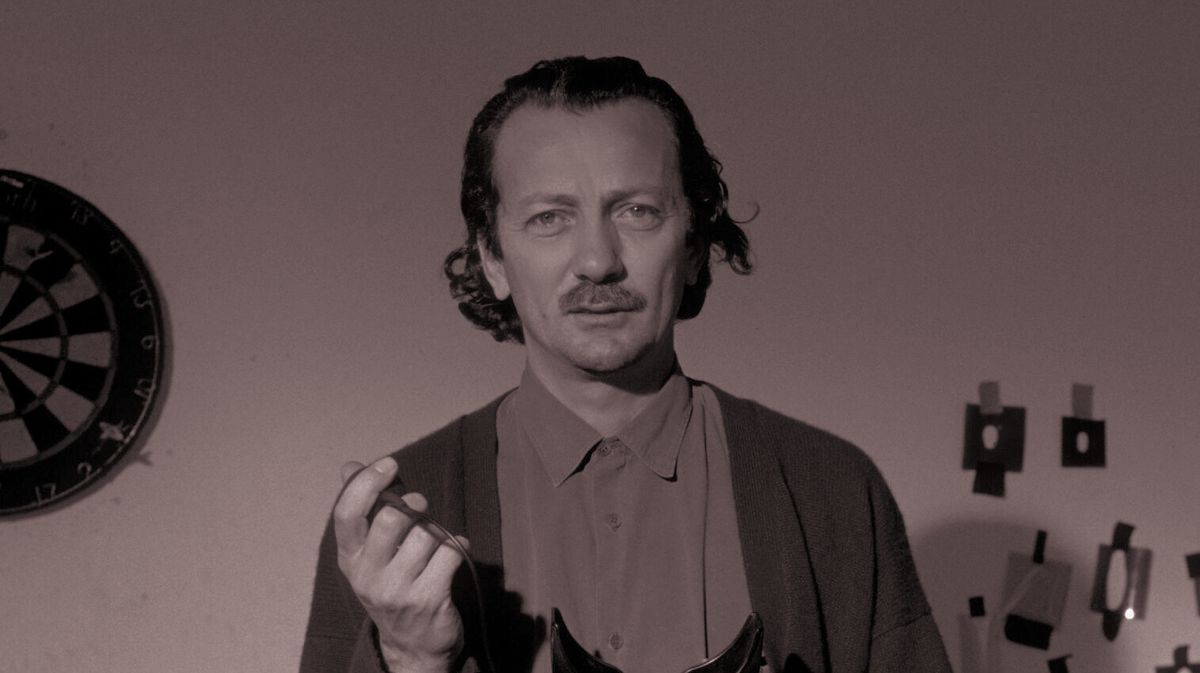
Tonight, my colleague at Air Mail, Elena Clavarino, has a profile of photographer Paolo Roversi, who used large-format
photographs to help usher in the era of the supermodels. Remember, Air Mail is now included with an Inner Circle subscription, which is yet another reason to upgrade your account if you haven’t already.
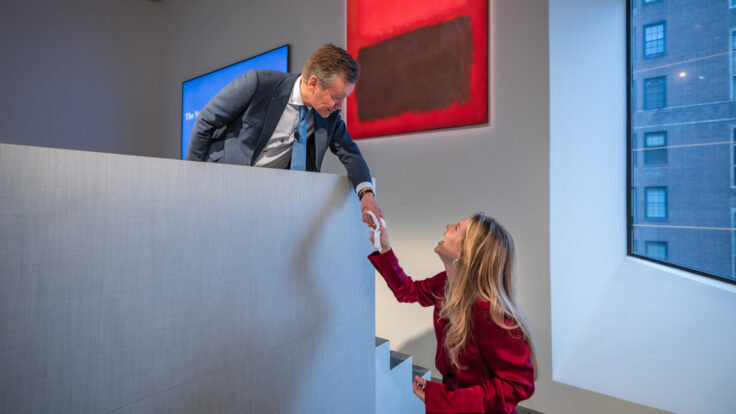
Up top, Sotheby’s has a Rembrandt that was rediscovered a decade ago but has been newly restored. It’s one of the leading lots in this week’s Old Masters sales in
London.
Also mentioned in this issue: Natalia Vodianova, Rei Kawakubo, Sarah Moon, Guy Bourdin, Helmut Newton, Deborah Turbeville, Diane Arbus, Laurence Sackman, Romeo Gigli, Kirsten Owen, Kate Moss, Naomi Campbell, Loulou de la Falaise, Stella
Tennant, Robert Frank, and more. |
|
|
|
A MESSAGE FROM OUR SPONSOR |
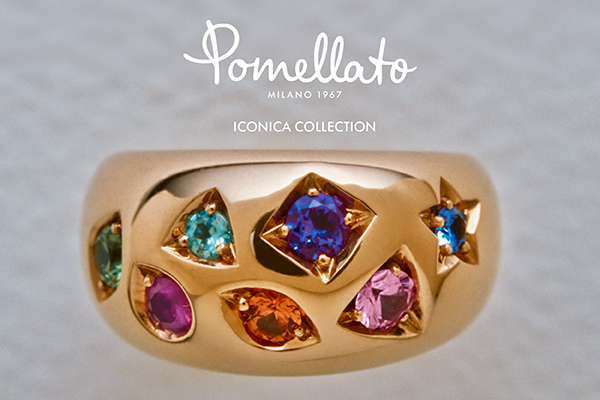
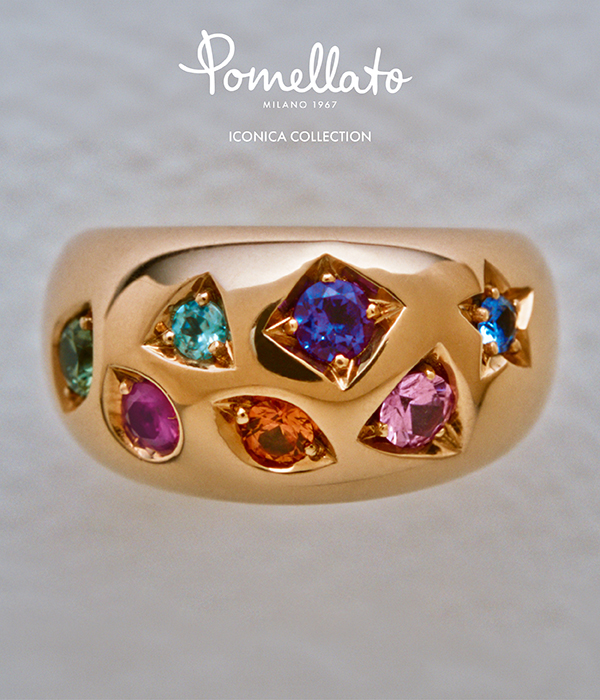
A New Facet of Iconica Long celebrated for its bold volumes and sculptural gold, Iconica reveals a new expression with vibrant gemstones. Crafted and polished by hand, each ring maintains the collection’s signature form while introducing flashes of ruby, emerald, sapphire, amethyst, and tsavorite. Set in carefully composed trios, the stones add depth, movement, and a contemporary edge to Iconica’s unmistakable silhouette. |
|
|
|
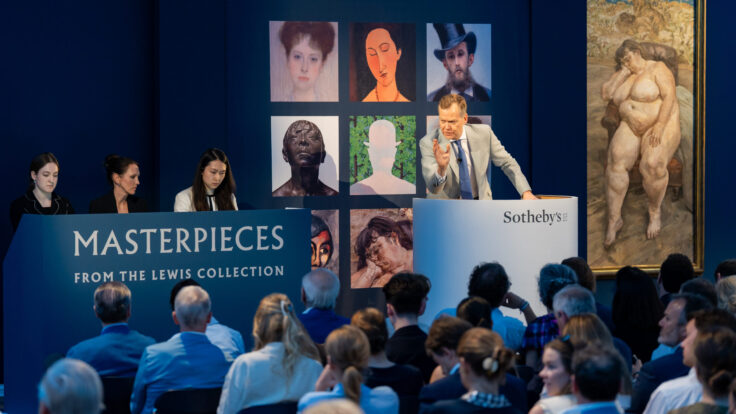
- Sotheby’s restored Rembrandt: On Friday, Sotheby’s announced that it will be offering a rediscovered Rembrandt in its Old Masters evening auction on July 1. The painting is estimated at £8 million and already carries an irrevocable bid.
A dozen years ago, a small
painting that might have been made by Rembrandt, which had been held in West Berlin since the middle of the 20th century, was sold at auction in Cologne. Once the work was cleaned, it became clear the painting was indeed by Rembrandt himself, and made early in his career. Further technical study and scholarly research, as well as the opinions of art historians and museum directors, encouraged the new owners to undertake significant restoration of the work, revealing a substantially
different image—one that seemed to suggest the painting was a tribute to Rembrandt’s parents, who had paid for his art apprenticeship with one of the leading artist’s studios in Amsterdam.
The conclusion was that Rembrandt had painted Let the Children Come Unto Me in 1627 upon his return to Leiden. In addition, the work seems to contain portraits of the artist and his family within a biblical scene that appears to promote religious tolerance, a pressing issue in the Netherlands
during this period.
|
Now, let’s go to Paris with our friends at Air Mail… |
|
|
|
In his Paris studio—and in time for a sweeping new retrospective in Spain—Paolo
Roversi, the photographer of Rei Kawakubo, Kate Moss, and Stella Tennant, reflects on a lifetime of looking. |
|
|
|
Paolo Roversi loves to quote literature. One of his favorite lines is
from Rumi: “I searched for God and found only myself. I searched for myself and found only God.” Another comes from the 17th century religious poet Angelus Silesius: “The rose is without why; it blooms because it blooms. It pays no attention to itself, asks not whether it is seen.”
I recently visited Roversi in his studio in Paris’s 14th Arrondissement, where he has worked since 1981. His studio manager of 30 years, Anna
Hägglund, greeted me at the door and invited me to take a seat in the office on the first floor, where his portraits breathed throughout the space. Many helped define the early days of fashion photography: the black-and-white photographs of a 20-year-old Natalia Vodianova, the Russian model’s eyes fixed on the camera lens like a python’s; another in which she lies on the floor, her naked body languid and serpentine. Nearby hung an image from
Roversi’s series for the Japanese fashion designer Rei Kawakubo—images in which models pose mid-movement, their bodies suspended between stillness and flight.
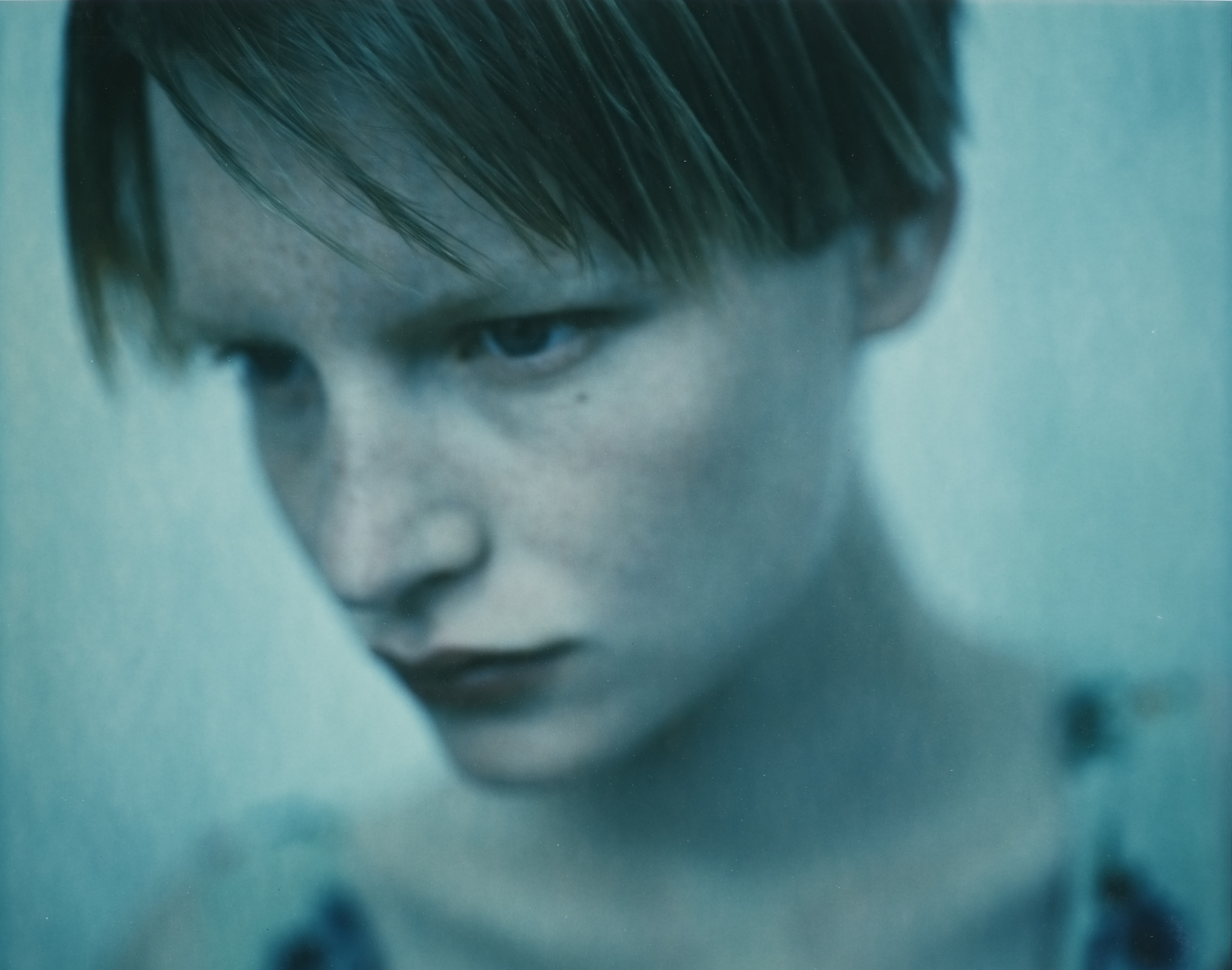
Roversi belonged to the same generation as Sarah Moon, helping steer fashion photography away from the stark, graphic approach of predecessors such as Guy Bourdin and Helmut Newton. His subjects are sometimes captured in fluid movement, sometimes
perfectly still, but always misty, soft around the edges. Roversi was never concerned with mimicking his peers; he cared only about understanding how to build with light. |
|
|
|
A MESSAGE FROM OUR SPONSOR |
In Living Color Within
Iconica’s radiant curves, color becomes a clear expression of personality. Saturated gemstones create a vibrant contrast with warm polished gold, balancing design precision with wearability. Both playful and refined, these compositions reflect Pomellato’s distinctly Milanese approach to modern elegance—pieces designed for self-expression and everyday wear. |
|
|
|
Now 78, he walked into his office slowly, leaning on the cane he’s used since suffering
a stroke a few years ago. Professionally, it hasn’t slowed him down. Last month, his native city of Ravenna, Italy, unveiled a permanent gallery in his honor at the Museo d’Arte della Città di Ravenna. The day after we spoke, he traveled to A Coruña, in northern Spain, for Doubts, a retrospective that opened on June 20 at the Marta Ortega Pérez (MOP) Foundation and features nearly 200 of his pictures. |
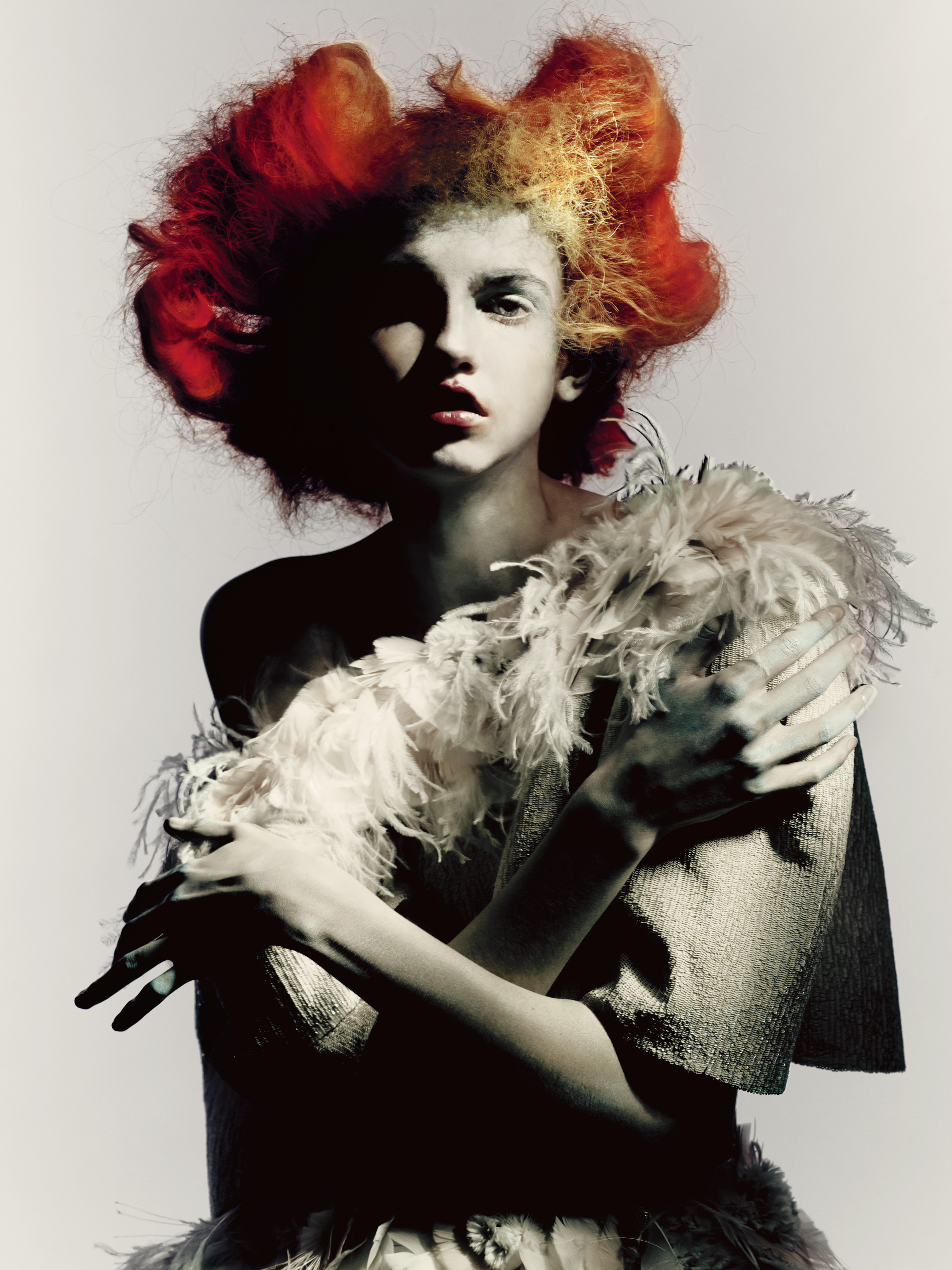
Molly Bair, Paris, 2015. Photo: Paolo Roversi |
The show’s final section is titled “Fading,” and that is where I began my interview, asking him
what he means by the word. “Everything disappears with time,” he told me in English, before switching to Italian. “Youth, beauty, love. Like Kerouac writes, ‘I will die, and you will die, and we all will die, and even the stars will fade out one after another in time.’” I also asked him why, as with his large-scale retrospective in 2024 at Paris’s Palais Galliera, he has chosen not to organize the exhibition chronologically. He told me time doesn’t matter, and that arranging his
work by date isn’t interesting to him. |
Roversi was born in Ravenna in 1947, when Italy was still reeling from World War II. From his
childhood bedroom on the outskirts of town, he could see the city center in the distance. Come every fall, he would watch the fog roll over the buildings. He was scared of the dark, and began to take an interest in light.
As a teenager, Roversi met a local postman named Battista Minguzzi, who taught him how to make prints. At 17, Roversi set up a makeshift darkroom in the basement of his parents’ house and printed his first photograph: a portrait of an old, wrinkled woman
standing in front of a cracked church in Sicily.
“I called the print Cracks and Wrinkles,” he said. “I spent almost the whole night there printing—more contrast, less contrast. Then, toward morning, after it had dried, I took it up to my room and hung it on my wardrobe facing my bed. I contemplated this print as if I were the greatest photographer in the world.” I asked if he still has it. “Of course,” he answered.
Even “the greatest photographer in the world” needed a
teacher, and for Roversi that was Nevio Natali, a photograph of whom hangs framed in Roversi’s studio. They met by chance. Roversi was a director at Modena’s Emilia Romagna Teatro in 1967, at the time pursuing a career in theater. Natali’s wife was an actress. Twenty years his elder, Natali was already the photographer-about-town, shooting everything from sports matches to weddings. Roversi spent many afternoons holed up in Natali’s studio on Via Nino Bixio, learning the basics:
how to develop negatives, how to print, and, most importantly, how to measure light. “In every one of my photographs, I owe something to Nevio,” he said. |
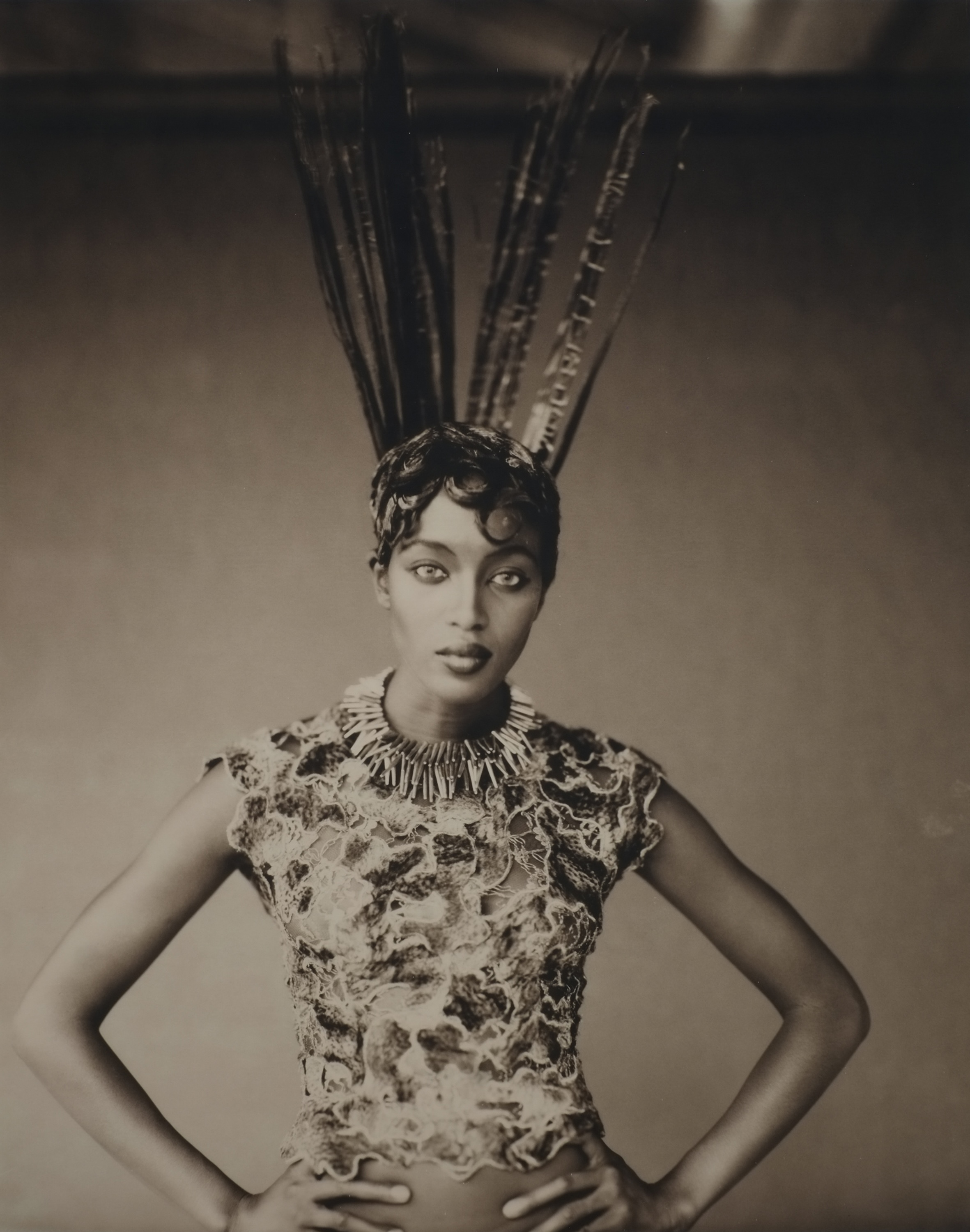
Naomi Campbell, Paris, 1996. Photo: Paolo Roversi |
In 1971, Peter Knapp—the Swiss former art director of Elle magazine—was
on assignment in Ravenna when he met Roversi. Two years later, in the fall of 1973, Knapp invited him to Paris. Roversi jumped at the chance, assuming he would stay only a few days, or maybe weeks. Fashion was booming in the City of Light. That November, the Battle of Versailles—the legendary charity showdown pitting five French designers against five Americans—captured the world’s attention. Moon and Deborah Turbeville were emerging, and the city had, Roversi recalled, “all the
atmosphere of the 1930s, the 1950s, all the atmosphere of artistic Paris. It was still all there, in the cafés, in the exhibitions, in the galleries.”
Roversi spoke neither French nor English, but he soon decided he wasn’t going home and scraped together enough money for a studio. One day, wandering through the Galeries Lafayette, he spotted a book by Diane Arbus. It was expensive, so he tried to slip it into his jacket pocket and get past the store manager. When he was
caught, he offered an unusual but resigned explanation: “I’d just never seen anything like it before.”
In 1974, he took a job with the notoriously difficult British photographer Laurence Sackman. “I worked with him for nine months,” he told me. “I broke all the records. Usually an assistant with him lasted three days, five days, then ran away.”
I asked what techniques he picked up from Sackman, given how different their work is. (Sackman’s charged, often erotic
pictures are indebted to the hard-lit world of Newton and Bourdin.) The question seemed to irritate him: Sackman was religious about technique, while Roversi is not. Still, he remembered one piece of advice: “[He] used to tell me something beautiful: ‘Fix your camera firmly on the tripod, fix the tripod firmly on the ground, but keep your head and your heart free to take the photograph.’”
Following his time with Sackman, Roversi picked up small commissions for Elle and the French
style magazine Depeche Mode. A Dior beauty campaign in 1980 brought him wider recognition. That same year, he began shooting in the 8-by-10 Polaroid format—using a Deardorff camera loaded with large-format film—that would become his signature. And so began his professional relationship with light. He founded Studio Luce—Italian for “Studio of Light”—where he developed his style: long shutter speeds and figures bathed in diffuse, uncertain light.
In 1981, Kawakubo was showing
collections at Paris’s InterContinental hotel—clothes with holes in them, shoes with strange shapes. “Rei’s work is not fashion,” the Italian editor Carla Sozzani once said. “She is an artist expressing her art through fashion.” So was Roversi, and the two recognized a quality in each other when they began to collaborate a couple of years later. “Working with Rei opens new horizons in a way that other work does not,” he has said. “Each time, I discover something new about my
work, about color, about form, about light.”
A collaboration with the designer Romeo Gigli followed in 1985. The next season, walking through London, Gigli and Roversi spotted a blonde girl playing guitar on the street. She had just arrived from Australia and was looking for money. They invited her to pose for them. Her name was Kirsten Owen, and she was 14 years old. They worked on the campaign for four days. “I wanted to capture the fragility and
sensuality of women,” Gigli said.
Roversi kept at the Polaroids, but a trip to India in the late 1980s changed everything. “There I discovered the penumbra, which is this light between light and dark,” he said. “This uncertainty between light and dark fascinated me enormously.”
Back in Paris, the era of supermodels was emerging, and on his trip, Roversi had discovered a new way of photographing them. First came Kate Moss, in the early 1990s, whom he shot naked.
Then Naomi Campbell, in the mid-1990s, for Italian Vogue. There was also Loulou de la Falaise, Yves Saint Laurent’s muse, and Stella Tennant, the aristocratic, androgynous Scotswoman who became one of fashion’s most indelible faces.
“They had an energy, a very particular presence, a very particular personality that was different from all the other models, from all the stereotypes,” Roversi said. “Kate and Stella
were truly unique. But what is it? The way they moved? Their personality? No, not one gesture more than another. It’s an ensemble of everything—a look, a gesture, a presence. Above all, a presence. For me, what matters is presence.”
Oftentimes, when Roversi talks about presence, souls, and mystery, it’s easy to forget that many of the images he describes were created to sell dresses, handbags, and perfume. “I always say that the designer is the composer of the music, and the photographer,
[who] plays the instrument, is the interpreter of the piece.” |
Kirsten Owen, Paris, 1991. Photo: Paolo Roversi |
Everyone wears a social mask, Roversi said, and his job is to get people to drop it, even if only
for a second. “There are no rules,” he told me. “No rules of time. It can happen in seconds. You don’t need lunch or dinner or conversation.” What matters is simply that his subject trusts him, and opens their heart so he can see it. |
|
|
|
We didn’t talk much about Roversi’s personal life until after the interview, when we
smoked on his terrace. (He lit a cigar, but I vape, unfortunately.) He told me he is not religious, returning to that Rumi quote. He has been with his partner, Laetitia, a model and lifelong muse, for 35 years.
Grief entered his life in recent years. In 2019, he lost his good friend Robert Frank, whose home in Mabou, Nova Scotia, he had traveled to in 2001. Together, they’d toyed with photographing each other with double Polaroids—a technique in which a
single piece of film is exposed to light twice, so two images appear layered on top of each other. Roversi showed me an iron statue of a donkey that once sat on Frank’s desk. He has not returned to New York since Frank died. Tennant, another close friend, died in December 2020.
Finally, I asked about his children. “I have four children,” Roversi said. “But I used to have five.” I left it at that. Later, I learned that his son Filippo, who was his darkroom printer for
years, died by suicide in 2017. “Survivor’s guilt is terrible,” Roversi said in a recent interview with D la Repubblica. “You feel guilty for existing. I feel I have no right to be well. When I go for my checkups now, after the stroke, and they tell me everything is fine, I start to cry. My psychologist tells me, Il faut vivre, Paolo. Il faut vivre. It is the hardest thing.”
Roversi escorted me back into the studio before I left. Black curtains were drawn across the
windows. The room smelled faintly of cigar smoke. The floors were laid with old wood, and stools and chairs lined the corners. It didn’t seem to have changed much since the ’80s.
If he closes his eyes, Roversi can tell you exactly where the sunlight falls and where it casts shadows. John Galliano once described his work as “a dance with light.” I understood that when walking through the studio—though I’m certain now that it is light that leads the dance, not Roversi. He
simply follows where it goes.
As I prepared to leave, Roversi pressed a monograph into my hands and signed it, adding: “To my new friend.” |
Thank you, Elena. That was fascinating. I’ll have more on Tuesday.
M |
|
|
|
Puck founding partner Matt Belloni takes you inside the business of Hollywood, using exclusive reporting and insight
to explain the backstories on everything from Marvel movies to the streaming wars. |
|
|
|
The ultimate fashion industry bible, offering incisive reportage on all aspects of the business and its biggest
players. Anchored by preeminent fashion journalist Lauren Sherman, Line Sheet also features Rachel Strugatz, who delivers unparalleled intel on what’s happening in the beauty industry, as well as Malique Morris on retail, D.T.C., and more. |
|
|
|
Need help? Review our
FAQ page or contact us for assistance. For brand partnerships, email ads@puck.news.
You received this email because you signed up to receive emails from Puck, or as part of your Puck account associated with {{customer.email}}. To stop receiving this newsletter and/or manage all your email preferences, click here. |
Puck is published by Heat Media LLC. 107 Greenwich St., New York, NY 10006 |
|
|
|
|