|
Welcome to Dry Powder. I’m Bill Cohan, pleased to be with you on this Father’s Day.
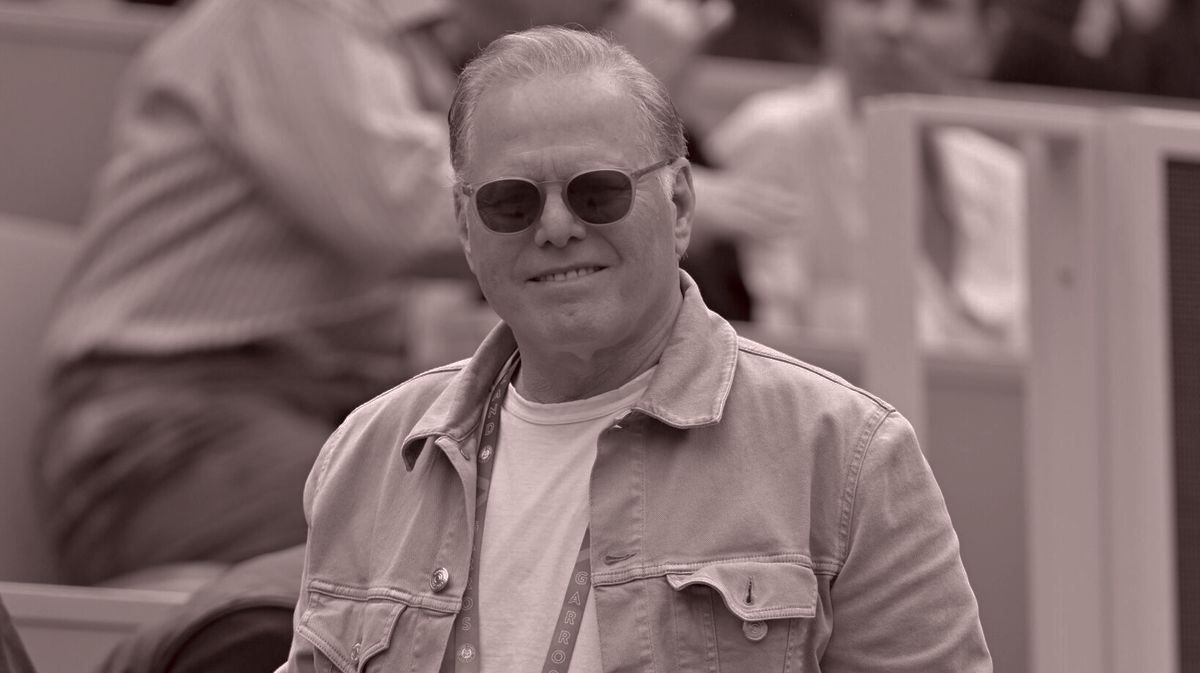
Tonight, I contemplate the next phase of transformation at WBD’s splitcos. Will David Zaslav’s new Streaming & Studios entity be catnip for a larger tech player, or can its market cap soar on its own as a debt-lite asset with healthy EBITDA? Is Gunnar Wiedenfels’ cable network portfolio a sitting target for Versant? Private equity? Some other vulture? I’ll discuss all this and more, below.
But first…
|
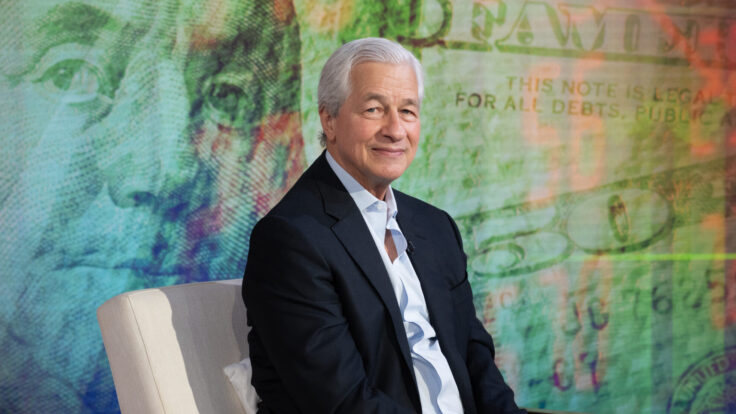
- Rowan repents: Well, that didn’t take long. As I reported last week, JPMorgan Chase C.E.O. and reigning king of Wall Street Jamie Dimon finally put his foot down regarding the industry’s most absurd recruiting practice—you know, the one where private equity firms and alternative asset managers routinely poach junior analysts from investment banks before they’ve so much as finished reading their orientation packages. It’s an annoying tactic, of course, since not only have the banks worked hard to recruit these kids off college campuses, they also invest considerable time and resources in their education once hired. (Yes, they also work them stiff, but that’s a story for another day.) Alas, the banks suffered this indignity in silence because the P.E. firms and alts were some of their largest clients.Recently, Jamie conveyed to his juniors that they’d be fired if they accepted a future-dated job offer from a P.E. or alt firm before spending at least 18 months at JPMorgan Chase. It was about time that someone drew that line in the sand, and it’s no surprise it was Jamie. No one else on Wall Street has his sort of juice.Unsurprisingly, the message was received. Earlier this week, David Sambur, the co-head of private equity at Apollo, and Nicole Bonsignore, head of human capital at the firm, sent a pablum-filled corporate missive of their own to prospective Apollo recruits, signaling that they would fall in line with the Dimon Doctrine. “Hiring decisions at Apollo are among the most significant to our business,” they wrote to their potential underlings. “With that in mind, we will not formally interview and extend offers this year for the Class of 2027.” They added, though, that they would keep in touch, since “we continue to be deeply interested in getting to know talented individuals like yourself.” General Atlantic, a buyout firm in Greenwich, followed Apollo’s lead.
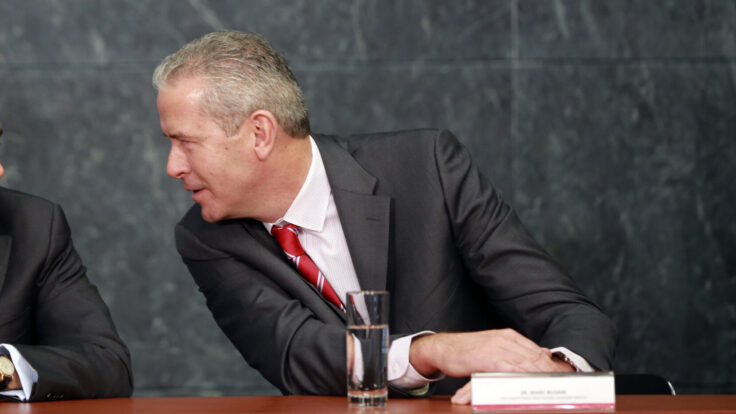
Marc Rowan, the C.E.O. of Apollo, conceded in a statement that the time had come to end the practice. “When someone says something that is just plainly true, I feel compelled to agree with it,” he said. “Bank C.E.O.s, along with others, have said what many of us have been thinking: Recruiting has crept earlier and earlier every year, and asking students to make career decisions before they truly understand their options doesn’t serve them or our industry.”
|
|
|
|
A MESSAGE FROM OUR SPONSOR
|
DESIRE MORE
Peerless
refinement. Uncompromising capability. Range Rover is the natural choice for those who lead by example.
EXPLORE
|
|
|
- A quick note on the I.P.O. frenzy…: A few weeks ago, I wrote about the revival of the dreaded SPAC, a.k.a. special purpose acquisition company. Now, it looks like the old-fashioned I.P.O. market is heating up again, too, despite the ongoing macroeconomic uncertainty that Washington has unleashed on the financial markets. This is a bit of a surprise, for sure, but the pent-up demand for a fresh crop of I.P.O.s needed a release, I guess.One of the first I.P.O.s out the door this round was Circle Internet Group, an issuer of stablecoins. Its long-awaited I.P.O., after rumors of a sale process instead, was priced June 5 at $31 per share, up from an indicated I.P.O. range of $27 to $28 per share. The stock motored to $83.23 a share by the end of the first day of trading, some 168 percent above its I.P.O. price. These days, the stock trades at around $126 a share, up another 17 percent alone on Friday. It now has a market value of more than $30 billion—higher than Warner Bros. Discovery, I might add.Chime, which provides free banking services to Americans earning less than $100,000 a year, also had a successful I.P.O. of sorts the other day. Its I.P.O. was priced at $27 per share, then opened at $43 on Thursday before settling at around $37 at the end of trading. The stock fell about 6 percent on Friday, giving the company a market value of $12 billion or so. While the Chime I.P.O. looks like a success for the company—as well as its underwriters Goldman Sachs, Morgan Stanley, and JPMorgan Chase—it was a bit of a downer for the smart-aleck investors (the aforementioned General Atlantic, as well as DST Global and Iconiq) that valued Chime at $25 billion in its last round of private-market investment, in 2021. That’s a serious bummer for those guys—a 54 percent hit—but it’s a relatively rare victory for the retail investors who bought on the I.P.O. and got a nice upward ride in the past few days.
Another successful (ahem) launch: Voyager Technologies, a mission-critical space technology solutions company, priced its I.P.O. at $31 per share, above the initial $26 to $29 range, and then saw its share price close at around $54.50 on Friday, up 75 percent from its June 11 debut. The most interesting I.P.O. in recent days, however, was the public listing for JBS, the world’s largest meatpacking company, which is principally based in São Paulo. Instead of an underwritten I.P.O., JBS, which has been seeking a stock listing in the United States for years, opted to list its stock on the NYSE without raising any money. According to The Wall Street Journal, neither Goldman, Morgan Stanley, nor JPMorgan Chase would underwrite the JBS I.P.O. “for compliance reasons,” and since the company didn’t need the money from an underwritten deal, it opted simply to list its stock.
The stock opened at $13.65 on Friday and closed around $14.44, up around 6 percent on the day. The company had around $80 billion in revenue, and around $2 billion in profit, in 2024. JBS has had its share of controversy, including, according to the Journal, “a corruption case” in Brazil that “ensnared” two of its founders, who ended up doing some jail time. According to the company’s filing with the S.E.C., JBS is the largest U.S. processor of beef, and the second-largest pork supplier. It is also the majority owner of Pilgrim’s Pride, the second-largest U.S. producer of chickens. Congrats to all.
|
|
|
|
As Gunnar Wiedenfels licks his chops over the debt-reduction possibilities at his cable-asset-heavy RemainCo, it’s time to contemplate the possibilities for Zaz’s Streaming & Studios venture. Is a 13x EBITDA multiple possible? If so, could this business kiss a $40 billion market cap, which is nearly twice the value of WBD?
|
|
|
While the equity markets continue to process David Zaslav’s announcement that he’s splitting Warner Bros. Discovery into two publicly traded companies—a declining linear television business, run by Gunnar Wiedenfels, known for now as Global Networks, and a Zaz-led, debt-lite, growing, Streaming & Studios business—our friend Rich Greenfield at LightShed Partners offered a few interesting points. First, in his June 11 note, he correctly recalled the original sin of the whole affair: When Zaz closed the deal in April 2022, he guided Wall Street to expect 2023 EBITDA of $14 billion. That initial estimate was lowered to between $10.5 billion and $11 billion, but the actual adjusted EBITDA—don’t do this shit to me on Father’s Day—ended up at $10.2 billion. It’s been downhill from there, with $9 billion in adjusted EBITDA for 2024, and what seemed to be a gathering consensus that it would be stuck at $9 billion for the foreseeable future, absent a spin or split.
“While a never-ending global pandemic, followed by a rare double Hollywood strike, could not have been predicted or modeled, WBD has nonetheless failed to meet its original financial expectations, an underperformance reflected in the precipitous drop”—of some 60 percent—“in its stock price since the merger was announced,” Greenfield wrote, adding that “management is clearly frustrated and looking for ways to create shareholder value and ward off potential activists that have pressured several of their legacy media peers.”
|
|
|
|
A MESSAGE FROM OUR SPONSOR
|
DESIRE MORE
Peerless refinement. Uncompromising capability. Range Rover is the natural choice for those who lead by example.
EXPLORE
|
|
|
|
And yet, the Zaz-and-Gunnar-engineered amicable divorce does not seem to have appeased Greenfield. “Splitting WBD into two parts does not ensure value creation, and while financial engineering can create value for investors, it also introduces new risks that investors need to consider,” he argued, before throwing cold water on the idea that S&S and Global Networks would be ripe for consolidation, as both Zaz and Gunnar implied on a Monday conference call with Wall Street analysts. During the call, they also maintained that neither company would face adverse tax consequences if they rather quickly set off on an M&A binge. Zaz and Gunnar may have been posturing for the markets, and attempting to preserve their optionality, but Rich doesn’t think they have any real suitors.
|
The Great Acquisition Fallacy
|
Greenfield’s note was of a piece with a soliloquy that he delivered on my partner John Ourand’s excellent podcast, The Varsity, and reflects what is becoming the consensus view in the industry. For years, executives and analysts wondered if—and, really, when—the tech giants would swallow the remaining legacy media players whole. And while this talk was amplified by Amazon’s $9 billion acquisition of MGM, it has since subsided. Obviously, as recent history has shown, the tech overlords don’t need to take on legacy headaches to extract value.
Greenfield, for his part, dismissed the idea that either Apple or Amazon would be buying the newly independent S&S anytime soon, which he thought could trade for as much as $40 billion, by placing a 13x multiple on its estimated 2026 EBITDA of around $3 billion. Zaz would certainly take that multiple—WBD’s current market cap is around $25 billion—but Rich’s point is a fair one. If a tech giant wanted this business now, it would buy it at its current price and harvest the value itself, rather than wait a year and pay a lot more. “[D]o we really believe they have not thought about buying all of WBD and then discarding the linear networks they were not interested in?” he asked. He also acknowledged that additional regulatory headaches are a near certainty in the Trump era.
Rich did suggest that the Ellisons could buy S&S if their deal for Paramount Global, which is looking increasingly iffy, falls through. (I recently shared my thoughts on this matter—including the $550 million sword of Damocles hanging over Shari’s head.) If Redstone and the Paramount board are able to manage the double-barreled headache of settling Trump’s 60 Minutes lawsuit and securing regulatory approval, however, the Ellisons will have their hands full with the integration of Skydance and Paramount, value extraction, and so much else. It would be hard to imagine them contemplating a second acquisition so quickly thereafter.
Rich was also pessimistic about the possibility of Versant merging with Gunnar’s new company, and the possibility of private equity coming along for the ride. He may be right on both counts, but I personally think a private equity or alternative asset management firm will eventually come to collect Gunnar’s Global Networks, and make the same bet that TPG did so successfully when it gobbled up part, and then all, of DirecTV from AT&T. In that instance, TPG assumed that it could manage the decline curve much more effectively and profitably than could the telecom giant. The firm was correct, and made a fortune. (Disclosure: TPG is an investor in Puck.)
As for Zaz and S&S, if S&S starts putting up numbers anything like the $4 billion in EBITDA that management expects, and also pays down the debt that S&S will carry after it’s spun out—$7 billion? $9 billion?—I, too, think it could trade for $40 billion, or even more. If that happens-–a big if, of course—Zaz could end up as a consolidator in the ongoing game of Hollywood Risk, which may actually be his new plan.
After all, Zaz traded up from Discovery Communications’ relatively forlorn cable TV portfolio, to WBD, and now to a fiefdom of some of the sexiest media assets on the planet—HBO, the Warner Bros. movie studio, and the Warner Bros. TV production business—and a relatively manageable amount of debt. It’s the same feat that John Malone, Zaz’s mentor, managed to pull off a few times in his own career. Not a bad outcome, all things considered, unless you bought the WBD stock after it was created in April 2022. (This is not investment advice.)
|
|
|
|
Ace media reporter Dylan Byers brings readers into the C-suite as he chronicles the biggest stories in the industry: the future of cable news in the streaming era, the transformation of legacy publishers, the tech giants remaking the market, and all the egos involved.
|
|
|
|
Join Emmy Award-winning journalist Peter Hamby, along with the team of expert journalists at Puck, as they let you in on the conversations insiders are having across the four corners of power in America: Wall Street, Washington, Silicon Valley, and Hollywood. Presented in partnership with Audacy, new episodes publish daily, Monday through Friday.
|
|
|
Need help? Review our FAQ page or contact us for assistance. For brand partnerships, email ads@puck.news.
You received this email because you signed up to receive emails from Puck, or as part of your Puck account associated with . To stop receiving this newsletter and/or manage all your email preferences, click here.
|
|
Puck is published by Heat Media LLC. 107 Greenwich St, New York, NY 10006
|
|
|
|