Hello and welcome back to The Best & The Brightest. I’m Leigh Ann Caldwell, coming to you on yet another rain-soaked day in Washington.
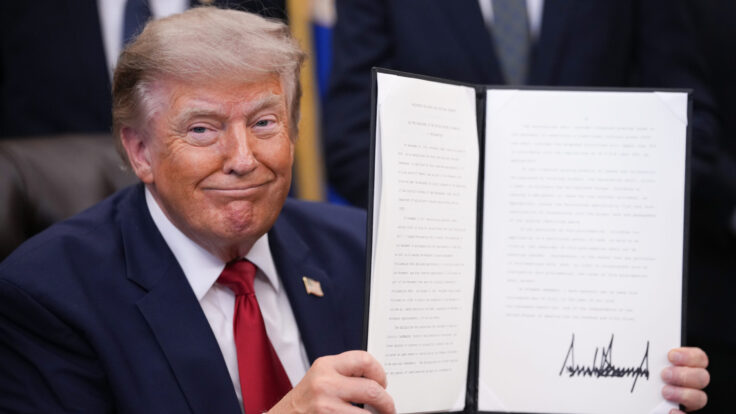
President Trump attended the first day of the G7 summit in Canada today, lamenting Russia’s exile from the global economic group and insisting that the war in Ukraine would never have happened on his watch. (He remains unrivaled for blaming the past when the present isn’t meeting expectations.) Julia Ioffe and I discuss all that, and more—including the latest strife between Iran and Israel—on tomorrow’s episode of The Powers That Be.
In today’s issue, Abby Livingston looks at Capitol Hill’s day trading epidemic, the push to ban it, and how Washington is grappling with new scrutiny of a national pastime.
But first, some news and notes from around town—including the key details from the just-released Senate Republican version of the Big Beautiful Bill...
|
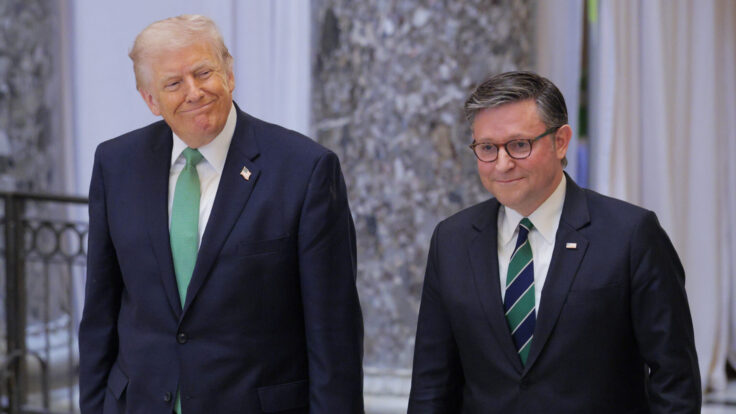
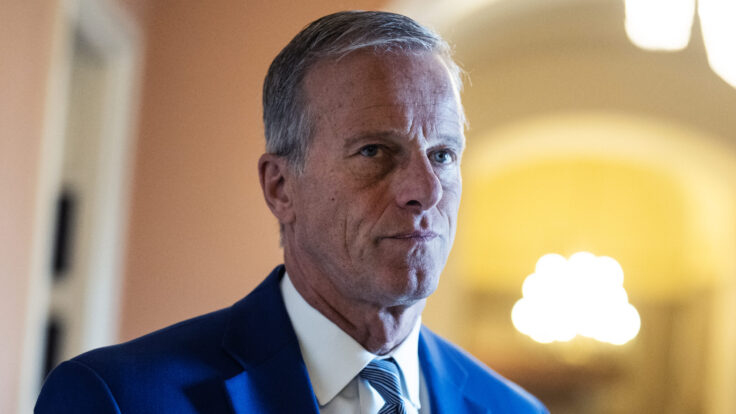
- The Senate cuts SALT: Senate Majority Leader John Thune had suggested that the upper chamber wouldn’t deviate too much from the version passed by the House. After all, Speaker Mike Johnson doesn’t have much of a margin to work with, and even tiny tweaks can cause major tremors. Of course, that’s not what happened. Instead, the Senate made changes large enough to spark real panic among some House members.First, the Senate has set the stage for an intraparty fight over Medicaid. Its cuts to the provider tax, which helps fund the program, won’t please Sen. Josh Hawley and others concerned about the impact on rural hospitals and nursing facilities. The House version kept the provider tax cap at 6 percent; the Senate version would reduce it to 3.5 percent by 2031.
The Senate, which promised to deliver a price tag far below the House bill’s $3 trillion cost, found savings elsewhere, too. Most significantly, Senate Republicans—none of whom represent high-tax blue states—knocked the state and local tax deduction cap back down to $10,000, from the $40,000 limit negotiated in the House. That level reflects the current law, which is detested by Republican SALT Caucus members in New York, New Jersey, and California, who worked hard to get that $40,000 cap and say they’ll accept nothing less. (We’ll see if they hold or if a new negotiation ensues.)
The Senate version also phases out the renewable energy production tax credit for wind and solar starting in 2026, a move likely to anger North Carolina Sen. Thom Tillis and colleagues pushing for a slower glide path. (The bill is more generous to nuclear and geothermal power, which will remain eligible for tax credits until 2036.) Meanwhile, on Trump’s signature issue of no taxes on tips or overtime, the Senate version is far less charitable, allowing only the first $25,000 of tipped income to be untaxed, whereas the House version had no limit. It’s going to be a messy few weeks.
|
|
|
|
A MESSAGE FROM OUR SPONSOR
|
bp supports ~300,000 US jobs. Like the engineering and skilled labor jobs that are working to produce more American energy right now. Across our five offshore platforms in the Gulf of America, we’re making major investments in people and infrastructure. It’s just one of the ways bp is investing in America.
|
|
|
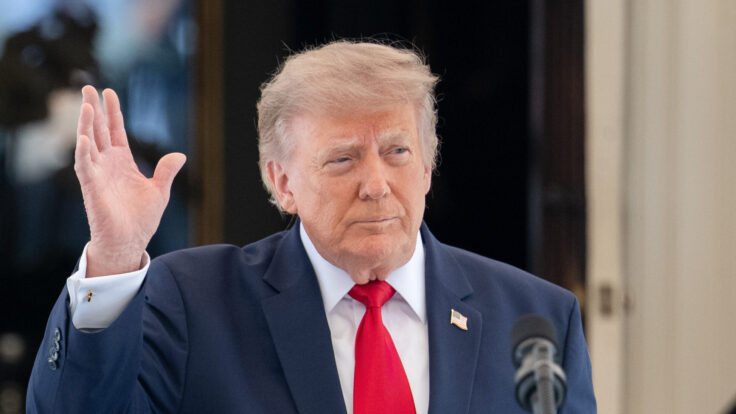
- The politics of deportations get personal: The president is seemingly changing tactics after his calls for mass deportations—and a daily quota of 3,000 arrests—have caused tensions to boil over across the country. No, Trump isn’t having second thoughts about widening the Department of Homeland Security’s dragnet to include all undocumented immigrants, not just those with criminal records. But he does appear to be worried about the impact on certain industries that have historically relied on migrant labor.In the latest development, immigrants who work for people in a demographic that voted for him, like farmers, will be spared this round, following pushback from Agriculture Secretary Brooke Rollins, according to The New York Times. Rollins had been taking heat directly from farmers and Republican members of Congress. Also untouched will be immigrants working in industries that Trump understands, like hotels and restaurants. (Trump has previously advocated for expanding temporary worker programs, which he has used extensively at his own properties.)
At the same time, Trump has ordered ICE officers to ramp up deportations in Democratic cities, pushing law enforcement to “do all in their power” to round up and deport any “illegal aliens” in Los Angeles, Chicago, and New York. “Most of those people are in the cities,” he said, “all blue cities, all Democrat-run cities.”
|
|
|
|
Senate Democrats (and a few Republicans) are reviving efforts to ban stock trading by members of Congress—a surprisingly complex issue with bad actors on both sides of the aisle.
|
|
|
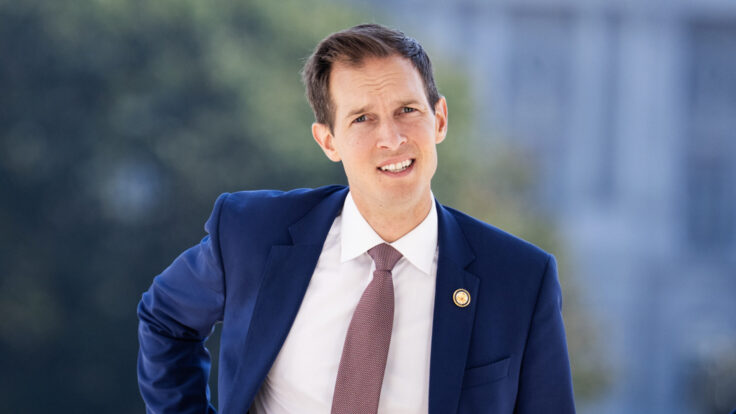
Last week, Representative Mikie Sherrill handily won the Democratic Party’s nomination to run for governor of New Jersey, defeating her closest rival, Newark Mayor Ras Baraka, by double digits. But in the race’s final weeks, her rivals opened up a potent new line of attack—slamming Sherrill for the extraordinary growth of her portfolio. Over the past five years, according to financial disclosures, the former Navy helicopter pilot’s financial assets have at least tripled—boosted mostly by her husband’s compensation. Adding to the hit: In recent years, she paid a fine after a belated disclosure of two stock sales. Not a big deal, but an easy attack line.
Sherrill went on to win the primary, but the grumbling among her Democratic opponents—and some party operatives—is indicative of a metastasizing problem on Capitol Hill for incumbents. After all, stock-picking by members of Congress is one of the few truly bipartisan practices in Washington these days, with not-so-amateur trading taking place on both sides of the aisle. Concerns about lawmakers profiting off inside information spiked in April, amid a flurry of trades that seemed suspiciously timed to Donald Trump’s erratic tariff pronouncements. Marjorie Taylor Greene caught flak for activity that she characterized as her portfolio manager buying the dip, but she was hardly the only one. The issue has been ongoing for years.
|
|
|
|
A MESSAGE FROM OUR SPONSOR
|
bp added $190+ billion to the US economy over the last three years. Like adding more than 300 TravelCenters of America sites to our retail network. With our on-highway locations spanning the entire US, we can bring more quality fuel, charging and food to customers. It’s just one of the ways bp is investing in America.
|
|
|
Policymakers have tried to tamp down on the pastime. In 2012, President Obama signed the Stop Trading on Congressional Knowledge (STOCK) Act, which restricted members’ ability to benefit from nonpublic information. Yet it hasn’t stopped lawmakers from trading, creating the appearance of impropriety. “It’s so crazy,” Rep. Alexandria Ocasio-Cortez said earlier this year on Jon Stewart’s podcast. “People think that everyday people are stupid. I’m like, do you all really think that people don’t see this shit?”
The Mikie Sherrill situation put operatives from both parties on high alert that stock sales are increasingly treacherous political territory for lawmakers in Washington. After years as a relative nonissue, congressional stock trading rose to prominence when former Rep. Chris Collins went to prison in 2020 for insider trading. (He was later pardoned by Trump.) That same year, Senators Kelly Loeffler, Dianne Feinstein, and Richard Burr were all taken to task for trades around the pandemic. The S.E.C. investigated Burr, the then-chair of Senate Intel, who received classified Covid briefings, after he dumped between $628,000 and $1.72 million in stock weeks before the pandemic hit the United States. The commission dropped the investigation in 2023, days after Burr retired.
With the markets soaring post-pandemic, congressional stock trading also became a source of public fascination, with websites tracking members’ market activity. Nancy Pelosi and her husband, investor Paul Pelosi, have an online following that tracks and replicates their every trade—and routinely outperforms the market doing so. As Jay Hunter of the congressional stock-trade website Hunter Index told me, “There are more eyeballs on this than in the past.”
|
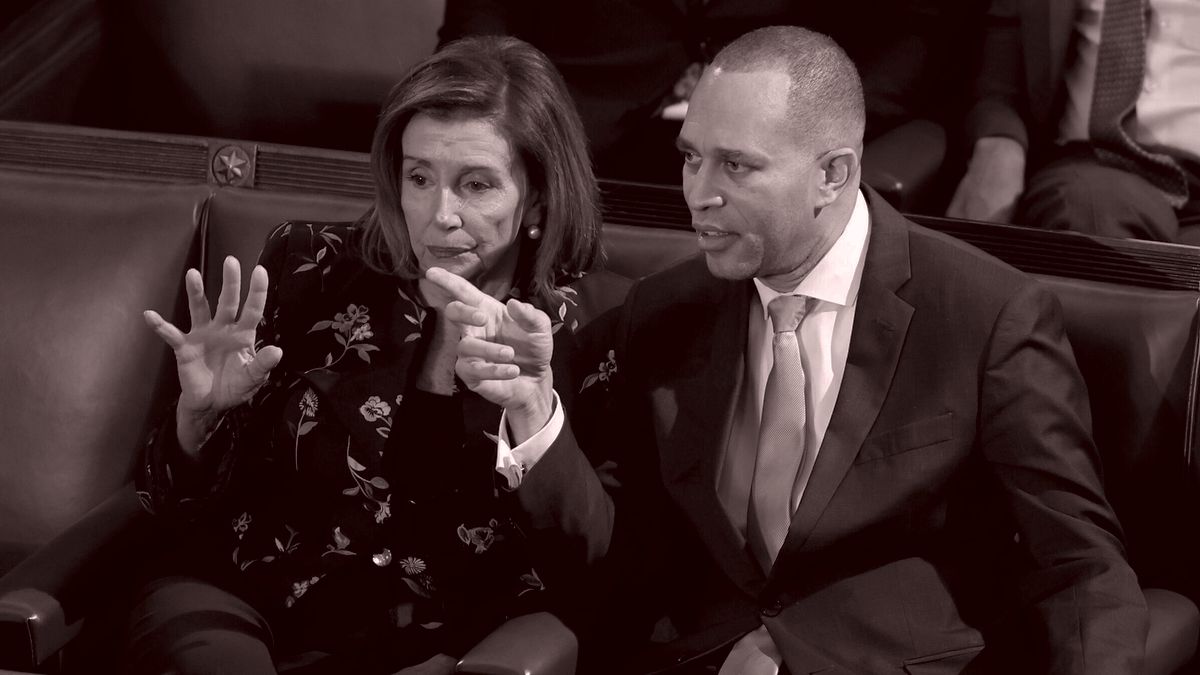
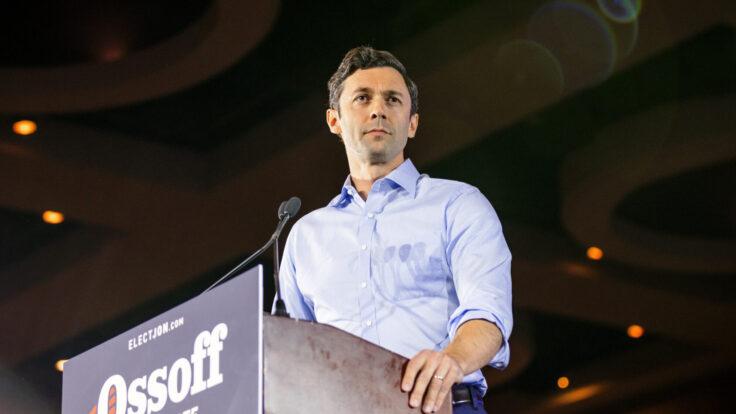
Of course, the unseemly is not necessarily illegal. True insider trading is rare in Congress… or at least rarely proven. More frequently, members simply fail to make timely disclosures of trades, as required under the STOCK Act. (A Business Insider investigation found 78 members of the 117th Congress had violated disclosure requirements.) In any case, there’s momentum for more radical action. In April, House Minority Leader Hakeem Jeffries endorsed a stock trading ban, citing Rep. Greene’s tariff trades—a direct contrast with his predecessor, Pelosi, who has long defended the practice. The following month, Democratic Senators Jon Ossoff and Mark Kelly reintroduced a bill that would ban members of Congress and their immediate families from trading individual stocks. Senator Josh Hawley has offered a similar bill, which President Trump has suggested he’d sign.
|
|
|
Alas, there are all kinds of reasons it’s been difficult to ban members from trading individual stocks. For one, the people who can afford a congressional run—which can require going 16 months with no salary—tend to have plenty of assets to their names. And of course, it’s always a tough sell to persuade Congress to regulate itself, say, by approving tax penalties for liquidating assets. While most members caught up in negative coverage deflect blame to their stockbrokers, some members opt for “blind trusts” to insulate their trades from their own insider knowledge (though this isn’t foolproof—they can have a pretty good idea of what’s in their portfolio). Wisconsin Sen. Tammy Baldwin, who always faces a difficult reelection in her purple state, has one of the few purely blind trusts. Freshman Rob Bresnahan, one of the most vulnerable House Republicans, has been one of the most prolific traders in the House, but after negative headlines, he introduced legislation to ban congressional stock trading and promised to move his money into a blind trust.
Republicans may feel like they’re getting mixed signals from Trump, who has paid no political price for his enrichment spree since his second election—the Trump cryptocurrency, the Trump phone, the Trump properties in the Middle East, the Melania documentary, the Qatari plane, etcetera. And yet, nobody else seems to enjoy the same double standard. “I think there’s a baked-in approach with him on those issues that you’re not likely to have with your average House candidate,” said Amy Walter of the Cook Political Report. “If I am an individual member, I would do whatever I could to make myself as distant as possible from any sort of financial transactions.”
A Republican opposition researcher concurred, regaling me with a story about a politician with a limited budget who was scrutinizing their opponent’s stock trading information only, with far less interest in their voting record—because when it came to personal financial disclosures, the researcher told me, “I can always find something.”
|
|
|
|
Join Emmy Award-winning journalist Peter Hamby, along with the team of expert journalists at Puck, as they let you in on the conversations insiders are having across the four corners of power in America: Wall Street, Washington, Silicon Valley, and Hollywood. Presented in partnership with Audacy, new episodes publish daily, Monday through Friday.
|
|
|
|
Unique and privileged insight into the private conversations taking place inside boardrooms and corner offices up and down Wall Street, relayed by best-selling author, journalist, and former M&A senior banker William D. Cohan.
|
|
|
Need help? Review our FAQ page or contact us for assistance. For brand partnerships, email ads@puck.news.
You received this email because you signed up to receive emails from Puck, or as part of your Puck account associated with . To stop receiving this newsletter and/or manage all your email preferences,
click here.
|
|
Puck is published by Heat Media LLC. 107 Greenwich St, New York, NY 10006
|
|
|
|