{{ 'now' | timezone: 'America/New_York' | date: '%b %d, %Y' }}
|
|
|
|
Hi, and welcome back to Line Sheet. I have returned to the West Coast for a few weeks, and am once
again embracing the 5:30 a.m. walk-and-talk. I hope to see you while I am on this side of the world—and, if not, somewhere colder this autumn.
I missed a lot while I was away last week, and will be sharing some additional intel in tomorrow’s Inner Circle issue on everything from Jonathan Saunders’s appointment at Kate Spade New York to the news about Bottega
Veneta’s new C.E.O. and what the move means for both Kering and LVMH. In today’s issue, Rachel “ Rachel@puck.news” Strugatz is back with a heap of intel on Sephora’s fragrance business. Perfume remains the fattest of the industry’s cash cows, and Rachel shares all the interesting stuff happening behind the scenes. Plus, Malique
“ Malique@puck.news” Morris is here to read between the lines of the Mulberry earnings report. He’s also back on the Spanx beat with the latest executive changes under the shapewear brand’s new ownership. And I’ve got a little something on the summer’s “It” accessory—besides Phoebe Philo sandals, of course.
Also mentioned in this issue: Hailey Bieber,
Jonathan Anderson, Jen Brill, Rory Satran, PerfumeTok, Phillip Lim, Andrea Baldo, Kayali, Yasi Salek, Pia Baroncini, Drunk Elephant, Christopher Kane, Old Town Pasadena, Alexa Chung, Monogram Capital Partners, Funmi Monet, Coach, Mike Ashley, Fara Homidi, and more.
|
Three Things You Should
Know…
|
- The must-have accessory of the
summer is… a lip gloss: About six months ago, I was having dinner with Jen Brill and Pia Baroncini at an overpriced Mexican restaurant in Old Town Pasadena (which, honesty, I would recommend), and noticed that they were both using Fara Homidi’s Soft Glass Lip Plumping Oil. The lacquered, sky blue
cap tipped me off that it was Homidi’s creation. The makeup artist’s line had been on my radar since The Hamptons Chronicle author Rory Satran wrote about her lip compact in
The Wall Street Journal back in December 2023. I am not a big lip gloss person—it never actually makes your lips feel softer (I use Henné lip balm for that) and it also often looks too try-hard, as the kids say. But, hey, I
will try hard to look anywhere near as cool as Jen, the coolest girl in the world.I ordered it on the spot, and have since become obsessed with Homidi’s whole range. I’m a big lipstick person, and have the Holiday 1 and Red 1 compacts, as well as the Essential Eyeshadow palette that includes Homidi’s signature blue. The best thing, though, is the concealer, which is waxy and great for covering any sort of little blemish. Anyway, I’m obsessed, and have noticed that basically every cool woman owns the lip gloss, at least. I asked Rachel how Homidi’s business was doing in light of
my obsession. According to Rachel, it’s still a “very small” brand, but Sephora is excited about it, mostly because what Homidi is making feels singular. I have a feeling we won’t be calling it “very small” for long.
|
|
|
|
 |
Malique Morris |
|
- Spanx’s new owners are moving
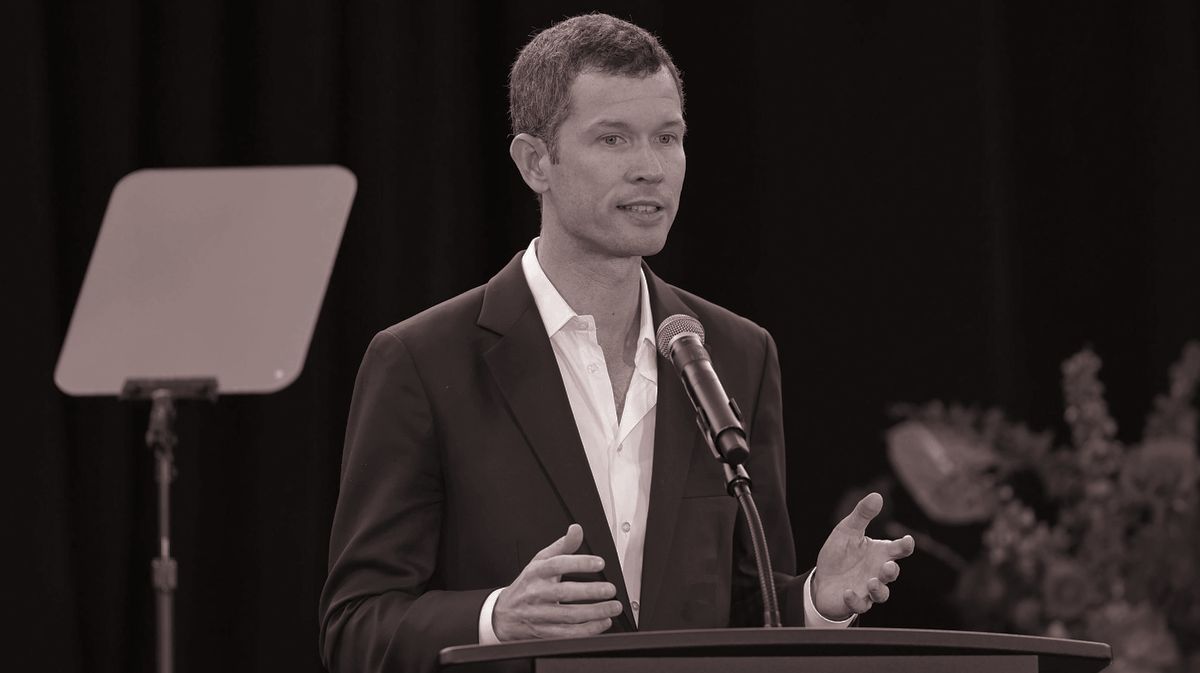
quickly: The C-suite musical chairs continue at Spanx. I’m told that C.E.O. Robert Trauber, who joined the company in May, will be replaced by an interim chief executive, Jennifer Holland. Holland, a former Bain and Alvarez & Marsal consultant, will be Spanx’s fourth C.E.O. in eight months, beginning with Cricket
Whitton’s departure in October. The shake-up was announced during an all-hands meeting on Wednesday. I’m also told that Spanx’s finance chief, Joshua Jacobs, who joined in October, will be replaced by Rhys Morgan, another Alvarez & Marsal alum. (Spanx didn’t respond to a request for comment.)It hasn’t even been a full month since Blackstone sold its majority stake to HPS Investment Partners, the private lender and BlackRock subsidiary. Just two weeks ago, Tauber was announcing Spanx’s new ownership structure to employees. HPS plans to restructure the board after founder Sara Blakely exited last month. Bringing a Bain consultant onboard as interim C.E.O. isn’t the worst idea for a company that needs to revive profitable growth.
- The Mulberry turnaround you
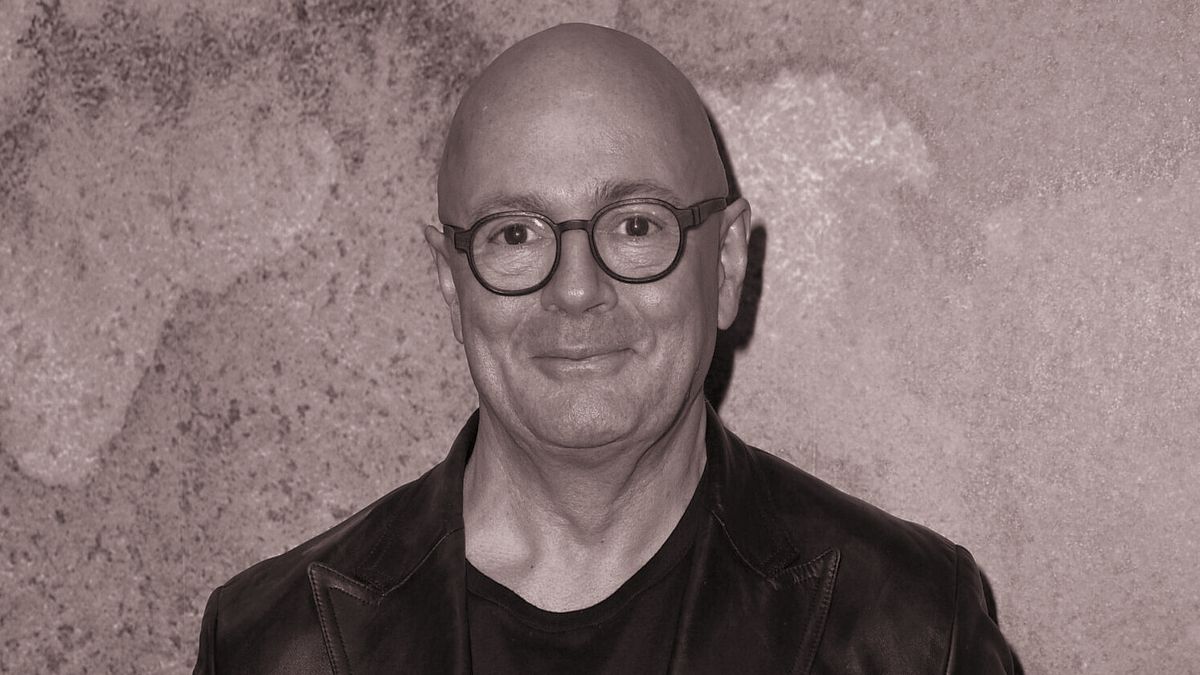
didn’t know was happening is underway: Christopher Kane’s first collection for Mulberry hits the runway in London this September, but the company—owned by the Singaporean investment firm Challice, with Mike Ashley’s Frasers Group as a key minority shareholder—is already doing far better than you’d imagine. On Wednesday, Mulberry reported that sales jumped 23 percent year over year in the quarter that ended in June, and leapt 4 percent to £126 million for
its fiscal 2026 that ended in March. That’s pretty good, especially since sales dipped 21 percent year over year in 2025.The company is still losing money—£8.9 million in the most recent fiscal year—but that number is shrinking. C.E.O. Andrea Baldo, who joined in 2024, is taking what I’d consider a two-pronged approach to the turnaround. His initial strategy was branded “back to the Mulberry spirit,” and it focused on storytelling around the brand’s heritage. More
importantly, Baldo seems to understand the appeal of making well-priced, high-quality bags that don’t really look like anything else on the market. (The Coach approach.) The Kane factor will bring fashion-enthusiast interest, hailing back to Mulberry’s true heritage: gifting bloggers who wanted to look like Alexa Chung thousands of bags circa 2010.
|
|
|
|
After turning indie fragrance brands like Kayali into blockbusters, Sephora is trying to
build its next hit from the ground up.
|
|
|
|
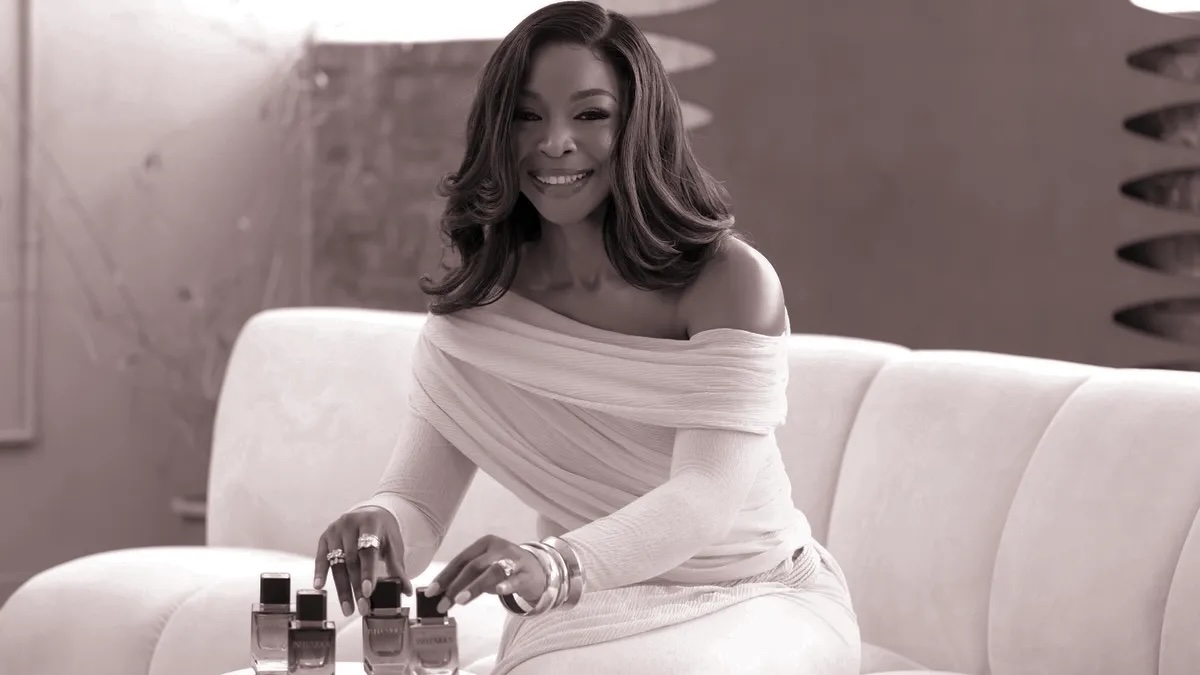
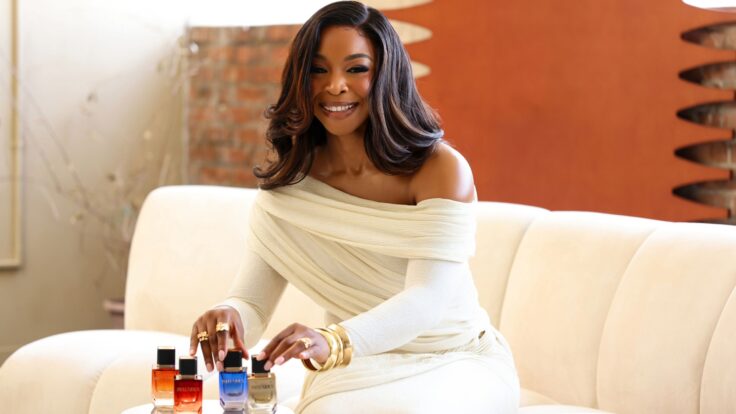
When Funmi Monet debuts her fragrance brand Influxious on Sephora’s website next week, she
will become the first fragrance content creator to go from reviewing scents to launching a line of her own. The stakes are high for “the godmother of PerfumeTok,” as one industry veteran called Monet: Retail partnerships with the LVMH-owned beauty giant can overwhelm brands that have never tested their products or messaging at scale. (I have horror stories about brands languishing on Sephora’s shelves right now…) Nor is it a zero-risk venture for Sephora, which co-developed Influxious with the
influencer. “Everyone is watching to see if it works,” this person said. “It’s a huge proof point.”
Of course, there are a number of factors working in their favor. A digital-first rollout requires far less up-front capital, for one. But Monet is also testing the market during a boom time for the category. Perfume remains one of the beauty industry’s richest gravy trains, and nowhere is that more apparent than at Sephora, where fragrance sales have exploded in recent years.
According to a person familiar with Sephora’s business, fragrance sales rose around 30 percent through the end of 2025 and into Q1 of this year. Growth has since slowed, but the category continues to outpace makeup and skincare.
Just as importantly, the fragrance business has undergone a structural shift. A decade ago, indie brands like Tatcha and Drunk Elephant rose to dominance in the skincare space, displacing the incumbent players before selling to Unilever and Shiseido, respectively,
for $500 million and $845 million in 2019. Last year, fragrance experienced its own regime change: Kayali became Sephora’s top-selling perfume brand, marking the first time that an indie label displaced legacy houses such as Chanel, Dior, and Valentino.
Sephora previously found some traction early on with indie brands like Juliette Has a Gun, but designer labels still controlled the category, according to a person close to the retailer. “It’s really only been in the last year that Kayali
was suddenly the number-one fragrance brand, and Phlur broke into the top five, too,” this person explained. “That’s never happened––and when you actually have real volume coming out of those brands, that’s a totally different story. You can put all of your eggs in your niche brands, but if they’re not actually delivering the big volume, you’re not going to get the market share.”
The retailer is already planning its next move. In addition to targeted bets like Influxious, according to a
Sephora insider, the company has started “working on projects with the major conglomerates that hold the licenses to the designer brands” to produce Sephora-exclusive scents. Until recently, these companies “would never have entertained giving Sephora something exclusively,” the insider added. But now they have to compete with the disruptors.
|
Naturally, Sephora will have a chance to eat on all sides of the equation. In addition to these partnerships,
the company will also continue to develop fragrances with some of its exclusive or bestselling makeup and skincare brands—a strategy that has already produced scents with Rare Beauty, Summer Fridays, and Merit. Rare Eau de Parfum, introduced nearly a year ago, became the retailer’s bestselling fragrance at the time of its launch, according to the person familiar with the business. Next up, I’m told, Summer Fridays will expand its fragrance assortment, while Saie plans to introduce a scent under
the nausea-inducing name Nostalgia.
Meanwhile, the broader fragrance market continues to boom across every price point, from Sol de Janeiro body sprays to ultra-premium niche perfumes. At Sephora, however, the center of gravity remains Kayali and Phlur, the retailer's exclusive “new prestige” leaders. Their strategy has been to stake out the market’s middle ground—niche enough to feel distinctive, but still trend-driven with scents that appeal to a mainstream audience. Most
importantly, they’re accessible enough to sell at scale, and priced well below the $300 luxury tier.
Several smaller indie brands have also gained momentum. I’m told The 7 Virtues—alas, the branding looks like A.I.-generated fragrance slop—and Boy Smells have both seen business pick up considerably at Sephora recently. I’ve also noticed that the retailer
has added a handful of niche global brands like Born to Stand Out, Fugazzi, and Montale. Although these brands have established followings—L’Oréal has invested in Born to Stand Out—they’re more niche than Sephora’s usual offerings. Because they are not exclusive to the retailer, Sephora hasn’t promoted them as aggressively.
Anyway, the search for the next breakout fragrance has become an industry-wide spectator sport. As Kayali and Phlur mature—both were acquired by private equity firms
in 2025—Sephora will inevitably begin looking for the next generation of growth brands. On PerfumeTok, often an early indicator of future mainstream demand, French Cowboy, L’Epoque, and Nostos have all begun generating attention. Each launched within the last year and costs $150 or less. Most tellingly, all three are already stocked by Luckyscent, the independent fragrance retailer in which Monogram Capital Partners acquired a majority stake last year, reportedly with ambitious expansion plans.
The next Kayali is probably already out there. The question is which brand gets there first.
|
What We’re Reading… and
Buying…
|
Hélène de Tissot, a Pernod Ricard alum, is Chanel’s new C.F.O. [Inbox]
Dior is
showing Pre-Fall in Dublin. This should be a nice moment for Jonathan Anderson. (Remember, he is Irish… though actually he is Northern Irish.) [ Instagram]
Phillip Lim is launching a new brand. I was just chatting with someone about how good 3.1 Phillip Lim was in the late aughts, before it was corrupted by wholesale demands. And, before
that, he had Development. Anyway, the name of this new brand is bad, but let’s not hold that against him. [ BoF]
Rosie Assoulin hosted a dinner for her Target collaboration, launching Saturday. Rosie’s stuff is still so wearable and loveable after all these years: It’s worth taking a squizz.
[ Target]
Loewe opened a temporary ice cream shop in De Beauvoir Town, an amazing neighborhood in London that is not really accessible by train, but houses many potential Loewe customers. (It is where I would want to live if I lived in London, if I couldn’t live in the Barbican.)
[ Instagram]
Jeffries analysts say the Hailey Bieber Gap jeans sold through as well as you can imagine. My analyst, Yasi Salek, of Bandsplain fame, was able to get them easily in Kansas City. So maybe try there?
[ Proactive Investors]
Nike is culling its third-party e-commerce channel in China, its third-largest market, where local brands have overtaken the giant. It’s a gutsy move that suggests how much China’s economy has changed.
[ Reuters]
Bartolomeo Rongone, Moncler’s new C.E.O., and his predecessor, Remo Ruffini, who transitioned to executive chairman earlier this year but retains creative control, are really gelling. The company reported a 9 percent revenue increase in the first half of the year.
Sales in Asia for Moncler and Stone Island were both up double digits. [ Moncler]
|
Until tomorrow,
Lauren
P.S.: We use affiliate links because we are a business. We may make
a couple bucks off them.
|
|
|
|
Ace media reporter Dylan Byers brings readers into the C-suite as he chronicles the biggest stories in the industry: the future
of cable news in the streaming era, the transformation of legacy publishers, the tech giants remaking the market, and all the egos involved. Also featuring a weekly dispatch from Puck’s crack streaming/media analyst, Julia Alexander.
|
|
|
|
Puck founding partner Matt Belloni takes you inside the business of Hollywood, using exclusive reporting and insight to explain
the backstories on everything from Marvel movies to the streaming wars.
|
|
|
|
Need help? Review our
FAQ page or contact us for assistance. For brand partnerships, email ads@puck.news.
You received this email because you signed up to receive emails from Puck, or as part of your Puck account associated with {{customer.email}}. To stop receiving this newsletter and/or manage all your email preferences, click here.
|
Puck is published by Heat Media LLC. 107 Greenwich St., New York, NY 10006
|
|
|
|
|