Wall Street War Stories, Ben Smith's Newco, and the Next J.B. Pritzkers
Good afternoon and welcome back to The Daily Courant, bringing you the latest and most provocative new journalism at Puck. Today, William D. Cohan returns with the final chapter on Jimmy Cayne, the legendary Bear Stearns warhorse and inveterate hustler who played chicken with the global financial system over a Faustian bailout offer—and nearly won.
Then, below the fold, don't miss Teddy Schleifer's latest dispatch from Silicon Valley on Bill and Melinda Gates' new political philosophy, the millennial venture capitalist seeking to become the next J.B. Pritzker, and what it all means for the Times columnist-turned-Oregon gubernatorial aspirant Nick Kristof.
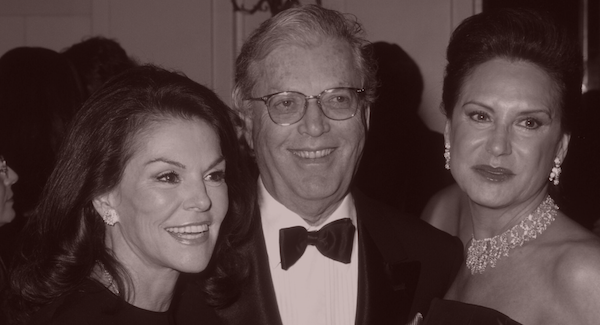
The epic story of how a crafty bond salesman took over Bear Stearns—and risked an apocalypse to fight for it. When Bear Stearns ended up in the arms of JPMorgan Chase, on March 15, 2008, after a weekend of furious negotiations, the bank had come within a few hours of filing for bankruptcy. That was the stark choice facing the Bear board of directors: Either file for Chapter 11 or accept Jamie Dimon’s offer of $2 a share for the company. The board wisely chose Dimon’s offer, even though the stock had been as high as $172-a-share 14 months before.
The piddling offer for the whole company, worth barely more than the new Bear Stearns headquarters at 383 Madison Avenue, across the street from the JPMorgan Chase headquarters at 270 Park Avenue, was the safest solution for the Bear board. It required JPMorgan Chase to assume most of Bear’s liabilities—a not insignificant sum, it turned out—and allowed Bear’s creditors to get a bonanza, since its debt had been trading at around 30 cents on the dollar—reflecting the prospect of Bear’s bankruptcy—and now would get paid off at 100 cents on the dollar, based on JPMorgan Chase’s supposedly solid gold credit. For reasons that remain mysterious, but that have been blamed on the lawyers’ drafting errors, in the week after the March 15 agreement, JPMorgan Chase ended up increasing its offer for Bear Stearns to $10 a share and, just like that, Bear was gone.
As soon as JPMorgan Chase announced it was buying Bear, I started working on House of Cards, my book about the extraordinary collapse of Bear Stearns. I wanted to know what the hell happened and why.
Within days, with the invaluable help of Fares Noujaim, then a Bear Stearns vice-chairman, I found myself in the office of Jimmy Cayne, the penultimate C.E.O. of Bear Stearns, who had been reigning over the firm one way or another since 1986, the year it went public. Cayne had been the firm’s C.E.O. for nearly 15 years, until he abruptly resigned in January 2008, pretty much against his will...
FOUR STORIES WE'RE TALKING ABOUT 
Part II of my year-end list of the 22 boldest, totally bankable, 100 percent probable predictions from actual industry insiders. MATTHEW BELLONI 
Notes on the president’s 2024 thinking, the Kamala curse, and the limitations of the Youngkin-McCormick MAGA playbook. PETER HAMBY 
In modern politics, key relationships with a Silicon Valley benefactor can transform long-shot candidates into bonafide contenders. TEDDY SCHLEIFER 
Ben Smith and Justin Smith had been quietly discussing their new media ambitions, on and off, for years. Here's what they had to say. DYLAN BYERS 
You received this message because you signed up to receive emails from Puck.
Was this email forwarded to you?
Sent to {{customer.email}}
Puck is published by Heat Media LLC.
For support, just reply to this e-mail. For brand partnerships, email ads@puck.news |


SHARE