 |
|
Welcome back to The Best & the Brightest. I’m Tina Nguyen.
|
|
The latter half of 2023 has been so chaotic that voters might have forgotten that House Republicans are trying to impeach Joe Biden. But with Congress set to return to Washington in the coming days, I figured this would be a good time to dip back into the impeachment zone and see how the investigations into the Biden Crime Family are going. More on that, below. But first…
|
| Johnson Tithing & ’24 Moves |
|
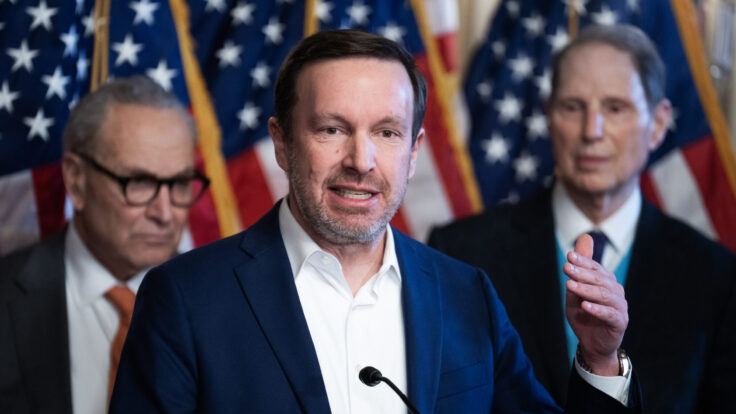
| It’s now clear why House Republicans outraised Democrats in November, Mike Johnson’s first full month as speaker: Republican members ponied up big with transfers from their own campaign accounts. We already knew that the N.R.C.C. brought in $7.8 million to the D.C.C.C.’s $5.7 million. Now that itemized campaign finance reports are available, however, we can also see that House Republicans donated more than $4.8 million from their personal campaign accounts. (The rest of the money came in by way of PACs, individual contributions, etcetera.)
Why does this matter? Well, for one, that sum more than made up the spread to outpace Democrats. But also, it demonstrates that many key Republican members are rallying behind Johnson and are enthusiastic about funding next year’s campaign to hold on to the gavel. (Given that Johnson did not spend the last 10 years building out a national network, he needed the help.) Here’s how the donations broke down:
- Leadership delivered: If Steve Scalise is feeling sour grapes over not becoming speaker in October, he’s not showing it. The House majority leader gave more than $1.7 million to the committee. And other bold-faced Republicans pitched in, as well: Energy and Commerce Chair Cathy McMorris Rodgers transferred $261,000, and Rules Committee Chairman Tom Cole contributed $50,000. And then there’s Johnson himself. The new speaker’s October campaign finance report (prior to his ascent) showed he had $1.1 million in cash on hand. By November, he had transferred $1.8 million to the N.R.C.C.
- Ambitious members showed up: House leadership assigns target amounts for each member to donate to the N.R.C.C., but not all heed the guidance. The ones who do give, though, are invested in helping vulnerable colleagues and, presumably, receiving favors down the line. Raising money for the committee, after all, is a necessary step in moving up the pecking order in the House. Early on, dues payers are first in line for choice committee assignments, and it’s a prerequisite in most scenarios to run for leadership or a committee gavel. Appropriations Cardinal Robert Aderholt was good for $105,000. French Hill gave $200,000 just a week before Patrick McHenry retired, which was a fortuitous showing given that Hill is a contender to replace McHenry as the top Republican on the Financial Services Committee. (In both parties, it’s good form to donate money to the committees ahead of a committee leadership race.)
|
| About That Boebert Decision… |
|
| On Wednesday night, Beetlejuice aficionado Lauren Boebert announced her intent to drop out of her tough general re-election race in Colorado’s 3rd Congressional District. She will now run in the open-seat race to replace retiring Ken Buck in the much safer 4th. Cook Political Report analyst David Wasserman reacted to the news by shifting the 3rd District from “Tossup” to “Leans Republican.”
The situation is uncannily akin to Michele Bachmann’s 2015 resignation from Congress: Bachmann’s inflammatory politics allowed her Democratic rival to become a fundraising cause célèbre on the left and, consequently, put her once-safe Minnesota district in play. Upon her exit, the seat fell off the radar.
But… Wasserman’s shift to a mere “Leans Republican” indicates that Democrats still have a shot in western Colorado. And this is partially why: Boebert’s now-former opponent, Adam Frisch, is the top House fundraiser in the country whose name is not Kevin McCarthy or Hakeem Jeffries. While Frisch has a high burn rate—he’s already spent $3.8 million this cycle—he still has $4.3 million in cash on hand.
That fundraising gusher might dry up now that Boebert is no longer in the mix, but this is still a serious pile of money, and he’s already locked in a strong following of online donors. All of which is to say, he may be able to stay competitive while spending big on campaign ads in the fall at the bargain TV rate candidates can legally secure. |
 |
| The Biden Impeachment Starter Marriage |
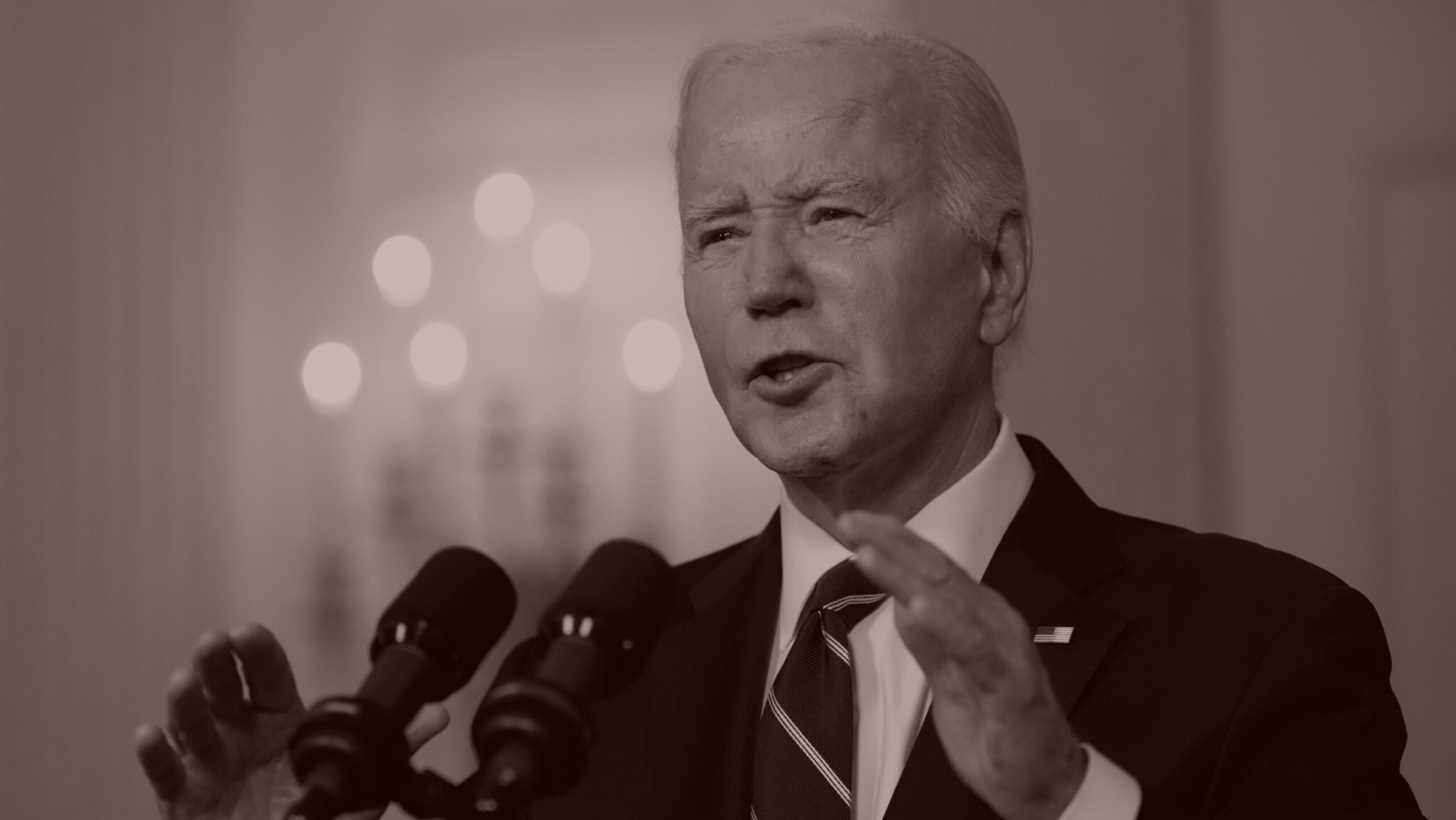
| Predictably, the multipronged Biden impeachment inquiry looks to be turning up duds. But the Republicans I talk to aren’t all that worried or embarrassed. This whole thing may have been less of a boobie trap than a dress rehearsal for giving the old man hell. |
|
|
|
| It’s been months since Kevin McCarthy authorized several House committees to begin impeachment inquiries into Joe Biden—caving to the wishful and amorphous demands of his MAGA wing and the G.O.P. base. For years, these cohorts and their elected representatives in the lower chamber have insinuated, typically in the just-asking-questions tense, that the president profited from his son Hunter’s various business dealings in Ukraine and China, and that then-Speaker McCarthy, with the power of the gavel in his hands, was duty-bound to investigate. Even if, as Republicans privately acknowledged, they were fumbling in the dark to paint what McCarthy described as a “picture of corruption.”
Three months and one speaker fight later, however, the investigations—spanning Judiciary, Oversight, and Ways and Means—have yet to yield much of anything, though it’s not for lack of trying. Yes, they’ve found bits of circumstantial evidence suggesting that Hunter traded on his father’s name for financial and political benefit. (There’s really no other explanation for how Hunter, then in the throes of a drug addiction crisis, ended up on the board of a Ukrainian energy company.) More recently, the committees have scrutinized James and Sara Biden, the president’s brother and sister-in-law, whom Joe Biden loaned money in 2017 and 2018.
Perhaps more seriously, House Oversight chairman James Comer has alleged that Joe Biden “dined with his family’s foreign associates, spoke to them by speakerphone, had coffee, attended meetings, and ultimately received payments that were funded by his family’s business dealings.” But so far, the committee has not surfaced evidence that Biden himself committed any specific crimes, let alone “high crimes and misdemeanors.” As a result, there’s been no significant shift in how the public views Biden, beyond the general scorn for his perpetually troubled, drama-generating son and other shady relatives—an impression that was already widely held before Biden was elected president. “We have a persuasion problem,” a veteran G.O.P. aide told me. “Because we are desperately, really searching for the right way to tell this story.”
Of course, we are in a holiday lull right now, and it’s possible that when the House reconvenes in 11 days, the inquiries will have snapped into clearer focus. But the fact that Republicans are still trying to find an impeachable offense speaks to the convoluted nature of the inquiry’s origins. Back in July, House sources told me that the MAGA wing of the party had been pressing McCarthy to launch some sort of impeachment inquiry into the Biden administration, though they could not cite any specific allegation to investigate. While McCarthy gave them inquiries in exchange for their support in the budget negotiations, they removed him as speaker instead. And though the committees were granted immense investigatory powers and could continue their work during the speaker crisis, the past few months have resulted in public face-plants: embarrassing hearings, overhyped pieces of evidence, and the new speaker, Mike Johnson, dialing back expectations for an impeachment—even though he’d previously accused Biden of using his influence to get a Ukrainian official to drop his investigation into Hunter’s company, Burisma.
Alas, this unforced error always seemed like a logical stretch—not much more, really, than a reciprocal fever dream for the double Trump impeachment and so-called “witch hunt” treatment. Cohorts of the party worked hard to articulate the public narrative of the “Biden crime family,” but trying to work backward to prove its truth instead weakened their justification to use the impeachment process. Others were frustrated by the fixation on Hunter and the connect-the-dots approach to tying it back to Joe. As the veteran G.O.P. source argued to me, there were plenty of other paths the House could have pursued, like targeting Biden’s alleged abuses of executive power, such as his reforms to the asylum process. “To ignore the impeachable offenses of the actual job [of being president] has been, to me, the most critical mistake we’ve made,” he said.
It looks even more futile when Congress math gets involved: There’s almost no chance that the House, which the G.O.P. holds by three seats (for now), gets a simple majority to impeach Biden in the next year, to say nothing of the two-thirds majority needed in the Dem-held Senate to actually remove him. But the motivation for Republicans isn’t removing Biden from office, as the Dems had hoped to do with Trump: it’s that they’re regularly unearthing more evidence that suggests impropriety, and voters get to see it. “You can debate the veracity of the evidence,” a senior G.O.P. impeachment inquiry aide told me, “but to say there’s no evidence is completely false, and I think the American people get that, based on what they’ve already seen so far.” |
|
|
| All this is in stark contrast to the House Democratic impeachment inquiry into Donald Trump in 2019, which Nancy Pelosi almost immediately authorized after a whistleblower alleged that Trump had threatened to withhold aid to Ukraine until President Volodymyr Zelensky launched an investigation into Joe Biden. Hearings were scheduled, subpoenas were issued, SCIFs were booked and depositions were taken, and the Judiciary Committee quickly churned out two articles of impeachment: abuse of power and obstruction of justice.
This entire process took less than three months. During that time, the Democrats’ messaging remained laser-focused on the specifics of their investigation—as was Trump’s response, regarding what he always called the “perfect” phone call. The current House Republican inquiry into the Bidens, on the other hand, looks more like a trawling expedition, scooping up thousands of documents and texts in search of… something.
Second, while the Democrats had a news cycle advantage—Trump drama was all-consuming—McCarthy made the decision to announce the impeachment inquiry on the same day he announced he was going to fund the government using a continuing resolution, which outraged the MAGA wing of the base and led to his political death. Inevitably, the McCarthy exorcism not only distracted the ruling party, but also discredited its general antics and undermined its motivations, depicting impeachment not as a grave and serious punishment, but a shiny object to placate hardliners. (One of Mike Johnson’s first acts as speaker, notably, was to reassure Republicans that the inquiries would continue.)
According to two senior aides involved in the inquiries, the investigation process did not stop amid the caucus’s leadership crisis. The committees didn’t need a speaker to continue their work, after all. But the things they were able to unearth during this period—for instance, a suspiciously timed $200,000 check cut from the president’s brother, which came on the heels of a potentially predatory loan he took from a startup, Americore—were buried under months of cascading chaos. “It feels like we have been spinning off our axis ever since McCarthy got decapitated,” the veteran aide told me. |
|
|
| Interestingly, during my conversations with Republicans involved in the investigation process, I came away with an odd observation: Far from being stressed out that they had nothing, or worried that they would face backlash, these Republicans were notably relaxed about it all. Granted, everyone I spoke to in Washington this week was in vacation mode, but I was still struck by how calm they were, compared to the frenetic and serious intensity of Democrats in 2019 (and again in late 2020, for that matter).
“Congress has a check on the executive branch. So that’s what we’re gonna do,” a G.O.P. aide involved in the investigations told me, when I asked if they were concerned about the Democrats attempting to cast their investigation as a witch hunt. “We’re gonna conduct our oversight without any preconceived notions and see what comes. If something’s there, then we’ll impeach the president. If something’s not there, then we won’t.”
There were several trains of thought among my sources justifying the take-it-slow approach, though the overall hope is to wrap up the inquiry within the next two months. First, these folks argue that their long evidence-gathering process has allowed them to frame their investigation as more deliberate and less hyper-partisan than the meteor storm of Trump investigations, which Republicans viewed as driven by political animus more than facts. “I disagree with Joe Biden on a lot of things, don’t get me wrong, but I don’t think there’s a visceral hatred for the guy like the Democrats had with Trump,” said the aide. (In addition to the two impeachments, as well as the Mueller investigation into potential Russian collusion, Trump currently faces 91 criminal felony charges across four separate jurisdictions—all serious allegations, but perhaps too darn many for some voters to track without sympathizing that perhaps his prosecution has been political.)
Second, the senior impeachment inquiry aide told me, the public does agree with the premise, citing a recent A.P. poll that found that 33 percent of voters believe Biden acted unethically, and 35 percent believed that he did something illegal, in his son’s business dealings. “I mean, that’s an A.P. poll. It’s not some random poll out there,” the aide argued. “So I think we’ve broken through. I think the American people care. They want to see public officials held accountable if they’ve been accused of corruption.”
More important, perhaps, is what all this signals to the electorate in 2024: that impeachment is just a starter marriage for House Republicans looking to give Biden absolute hell over the next year. They’ll be haranguing him over the wars in Ukraine and Israel, the border crisis, lingering inflation, culture war tripwires, and whatever octogenarian gaffe he commits that day. In the meantime, Biden’s doing a perfectly good job tanking his own approval rating, to the point that Trump, of all people, has recently gained a notable edge over him in re-election polls. Why not take their time exacting maximum political pain? |
|
|
| That’s all for today, friends. If you missed it earlier this week, Peter Hamby and I had a conversation about my new book, The MAGA Diaries—a memoir of my life in the conservative movement before and during the rise of Trump—and the overall state of the American right. Peter’s an incredible interview (even in a written format!) and his questions prompted me to really dig into the book’s substance, beyond what I can fit into an email lede or social media posting. Check out our interview here (and preorder the book here). |
|
|
|
| FOUR STORIES WE’RE TALKING ABOUT |
 |
|
 |
|
 |
| Ukraine Diaries |
| A harrowing conversation about Putin’s siege of Mariupol. |
| JULIA IOFFE |
|
 |
|
|
|

|
 |
|
|
|
Need help? Review our FAQs
page or contact
us for assistance. For brand partnerships, email ads@puck.news.
|
|
You received this email because you signed up to receive emails from Puck, or as part of your Puck account associated with . To stop receiving this newsletter and/or manage all your email preferences, click here.
|
|
Puck is published by Heat Media LLC. 227 W 17th St New York, NY 10011.
|
|
|
|