{{ 'now' | timezone: 'America/New_York' | date: '%b %d, %Y' }} |
|
|
|
Hi, and welcome back to Line Sheet. Malique “Malique@puck.news” Morris is here today with news of another departure at GQ, plus confirmation of my prediction that Kering’s Luca de Meo would install a brand guy—not a car guy—as C.E.O. at Bottega. Also, Rachel “Rachel@puck.news” Strugatz reports that Katherine
Power, the serial entrepreneur who founded makeup brand Merit and makes wine with Cameron Diaz, has offloaded her skincare brand, Versed. For the main event, Rachel has exclusive insights into the return of Marc Jacobs Beauty. It’s going… well!
Also mentioned in this issue: Alexis Rollier, Alexandre Choueiri, Miles Pope, Leonardo DiCaprio, Dr. Martens, David Haskell,
Will Welch, Oasis, Brandon Tan, Daniel Riley, Kylie Jenner, Sam Hine, LACMA, Alessio Vannetti, Charlotte Tilbury, Adam Baidawi, Jody Quon, Victoria Beckham, Roxanne Behr, and more. |
Three Things You Should
Know…
|
|
|
|

| Malique Morris
|
|
- The GQ exodus
continues: A day after the magazine announced the return of Brandon Tan as global fashion director, another key staffer is leaving the building. Roxanne Behr, GQ’s global creative director, is departing to become New York magazine’s creative director of photography. It’s somewhat of a boomerang for Behr, who spent eight years as a photo editor at New York before joining GQ in 2018. David Haskell and his
crew are still working to fill the void left by creative director Jody Quon, who decamped this month to take the top job at T.
It’s another loss for GQ. Behr, despite her minimal social media presence, was a key lieutenant in the execution of Will Welch’s vision. GQ had already lost Sam
Hine, who left in May to build out the menswear beat at New York, and global fashion director Miles Pope, who left in June for Vuori. Meanwhile, I’m told, Daniel Riley—Welch’s longtime right-hand man and global director of content development—has also left the building. All that comes alongside the usual turnover that follows a
changing of the guard at Condé.
It’s a tough break for Welch’s successor, Adam Baidawi, who worked with Hine, Pope, and Behr when he was head of British GQ. But his success at persuading the boomerang of Tan—who was GQ’s fashion editor from 2022 to 2024 before going to Willa Bennett’s Gen Z–coded Seventeen and Cosmopolitan—may bode well for any other veterans he has his eye on. - Luca’s
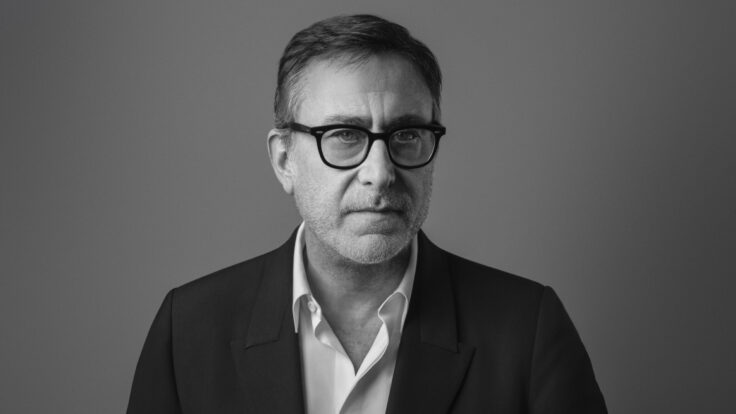
new intrecciato emperor: Kering C.E.O. Luca de Meo has kept his promise that Bottega Veneta’s next chief executive would be a “tried-and-true brand person,” as Lauren predicted last week. The company today named LVMH veteran Romain Spitzer as Bartolomeo Rongone’s successor. Spitzer’s stacked résumé in
luxury includes a stint as president and C.E.O. of LVMH’s beauty division. But his decades-long career is mostly in fragrance, with roles at Jean Paul Gaultier and Guerlain.
That’s interesting, of course, since Bottega is mostly a leather goods business. Also, Kering has been outsourcing beauty—selling Kering Beauté to L’Oréal last year and then announcing a deal last week to license Gucci Beauty to L’Oréal. But Spitzer still has plenty of other experience with heritage brands, including
Dior and Givenchy. Let’s hope he can make Louise Trotter’s colorful, if material-heavy, vision for the brand stick.
|
|
|
|
A MESSAGE FROM OUR SPONSOR |
|
|
|

| Rachel Strugatz
|
|
- Power out:
Versed, the skincare brand founded by serial entrepreneur Katherine Power, announced last week that it had been acquired by Belle Brands, a subsidiary of Windsong Global, the investment group that specializes in distressed beauty assets. The deal size wasn’t disclosed, but a person familiar with the matter told me it was “under $10 million.” (Spokespeople from Versed and Belle Brands declined to comment.)
Power, a partner at Greycroft, previously co-founded celebrity
style site Who What Wear, affordable wine label Avaline (borderline undrinkable for me!), and makeup line Merit (which seems to be doing quite well at Sephora). But Versed was always one of her more intriguing ventures. When it launched nearly seven years ago, Power anticipated the shift toward retail partnerships over the D.T.C. model that was predominant at the time, and set the line at Target. She also secured an
investment from LVMH—an unusual fundraising coup for a masstige skincare line. Versed was sold exclusively at Target at the beginning, but looked and felt more expensive than its price point suggested. Alas, the skincare boom brought competition, and the Millennial branding began to feel dated. Anyway, that’s Windsong Global’s
opportunity now.
|
|
|
|
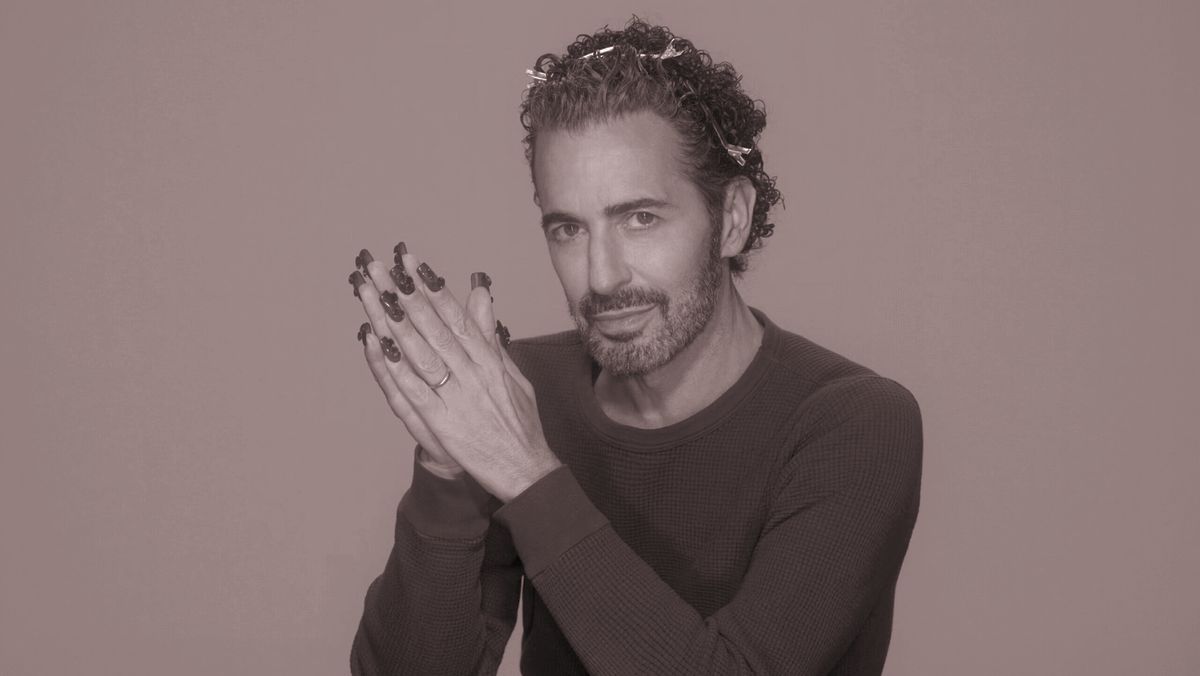
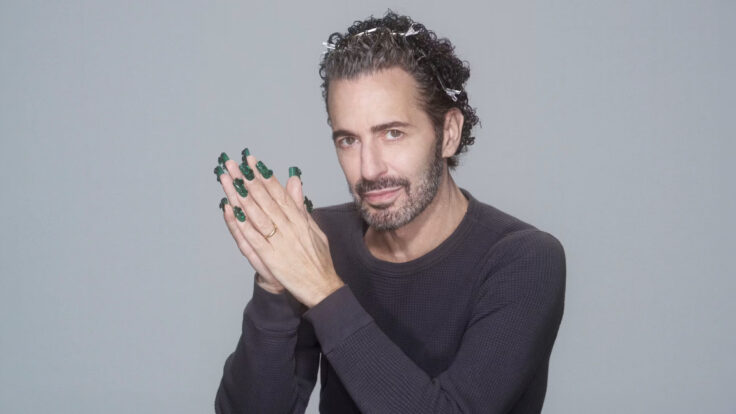
The long-awaited revival of Marc Jacobs Beauty is off to a rollicking start, with Sephora
sales expected to clear $30 million by year-end. Will it be enough to give embattled beauty group Coty a meaningful growth engine beyond fragrance? |
|
|
|
Coming into the year, Coty desperately needed a win. The Paris-based beauty conglomerate had spent months
navigating one challenge after another—activist investors, an executive reshuffling, potential divestitures, the loss of its Gucci license—and lingering questions about its overall beauty business. Outside of
fragrance, and aside from Kylie Jenner’s Kylie Cosmetics, Coty didn’t have much going for it in the prestige beauty space, particularly in high-end makeup.
That’s why so much was riding on the return of Marc Jacobs Beauty. After the ambitious, much-hyped revival of the brand—control of which fell to Coty almost by default—the company is breathing a sigh of relief, at least for now. I’m hearing that all parties involved are thrilled with
the relaunch, which debuted in early June exclusively on Sephora’s U.S. and Canadian websites. Sales have been “very strong out of the gate,” said one person with knowledge of the relaunch. “This far exceeded their expectations.” According to another person familiar with the business, initial sales were “more than double projections.” |
|
|
|
A MESSAGE FROM OUR SPONSOR |
|
|
|
Chalk it up to Sephora’s operational excellence and Elder Millennial nostalgia. The original Marc Jacobs
Beauty, created by LVMH beauty incubator Kendo in 2013, was mysteriously wound down five years ago before disappearing from shelves altogether. Coty, Jacobs’s longtime fragrance partner, agreed to take over the company’s remaining beauty licenses in late 2023. The project then remained under tight wraps for nearly three years before last month’s relaunch.
Of course, the stakes remain enormous. Beginning in September, the combined Coty–Sephora team will embark on a major retail expansion,
with Marc Jacobs Beauty entering Sephora stores across the U.S., Canada, the U.K., Australia, and New Zealand—marking Sephora’s first scaled global beauty launch since Fenty, nearly a decade ago. But relaunches always carry their own unique risks. Reinventing an established brand for a new demographic amid a vastly different beauty landscape is often harder than building a new one from the ground up. |
No one knows how large Marc Jacobs Beauty 2.0 can ultimately become until repeat purchases begin. But one
person close to Coty estimated that Sephora sales could reach $30 million to $40 million by year-end—a strong performance given the three-month online exclusivity. The expectation is that sales could double in 2027, the brand’s first full year in the market.
Indeed, the early Marc Jacobs numbers are particularly notable because the launch completely excluded complexion—the category comprising foundation, skin tints, concealers, etcetera, considered necessary to be a true player
in makeup. Nevertheless, I’m told a concealer hybrid is coming, presumably followed by a wider foundation range. In the meantime, executives at both Sephora and Coty have been surprised that the bestselling items have been single eyeshadows, packaged in miniature star-shaped compacts, rather than eyeliner, the hero product of the original Marc Jacobs Beauty. “They were basing too much off of the first brand, and this eyeliner is totally different,” said a person close to Coty, noting that
several brands have since introduced long-wear versions that are similar or better than Marc Jacobs’s original gel pencil eyeliner.
As for that three-month exclusivity window, the e-comm handcuffs have puzzled some insiders. Sephora typically goes all out for exclusive, in-store rollouts for priority brands. My understanding is that licensing logistics, not merchandising strategy, prevented the line from entering stores until September. The person close to Coty acknowledged this “wasn’t
ideal,” explaining that “launching in-store simultaneously would have been the goal, but the upside is learnings and more precision.” Even so, this person added, Marc Jacobs Beauty ranks as “one of—if not the—most successful online-only launch in recent history” for Sephora. |
|
|
|
I’ve discussed the Marc Jacobs Beauty relaunch with a number of industry types over the last two
months. Some think it reflects Jacobs’s youthful spirit and knack for reinvention, and others say they would never use it. But the skeptics may be missing the point (or unwittingly proving it): Most of my beauty editor peers are Millennials and Gen Xers, the audience Marc Jacobs Beauty 1.0 was built to capture. If the relaunch works, it will create the same cultural imprint with Gen Z and beyond. Whether we’ll still be talking about “Born Star” eyeshadows and “Heart On” lipsticks five years from
now remains to be seen. But sales are the clearest measure of success, and by that standard, Marc Jacobs Beauty 2.0 is off to an impressive start. |
Calvin Klein–owner PVH tapped Sephora executive Alexis Rollier to be its new finance chief.
The company expects revenue across its brands to be flat for the full year. [PVH]
Macy’s poached former Kering Beauté C.E.O. Alexandre Choueiri to take over Bluemercury amid the company’s Bloomingdale’s-led boom. The company’s stock has jumped 91 percent over the last year.
[Macy’s]
La Perla has found its post-bankruptcy turnaround artist in Alessio Vannetti, the esteemed former Gucci and Valentino executive, who is joining the embattled legacy lingerie maker as C.E.O.
[Business of Fashion]
Gucci is building out the leadership team for its new title partnership with the Alpine F1 team. They’re repainting the cars in black and gold, and will be dressing the team’s drivers and pit crew, too…
[WWD]
The jewelry boom continues to serve Richemont well. Sales were up 20 percent in its fiscal first quarter, which ended in June. [Financial Times]
The U.S. wholesale market is
actually a boon for Dr. Martens. [Reuters]
Luca de Meo listens to New Order, Daft Punk, and Oasis just like the rest of us. [Instagram]
Leonardo DiCaprio is co-chairing
this year’s Gucci LACMA gala. [Inbox] |
Until tomorrow,
Lauren
P.S.: We use affiliate links because we are a business. We may
make a couple bucks off them. |
|
|
|
Need help? Review our
FAQ page or contact us for assistance. For brand partnerships, email ads@puck.news.
You received this email because you signed up to receive emails from Puck, or as part of your Puck account associated with {{customer.email}}. To stop receiving this newsletter and/or manage all your email preferences, click here. |
Puck is published by Heat Media LLC. 107 Greenwich St., New York, NY 10006 |
|
|
|
|