Welcome back to The Varsity. I’m John Ourand, back in D.C. and on my
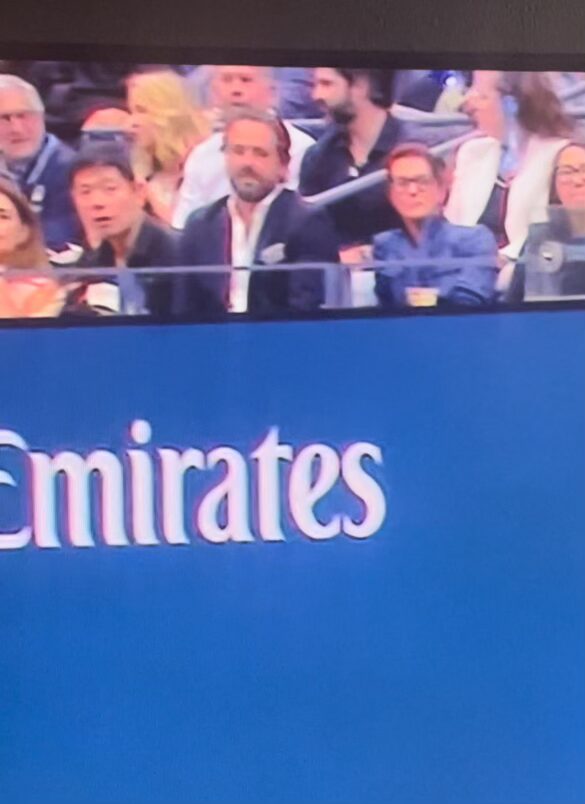
third cup of coffee following a thrilling Sunday Night Football opener on NBC that kept me up way too late. And yes, that was my partner Dylan Byers in the front row at the U.S. Open men’s final yesterday, with better seats than Springsteen, Sting, Spike Lee, and POTUS. (Here’s some very lo-fi evidence of the appearance, courtesy of Lauren Sherman.)
🚨 Pod alert: Pablo Torre joins the Varsity podcast on Wednesday to chat about his blockbuster story suggesting that the Clippers circumvented the NBA’s salary cap, which is sure to be one of the most consequential issues discussed at the league’s board of governors meeting in New York this week. Meanwhile, Dylan joined yesterday’s pod for a rollicking
conversation about the state of sports—and news—media. You’ll like this one. Listen to The Varsity here and here. |
|
|
A MESSAGE FROM OUR SPONSOR |
Greatness isn't achieved in an instant. It's tested until there is no question — only performance. |
|
|
- The NFL’s international package: By now, you’ve seen the numbers from YouTube’s NFL debut last Friday night: 16.2 million viewers in the U.S. That’s more than Peacock’s 14.2 million domestic viewers for last year’s Friday night game from Brazil, but well short of Netflix’s average audience of 24 million U.S. viewers for its two games (and one Beyoncé halftime) last Christmas. YouTube’s international viewership came in much
lower than I expected: 1.1 million viewers outside of the U.S., compared with an average of 6.5 million for each of the Netflix games last Christmas.
For the NFL, which is contemplating a package with at least 16 international games, those numbers must be highly informative, and at least a little discouraging. The league would need to partner with a streaming service with a global footprint, and Netflix, YouTube, and Amazon Prime have all shown interest. While the biggest check probably
will win the package, the NFL is conscious of reach, and YouTube’s showing last Friday wasn’t too promising. - RedZone’s slippery slope: Sure, on some level, the consumer reaction to the once-ad-free NFL RedZone’s decision to carry advertising was overblown. After all, the network only ran one minute of advertising during a seven-hour period. The actual ads, which ran in a double box yesterday, didn’t create anywhere near the level of
furor that some anticipated.
But the NFL shouldn’t dismiss the frustration. For years, as sports rights have become more expensive and the media industry has fractured, fans have increasingly felt like they’re bearing the cost burden. Plenty of family members, friends, and sources have complained to me about the tech headaches and expenses required to watch their favorite teams and leagues across platforms. Many of these same people griped about RedZone abandoning its commercial-free
premise. They know what’s coming: Now that the formerly commercial-free NFL RedZone has allowed a minute of ads, does anyone really think that the league won’t add more commercials? - Trump at the Open: Generally speaking, ESPN has successfully avoided the political morass that made it such a big target during the first Trump administration. But it’s hard to toe that line forever. ESPN executives faced a challenging decision
when word leaked that the U.S. Tennis Association had asked all the networks covering the tournament, including ESPN, not to broadcast the crowd’s presumably negative reaction to Trump’s appearance at yesterday’s U.S. Open men’s final.
In the end, I’m told that the memo did not influence the way ESPN produced the event. ESPN showed the president on-air four times during the men’s final: first when he entered the stadium; then during the national anthem, which
provoked a reaction of more boos than cheers; once more in the middle of the fourth set, when Fowler noted that he was the first sitting president to attend the event since Bill Clinton in 2000; and finally at
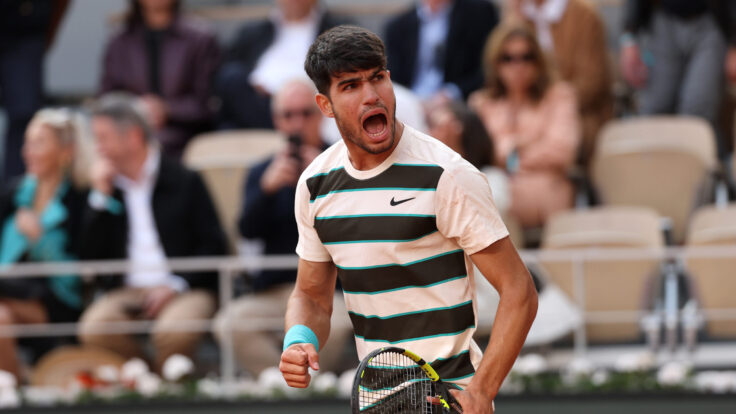
the end, after Carlos Alcaraz’s four-set victory.
ESPN didn’t view the USTA note as a hard-and-fast rule about how to cover Trump’s visit. After all, the note was not ESPN-specific, and was filled with the same information about Trump’s visit (security, time, etcetera) that was sent to all the U.S. Open’s rights-holders. ESPN has produced several events with Trump in attendance—UFC fights, college football games, the NCAA wrestling championship—and each time, they
approached the production the same way: document that he’s there and then focus on the game at hand. As the World Series and football seasons gear up, I’m sure we’ll see other networks and leagues grappling with how to handle the president’s attendance. They could learn something from ESPN. - The death of the play-by-play announcer: When Mike Tirico joined the Varsity podcast last week, he mentioned how rare it’s become for
college students to aspire to a career as a play-by-play announcer. “I do notice when I go back to school now, you find more of the students who are interested in being hosts and opinion makers, and less who are interested in being play-by-play announcers,” Tirico told me. “The celebrity factor becomes the magnet, and the idea of coming through the ranks is not there as often as it once was, at least in some of the students that I see.”
When Dylan joined me on The Varsity
yesterday, he noted that this has been the prevailing trend within television news for several years. “There are all sorts of points of entry into this game that go beyond just clawing your way up the org chart until you get an anchor job or become a senior White House correspondent. In news, there’s the Bari Weiss route or the Emily Sundberg route. That’s as true in sports as it is in news. … We talk in this business a lot
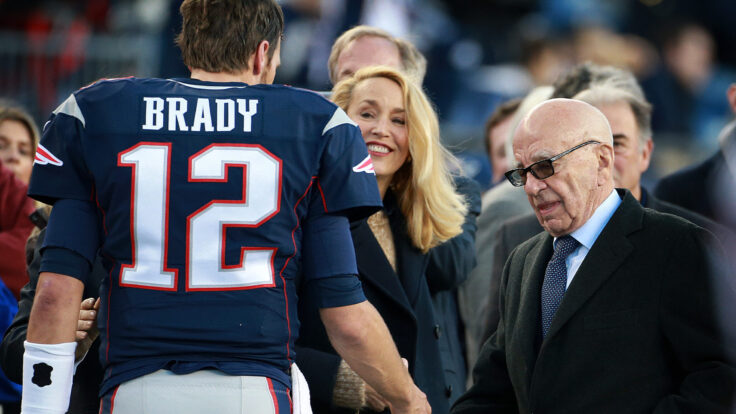
about what works, and that is authenticity. It’s the reason that Dave Portnoy and Joe Rogan and Pat McAfee work. If you can create a brand and an aura around yourself, then you can create a following that can be significantly monetized.” - The Brady Meter: Last year, as you all know, the NFL put The Brady Rules in place, keeping the future Hall
of Fame QB out of pre-broadcast production meetings due to his ownership stake in the Raiders. Of course, the NFL relaxed those rules for the Super Bowl, and all but ditched them this year. Last week marked the first time in Tom Brady’s broadcasting career that he was given access to coaches and players before a regular season game, a resounding Commanders win over the Giants.
In just two weeks, the Commanders play the Raiders. That led Ben
Standig to ask Washington coach Dan Quinn whether he had any reservations about giving a Raiders minority owner insight into his team’s game plan. After calling it a “unique” situation, Quinn went on to say that he didn’t divulge any information that could help the Raiders in two weeks. “Really, in every game, it’s about what you have to do to win this
game,” he said. “The information here wouldn’t be applied to another team in that way.”
|
|
|
Even in ESPN’s anti-sentimental, multichannel, needle-mover era, the
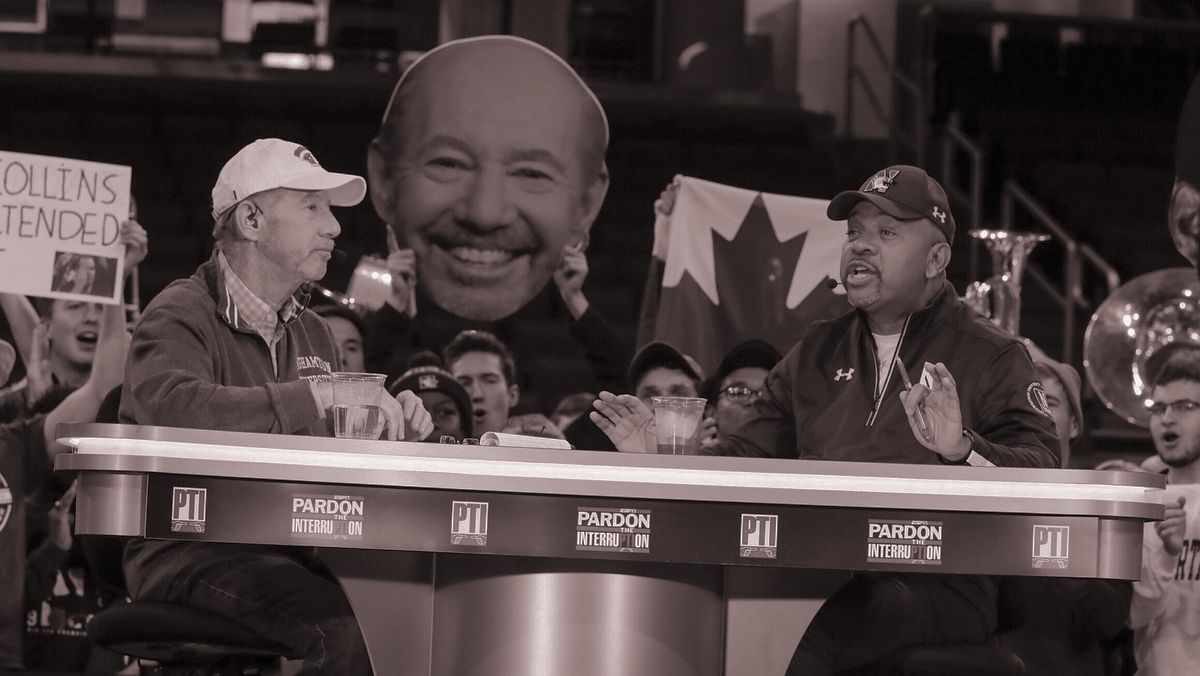
company is doubling down on the old-school curmudgeons who starred in its golden age. Mike Wilbon and Tony Kornheiser are being rewarded with new three-year deals that might truly mark the beginning of the end of an amazing journey. |
|
|
Nearly a quarter-century ago, in the middle of ESPN’s golden age, network president Mark
Shapiro debuted a novel banter talk show with only the most modest ambitions: Pardon the Interruption featured a pair of balding, grizzled, middle-aged Washington Post columnists, who had either been kicked upstairs or downstairs after years of regular appearances on The Sports Reporters, the old Sunday morning Dick Schaap roundtable. In those early days, Tony Kornheiser and Michael Wilbon were almost
comically transparent about their unusual, and perhaps precarious, leap from the smoky newsroom into the celluloid boob tube during the invisible lead-in hour to SportsCenter. Indeed, neither were matinee-idol-attractive or even entirely media trained. Their chief talent, in fact, was arguing about sports—and they were preternaturally great at arguing with each other about sports.
And yet that talent, along with the show’s innovative rundown
format, turned out to be a harbinger of a new age that would beckon in a decade or two, after the bright lights of SportsCenter faded and the monoculture collapsed. In those days, producers realized that Kornheiser and Wilbon made for great TV largely because of their extraordinary authenticity—both their familiarity with each other, their own unique tics (Kornheiser’s fear of flying; Wilbon’s natty wardrobe), and their chummy relations with their guest stars, both athletes and coaches,
who also happened to be their friends from years of postgame banter. |
|
|
A MESSAGE FROM OUR SPONSOR |
Greatness isn't achieved in an instant. It's tested until there is no question — only performance. |
|
|
In many ways, Mike and Tony presaged the current model for ESPN chairman Jimmy
Pitaro: They were O.G. needle-movers, precursors to the network’s current programming strategy, which now coalesces around Pat McAfee and Stephen A. Smith. Pitaro and his content chief, Burke Magnus, bet that they could expand ESPN’s brand to Gen Z by allowing McAfee to simulcast his show on YouTube, including an extra hour that does not appear on ESPN. Earlier this spring, ESPN made a similar decision
with Stephen A., who signed a mammoth $20 million-per-year deal that allowed him to continue producing YouTube shows while hosting a weekly political radio show for SiriusXM. And last month, ESPN hired social media influencer Katie Feeney, who has more than 14 million followers across her accounts.
And yet Mike and Tony are, in their own way, needle-movers for the aging Gen Xers and older Millennials who came of age in the Patrick–Olbermann
era. Even as ESPN changes—dispensing with second- and third-tier talent, capitalizing on internet-famous talent, and relying on a panoply of distribution deals—they are core to the proposition for what remains of the aging audience that fueled the network’s ascent. “I look at them as the hosts of the original sports personality show,” Magnus told me. “They’re still as relevant and as powerful as they’ve ever been. And, by the way, they also attract a very diverse audience. By no means
are they weak in the young demographic.”
So, nearly 24 years to the month after PTI debuted, I’m told that ESPN is extending their deals by another three years apiece. Is this the final extension? Kornheiser, who is 77, laments his age on a nearly quotidian basis. (One common refrain between the two hosts is his inability to watch evening games to their conclusion.) Wilbon is a comparatively spry 66 years old. And they’ve already outlived, at least in TV years, many of their
generational brethren, such as Around the Horn, which was started by their former statistician Tony Reali. (ESPN still hasn’t decided on a replacement for the ATH time slot, and Magnus says he’s not close to making a decision, happy to use SportsCenter as a lead-in to PTI in the interim.)
In fact, ESPN seems to want as much PTI as it can get from its hosts. At one point, executives had considered the idea of expanding the show
to an hour, but that idea never got serious. “There was never a moment when we weren’t completely committed to continuing PTI, frankly,” Magnus told me, “for as long as they want to continue PTI.” |
On YouTube’s NFL game: “I was on the road Friday night and came back to a huge hotel
sports bar so that I could catch the second half of the Chiefs-Chargers game, and… the bar couldn’t get the game via YouTube. A waiter told me in a frustrated fashion that the bar had turned away a lot of annoyed people. I ended up going up to my hotel room because I knew the room TV there had a built-in YouTube app, and… I was met with lots of ‘loading’ errors. I gave up and watched the rest of the game on an iPad. Essentially, I downgraded from a massive sports bar to a big hotel room TV to an
iPad. There was shrinkage!” —A media executive
On the Channels strategy: “This autumn, for the first time, I plan to use YouTube Premium, NFL Sunday Ticket, Paramount+, and HBO Max combined within the YouTube interface, and I would like to stream ESPN Unlimited’s WWE PLEs and Peacock’s Premier League exclusives on YouTube as well. Distributors and programmers need to collaborate to share data, as Amazon and YouTube’s channel stores are likely to dominate the market for
high-value consumers who subscribe to multiple streaming services.” —A Varsity subscriber
On YouTube’s alternate telecasts: “Maybe the future of sports is this level of fragmentation. We’ve already seen it with scripted TV where everyone has different favorite shows. Maybe it’s time for everyone to have their favorite stream for a sports game. A company like ESPN could hire (or more likely license) streamers and offer them on a different ‘channel’ via a service like
YouTube TV. You could have your traditional broadcast on ESPN, but then also have a streamer do their broadcast on ‘ESPN Streams,’ which would be offered on a higher paid tier on YouTube TV.” —A local TV sports anchor |
|
|
An essential, insider-friendly Hollywood tip sheet from Matthew Belloni, who spent 14 years in the trenches at
The Hollywood Reporter and five before that practicing entertainment law. What I’m Hearing also features veteran Hollywood journalist Kim Masters, as well as a special companion email from Eriq Gardner, focused on entertainment law, and weekly box office analysis from Scott Mendelson. |
|
|
Puck fashion correspondent Lauren Sherman and a rotating cast of industry insiders take you deep behind the scenes of
this multitrillion-dollar biz, from creative director switcheroos to M&A drama, D.T.C. downfalls, and magazine mishaps. Fashion People is an extension of Line Sheet, Lauren’s private email for Puck, where she tracks what’s happening beyond the press releases in fashion, beauty, and media. New episodes publish every Tuesday and Friday. |
|
|
Need help? Review our FAQ page or contact us for assistance. For brand partnerships, email ads@puck.news. You received this email because you signed up to receive emails from Puck, or as part of your Puck account associated with {{customer.email}}. To stop receiving this newsletter and/or manage all your email preferences, click here. |
Puck is published by Heat Media LLC. 107 Greenwich St, New York, NY 10006 |
|
|
|