 |
 |
|
Happy Monday, I’m Eriq Gardner.
|
|
Welcome back to The Rainmaker, a private email about money, power, fame, and their intersection with the law.
For the first edition of the new year, I have a few provocative predictions, including my expectations for the recently filed lawsuit by The New York Times against OpenAI. Also: Tom Girardi, Jerry Jones, Elon Musk, Richard Prince, Leah Remini, Jackie Robinson, Ben Smith, Donald Trump, and why Nirvana may be headed to multiple trials on the 30th anniversary of Kurt Cobain’s death. (Trust me, that number makes me feel old, too.)
P.S. If someone else forwarded you this email, and you’d like to continue receiving this newsletter, click this link.
Up first…
|
|
|
- Buzzfeed Mysteries: Just before Christmas, Ozy Media made quite the splash by serving up a lawsuit against Semafor’s Ben Smith, who eviscerated the company and its founder, Carlos Watson, during his previous stint as the media columnist for The New York Times. The lawsuit concerns Smith’s role in his previous corporate iteration—back when he was the founding editor of Buzzfeed News, and the company was allegedly kicking the tires on an acquisition of Ozy. The suit notes an old nondisclosure agreement, and spins a tale of Smith, Buzzfeed, and Semafor dipping their toes in the murky waters of Ozy’s supposed trade secrets.
While Ozy’s provocative new case has turned heads, one particularly juicy nugget buried in the 70-page complaint seems to have slipped past many eagle-eyed observers: Page 34 details private chats between Smith and Buzzfeed C.E.O. Jonah Peretti. Now, how did Ozy get those?
Here’s where things get even more curious. After Ozy filed its lawsuit, on December 21, federal prosecutors sent an angry message to Watson’s legal team as he awaits trial for allegedly hoodwinking investors. The prosecutors accused Watson’s lawyers of violating a protective order by sharing Buzzfeed’s internal communications, which Watson obtained from the government as part of discovery in the criminal case. That raises another question: Why on Earth did the prosecutors have these materials in the first place?
Interestingly, part of Watson’s criminal defense is that his actions were supposedly no less egregious than those of executives running Buzzfeed and Vice, and that he’s being unfairly singled out because he’s Black. But, hang on—could it be that the Department of Justice actually did investigate Buzzfeed? For answers, I reached out to the company, but a spokesperson politely told me they couldn’t help me on this topic.
- Defensive tackle: Dallas Cowboys owner Jerry Jones is juggling more than a pigskin as the NFL playoffs get underway. He’s being sued by a woman claiming he got handsy and planted an unwanted smooch during a postgame celebration at AT&T Stadium five years ago. At first, the woman took this case to court as a “Jane Doe,” but she unveiled her identity once informed she couldn’t proceed pseudonymously. Now, she is gunning to grill Jones in a deposition. Jones is hitting back, claiming it’s a “shakedown” and demanding that she submit to an inquisition first.
In this surprisingly under-the-radar case, Jones has brought in a pair of the team’s star players—defensive end DeMarcus Lawrence and offensive tackle Tyron Smith—as witnesses. Both claim they saw nothing inappropriate. Lawrence, who played football with the accuser’s son and who secured game tickets for them, has already delivered a sworn affidavit. He may be asked to give testimony in advance of a trial tentatively scheduled for March. For now, the parties are set to appear before the judge on January 31 and wrangle over the prospect of Jones getting grilled.
- Afterlife agents: One more sports-related scoop: A legal slugfest is in full swing, starring none other than baseball icon Jackie Robinson. At the heart of this tussle is a lively arbitration battle between his 101-year-old widow, Rachel Robinson, and CMG Worldwide—the agency piloted by Mark Roesler, known for representing dead stars like James Dean, Andre the Giant, and Jerry Garcia.
What started out as a seemingly minor scuffle over a company claiming the right to hawk Jackie Robinson bobbleheads has evolved into an exploration of whether Roesler’s outfit has been wheeling and dealing behind Rachel Robinson’s back. Apparently, even in the afterlife, parting ways with your agent isn’t a walk in the park. Gina Durham, the DLA Piper partner repping the Robinson estate, tells me that CMG shot down attempts to sever the bond. She emphasizes, “CMG initiated arbitration based on unfounded breach of contract claims. No individual or company, including CMG, can disregard the basic terms of a licensing contract and subsequently deprive Rachel Robinson and her family of their legal right to determine how their loved one’s likeness appears in public.”
|
|
|
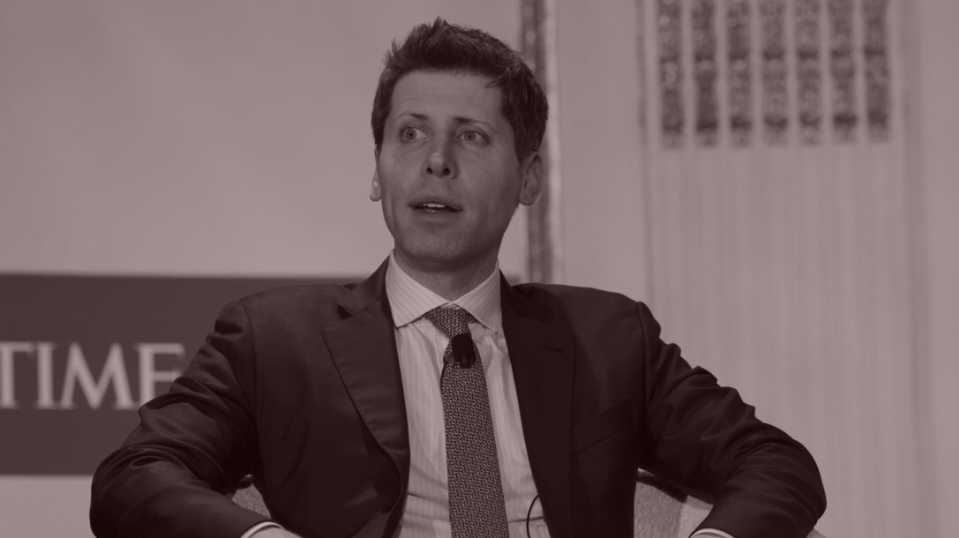
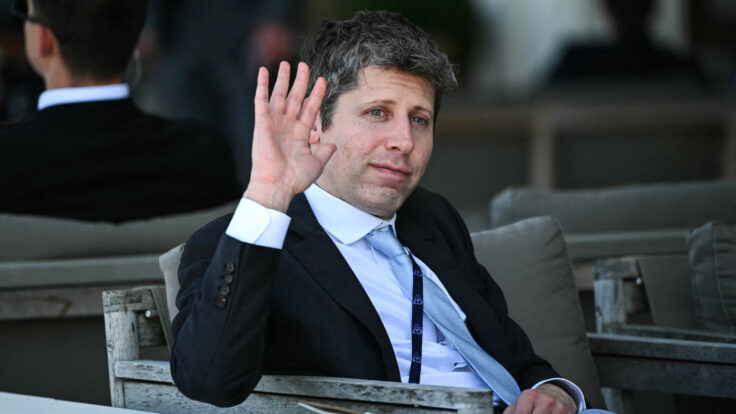
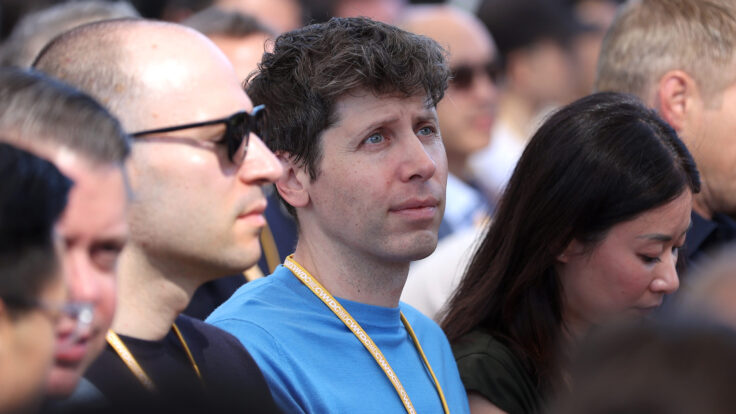
| On December 27, The New York Times dropped a legal bomb on OpenAI, accusing the ChatGPT maker of copyright infringement and seeking unspecified, presumably sizable, damages. Of course, plenty of journalists and lawyers cheered the move, imagining Sam Altman to be quaking in his candy-colored, Dall-E designed shoes. But I’m not vibing with the majority. In fact, I believe that A.G. Sulzberger and the paper’s legal team at Susman Godfrey are facing a rocky road ahead.
Let’s start with the notion that OpenAI is competing with the Times—a point the publication strongly emphasizes at the very beginning of its complaint. While I can fathom A.I. cooking up prize-winning news in the future, ChatGPT’s current capabilities are more modest, prone to factual mistakes and occasional “hallucinations.” (I’ve yet to encounter anyone swapping out their Times subscription for the $20/month ChatGPT Plus.) As for copyright law, the Times’ legal eagles are undoubtedly aware that the paper’s reporting is afforded “thin” copyright protection, given that facts aren’t copyrightable, and no one possesses a monopoly on a true story.
Instead, they’re trying to sell a court on the notion that ChatGPT is a plagiarist, mimicking their unique expression of facts. (Check out the complaint here.) But digging a bit deeper, you’ll find that the near-verbatim reproduction of a Pulitzer Prize-winning article like “Snow Fall: The Avalanche at Tunnel Creek,” which is highlighted in the complaint, only happens when ChatGPT is aggressively prompted to sidestep the paywall and share the specific article. This makes for an interesting and fancy legal claim—that ChatGPT can be a tool to circumvent the Times’ copyright protection system—but on a straight-up infringement claim, I’m betting a judge will credit similarities to the plaintiff’s not-so-subtle prodding. (OpenAI put out a statement today that included gripes about the publication’s “intentionally manipulated prompts” and “cherry-picked” examples.)
More profoundly, this case will turn on whether the “training” of ChatGPT qualifies as fair use. In its complaint, the Times argues that its archives were the single largest proprietary data set ingested by OpenAI. Of course, budding journalists have been guzzling down the Times as part of their learning brew for ages. Is it different when A.I. does the sipping? OpenAI will argue that its use of copyrighted content is transformative, with zero signs of actual market harm. (I also bet they’ll slip in the embarrassing fact that Times journalists regularly use it.) And there’s reason to expect such a defense would carry weight in a New York federal court. Any doubters would be well advised to check out the 2nd Circuit’s thumbs-up for fair use in Google’s digitization of a zillion library books. |
|
A MESSAGE FROM OUR SPONSOR
|
| |
 |
Alexander Payne's "The Holdovers" is a quiet masterpiece, a testament to the director's mastery in crafting poignant stories that celebrate the human condition. He "breathes new life into a cinematic form that has lately felt more endangered than ever" (The Washington Post), guiding us through the halls of a New England prep school, bringing to life a trio of unlikely protagonists. Ultimately, ‘The Holdovers’ is a story about the universal human need for connection and finding solace in unlikely places, offering a glimmer of hope and empathy in a world often focused on division. Featuring stunning performances from Paul Giamatti, Da’Vine Joy Randolph and newcomer Dominic Sessa, THE HOLDOVERS has been heralded by audiences and critics alike. Nominated for 8 Critics Choice Awards including Best Director Alexander Payne and Best Picture of the Year.
|
|
|
|
|
| All that said, there may be a twist in the months ahead. The A.I. space is a cash ocean—Microsoft, Google, and Amazon alone threw $18 billion into the water last year—and the smart money says that A.I. bigwigs would be willing to pay content producers for fresh training data. OpenAI has already shaken hands on a licensing deal with The Associated Press and Axel Springer, and the Times lawsuit surfaced after marathon talks hit a dead end.
If OpenAI plays the old card of making a counterclaim in search of a deal, it’s not impossible to imagine its lawyers highlighting how news publishers including the Times, the Journal, Vox Media, Condé Nast, Axel Springer, and Barry Diller’s IAC discussed forming a coalition to address A.I. issues last summer. Those early conversations transpired just as Congress was wrangling over an antitrust exemption for news producers so they could tag-team the digital giants. But no bill allowing such coordination actually passed. Could OpenAI claim that last year’s conversations between news rivals amounted to a price-fixing conspiracy?
Maybe, maybe not—an antitrust claim would hardly be a slam dunk. But it might be colorable enough to strut past an initial dismissal motion and set the stage for a mega-settlement between OpenAI and a larger coterie of news heavyweights. (And, yeah, I’m picturing a similar showdown with book and music publishers, too.)
If a blockbuster settlement follows licensing demands and an antitrust tango, it wouldn’t be the first time. Some 75 years ago, the government cut a deal with song publishers in a major antitrust brawl. They laid down a consent decree, birthing a collective licensing setup to make sure radio stations could groove to the tunes, and songwriters and publishers got their due. Now, some folks are holding up that same blanket licensing system as a potential solution to the A.I. puzzle. But sorting out the nitty-gritty of compensating content creators whose work was used to train A.I. systems will be tricky. After all, tracking a song’s radio play seems easier than opening the ChatGPT black box to determine how much of its output is derived from Times articles versus, say, Politico or The Wall Street Journal. |
|
|
While I’m at it, two more bold forecasts for 2024. Oddsmakers would likely rate these as long shots, yet I could easily envision them happening, and, of course, there will be some chest-beating if they come to fruition.
- Donald Trump’s J6 criminal trial ends in a mistrial: Prognosticating what’s ahead for the former president requires expertise in criminal and appellate procedure, coupled with a deep appreciation of game theory. Clearly, his intent is to defer his trial for allegedly scheming to overturn the 2020 election results for as long as possible. His ideal scenario involves no trial until re-election, allowing him to possibly instruct the Department of Justice to drop the case. As such, his bid for immunity, now on appeal, has drawn considerable attention. Expect further attempts by Trump to derail Jack Smith’s case as the trial date approaches. Although the Supreme Court may ultimately deny Trump immunity, his delaying tactics might not conclude there.
Even if the trial commences, there’s no guarantee of reaching a verdict. Although Judge Tanya Chutkan will do everything she can to maintain order, ample room for shenanigans exists that could culminate in a mistrial. Health emergencies, technical glitches, bizarre outbursts, external interference, juror misconduct, etcetera. Your imagination is as good as mine.
- The NCAA suspends the college football and basketball seasons: Last month, NCAA president Charlie Baker made the surprising proposal that schools directly negotiate name-image-likeness deals with athletes. Around the same time, a dismaying realization dawned on many: Relaxed transfer rules meant it was theoretically possible to recruit a bowl opponent’s star quarterback right before the big game. While compensating star college athletes is long overdue, the need for new regulations is evident. The problem is that the NCAA now seems to lack confidence that any pay restrictions could withstand legal challenges.
This is where the unionization of college athletes may actually present a solution, since collectively bargained work conditions get a pass from antitrust laws under something known as the nonstatutory labor exemption. Presently, the National Labor Relations Board has pending union recognition petitions from USC athletes and Dartmouth basketball players. And there’s a growing possibility that these petitions will be granted by Biden appointees.
If that happens, expect a prolonged appellate battle as schools and athletic conferences contest the classification. Alternatively, they might embrace the prospect of negotiating with unions, especially as they face the possibility of losing a major class action and having to share billions of dollars in broadcast TV money. If they chose to engage with unions, they may seek negotiating leverage. This could potentially lead them to suspend college athletics, mirroring the strategy employed by professional sports owners, who often “lock out” players upon the expiration of collective bargaining agreements.
|
|
|
|
|
- One additional note on this New York Times lawsuit: The paper’s first move was to steer its case to U.S. District Court Judge Sidney Stein. After all, Stein is not only presiding over another big case on the A.I. front brought by book authors, he’s also the judge overseeing several lawsuits against famed artist Richard Prince.
Prince’s artistic specialty is appropriation, which naturally lands him in copyright hot water quite often. Right now, Prince is embroiled in a tangle with photographers for taking what they posted on Instagram, adding cryptic comments, and with a little bit of cropping, passing off their images as his own work. Stein, in a summary judgment opinion last year, declined to give Prince a fair use win, so now he’s facing a trial on January 29. The parties have agreed to let Stein decide the case without a jury. Alas, anyone curious about Stein’s view on copyright and fair use should pay close attention to this proceeding.
- Get ready to see a broadcast of Leah Remini’s stalking lawsuit against the Church of Scientology. That’s because Los Angeles Superior Court Judge Randolph Hammock is allowing ABC to film the proceedings, including a key January 16 hearing where the church will attempt to knock out Remini’s claims.
The decision to allow cameras into the courtroom is itself pretty surprising and intriguing. Ever since O.J. Simpson, Los Angeles judges have been extremely reticent about such intrusions. Hammock isn’t allowing ABC to show court staff or audience members—you’ll have to read about which celebrity Scientologists show up—but he’s confident enough to allow the cameras to show the parties, their lawyers, and of course, himself.
- I’ve got a colorful update on Russian oligarch Eduard Khudainatov’s efforts to recover the $330 million, 350-foot superyacht Amadea, seized by the Justice Department amid a money laundering probe. Just how badly does the oil baron want his prized vessel back? So much that he’s now proposing to deposit any penalties for money laundering into escrow in exchange for having the seized ship returned. I’m not joking. His lawyer is prepping a motion for this audacious swap, creating a scenario where the fight continues over a pile of cash and he sails away on the yacht.
- Tom Girardi has been deemed competent to stand trial for allegedly embezzling $15 million of client funds, but I highly recommend reading the full opinion where the judge delves into the question of whether the embattled power lawyer has been feigning dementia. Perhaps the best part is Girardi giving the government’s psychological expert incorrect answers when quizzed about sports and famous political assassinations. Yet, the real kicker unfolds when, during the interview, his cell phone rings—and who else but Real Housewives star Erika Jayne, his former spouse, is on the line. It was then observed that despite Girardi’s earlier claims of not remembering a third wife, Girardi knew exactly who was calling, and he even recalled her imminent trip to Spain for a TV shoot.
- You might have heard that on December 21, the 9th Circuit Court of Appeals revived a child pornography suit over the famous cover art for Nirvana’s album Nevermind. What’s gone completely unnoticed is something else that happened that very same day. The band got the green light to move to trial against Marc Jacobs for allegedly ripping off the band’s smiley-face logo for a T-shirt.
I won’t blame anyone for forgetting this case, as it’s been awaiting California federal judge John Kronstadt’s decision for many years. The band claims that Kurt Cobain created the design that became one of its signatures. Then, after the suit was filed, an art director named Robert Fisher came forward to take credit, prompting Marc Jacobs to seek sanctions against Nirvana for filing a frivolous copyright suit.
In Kronstadt’s summary judgment ruling (read here), he decides that the design indeed contains protectable expression. If Cobain created it, Nirvana owns the rights, and if Fisher did, those rights would have passed to the Geffen record label, now owned by Universal Music Group, since he was an employee there at the time. Then, the questions would be whether Geffen’s rights were assigned to Nirvana and whether the copyright registration was still valid given inaccurate information. Moreover, there’s a trademark concern, as Nirvana presents evidence that high-end T-shirt buyers might be confused about the origins of this Marc Jacobs special. It’s a tricky situation, and the judge believes a trial is warranted if the parties do not come to a settlement. I’ll keep you updated.
|
| That’s all for today. Hit me with any questions, tips, or comments. |
|
|
|
| FOUR STORIES WE’RE TALKING ABOUT |
 |
| Ackman’s Revenge |
| On Bill Ackman’s P.R. battle royale, ESPN’s megadeal, and more. |
| WILLIAM D. COHAN |
|
 |
|
 |
|
 |
|
|
|
|
|
 |
|
|
|
Need help? Review our FAQs
page or contact
us for assistance. For brand partnerships, email ads@puck.news.
|
|
You received this email because you signed up to receive emails from Puck, or as part of your Puck account associated with . To stop receiving this newsletter and/or manage all your email preferences, click here.
|
|
Puck is published by Heat Media LLC. 227 W 17th St New York, NY 10011.
|
|
|
|