The '1619' Backlash, Web3 Mania, and the Crypto Mafia
Good afternoon and welcome back to The Daily Courant, our regular digest of the latest and most consequential journalism from Puck. Today, we direct your attention to Baratunde Thurston’s thought-provoking reflections on the Rittenhouse trial, the agita surrounding the 1619 Project, and the new media-tech-financial ecosystem coalescing around the metaverse, Web3, and crypto everything. Thurston, of course, was one of the highest-profile voices to join the recent effort by a “decentralized autonomous organization” to buy an original copy of the U.S. Constitution—until they were outbid by billionaire Ken Griffin. His takeaway for our digital future? “It’s gonna be a mess.”
Plus, stick around below the fold as Dylan Byers investigates what's in store for CNN's scandal-ridden Chris Cuomo.
Reflections on our gun violence epidemic, blockchain democracy, buying the Constitution, and rebuilding America in the metaverse. One of the most rewarding aspects of my work at Puck has been receiving feedback from our engaged community of subscribers. This week, in the wake of the Rittenhouse verdict, the dawn of Meta, and yet another school shooting, I’m opening my notebook to respond to some of the most urgent emails from readers. If you have critiques, additions, or further questions, write me back at baratunde@puck.news. My inbox is always open.
What’s your view on both Meta and the metaverse? Will we be spending a lot of our time in the latter, ten years from now? And will the former be the main platform we engage on?
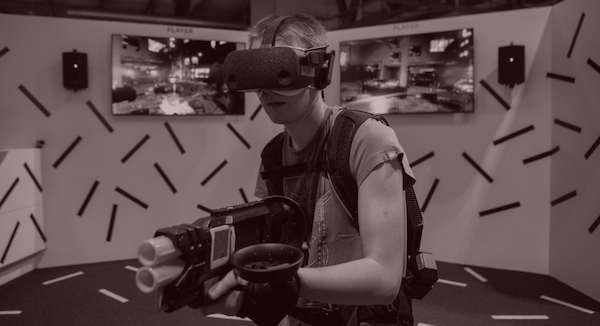
OK, so the metaverse is kind of impossible to define right now. Big tech companies and investors are promoting it as an immersive virtual world slash video game slash 3D video conferencing slash NFT sales bazaar slash crypto blockchain something something. It recalls the equally amorphous term “information superhighway” that we used back in the ‘90s to describe what would become the internet. No one says “information superhighway” anymore, but we do live in a networked world defined heavily by digital experiences and dominated by the exchange of our data for services.
The metaverse, sometimes called Web3, refers most broadly to a vision of the internet defined by more ubiquitous computing and less centralization of authority. Proponents of this next-generation ecosystem say that we should be able to own our data and move between digital experiences without having to spin up new profiles, logins, etc. The in-app purchases we make on today’s web, for instance, should work across apps in the future web, if that future even has “apps” per se. And our ability to coordinate and organize without a central authority blessing that organization should increase dramatically. All this can affect creativity, commerce, entertainment, politics and more. It’s a lot. This piece from Wired starts to address some of what the metaverse is not and what it might be. And this piece in The Information (paywall) is most excellent in mapping out how our future might evolve. It’s seriously one of the best things I’ve read.
Here’s what excites me. The current version of the web concentrates authority in the hands of a few massive companies. We didn’t intend that for the internet. It was supposed to be a force for distributing power. But as we evolve the networked world to something more decentralized (like blockchain) and interoperable and generally programmable, we increase the odds that power is returned to the hands of the people. Part of that vision centers on DAOs, or decentralized autonomous organizations, that use digital tokens and ledgers to pool financial resources and voting power. For example, I recently took part in an effort among thousands of people to raise tens of millions of dollars to buy an original version of the U.S. Constitution...
FOUR STORIES WE'RE TALKING ABOUT 
Plus: As Disney’s charismatic leader completes his choreographed exit, the mood inside Burbank approaches a state of dread. DYLAN BYERS 
Washington has become a gerontocracy. But, actually, is that as bad as it sounds? JULIA IOFFE 
The line between philanthropy and politics has been obliterated. The upshot is that even more money is moving into the shadows. TEDDY SCHLEIFER 
Inside the dynastic politics, boardroom dramas, and M&A land-grabs that are reshaping the media-tech-financial landscape. WILLIAM D. COHAN AND DYLAN BYERS 
You received this message because you signed up to receive emails from Puck.
Was this email forwarded to you?
Sent to {{customer.email}}
Puck is published by Heat Media LLC.
For support, just reply to this e-mail. For brand partnerships, email ads@puck.news |


SHARE