{{ 'now' | timezone: 'America/New_York' | date: '%b %d, %Y' }} |
|
|
|
Hello and welcome back to The Best & The Brightest. I’m Leigh Ann Caldwell. Yes,
the Senate is still entertaining unrealistic SAVE America Act chatter. But there is no way they are canceling August recess, especially for a bill that doesn’t have the support of 50 senators on a good day.
In tonight’s issue, I take a look at the staffing drama facing Sen. Tim Scott. The affable South Carolina senator is a complicated figure: He’s well-liked by his colleagues and has notched some significant policy wins, but some Republicans wonder if his dysfunctional
office and ruthless management style is a match for his portfolio. Plus, Peter Hamby has some news on Jon Ossoff’s fundraising swing, and Marianna Sotomayor has exclusive polling on what moderate women really think about socialism.
Also mentioned in this issue: Jennifer DeCasper, John Thune, Nathan Brand, Chris Lucas, Tom Safran, Mike
Collins, Leah Mendelsohn, Chelsea DeCasper, Mike Pence, Steve DeMaura, Janie Faulkner, James Costos, Lindsey Graham, Andy Spahn, Elizabeth Warren, Michael Smith, Brendan Jaspers, Darline Graham, John Cornyn, Trey Gowdy, Ken Paxton,
John Sununu, and more. |
|
|
|
A MESSAGE FROM OUR SPONSOR |
Invested in America's grandeur. As our nation has grown, Bank of America has grown with it—helping people, businesses and communities
prosper. As a founding sponsor of the Theodore Roosevelt Presidential Library, we're helping preserve our nation's history. Read the story |
|
|
|

| Peter Hamby
|
|
- An L.A. 2028 networking
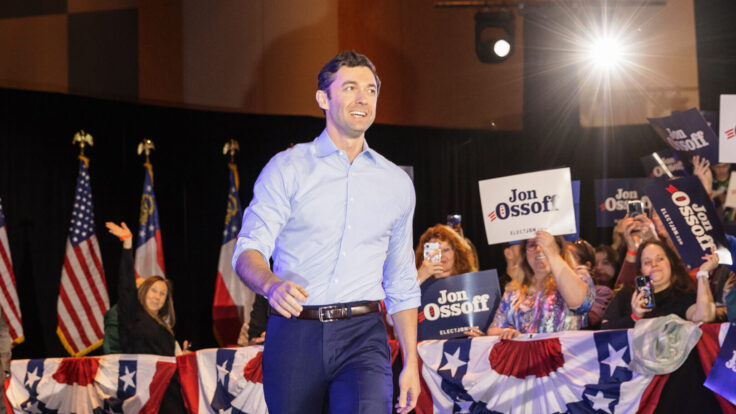
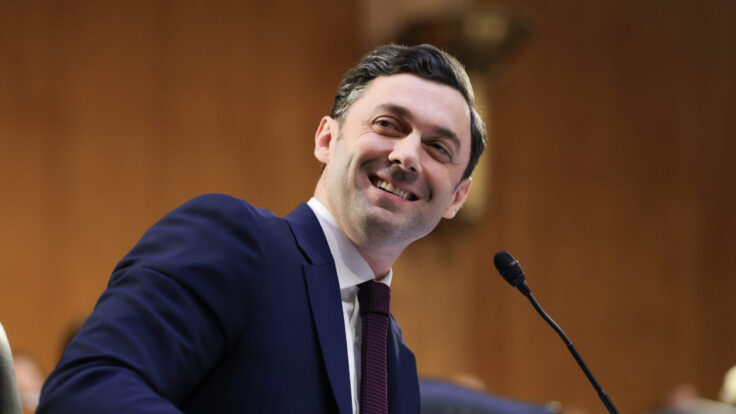
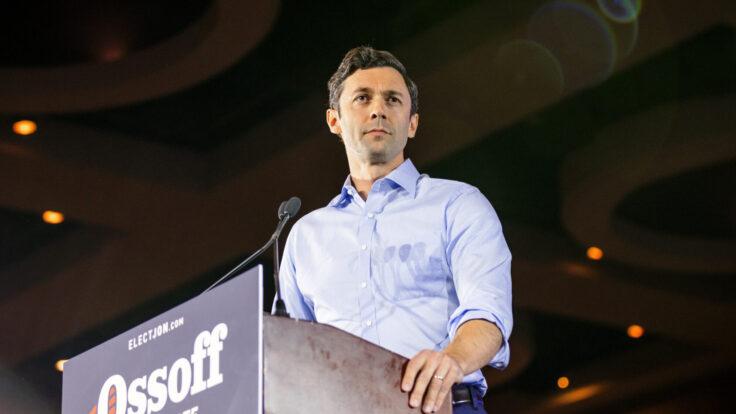
alert: Georgia Sen. Jon Ossoff will be in Brentwood on Friday at a fundraiser for his reelection campaign hosted by some big-time L.A. Democratic donors, including power players in the city’s Jewish community. Notably, the impressive host committee suggests that Ossoff has some mighty fundraising connections in Los Angeles, should he ever decide to take his act to the national stage. Among those bold-faced names are real estate developer Tom Safran,
longtime L.A. political fixer Andy Spahn, Democratic fundraiser Leah Mendelsohn, and former Obama ambassador James Costos and his partner, the interior designer Michael Smith.
It’s a high-dollar event, with funds being distributed across his campaign and several coordinated accounts, including the D.S.C.C. Not that he needs the money (for this campaign, anyway…)—Ossoff already has one of the largest war
chests of any Senate candidate this year, reporting $42 million in cash on hand heading into the final three months of the election cycle. His opponent, Republican Mike Collins, has only about $2 million in the bank.
|
|
|
|

| Marianna Sotomayor
|
|
- Are soccer moms tuning
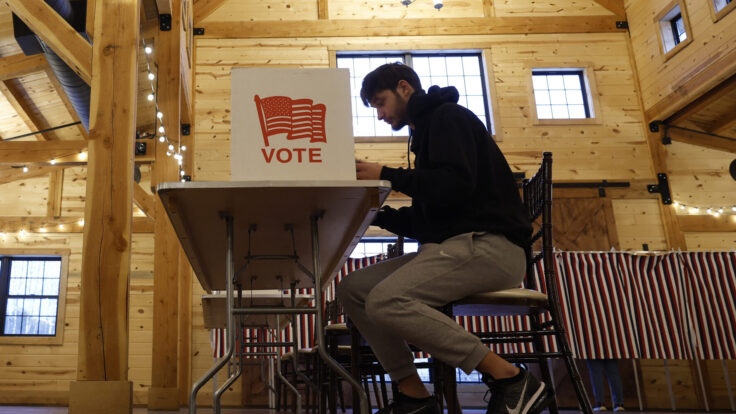
out?: That’s one way to read the results of Galvanize Action’s new July survey of ideologically moderate white women ahead of the midterm elections. According to our exclusive first look at the data, a whopping 48 percent said they didn’t have a strong opinion of candidates who identify as democratic socialists. (Among the remainder, 34 percent said they disliked D.S.A. candidates, while 18 percent viewed them positively.) And while more likely voters said they’d cast a ballot for
Democrats (32 percent) than Republicans (28 percent) in November, fully 21 percent said they hadn’t made up their minds. That’s a big swing bloc with unformed opinions. Another 19 percent don’t plan to vote at all, which is consistent with a broader disengagement trend noted throughout the year.
Interestingly, our friends at Galvanize noted that their surveys have shown a trend of women remaining “neutral or conflict-avoidant” on controversial subjects for the sake of “social
desirability.” That could be a warning sign for Republicans who are keenly focused on painting all Democrats as communists without offering much of an economic agenda of their own.
|
|
|
|
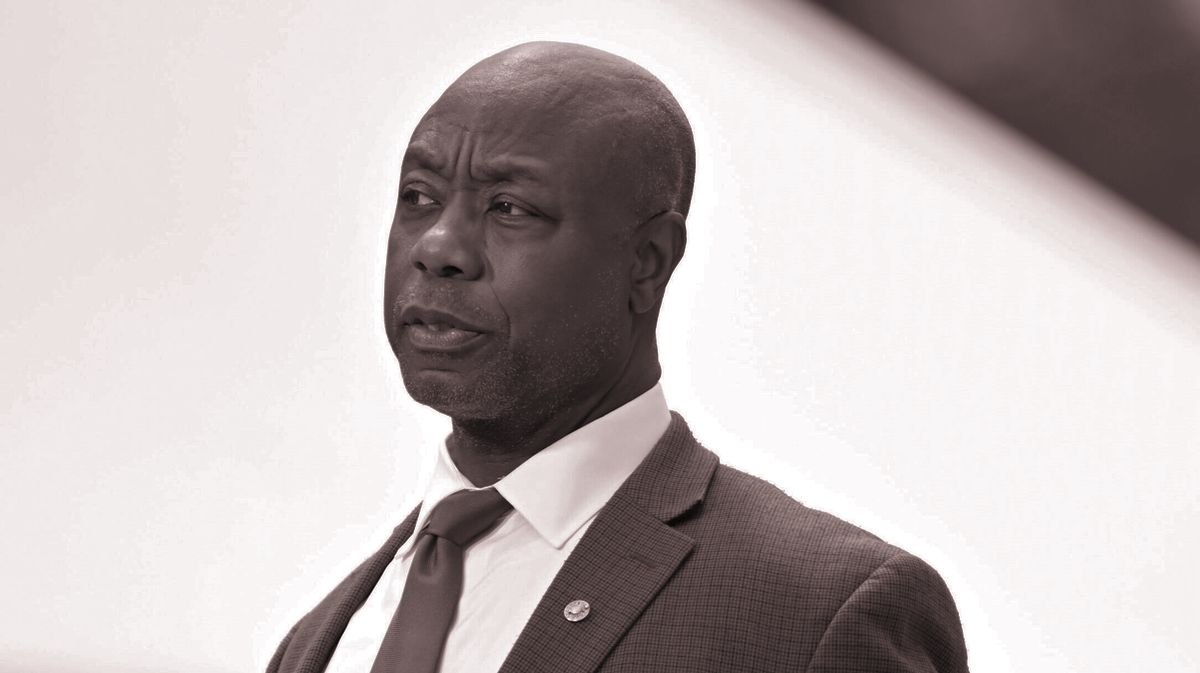
Supposedly the G.O.P.’s nicest guy, Scott has developed a reputation for running two of the
Senate’s most dysfunctional offices—consumed by high turnover, internal rivalries, and a string of costly political missteps. Some Republicans wonder whether his portfolio has grown beyond his abilities. |
|
|
|
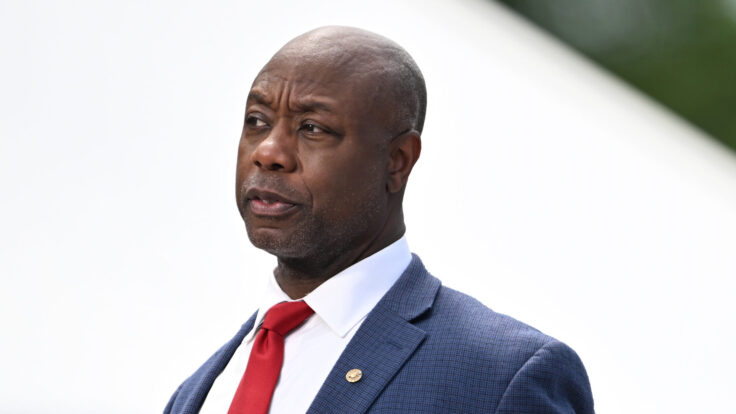
It’s been a tough few weeks for Senator Tim Scott. After suddenly losing his friend, fellow
South Carolinian, and biggest champion Lindsey Graham, Scott’s subsequent lobbying campaign for former congressman turned Fox News host Trey Gowdy to succeed Graham collided with Donald Trump’s public endorsement of the late senator’s sister, Darline. Scott, who is head of the Senate Republicans’ campaign arm, has discomfited Republicans by hesitating to get fully on board with Darline during her three-week
sprint for the nomination.
Alas, this political faux pas was only the latest in a series of befuddling missteps that have led fellow Republicans to describe Scott as out of touch and outmaneuvered—behavior befitting a Capitol Hill novice rather than a former presidential candidate who, in addition to the Senate Republican campaign arm, chairs the powerful Senate Banking Committee. Just last week, during a perfunctory Banking Committee meeting, Scott granted Sen. Elizabeth
Warren’s request for a closed session to discuss an F.B.I. background check for Trump nominees poised to advance out of committee. The move derailed much of the day’s work, and startled Republicans who wondered why Scott had neither anticipated Warren nor prepared an effective response.
Of course, Scott can point to numerous accomplishments, too. But as his portfolio has grown, rumblings about his broader mismanagement have also resurfaced. His Banking Committee office has one of
the highest turnover rates in the entire Senate: 20 committee employees have left during Scott’s tenure, and he is currently looking for his fourth staff director since becoming chairman 18 months ago. His personal office is hardly better: Scott has had five communications directors in five years, and three chiefs of staff in less than three. |
|
|
|
A MESSAGE FROM OUR SPONSOR |
Invested in America's grandeur. As our nation has grown, Bank of America has grown with it—helping people, businesses and communities
prosper. As a founding sponsor of the Theodore Roosevelt Presidential Library, we're helping preserve our nation's history. Read the story |
|
|
|
Ostensibly, some of this turnover is by design. Inside his office, Scott regularly holds “pruning
conversations,” where he gathers staff in the conference room and reminds them they’re all replaceable. Promotions can resemble The Hunger Games—two press secretaries who were competing for communications director alternated in the role one week at a time. (After several months, Scott hired from the outside.) And when the Banking Committee needed a staff director late last year, deputy director Chris Lucas and general counsel Janie Faulkner
were told for months to compete openly for the job. (Faulkner won the job in March, but is already leaving next month for the private sector.)
The internal discontent runs contrary to Scott’s public image as a happy-go-lucky, affable figure who overcame incredible odds to become the first and only Black Republican senator in a state that once empowered racist segregationists John C. Calhoun and Strom Thurmond. Scott likes to say that competition leads to
innovation, citing Doris Kearns Goodwin’s Team of Rivals. “Senator Scott runs a tight ship with high standards that delivers serious results,” Nathan Brand, Scott’s senior advisor, told me. “His office has produced exceptional staff who are now making an impact across the administration, Congress, and the private sector.” But other people I spoke to worry that the backstabbing in his office may jeopardize his hard-earned future
ambitions. |
There’s no question that Scott is a complicated boss: He has high expectations for his staff, but enjoys the
comfort of his own experience and talents. He utilizes internal competition for better outcomes, but sets his own work boundaries. He gives staff wide latitude to implement his vision, but creates insecurity in the vacuum of clear directives. He wants to do big things, but struggles with making hard decisions. And, perhaps most critically, he has invested unusual power in his longest-serving and most loyal aide, Jennifer DeCasper—whom many around Scott perceive as having
reinforced his worst instincts.
Though formally the N.R.S.C.’s executive director, DeCasper is so closely tied to Scott that her presence is inescapable among his staff. People in Scott’s orbit described DeCasper as both “manipulative” and “untrustworthy”—encouraging employees to rat on one another while emphasizing that she alone enjoys the senator’s confidence. At times, it can seem as though everything is funneled through DeCasper. Even during her short stint at the G.O.P.
firm Targeted Victory, after Scott’s presidential campaign, she retained tremendous influence over what happened inside his office. (“Jennifer is busy protecting the Republican majority and is grateful for the many Tim Scott alumni continuing to advance an opportunity agenda,” Brand said.)
DeCasper had little political or policy experience when she first interviewed with Scott, then an incoming House freshman. She was a Dulles airport baggage handler with a law degree, and in a career
lull. But Scott viewed their meeting as providential. Addressing her in his book, America, a Redemption Story, Scott wrote, “God was saying you were the right person for the job.” And over a period of 15 years, the two became inseparable. DeCasper ultimately consolidated power—occassionally sharing it with Brand—and even hired her sister, Chelsea, to serve as Scott’s chief of staff after nearly a decade in administrative roles by her side. Last year,
Chelsea DeCasper split her time between Scott’s personal office, as deputy chief of staff, and the N.R.S.C., where she was also Jennifer’s chief of staff—an unusual multipronged arrangement. In 2019, Jennifer posted on Twitter that Chelsea was “Technically Office Manager but really therapist, disciplinarian, banker, & babysitter. Without her we would fail.”
Jennifer
DeCasper’s appointment as executive director of the N.R.S.C. stunned many Republicans, given that her only campaign experience had been running Scott’s failed, five-month presidential bid. One of her early moves at the N.R.S.C.—hiring outgoing vice president Mike Pence’s former campaign manager Steve DeMaura as a top political advisor—struck many as politically shortsighted, considering the newly elected Trump didn’t look fondly upon Pence. (The committee
subsequently hired Brendan Jaspers, who is close with the White House and Trump’s political operation, to make amends.) In another careless episode, she posted a racially insensitive joke making fun of Rep. Wesley Hunt, a Texas Republican who entered the Senate race despite Scott’s discouragement. “As a victory-oriented operative, she is
the most inept person in Republican politics,” one Scott alum told me. “If her task is to excel in getting Tim Scott to do what she wants him to do—or not do—she has excelled at that.” |
The internal dysfunction first became apparent in 2023, when Scott launched his ill-fated presidential
campaign. At first, his unapologetically Christian, optimistic, post-Trumpian pitch attracted a coveted team of political operatives. But Scott never gained serious traction, disappointing donors and failing to raise enough money to compete. He also acquired a reputation for being unwilling to do the hard work necessary for a successful presidential campaign. Never a morning person, Scott rarely would do early television hits during prime viewing time and was reluctant to do critical prep. “He
underestimates how much better he could be with practice,” said another Scott alumnus. |
|
|
|
Meanwhile, every decision was routed through DeCasper, whose political acumen much of the
team doubted. “It’s hard for any presidential candidate to surround themselves with people they don’t know and ask them to be loyal to the cause,” DeCasper told The New York Times afterward. “I was his longstanding protector and nobody could have done that besides me.”
Back in the Senate, Scott was floated as a potential vice presidential prospect, though multiple people told me Trump’s campaign never seriously considered or vetted him. But he was close with Senate
Majority Leader John Thune, giving Scott a leg up to become N.R.S.C. chair—astonishing those who knew he preferred to go home to South Carolina on the weekends rather than work the donor circuit. Nevertheless, it was an irresistible opportunity to rebuild his donor relationships, recruit the next generation of senators, and possibly prepare another national campaign. (Scott attends fundraisers during the week, but often goes home on weekends to spend time with his
family.)
Of course, Scott has his adherents, too. Last week, “TC,” as he’s affectionately called, hosted his annual South Carolina prayer breakfast, attended by dozens of current and former staff. He is considered loyal to the employees who thrive, helping them to secure other, perhaps better, jobs. “It was the best job I’ve ever had,” one former Banking Committee staffer told me, noting that they had a mandate to implement his vision and the freedom to decide exactly how to do
so.
And his allies say he gets results. On the Banking Committee, Scott has overseen major negotiations. He and Warren produced a bipartisan housing bill—the first affordable housing legislation to pass Congress in decades—though Republicans complained that Warren was out front on the messaging, making the Democratic wins in the bill more visible. (The president didn’t help that perception when he called it the “Elizabeth ‘Pocahontas’ Warren centric housing bill.”) Scott
also shepherded the Genius Act, the first-ever stablecoin legislation, and ushered through negotiations on Clarity, the crypto market-structure bill.
Meanwhile, the N.R.S.C. has outraised Democrats and holds a $15 million cash advantage, and Scott has also pressed Senate colleagues to donate to the committee—something never previously expected of them. But there have been costly missteps. He was unable to prevent Ken Paxton from entering the Texas Senate race, then drew
criticism for his decision to attack Paxton vigorously in the primary against Sen. John Cornyn, despite the likelihood that Paxton would win the nomination. And while he takes some credit for recruiting John Sununu for the New Hampshire race, a person close to Sununu said that it was Thune who sealed the deal.
Those accomplishments point toward the leader that Scott may yet become. His staff still believe in his inclusive, conservative vision for the
Republican Party. But many struggle with the chaos of an office defined by misplaced, unrealistic demands, and a senator reluctant to make hard decisions or live up to the expectations he imposes on others. Scott is “a mess of contradictions,” said another alum. |
|
|
|
Join Emmy Award-winning journalist Peter Hamby, along with the team of expert journalists at Puck, as they let you in on the
conversations insiders are having across the four corners of power in America: Wall Street, Washington, Silicon Valley, and Hollywood. Presented in partnership with Audacy, new episodes publish daily, Monday through Friday. |
|
|
|
Unique and privileged insight into the private conversations taking place inside boardrooms and corner offices up and down Wall
Street, relayed by best-selling author, journalist, and former M&A senior banker William D. Cohan. |
|
|
|
Need help? Review our
FAQ page or contact us for assistance. For brand partnerships, email ads@puck.news.
You received this email because you signed up to receive emails from Puck, or as part of your Puck account associated with {{customer.email}}. To stop receiving this newsletter and/or manage all your email preferences, click here.
|
Puck is published by Heat Media LLC. 107 Greenwich St., New York, NY 10006 |
|
|
|
|