Hello and welcome back to The Best & The Brightest. I’m Leigh Ann Caldwell, in New York on this moody day for Puck’s biannual company hang. I’m excited to meet some of the colleagues whom I haven’t yet connected with in person.
As President Donald Trump contemplates getting involved in the Israel-Iran war, domestic conflicts continue to dominate the news. Earlier today, New York City mayoral candidate Brad Lander, who was attending immigration court as a witness, was detained by ICE while escorting a defendant out of the courthouse. That brings the number of detained Democratic officials to at least four over the past several weeks—an apparent intimidation strategy that, as I predicted last week, will only get worse.
Meanwhile, back in Washington, lawmakers are still shell-shocked from the politically motivated shootings over the weekend of Minnesota state lawmakers Melissa Hortman and John Hoffman and their spouses. During an all-senator meeting this morning, the bipartisan duo of Republican Sen. Dave McCormick and Democratic Sen. Adam Schiff requested more security funding. House Democrats, even while on recess, gathered on a teleconference call this afternoon—and their chiefs of staff joined a leadership-run conference call this evening—to discuss how to address security threats.
As I noted on PBS’s NewsHour last night, violent threats against members of Congress have increased over the past decade, but are also having a chilling effect on recruitment and retention. My former colleagues at The Washington Post reported that members increased their personal budget on security by 500 percent between the 2020 election and 2022 midterms.
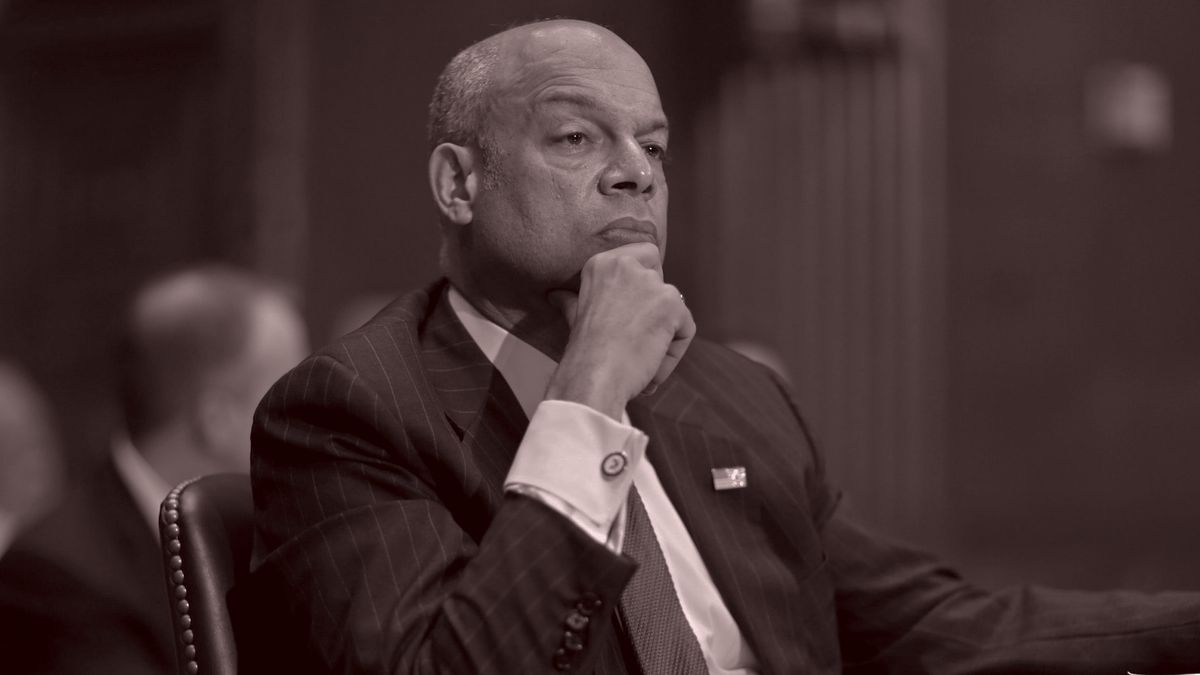
Speaking of which: Today, my partner John Heilemann is sharing his recent conversation with Jeh Johnson, the former secretary of the Department of Homeland Security. John and Johnson get into everything—the ICE raids, the metastasizing situation in L.A., Trump’s border security, and the legality of it all. It’s a great and incredibly timely conversation.
|
|
|
|
A MESSAGE FROM OUR SPONSOR
|
bp added $190+ billion to the US economy over the last three years. Like three major projects in Texas
to help modernize our natural gas production. Now, 95% of our wells in the Permian Basin run on electricity – a more efficient way to power our US production and one more way we’re investing in America.
|
|
|
|
But first, here’s Abby Livingston on the ruckus at the D.N.C.…
|
|
|
 |
Abby Livingston |
|
The turmoil at the Democratic National Committee continued this week with the high-profile resignations of two major union leaders, Randi Weingarten of the American Federation of Teachers and Lee Saunders of the American Federation of State, County, and Municipal Employees. Their departures set off another dreadful news cycle for beleaguered D.N.C. chair Ken Martin, who was just recovering from his battle with David Hogg.
Hogg, of course, was unceremoniously deposed as a vice chair, after his and Malcolm Kenyatta’s elections to their posts were essentially annulled by the national party on a bizarre technicality. (The real cause: Hogg vowed to spend millions of dollars backing primary challenges against older incumbents.) At times, the clash got personal. In a leaked recording of a recent virtual meeting, Martin could be heard telling Hogg, “I’ll be very honest with you, for the first time in my 100 days on this job … the other night I said to myself … I don’t know if I wanna do this anymore.” At another point, Martin complained that “no one knows who the hell I am” and that Hogg “essentially destroyed any chance I have to show the leadership that I need [to show].”
Anyway, the resignation of Weingarten and Saunders, who had both supported Wisconsin state Democratic chair Ben Wikler over Martin in last year’s D.N.C. election, seemed to be another vote of no confidence in the party chair. Other Democrats with knowledge of the situation, however, told me Martin still has solid support within the committee. Some suggested the timing was particularly ugly, given the shock in D.N.C. circles following the assassination of Minnesota state Rep. Melissa Hortman, a close Martin ally.
But outside the cloistered world of the D.N.C., there’s a broader swath of Democratic consultants, donors, and members of Congress shaking their heads on the sideline. “My biggest concern about the D.N.C is that since the chair’s race, which was lively but not acrimonious, the only conversation emanating out of the D.N.C. has been about internecine squabbles,” said a Democratic consultant who’s worked closely with the committee. When I posed this critique to a source close to committee leadership, the source responded bluntly: “The distraction is not caused by the D.N.C. or Ken Martin.”
Maybe, but this post-inaugural period should be the easy part of the job. Two years from now, Martin will be leading decisions about who among likely dozens of Democratic contenders end up on the presidential debate stage, which news outlets get to host debates, the order in which states hold their primaries, which city will host the 2028 convention, etcetera. If Martin isn’t sure whether he wants the job now, it’s hard to imagine he’ll want it more later.
Martin, for his part, seems determined to stay the course. “Some people in D.C. just want to win the argument, but I’m focused on winning elections,” Martin said in a statement. “The American people don’t care about beltway chatter, and neither do I—they want to know that Democrats are fighting for them.”
|
|
|
|
A bracing conversation with former D.H.S. secretary Jeh Johnson about the realities of mass deportation, Trump sending troops to L.A., the handcuffing of Senator Alex Padilla, and America “being pushed to a breaking point.”
|
|
|
Created by George W. Bush in the aftermath of 9/11, the Department of Homeland Security consolidated all or part of 22 federal agencies, including two—U.S. Customs and Border Protection (C.B.P.) and U.S. Immigration and Customs Enforcement (ICE)—that reach deeply into the lives of America’s ever-vulnerable and oft-vilified immigrant population. C.B.P. and ICE have become immensely controversial in recent years, particularly those in which Donald Trump occupied the Oval Office, and especially since January, when Kristi Noem took over as Trump’s D.H.S. secretary.
Last week, of course, Noem’s degree of infamy—already considerable due to her inability to define habeas corpus in a Senate hearing and her video shoot at El Salvador’s notorious Terrorism Confinement Center, where she posed in front of a cell packed with shirtless prisoners while wearing a glimmering, solid-gold Rolex Daytona—reached new heights when her security detail manhandled, subdued, and slapped handcuffs on Democratic Senator Alex Padilla after he tried to question her at a press briefing in Los Angeles.
Given that incident and the more sweeping events playing out in L.A. that set the stage for it—Trump’s deployment of the National Guard and Marines to deal with protests there against his deportation agenda—it seemed an apt time for a chat with one of Noem’s predecessors, Jeh Johnson. Johnson, who held the post of D.H.S. secretary throughout Barack Obama’s second term, could scarcely be more different than Noem: measured and methodical, cool and collected, deliberate and deliberative to a fault. Indeed, prior to his stint at D.H.S., Johnson served as general counsel of the Defense Department (during Obama’s first term) and general counsel of the Air Force (under Bill Clinton), a pair of jobs for which he was temperamentally well suited and from which he learned a thing or two about both the legality and wisdom of deploying members of the U.S. military to tackle domestic law enforcement.
|
|
|
|
A MESSAGE FROM OUR SPONSOR
|
bp supports ~300,000 US jobs. Jobs like producing renewable natural gas on-site at landfills from Pennsylvania to California and 30 states in between. We’re capturing the methane from waste and turning it into renewable natural gas. Archaea Energy is one more way bp is investing in America.
|
|
|
That was one of the topics Jeh and I covered in our conversation for my Impolitic podcast, along with the practical and political constraints on Trump’s mass deportation plans; how Johnson would have assessed the protests in L.A.—and handled a senator from the opposition party turning up at a press conference and demanding he answer questions—if he were still running D.H.S.; and his view of the stresses that Trump’s militarization of policing and politicization of the military are placing on the fabric of American democracy. As always, the excerpts below have been edited and condensed for clarity, and you can listen to the whole megillah here.
|
|
John Heilemann: Do you think Gavin Newsom’s description of the situation in Los Angeles—that the protests posed some manageable issues which the city and state already had under control when Donald Trump poured gasoline on a very small fire—was accurate?
Jeh Johnson: When I was in office, I used to tell our immigration enforcement officials, When you’re out doing your job in communities, use common sense. One incident in which you snatch somebody’s grandmother as she’s leaving church, or arrest some kid walking out of high school, can
inflame a community and undermine your legitimacy and ability to do your job, which is looking for the bad guys who are undocumented. One incident can turbocharge the city’s movement. That appears to be exactly what’s happening right now.
One of the reasons the military is so revered by our society is because we keep the military cabined to overseas conflicts. You don’t generally have active-duty military roaming the streets of our cities. But there are exceptions to the law against posse comitatus [which prohibits using the military for domestic law enforcement]—the Insurrection Act, which, by the way, is very broad, with very antiquated language. In general, presidents have not used it. The last time a president used the Insurrection Act without the request of a governor was 1965. In this case, there was another provision of law invoked by President Trump, which basically says you have the right to federalize the National Guard to put down a rebellion if the president is unable to execute the laws of the United States with regular forces.
Based on what I see from the aerial photographs, I would think that with the assistance of other federal law enforcement agencies, and the assistance of the L.A.P.D. and the California Highway Patrol, they ought to be able to address the situation. I question whether federalizing the National Guard, taking the governor’s control of the National Guard away, and introducing 4,700 guards and active-duty military to the situation was the correct calculation.
If you’re running D.H.S., is it not just the simplest answer to follow the governor’s lead here?
Yes. My first question to the director of the National Guard Bureau, or any commanding general in this situation is, What are my rules of engagement, and are my people trained to execute on those rules of engagement? If you’re an active-duty Marine, you’re not necessarily equipped to deal with crowd control on the streets in L.A. But of course you want to know what the governor thinks, what the mayor thinks, what the chief of the L.A.P.D. thinks, and what the superintendent of the California Highway Patrol thinks, before you take that extraordinary step.
The reporting seems to suggest that the Marines are more or less not doing much out there—and occasionally doing things that kind of cross the line into the realm of law enforcement.
It’s a little reminiscent of when we call the National Guard to go to the border. It sounds muscular to say, I’m sending the Guard. But then once they get there, they stand around and say, Okay, what am I doing here? Because they don’t engage in direct arrest and interdiction; they’re in support. We’re talking about people who are trained in warfare, in lethal force. It’s a dangerous situation to have active duty or federalized National Guard armed, confronting civilians on the streets.
Everything I hear is that people who join the United States armed forces did not sign up for confrontation with their fellow citizens. Putting them in that situation, where they’re not trained for it and don’t want to be there, seems like a recipe for disaster.
Nobody in the U.S. military profession wants to be in a situation where they’re confronting somebody’s 17-year-old kid at a demonstration. I could envision the military getting somewhat motivated about going to the border to deal with the cartels and drug smuggling at the border—the way the president has described the situation. But when you’re talking about downtown L.A. and a bunch of people who are, by and large, peaceful demonstrators, who could be very excited by the sheer appearance of the U.S. military on the streets, that’s a combustible situation.
|
“You Can’t Fire Them All”
|
|
In Newsom’s speech last week, he said that our “democracy is under assault” and “the moment that we’ve feared has arrived.” Do you agree?
In the entire history of our republic, we’ve had presidents, Republicans and Democrats, who understand and observe constitutional norms. You see it in elections. For the sake of the sanctity of our democracy, when you know you’ve lost, you say it, I concede. The other constitutional norm is that we’re very careful about how we use the U.S. military. Our Constitution and our laws actually [have] a lot of grey. As long as we have leaders who respect constitutional norms, the oath they take, and our history, we’ve been fine. We’re being pushed to a breaking point right now. And I worry about how it’s going to come out. President Trump’s second term is very different from his first term. He had a sabbatical of four years to think about what he was going to do in his second term, and now we’re seeing that in execution.
|
|
|
|
What a lot of people who don’t like Trump feel right now is that his efforts to federalize and militarize law enforcement smacks of imposing martial law. How worried are you about that in the near term?
One of the things that most concerned me was when this Trump administration fired the judge advocate generals of each service [the Army, Navy, and Air Force], probably because they wanted to replace them with people they knew were with [Trump’s] program. I’m optimistic in the following sense: Our law enforcement, our defense community, is really big. I believe that as hard as any president may try to put people in place who are with “the program,” there’s a great body of people who, today, are part of our national security, who still respect the oath they took, still respect constitutional and historic norms—and they’re still going to be there, because you can’t fire them all.
What do you think of the execution of Donald Trump’s immigration policy?
The Trump campaign was all about, quote unquote, mass deportation. That was the bumper sticker. But you have to have priorities—whether it’s Obama, whether it’s Biden, whether it’s Trump. In all three administrations, the top priorities for deportation were public safety and national security threats. And when this administration took office, that’s where they started—with rounding up the criminals, which many people, including myself, think is a good thing. But to do that, you have to have a relationship with local law enforcement in big cities. You have to be able to work with them, and they have to be willing to work with you. So that’s part of the conundrum here. He got frustrated because the number of people who were actually being arrested and deported is lower than he would like. But the thing he isn’t crowing about enough is that border crossings are down to historic lows. Last month, there were just 12,000 crossings in the entire month, which is what we saw in a single day in the Biden years. So Trump could rightly say, I’ve secured the border.
Trump talked about deporting as many as 20 million people. That’s not just deporting criminals. That’s deporting basically anyone who’s an undocumented immigrant. To make those numbers, you would have to have it be the central focus of state, federal, and local law enforcement, to the exclusion of almost everything else.
Correct. Within that population are people who have been here for upwards of 20 years, have committed no crimes, have U.S. citizen children, and who have become de facto Americans. We simply don’t have the capacity to remove 15 million to 20 million people from this country. It requires government agencies much larger than we have now—and detention space, which is extraordinarily expensive. Within the Department of Homeland Security, we have enough detention space for somewhere between 30,000 and 40,000 people; that’s it. Most Americans simply don’t want that [level of mass deportation] because, to a very large degree, we depend on a large segment of those 15 million to 20 million people to drive our economy.
I’m curious what your reaction has been to cases like Kilmar Abrego Garcia’s—in which people are being snatched up off the street without any due process, and sent off to rot in jail. It’s provoked a lot of controversy and pushback from the courts.
I believe that our federal judges have done an admirable job of calling balls and strikes. They’re adhering to their oath and following the rule of law in the face of what they can expect to be a lot of harassment, intimidation, blowback, angry phone calls to their chambers, etcetera.
|
|
What are your thoughts about ICE in its current guise and under the current operation?
If you don’t like the Vietnam War, you don’t eliminate the Department of Defense. If you don’t like what ICE is doing, you don’t eliminate the agency. You change the policy. And you change the policy by voting, or persuading policymakers to change the policy. You can rebrand it, you can call it whatever you want, but we need enforcement and removal operations. It’s all a matter of emphasis.
A lot of the worst videos we’ve seen of bad behavior by law enforcement in the streets have been ICE agents. I’ve never met an ICE agent. Do you have a sense of what the culture of ICE is?
What comes across when you talk to the rank and file is, for the most part, they believe that they’re inhibited from doing their jobs by their political masters. They recognize it’s not realistic to arrest and detain every single person they pick up on the border, but the general consensus is that the civilian political appointees very often inhibit their ability to do the job.
Remember the line in a heinous criminal case where the cop allegedly said to the person being imprisoned and abused, It’s Giuliani time? I worry that mentality has taken hold in immigration enforcement—It’s Trump time—and if we engage in excessive, abusive behavior, there will be no consequences. It’s also true that when I go to a place like McAllen, Texas, I would meet Border Patrol agents who are very much of the community. So it’s not a simple answer to your question.
|
|
|
|
Join Emmy Award-winning journalist Peter Hamby, along with the team of expert journalists at Puck, as they let you in on the conversations insiders are having across the four corners of power in America: Wall Street, Washington, Silicon Valley, and Hollywood. Presented in partnership with Audacy, new episodes publish daily, Monday through Friday.
|
|
|
|
Unique and privileged insight into the private conversations taking place inside boardrooms and corner offices up and down Wall Street, relayed by best-selling author, journalist, and former M&A senior banker William D. Cohan.
|
|
|
Need help? Review our FAQ page or contact us for assistance. For brand partnerships, email ads@puck.news.
You received this email because you signed up to receive emails from Puck, or as part of your Puck account associated with . To stop receiving this newsletter and/or manage all your email preferences,
click here.
|
|
Puck is published by Heat Media LLC. 107 Greenwich St, New York, NY 10006
|
|
|
|