 |
 |
| Welcome back to What I’m Hearing, and happy Grammys week in this bizarre year where the Top 4 awards shows all happen within about two months of each other.
Programming note: Thanks to the New York Times for naming The Town as one of “5 Podcasts for Hollywood’s Awards Season.” This week, Lucas Shaw and I picked our squads in the 2024 Box Office Draft, Sundance C.E.O. Joana Vicente agreed that Netflix is often not the best home for festival films, and Raine banker Joe Ravitch predicted what’s next for Paramount (see below for more from him). Subscribe here and here.
Was this email forwarded to you? Click here to become a Puck member. Got a news tip or an idea for me? Just reply to this email.
Also, paid promo alert: Netflix is hosting a performance by the New York Philharmonic of the Maestro soundtrack at Lincoln Center, with Bradley Cooper doing a conversation with the film’s conducting consultant, Yannick Nézet-Séguin. Limited tickets (for Puck members only!) available free here.
Discussed in this issue: Michael Mann, Scott Stuber, Tom Quinn, Ari Emanuel, Adam Driver, Tony Vinciquerra, Bob Iger, Bela Bajaria, David Ellison, Dan Friedkin, Matt Damon, Lina Khan… and Shailene Woodley’s Italian accent.
But first… |
| Who Won the Week: Sean McManus |
|
| The outgoing CBS Sports chairman scored 50.4 million viewers for last Sunday’s Bills-Chiefs game, per Nielsen, most ever for an NFL divisional championship game. Then he got his dream Super Bowl matchup involving Taylor Swift, who apparently can make it to Vegas from her Tokyo show the night before. Free idea for McManus: Simulcast the game on MTV or VH1 with a box devoted to a “Taylor Cam” trained on her suite. Gotta add at least a million viewers, right?Related question: What in the name of Jason Kelce’s bare torso is going on with NFL playoff ratings? Coming into this weekend, the numbers were the highest since 2015, when way more people subscribed to linear TV bundles. Many are citing Nielsen’s new out-of-home measurement tools, which do benefit sports. But I think it’s bigger: Fewer broadcast and streaming shows, thanks to the strikes, cold weather games that lure lookie-loos, and Swift. Plus, and this is hard to quantify, I think nostalgia for the monoculture has to be playing a role here. Football is the last thing that everybody in the U.S. knows about, so more of us want to participate in that conversation. Even if we don’t particularly care, we watch.
Prediction: The Super Bowl will break all records on Feb. 11. We’ll do a WIH ratings contest, so prepare your best guesses. |
|
|
| “It was an astonishing amount of money.”
—Tom Hollander, the White Lotus actor, describing on Late Night With Seth Meyers an email mishap where he accidentally was sent a seven-figure box office bonus for an Avengers movie that was meant for fellow agency client Tom Holland.A little more: This story seemed a little fishy to me so I asked around and indeed it did happen. Kinda. WME repped both actors and Hollander was accidentally emailed a pay stub—not an actual check—for an Avengers: Infinity War bonus. But the error was quickly noticed and fixed, and the agency payment system has since been automated, so flubs like this don’t happen anymore.
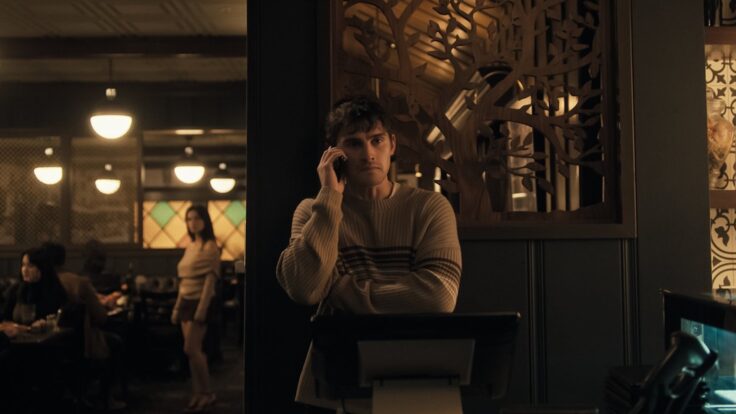
Last summer, a film distributor called me laughing about a movie he had just seen. It was Michael Mann’s Ferrari, which was seeking U.S. distribution, and he said he was OUT the moment he heard Shailene Woodley’s Italian accent. Despite that hurdle, the film found a U.S. home at Neon (its founder, Tom Quinn, is an F1 superfan and gearhead), which took on the nearly $100 million film—its biggest ever. The deal allowed Neon, owned by the billionaire film producer Dan Friedkin, to break even somewhere between $30 million and $40 million domestic, including revenue from the pay TV windows. Alas, at the box office, the film only got to $18.4 million domestic ($36 million worldwide), meaning the bulk of the losses will be borne by Mann’s many investors, which read like a who’s who of European rich people. Today, Scott Mendelson inaugurates a new feature called Coroner’s Report, analyzing what went wrong on a major misfire… |
 |
| Coroner’s Report: Michael Mann’s ‘Ferrari’ |
| Why is the industry surprised when expensive awards bait films, designed to impress critics more than audiences, fail at the box office? The latest Mann disappointment is an example of the chasm between film executives and filmgoers. |
|
|
|
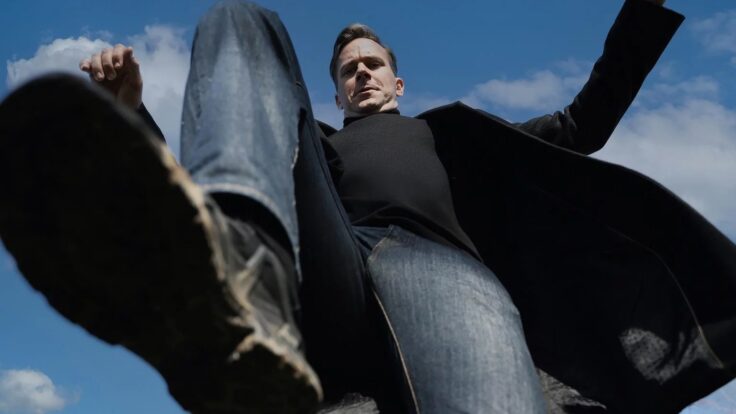
| After earning $36 million worldwide in its first month of theatrical release, Michael Mann’s Ferrari is most unequivocally the biggest box office bomb of the year-end holiday season. The film, financed independently and released domestically by Neon, arrived on PVOD this past Tuesday as it exited the Oscar race with zero nominations. Was this surprising? No. The Ferrari crash-and-burn is the latest and most lucid example of the disconnect between the powerful people who make movies and those who actually pay to watch them.Critically acclaimed awards-baity films are well and good, but ideally not at a cost of $95 million, the officially reported budget for Ferrari. (Other sources say it cost more.) It’s natural to wonder what went wrong, but the more apt question is why anyone expected a different outcome. In the case of Ferrari, the disastrous box office stemmed from a number of issues—a misunderstanding about Adam Driver and Mann, in particular, and a misread on the film’s precedent. |
| A MESSAGE FROM OUR SPONSOR |
|
Execs are using AI to cover 500+ page titles in minutesAcross the industry, execs are experimenting with AI, wondering how they can ethically deploy its powers to minimize tedious tasks.
Enter: Avail. Secret weapon to the most tech savvy execs at multiple major studios and leading agencies.
📚 Summarize books and scripts within minutes, including foreign-language titles.
🚫 Rest easy knowing our model never trains on uploads or outputs. Avail respects creator copyright concerns.
🔒 Uploads are encrypted end-to-end in AWS’ highest security tier used by the US government for top secret workloads.
💼 Backed by world class investors including Alexis Ohanian (776), General Catalyst, and Shari Redstone's Advancit Capital.
Try Avail free at itsavail.com. Use code PUCK50 at checkout for 50% off your first 3 months.
|
|
|
|
|
|
|
| The cast of Ferrari features Penélope Cruz, Patrick Dempsey, and Shailene Woodley, who (talent notwithstanding) are not and have never been butts-in-seats movie openers. In truth, the top-billed Driver, who plays Enzo Ferrari, is in the same boat. Driver, on some level, is a movie star in a time without movie stars. In the 12 years since he broke out in HBO’s Girls, he has made a slew of engaging and awards-friendly features with interesting directors. In roles both starring and supporting, he was featured in one or more films helmed by Martin Scorsese, Steven Spielberg, Jim Jarmusch, Greta Gerwig, Noah Baumbach, Spike Lee, Steven Soderbergh, Terry Gilliam, and the Coen brothers, plus an upcoming role in Francis Ford Coppola’s long-long-long-in-development Megalopolis.Those collaborators, plus the capital accumulated from his starring role in Disney’s Star Wars sequel trilogy, suggest Driver, 40, may be the closest thing we have to a 1980s/1990s-era Tom Cruise. However, in prior decades, audiences showed up for star vehicles like Barry Levinson’s Oscar-winning Rain Man, Cameron Crowe’s Jerry Maguire, and (ironically) Mann’s own Collateral. And Cruise’s star power gave an assist to less conventionally commercial projects like Stanley Kubrick’s Eyes Wide Shut or Paul Thomas Anderson’s Magnolia. However, in today’s theatrical environment, marquee I.P. characters are the stars. Driver is only a star when playing Kylo Ren. He’s almost commercially irrelevant in a film like Ferrari.
Similarly, Mann, now 80, has never been a bankable director. Yes, he is celebrated, especially among the film nerd subculture—The Insider is a modern masterpiece, and my personal pick for his best movie. Even in 1999, however, the Oscar-nominated drama earned just $60 million on a $90 million budget. Mann’s only real box office hits were The Last of the Mohicans ($143 million on a $40 million budget) in 1992, Heat ($187 million on a $60 million budget) in 1995, and the Cruise/Jamie Foxx-starring Collateral ($220 million on a $65 million budget) exactly 20 summers ago.
Then there’s Public Enemies, the Johnny Depp/Christian Bale gangster flick, which earned $214 million globally on a $100 million budget 15 summers ago. Otherwise, the likes of Thief, Manhunter, The Keep, and Blackhat (his previous theatrical film, a 2015 hacker-actioner starring Chris Hemsworth) either outright tanked or disappointed in relation to cost. Miami Vice earned $135 million in the summer of 2006, but on a $135 million budget. And now Ferrari can at least take solace in earning more than Blackhat ($20 million on a $70 million budget). |
|
|
| Like everything else, Ferrari has a prehistory that reflects how films get made in Hollywood. This project has been in development since 2015, and at one point was set to star Bale. Then Bale did James Mangold’s Ford v Ferrari opposite Matt Damon. That 2019 release earned strong reviews and was perceived as a hit. The notion of Driver playing a lusty Italian business tycoon who struggles to keep the family business afloat while managing a strained marriage to a fiery spouse likely caused some déjà vu in re: the 2021 Ridley Scott flick House of Gucci. Alas, to general audiences, Ferrari may have looked like a dour and unfun riff on two movies they may have already seen. (Also, Ford v Ferrari wasn’t even that much of a hit, generating $225 million worldwide on a $98 million budget. Meanwhile, Hustlers, which had just made $170 million on a $20 million budget two months earlier, was not seen as a movie whose success merited attention.)Commercially speaking, Ferrari is a reminder that what conventional wisdom says makes money in Hollywood can be more important than what actually does. It’s not just a gendered conversation, although frankly that’s how it usually manifests itself (Iron Man and Ford v Ferrari are business as usual but Mamma Mia! and Hustlers are often treated as flukes). It’s also about how Hollywood spent a decade chasing MCU-style superhero multiverses after most cinematic universe attempts failed, and even after Jurassic World ($1.67 billion) outgrossed, and Furious 7 came within $3 million of, The Avengers ($1.518 billion)—thus showing there was more than one way to build a blockbuster. Ferrari stood for the kind of movie that Hollywood expected to succeed despite little evidence suggesting such.
I’ve long argued that an adult-skewing, non-franchise film can still break out if it has one or more of the following: a) a great ensemble cast (Little Women), b) a marquee director (Once Upon a Time in Hollywood), c) an easy-to-explain high concept (Crazy Rich Asians), and d) great reviews (Knives Out), plus e) the promise of cinematic escapism (Baby Driver). You don’t need all five. House of Gucci got mixed reviews, and Oppenheimer wasn’t exactly a gee-whiz escape from our present-tense horrors. However, Ferrari had, in the eyes of everyday moviegoers, approximately zero of these elements.
It also faced competition from all-quadrant tentpoles like Wonka, Migration, and (relatively speaking) The Color Purple, along with plenty of better-received and more buzzed-about “movies for adults” like Poor Things and Anyone But You. Arriving on Christmas Day, Ferrari was not the first or even second choice for the vast majority of general moviegoers. To those in and around the industry, Ferrari perhaps looked like a surefire winner on paper. However, at least in terms of commercial potential, perhaps the powers that be should have pitched the package to their non-industry peers before taking on this clunker. |
|
|
| Have we reached the point in the Disney discourse where we’re comparing Bob Iger’s current situation with the forces that led Michael Eisner to step down 20 years ago? Yes, we have. [WSJ]“Everyone Has Lost Their Minds Over Barbie’s ‘Snubs.’” I’m gonna agree here. Would I have voted for Greta Gerwig as director and Margot Robbie as actress? Sure. But the Oscars are a popularity contest not a meritocracy. Voters have been making often dumb choices for 96 years now, and both women were nominated in other categories. [Slate]
SAG-AFTRA put out a statement in support of Alec Baldwin after he was charged again in connection with the death of cinematographer Halyna Hutchins. Interesting that nobody else in town is publicly supporting Baldwin, especially given the implications of an actor/producer potentially being held liable for a deadly accident on set. [NBC News]
Reed Hastings sounds like he’s enjoying semi-retirement in Utah. Not revealed: Did he switch to the ad tier of Netflix or not? [Information]
Lauren Sanchez hired Katy Perry, Usher, and the Black Eyed Peas to play Jeff Bezos’s 60th birthday party in Beverly Hills, then called Page Six to tell them all about the party’s “no gifts” policy. Never change, Lauren. [Page Six]
Now, as a treat, an edited version of my conversation with banker Joe Ravitch, whose Raine Group has been in the middle of some of the biggest entertainment and sports deals… |
| A Banker’s View of Media M&A in 2024 |
|
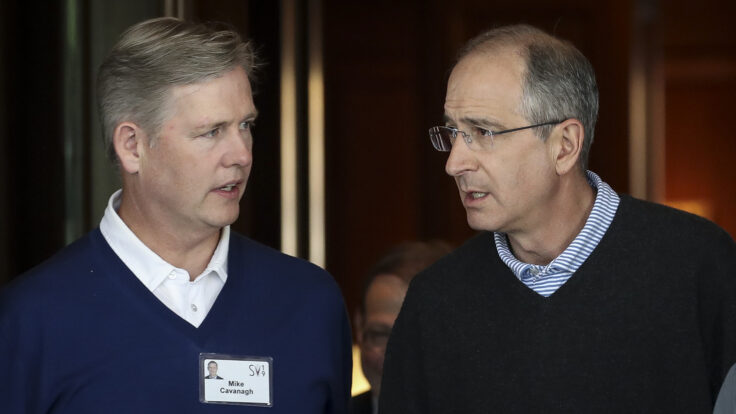
| Joe Ravitch, founder and partner at Raine Group, is one of the smartest and most outspoken bankers in the media/sports sectors—if you can get him talking. Luckily, I sat down with him for a rare interview this week, and he was so insightful on The Town that I couldn’t include everything in one show. So below, I excerpted some chunks of our conversation, including some that didn’t air, about the future of Paramount and Lionsgate, and what it would take to hit the global streaming services with a version of the financial Interest and Syndication rules (or “fin-syn,” which prevented TV distributors from owning content). This conversation is edited and condensed… |
|
|
| Matt Belloni: So, Joe, what is the deal market in 2024 going to look like in media and entertainment? Joe Ravitch: Sports rights will continue to go up in price. There’s so many more ways of monetizing sports. Another area that I think is going to be very interesting for different reasons… is what is going to happen to broadcasters around the world. Their business is shrinking, their audience is shrinking, they don’t have the multiples or the capital to create streaming businesses of their own. And so you have these national champions, whether it’s TF1 in France, Mediaset in Italy, Channel 4 in the U.K. The government’s been trying to sell Channel 4 now for a year and a half. I don’t think there’s any bidders. Pretty extraordinary.
But sports rights fees and broadcaster struggles are intertwined, right?
The rights fees for sports are going to become too expensive for the broadcasters. And remember, European countries often require a certain amount of sports to be broadcast over the air. But even that is not enough to save it, because their margins are completely going away. I sat down with a large national broadcaster that used to be a monopolist. And the guy said, “My broadcast margins have gone down from 60 percent to 15 percent. My business is dying. I thought I had all these deals to control the talent, but Netflix and Amazon and all these guys are showing up and they’re willing to pay two to three times for a director, an actor, a writer, a script, whatever it is, and my business is melting. And the only thing I have left is my library.”
That sounds very familiar to Hollywood people. That’s exactly what happened in the scripted world, and then it happened in reality, and it’s now gonna happen in sports.
I’ll tell you one thing about the Hollywood world, which is a contrast to the big broadcasters. When the streamers all started, you saw a bunch of talent do these deals where they would get paid a big guarantee and be exclusive to the streamer. Increasingly, having done that, the really good talent realizes, “You know what, I’d rather own backend. I’d rather build a library. I’d rather own more of what I produce than have it all disappear on the streamer.”
And you’re seeing that play out in the deal market?
One of the things I think you’re gonna see, amongst the streamers, is deep catalog selling. Second windows, for example, because it’s a way to generate incremental revenue.
Even Netflix?
I think they should.
Everybody thinks they should, but they haven’t done it yet.
I think all the streamers are gonna face increasing pressure for profitability. Look at Amazon. I was just with the senior guy there who was all excited because by putting advertising on Amazon Prime Video, he thinks it’s going to, at minimum, add a billion dollars to the bottom line.
Oh, I believe that. I would say more.
The accelerated collapse of linear has really slammed multiples on the big media companies, and there’s no good answer. Paramount, probably 100 percent of its EBITDA comes from linear broadcasting—more than 100 percent, because their streaming sort of sucks and loses money, right? |
|
|
| In your view, what happens to Paramount this year? It’s gonna get sold.
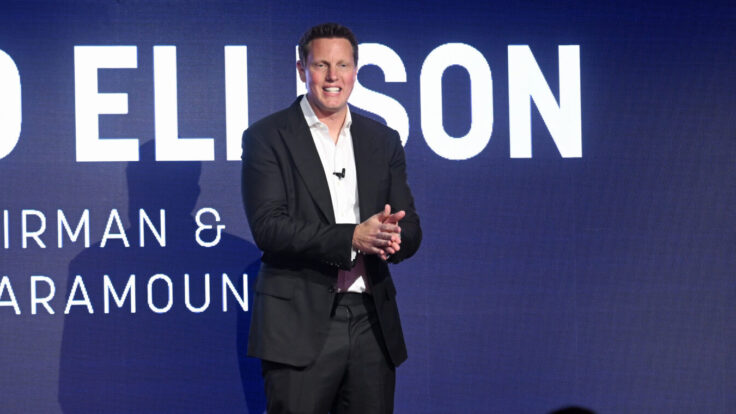
But who is the better buyer for Paramount? I believe that for its long-term health, the Ellison family makes a lot more sense because they will keep the studio. They like the business, they like making movies. You figure out what to do with the streamer, shut it down or sell it, and you figure out what to do with CBS and the cable networks, and then all of a sudden Paramount goes back to being a content arms dealer, and it survives as a Hollywood studio. Some of these other buyers, I don’t know if that happens. I don’t know if it gets merged out of existence or flipped again in another two years.
You’re very astute in your observations about Paramount. I won’t comment on specifics other than to say the following, which is the people who feel best, if you run around the big media companies today, are the Sony guys. They’re high-fiving each other. When Tony Vinciquerra took over, that company was doing $100 million of EBITDA and $10 billion of revenue. Now they’re going to do like $1.5 billion of EBITDA. As an arms dealer, they’re killing it, right? They have a deep library. They have big franchise titles. They sell some stuff to streamers. They take some stuff theatrically. They have global distribution. They carve up some territories. That is clearly proving to be a winning strategy in a world where getting to profitability on streaming is challenging for virtually everybody.
Right.
The only one who says he can do it right now is [Disney’s Bob] Iger, and that’s still a challenge. You know, the great irony of Paramount, they spent so much time, money, and effort building out Paramount+. We were involved in a bid for Showtime last January—at least it was reported in the newspapers that we offered more than $3 billion. And we got turned down because they viewed it as more additive to simply shut it down and merge it into Paramount+. So it wiped out the revenue, it wiped out $250 million of EBITDA, and now it’s part of Paramount+. And that’s great if you think Paramount+ is worth anything. But the one thing I will guarantee you is there’s not a single buyer that is trying to buy this company to get access to Paramount+. It will get shut down or merged into another streaming platform, with a content license back that actually generates cashflow.
I agree with you that Sony is sitting pretty right now, but that’s a short-term victory. Long-term, we know that when all of this shakes out and the consolidation happens, there will be three, maybe four global streaming services. And Sony will not own one of them. Doesn’t that challenge Sony long-term? Because if there are only a couple of buyers, they’re gonna be pickier about buying stuff from Sony, potentially.
I’m not so sure I agree with that part, although I do agree that there’ll be three, maybe four surviving global streaming services. I think there’ll continue to be niche streamers, AVOD, FAST channels, all kinds of ways in which people can consume content. There’ll continue to be a broadcasting world where second and third windows are out there. And I wouldn’t discount the massive library they have, and the franchises that they control, and their ability to do well for a long time as an arms dealer.
Okay, that’s fair.
The critical question to me is, are we going to see media consolidation in a world where Lina Khan has already declared her opposition to any kind of media mergers? And if you actually read the F.T.C. complaint against Amazon, there’s nothing that hurts consumers. Nothing. It’s a completely novel reworking of antitrust law. She will fight tooth and nail against a Warner-NBC merger, a Warner-Paramount merger, whatever they are.
I want to push back a little bit on that. A lot of the arguments that the government is making in opposing, let’s say, the Simon & Schuster deal in book publishing, were not necessarily that consolidation would hurt customers. It was that it would hurt the market for authors. That is applicable to the Hollywood companies, because you could make the argument that further consolidation will hurt the artists because there are fewer places to sell.
I think you have to separate out studios from streamers. There’s lots of smaller book publishers. The question is whether distribution matters. And that affects the market for artists having places to sell, which again, in my view, doesn’t necessarily hurt the consumer. But I would argue that you’re just going to have the law of simple economics in the absence of mergers. You’re going to shrivel down to two or three streamers in any case. I am hopeful there will be media consolidation. It’s the right thing for these big companies. Frankly, if I had my druthers, I wish the government—which it never will do—but I would like to see the government bring back some sort of fin-syn rules.
You’d like to see that? Because that is anti-consolidation.
I think the problem you have today is that the independent production companies—of which there are many and of which we’re invested in some—sometimes can preserve I.P. rights, sometimes they have to sell 100 percent of all territories, and all windows to the streamer. I would like to see a situation where streamers were limited in terms of how much of 100 percent–owned I.P. they could put on their service—where they had to limit licenses in the same way that the networks used to be restricted by the fin-syn rules. |
|
|
| You hope many of these media companies consolidate. Yet, when the news broke last month that the C.E.O.s of Warner Discovery and Paramount were chatting about a potential combination, the stocks of both of them dropped. So the market was essentially saying, Please don’t. Is that specific to those companies, or is perhaps the market not as bullish on consolidation? I think the market is bullish on consolidation. I think the market is nervous about streaming. If somebody said, “We’re going to buy Paramount and get rid of Paramount+ and become an arms dealer like Sony,” I think stock prices would be rewarded.
You share my belief that the tech companies are just not interested in buying a studio. I’m so sick of people saying, “Iger is preparing Disney to be sold to Apple. It’s a done deal. They already know it’s going to happen.”
I will put my reputation on the line and say none of the big tech companies in streaming are going to buy one of the big movie companies. I don’t see it.
What about Lionsgate? They are about to separate the studio from the Starz channel. This seems like a small-scale acquisition that another studio or a tech company could make to bring in some franchises.
I have tremendous respect for the two guys who run Lionsgate. I was involved in selling Starz to Lionsgate. And obviously, the thesis then was that by having their own distribution, they could help their content. Frankly, the opposite has proven to be the case. And the debt they took on to buy Starz ended up dragging the stock down into the single digits. The hope will be that the studio can be an arms dealer, and that by isolating the intrinsic value of the studio, which has a very, very cash-rich library, it becomes something that gets bought by somebody else.
That’s the hope.
That’s the hope, but tech companies ain’t gonna buy them. And the big media companies don’t have the cash or the multiple to pay the price that would make it appealing to buy Lionsgate.
What would it take for some kind of a new fin-syn rule in streaming? Is there any appetite for this in government?
It’s got to come from within the S.E.C. But the problem is, historically, for lots of reasons, the internet lobby has been extremely powerful. You know, when Comcast bought NBC, there were all kinds of restrictions put on Comcast. But the power of these tech companies is extraordinary in terms of letting them become much bigger than they really should without any kind of proper regulation.
Give me your quick entertainment landscape in five years. What does it look like? How is it different from today?
I think you’ll have three to four global streaming SVOD services. I think you will have a plethora of niche services that are either local, sports-based, niche, maybe like Criterion Channel. I think there’s some kind of an independent film concept that is away from the streamers. I think there’ll be niche FAST channels. There’ll be TVOD [transactional video on demand], where you’ll be able to buy individual shows if you don’t wanna pay for monthly subscriptions. I think there’ll be some kind of rebundling. Apple is desperate for the days of the iTunes store, where they could just say, “Everybody puts their content in. You charge whatever you want for it and we take a vig.” They would love Apple TV to become that again, which is why I think they’re holding back on spending a gazillion dollars on Apple TV+.
I think there will be some traditional cable/satellite left over, especially because this country sucks at getting broadband out to the broader population. And I think there will always be lots of deals going on. I’m not worried about that. |
|
|
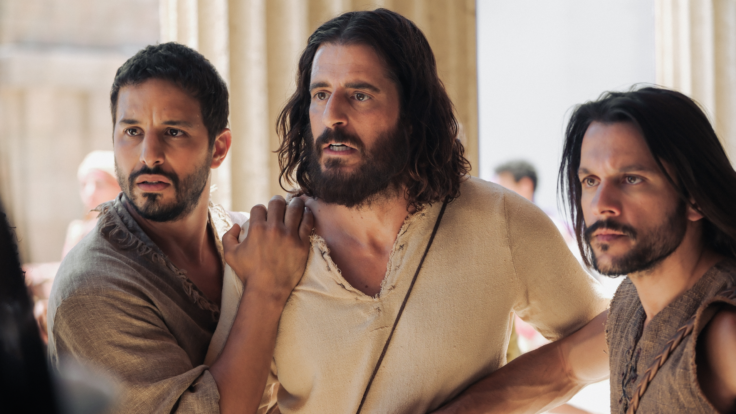
| Thursday’s breakdown of the end of the Netflix Film Era, Scott Stuber’s exit, and the $5 billion WWE deal led to a wide array of responses. Some examples:“No one in the history of showbiz has left a job where you get to make whatever you want and you get paid that kind of bread…” —A producer
“You nailed it. Bela [Bajaria, chief content officer] is turning Netflix into a global broadcast network. It will have all the categories of content you would expect: broad comedies and dramas, sports, a few prestige plays for Emmys/talent relations, news, variety shows, docudramas, reality, and movies of the week. The problem for Netflix hasn’t been that they make movies, it’s that they spend too much on them. People forget the inexpensive MOW business was once a huge business, and it will live on at Netflix.” —A former executive
“Netflix will have the same problem Amazon did when trying to attract a seasoned film executive: reporting to a TV person.” —Another producer
“When Netflix did that data dump at the end of last year, it was a warning shot. In hindsight, it told producers that our audience watches so few shows, we’re commissioning way too much, you see what we see, so expect a pullback.” —An executive
“Netflix has earned at least one Oscar nomination in the documentary feature or documentary short categories every year for the last decade, since its first with The Square in 2014... until this year. Sentiment in the doc community towards them—and the other streamers—is very negative at present. Their abandonment of ‘serious’ documentaries in favor of derivative true-crime and celeb-controlled vani-docs may help ratings, but it will come at the cost of at least one Oscar category where they could reliably expect a nomination or two each year.” —A documentary filmmaker
“Ari [Emanuel] is the luckiest mother*ucker in the world. Imagine if the Vince [McMahon] stuff had come out a week before they finished the Netflix deal. Adios $5 billion.” —A producer
[Editor’s note: A few people asked but no, Netflix has no plans to revisit the deal in light of the awful claims against McMahon, who has denied them but stepped down from WWE and the board of TKO on Friday.]
“Don’t forget that regardless of what tier the WWE fans who follow their favorite show to Netflix subscribe to, people who watch it live are getting ads regardless (like NFL on Prime). It’ll be a huge shot in the arm to their ads business.” —An executive |
|
|
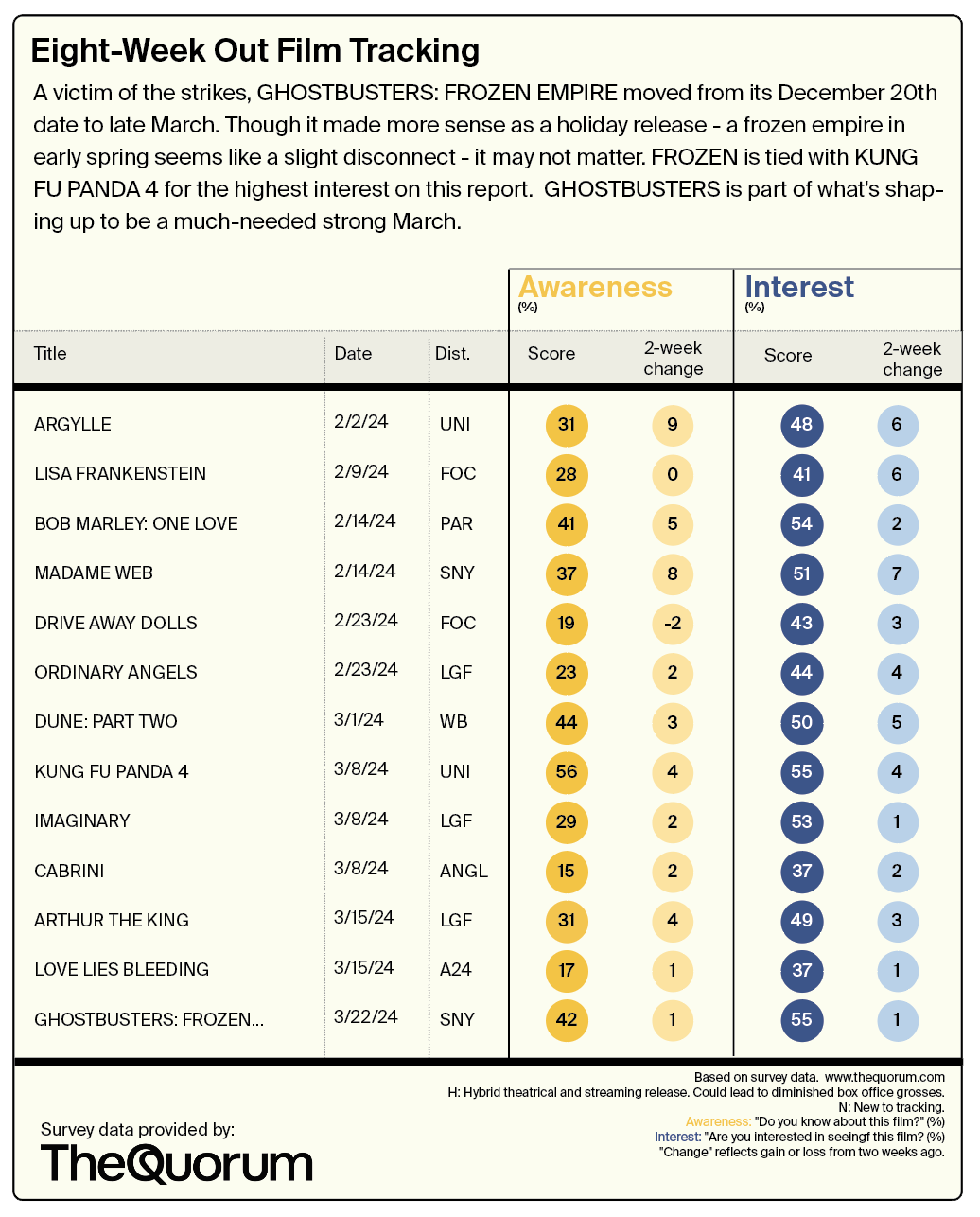
| Ghostbusters: Frozen Empire is being rewarded for its bump from December to March by high awareness on The Quorum’s latest early tracking chart… |
|
|
| Have a great week,
MattGot a question, comment, complaint, or are you the one person who actually cares whether Mean Girls or Beekeeper wins this weekend’s sad box office battle? Email me at Matt@puck.news or call/text me at 310-804-3198. |
|
|
|
| FOUR STORIES WE’RE TALKING ABOUT |
 |
|
 |
|
 |
| Hit and Ronna |
| A close look Trump’s R.N.C. arm twist. |
| TARA PALMERI |
|
 |
|
|
|
|
|
 |
|
|
| Need help? Review our FAQs
page or contact
us for assistance. For brand partnerships, email ads@puck.news. |
| You received this email because you signed up to receive emails from Puck, or as part of your Puck account associated with . To stop receiving this newsletter and/or manage all your email preferences, click here. |
| Puck is published by Heat Media LLC. 227 W 17th St New York, NY 10011. |
|
|
|