{{ 'now' | timezone: 'America/New_York' | date: '%b %d, %Y' }} |
|
|
|
Hello and welcome back to the Tuesday edition of What I’m Hearing, helmed by Eriq
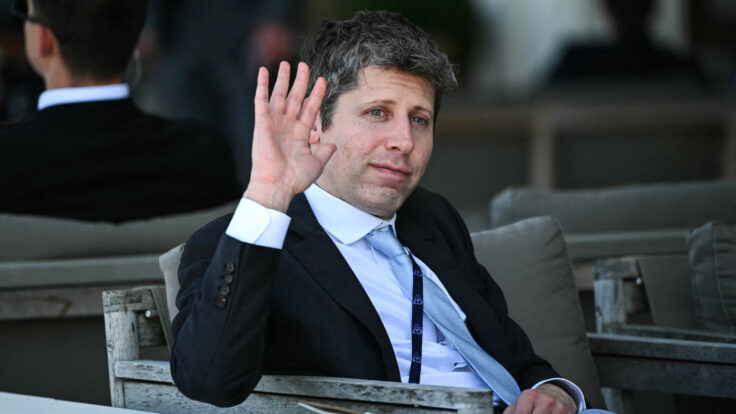
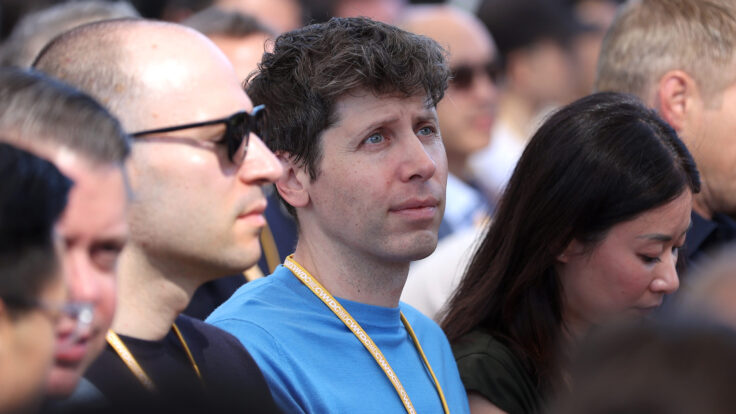
Gardner. Before I hand it off, and since WIH is dark on Thursday for the holiday, a couple of updates: I broke the news today that Neon is picking up Artificial, the Sam Altman movie that Amazon dumped after partnering with OpenAI. (My initial news break on that is
here.) Second, Tom Hardy has been un-fired from MobLand. After that meeting in London I told you about last week, showrunner Jez Butterworth and Hardy have come to an agreement on his behavior moving forward. Hardy’s lawyer Jason Sloane still needs to put it in writing, but expect a Season 3 renewal from Paramount+.
Great work, everyone.
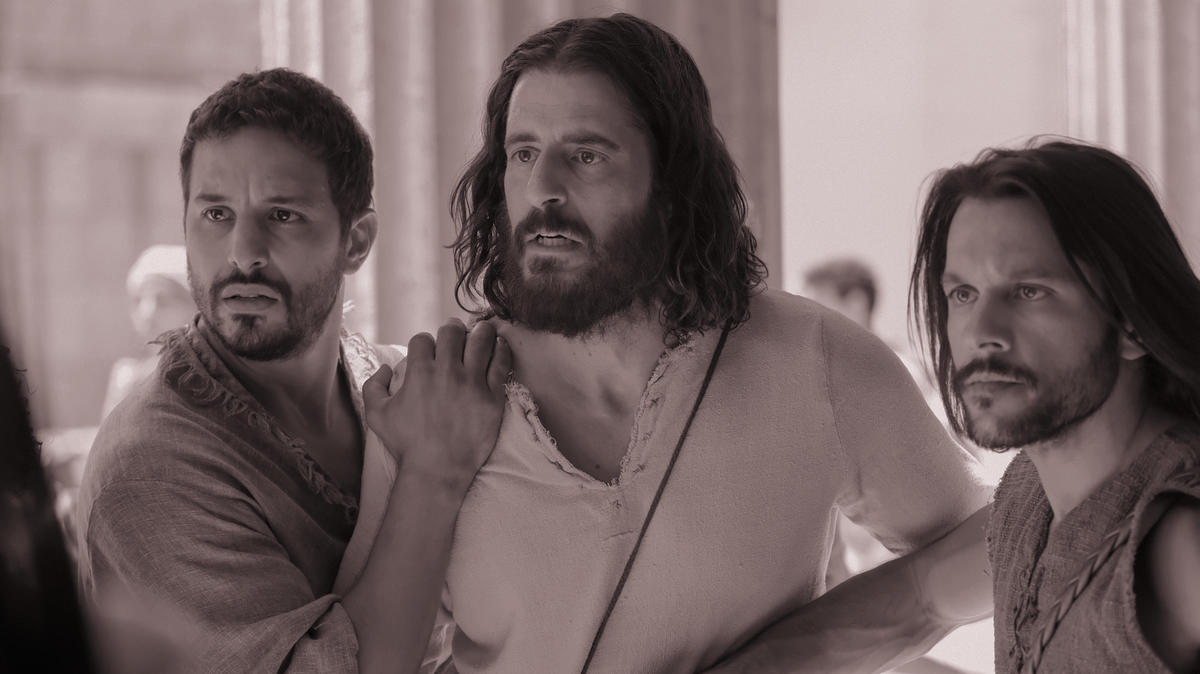
Tonight, Eriq breaks the news of a decidedly un-Christian legal war over The Chosen, the Amazon saga that has become one of the most lucrative faith-based franchises in entertainment. Plus, decoding a SCOTUS reference to Jimmy Kimmel and a possible strategy in the Comcast-NBCUniversal split.
All yours, Eriq (and send him tips at Eriq@puck.news).
Not
a Puck member yet? Never too late. Just click here.
Discussed
in this issue: Jimmy Kimmel, Charlie Kirk, Neil Gorsuch, Brendan Carr, Dallas Jenkins, Mart Green, Christopher Garabedian, Mark Sourian, Edmund Gorman Jr., Alex Falconi, and many more. |
|
|
|

| Eriq Gardner
|
|
- Comcast and the split-then-sell
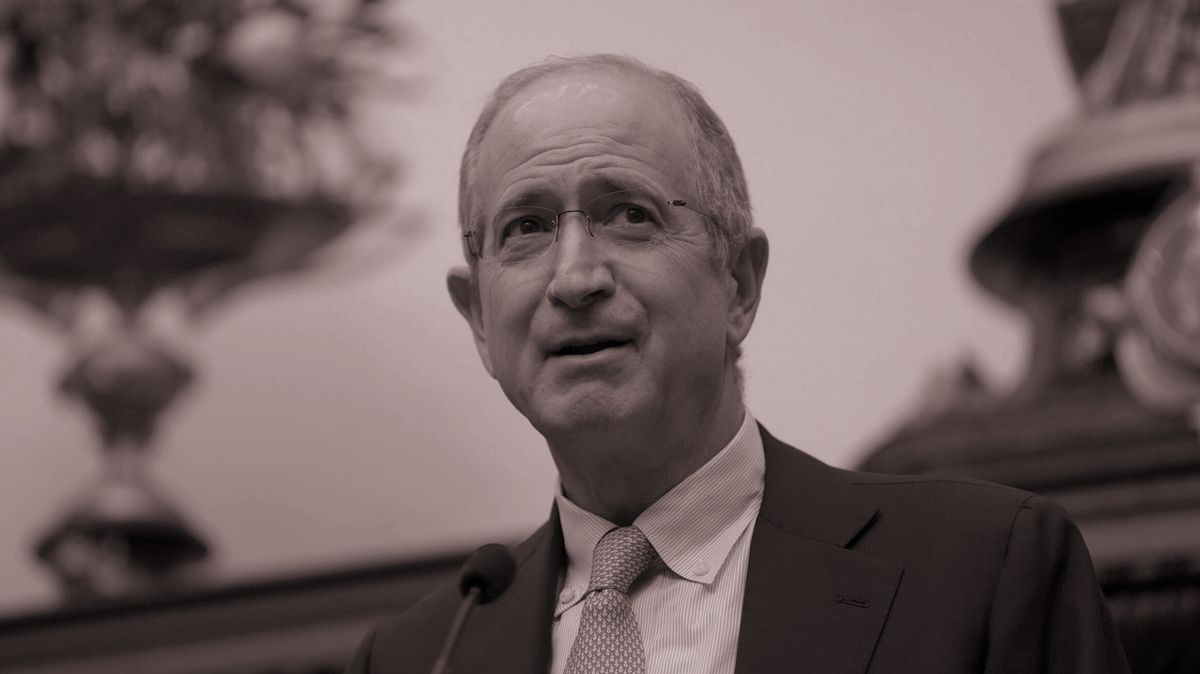
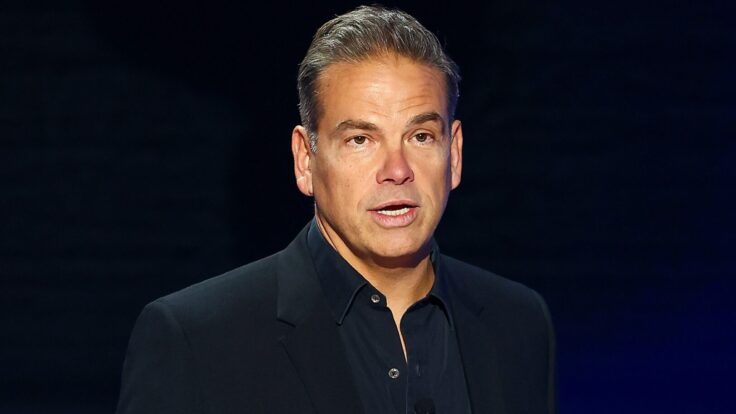
two-step: Given how the Warner Bros. Discovery split played out, there’s chatter in analyst circles that Comcast’s move to spin off NBCUniversal is just another head fake designed to gin up a bidding war. (Matt made a version of this argument last night, noting that potential buyers will be compelled to act on NBCU before it’s
handcuffed to tax consequences for two years.) Maybe. Comcast will need to tread carefully, thanks to Section 355(e) of the Internal Revenue Code, which is designed to prevent companies from using tax-free spinoffs as a stepping stone to a tax-free acquisition or a buyout of the spun-off business. Still, there’s a potential path for a major deal that has the added benefit of minimizing or even evading regulatory review.
The experts I consulted offered one possible workaround: a joint
venture with any prospective suitor, with NBCU contributing something like Peacock, pieces of the Universal TV library, current-season NBC/Bravo/Telemundo/Sky rights, and perhaps some international distribution infrastructure. (That’s kinda how things played out when Comcast acquired NBCU from GE, a deal that unfolded in two tranches over four years, minimizing regulatory scrutiny.) The key would be structuring the venture to avoid the appearance of a prearranged merger. Sidestepping a Section
355 problem while minimizing the chances of a full-blown D.O.J./F.C.C./Capitol Hill spectacle—especially in this Trump era, and especially for the former owner of MS NOW—would seem the wiser course.
Could Peacock ultimately end up merged with another streamer without an outright acquisition? Stay tuned. Ironically, 15 years ago, regulators approved Comcast-NBCU only after stripping Comcast of its oversight of Hulu, then the industry’s most important streaming joint
venture, for fear that the cable giant would smother online video in its crib. Now, as Comcast and NBCU stage their divorce, a Hulu-like structure may be less a regulatory problem than the strategic answer. - Disney at the Supreme Court: Lots of interesting details in Justice Neil Gorsuch’s unusual concurrence this
week in Trump v. Slaughter, where he gestured toward Disney’s F.C.C. problems in a decision giving the president sweeping authority to fire regulators across the federal bureaucracy.
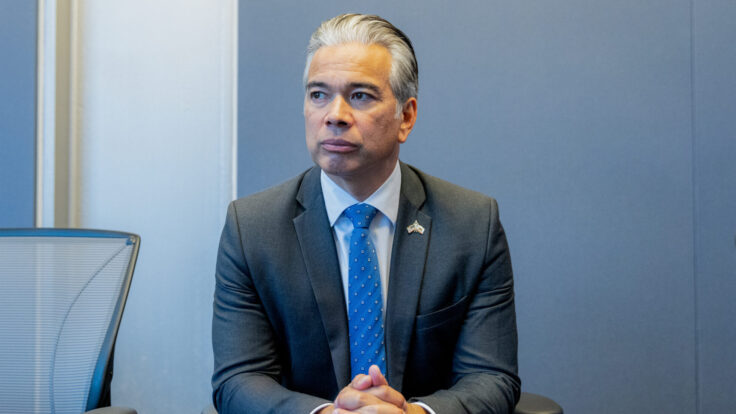
Gorsuch is plainly comfortable with giving presidents the power to remove the heads of the F.T.C., F.C.C., and other agencies that were once thought to enjoy independence. But he also offered a stark warning about a political culture in which Brendan Carr felt empowered to threaten
Disney and ABC over Jimmy Kimmel’s controversial comments about Charlie Kirk’s murder. Later in the opinion, Gorsuch posed a hypothetical: “A business out of favor with the party in control of the White House might be able to stave off an F.C.C. investigation. But can it survive a subsequent F.T.C. rule declaring unlawful one of its longstanding trade practices?”
His point seems to be that if agencies become more directly answerable to the president,
powers that once appeared technocratic can begin to look like tools for rewarding allies and punishing adversaries. And while Slaughter accelerates that shift, Gorsuch appeared to signal that the court also needs to police the other side of the equation more aggressively—through doctrines like nondelegation, major questions, Article III limits, due process, and other constraints on what agencies can actually do.
That could prove reassuring to Disney as it escalates its battle
with Carr. But there’s a flip side. I’ve recently been talking with industry insiders about what Democrats might want to do at the F.C.C. once they regain control. One idea already generating chatter is reopening reviews of transactions that required broadcast-license transfers, particularly where foreign investment is involved. (Hello, David Ellison…) But they might face a tougher judicial audience if courts, having strengthened presidential control over agencies, become
correspondingly more skeptical of the powers those agencies exercise. - A Murdoch M&A blind item: A couple of years back, I spotlighted Alex Falconi, the Reno muckraker who built a website devoted to Nevada’s judges and was agitating to film the trial between Rupert Murdoch and his
feuding heirs. Last week, Falconi finally got his wish—sort of—when the court allowed him to record a two-hour hearing in the Murdoch trust battle. The video is now on YouTube.
Of course, the main event is over: Lachlan gained control of the Murdoch trust, per his father’s wishes, while James, Elisabeth, and Prudence
reportedly walked away with $1.1 billion apiece. But the postscript has become its own little transparency war. News organizations, led by The New York Times, have been fighting for access to the sealed record, and they scored a major victory last Christmas when the Nevada Supreme Court ruled that sealing the entire case was improper. What remained was the less glamorous, but still consequential, exercise of figuring out what should be released and what could be redacted for legitimate
privacy reasons. That was the proceeding Falconi filmed last week.
During the hearing, probate commissioner Edmund Gorman Jr. authorized the release, with redactions, of Rupert’s 1999 divorce agreement with his second wife, Anna, and the irrevocable trust that resulted. But the more intriguing ruling concerned materials related to a proposed transaction discussed in 2019. The deal was not identified, but there are indications that it may have involved a
possible recombination of Fox Corp and News Corp in the wake of Murdoch’s sale of Fox’s studio assets to Disney.
More intriguing still, Lachlan’s attorney argued that those details should remain sealed, warning that the material involved “something that still could happen in the future,” and that disclosure “could impact markets,” “affect share price,” and “invite competitors to make moves in response.” Gorman was unmoved. The material, he said, was “pretty important”
and went to witness credibility.
Whatever the transaction was—and whatever the discussions around it reveal—don’t expect immediate answers. The parties have 28 days to submit revised materials consistent with Gorman’s rulings, and those redactions may still be reviewed. In other words, the Murdoch succession drama may be settled, but the paper trail is not done talking.
|
|
|
|
Now, without further ado… |
|
|
|
Thousands of Christian investors helped turn the story of Jesus into one of Hollywood’s most
valuable religious franchises. Now the faithful who financed its miracle say they were squeezed out just before the biggest payday. |
|
|
|
Before The Chosen became a global faith-based entertainment franchise, it was a kind of digital
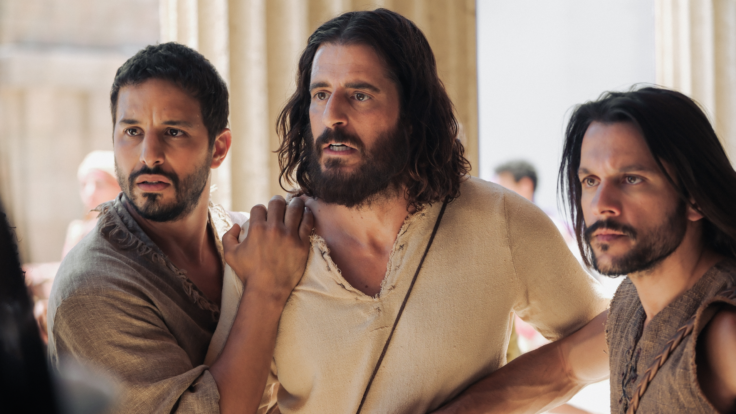
collection plate. Thousands of Christian believers chipped in to fund a television series about Jesus, helping to transform a crowdfunding campaign into a commercial phenomenon with theatrical releases, Amazon Prime Video distribution, and an audience that its creators measure not merely in viewers—some 250 million—but in souls reached.
Now a shareholder lawsuit, quietly filed this past week against 5&2 Studios in the Delaware Court of Chancery, alleges that some of those early acolytes
were prevented from sharing in the miracle. The complaint tells a sort of reverse loaves-and-fishes story, borrowing from the biblical tale in which Jesus miraculously multiplied five loaves and two fish into enough food for more than 5,000 people. In this version, just as The Chosen stood on the verge of its greatest commercial success, 5&2 cashed out its flock of Christian investors. Instead of feeding the multitude, the complaint alleges, “the insiders fed only
themselves.”
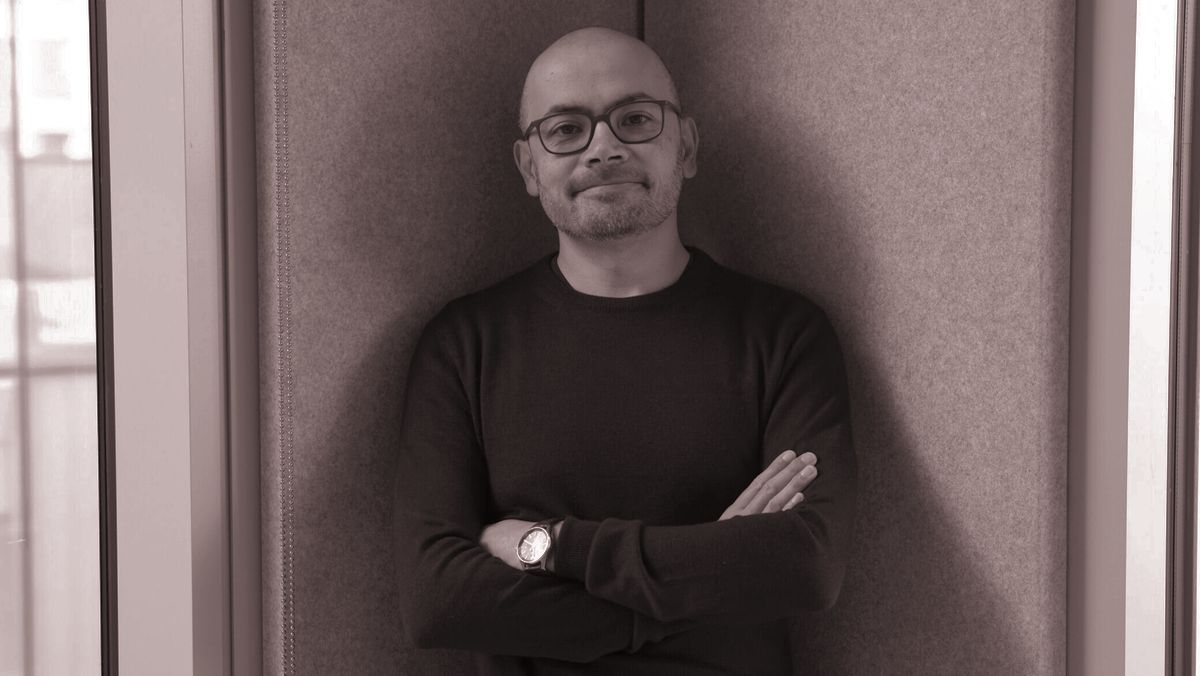
Christopher Garabedian, the chief executive of life sciences accelerator Xontogeny, is leading the charge. His usual terrain is biotech, but in 2019, after watching a 20-minute YouTube short about the Nativity told through the eyes of a shepherd, he invested $300,000 in the then-nascent project. That made him, he has said, the largest single crowdfunding investor in The Chosen and a co-executive producer of its first season.
He was hardly
alone. Director Dallas Jenkins had posted the video as a catalyst for a crowdfunding campaign that ultimately drew thousands of believers into the enterprise. Their money helped turn The Chosen from a faith-driven experiment into one of the most unlikely hits in modern entertainment. Later, as the company grew, a nonprofit called the Come and See Foundation, led by Hobby Lobby heir Mart Green, became central to the show’s financing—funneling donor
support toward production costs and helping 5&2 fund the remaining seasons.
That relationship has become a point of pride for the company. “Our relationship with Come and See is critical to us because they finance us, but Come and See is spreading Christianity throughout the world,” 5&2’s president of production, Mark Sourian,
told Christian Daily earlier this month. (Sourian joined 5&2 after a run at Universal Pictures, where he worked on films including The Fate of the Furious and Hobbs & Shaw.)
According to the lawsuit, however, those original stockholder-believers are no longer quite so critical. In
March, 5&2 executed a reverse stock split that eliminated more than 16,000 Series B stockholders, cashing them out at $3.75 a share, and left insiders in full control of the company just as The Chosen was heading into its blockbuster final seasons, which were focused on Jesus’s last days, and with a slate of future biblical franchises to be distributed by Amazon.
Garabedian and his attorneys at Bleichmar Fonti also allege some very un-Christian timing. A stockholder vote blessing
the reverse stock split came during Holy Week—one day after Palm Sunday and four days before Good Friday. More than three-quarters of Series B stockholders, they allege, didn’t participate. “This timing undercut the participation of minority stockholders, who were more likely to be focused on their families and worship than business dealings at the time,” the complaint read. In other words, the faithful who helped build The Chosen were asked to mind the cap table at the very moment they
were preparing to contemplate the Stations of the Cross. (5&2, Jenkins, and Sourian didn’t respond to an opportunity to comment.)
There’s a faint echo here of the emotional Chancery drama from a few years back over AMC’s meme-stock era. The small-time investors who’d helped save the theater chain felt betrayed when the company issued a
special class of preferred stock and pursued a one-for-10 reverse split. But the 5&2 case is not really the same animal. It’s closer in spirit to the continuing fallout from Endeavor’s go-private: a dispute over whether minority holders were squeezed out at the wrong price so that future upside could be spread among a, well, chosen few. But that’s
what makes it useful. Beneath the biblical metaphors and Delaware pleadings, the case offers a rare financial look behind the curtain of faith-based entertainment at the precise moment it is becoming a real Hollywood business. |
5&2 Studios was not exactly starving for cash. The Chosen began with crowdfunding—about $11 million
to finance Season 1—but eventually grew into a business with meaningful theatrical receipts and roughly $240 million in total backing from the Come and See Foundation. Under a hybrid model that released chapters of Jesus’s journey in theaters before moving them into episodic streaming windows, Seasons 3, 4, and 5 grossed more than $20 million, $30 million, and $40 million, respectively, at the box office, according to the complaint.
So what was the company worth? Garabedian’s lawyers
point to two very different answers. The first came during a phase known as “Project Cornerstone,” when 5&2 explored a sale of outstanding equity to a third party. At that point, the complaint alleges, insiders were effectively positioned as sellers and therefore had every incentive to maximize the company’s value. The projections were correspondingly bullish. The final two seasons of The Chosen, as well as follow-up movies and TV shows, were expected to generate about $1.4 billion in
revenue from 2026 through 2029, implying an enterprise value of roughly $150 million.
But the numbers changed dramatically during the second phase, “Project Sequel,” when the company turned its attention toward buying out minority shareholders. Now, the complaint alleges, the insiders had the opposite incentive. With Goldman Sachs doing the valuation work, the 2026–2029 revenue projection fell to $722 million—a $681 million haircut. Goldman’s fairness analysis supported the
$3.75-per-share cash-out price, implying a $52.9 million enterprise value.
Garabedian says that number is far too low. His lawyers point not only to the earlier Cornerstone figures but also to Angel Studios, which co-produced the first season of The Chosen and has become a heavyweight in faith-based entertainment. Angel, the company behind Sound of Freedom and the animated film David, went public last September through a SPAC reverse merger at a $1.6 billion
valuation. Its stock has since fallen, leaving the company worth just under $600 million, but even that diminished figure towers over Goldman’s valuation of 5&2. The complaint calls Angel “unequivocally the most appropriate comparable,” adding that 5&2 had a stronger social media presence and a more loyal fan base. And yet, Garabedian has alleged, “Goldman did not even mention Angel in its fairness deck.” |
The Passion of
the Cap Table
|
Garabedian’s narrative of Jenkins & Co.’s pushing out the flock before the harvest is powerful, but this is
not, formally, a morality play. It’s a Delaware Section 155 fair-value case, and 5&2 will presumably argue that the buyout was entirely legitimate. According to the complaint, the board began discussing “going dark”—that is, completing a transaction that would eliminate the company’s S.E.C. filing and reporting obligations—as early as 2023. Garabedian may be skeptical of the squeeze-out’s motivations, but the defense has obvious answers: S.E.C. reporting costs were real; Goldman issued a
fairness opinion; minority holders received a vote; and Series B investors were never promised a permanent ride on The Chosen’s upside. Being mission-driven, after all, does not bar a company from rationalizing its capital structure.
Still, the optics are obviously brutal for a company built on the devotion of Christian believers. It will be interesting to see whether the litigation dents 5&2’s image or affects the reception of future releases.
Maybe it won’t. Perhaps this
merely testifies, for better or worse, to the maturation of faith-based entertainment into a real business—one that has moved from church basements and direct-to-DVD distribution into the same machinery that governs the rest of Hollywood: streaming windows, theatrical grosses, complex financial models, conflicted fairness opinions, and, finally, a pilgrimage to Wilmington to “appear before the judgment seat.” Or at least meet the vice chancellor. |
Thanks, Eriq. See everyone next week.
Matt |
|
|
|
Puck founding partner Matt Belloni takes you inside the business of Hollywood, using exclusive reporting and insight to explain
the backstories on everything from Marvel movies to the streaming wars. |
|
|
|
Ace media reporter Dylan Byers brings readers into the C-suite as he chronicles the biggest stories in the industry: the future
of cable news in the streaming era, the transformation of legacy publishers, the tech giants remaking the market, and all the egos involved. Also featuring a weekly dispatch from Puck’s crack streaming/media analyst, Julia Alexander. |
|
|
|
Need help? Review our
FAQ page or contact us for assistance. For brand partnerships, email ads@puck.news.
You received this email because you signed up to receive emails from Puck, or as part of your Puck account associated with {{customer.email}}. To stop receiving this newsletter and/or manage all your email preferences, click here. |
Puck is published by Heat Media LLC. 107 Greenwich St., New York, NY 10006 |
|
|
|
|