 |
|
Welcome back to What I’m Hearing. Of course I’ve seen the incendiary Instagram posts by CAA board member and motion picture co-head Maha Dakhil calling Israel’s response to the Hamas attack a “genocide.” We all saw them, judging by how many people texted them to me this week. She did delete the posts and apologize “for the pain I have caused,” but I’m betting there will be fallout, especially at such an image-obsessive company. (Remember, CAA fired longtime agent Jay Baker in 2021 for an offensive joke.) I asked reps for Dakhil clients Natalie Portman and Steven Spielberg, two of Hollywood’s most outspoken defenders of Israel, for comment, and I’ll share what they say, if anything.
As always, if you were forwarded this email, click here to become a Puck member.
|
|
|
- Apple and Jon Stewart: What took this long?: That was my first question when I saw that The Problem with Jon Stewart was scrapped on the eve of Season 3. Another: What changed? Stewart already did two button-pushing seasons of this show. According to sources familiar, Apple execs took more of an interest in topics last season, and when Stewart began discussing plans to delve into the 2024 political campaign, they voiced increasing concerns. So Stewart bailed. Pretty simple, and relatively little drama.
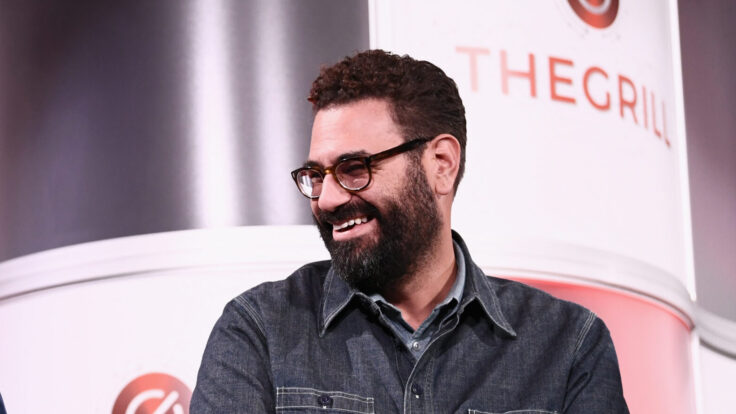
- Speaking of late night: As predicted by me, Hasan Minhaj was just told by Paramount Global that he’s not getting The Daily Show. Why does it matter that a guy who was reported as a frontrunner is no longer a frontrunner? Because Minhaj and his WME team believe that they had a closed deal. Not a signed deal, but he was the choice, they’d closed on all the financial details pre-strike, and only the papering remained. In fact, Minhaj would have been announced as the new TDS host this summer had the strike not intervened. Instead, both sides sat on the announcement, and then… disaster. The New Yorker story dropped on Sept. 15, revealing that he fabricated anecdotes about discrimination in his act, and Paramount Media Networks chief Chris McCarthy decided to move on. Minhaj asked for a sit-down with McCarthy in New York last week to plead his case, but he got the official call yesterday. (His reps and Paramount declined to comment.)
Now the question is what, if anything, Paramount must pay Minhaj to go away. After all, if there is an offer and acceptance, that’s a contract, even without a formal signature. But according to sources close to the show, Paramount believes the deal wasn’t closed, and that several outstanding issues remained, including a typical company background check and a separate independent investigation that high-profile employees receive. McCarthy also had gotten whiffs that The New Yorker was sniffing around on Minhaj well before the story dropped. Plus, if the deal was eventually papered, a standard morals clause would have been included—one that the behavior described in the article may have violated. Indeed, the argument goes, if Minhaj had been announced as the new host and then the story dropped, Paramount likely would have fired him in a much messier situation. A standoff is looming, and it looks like litigators might need to get involved.
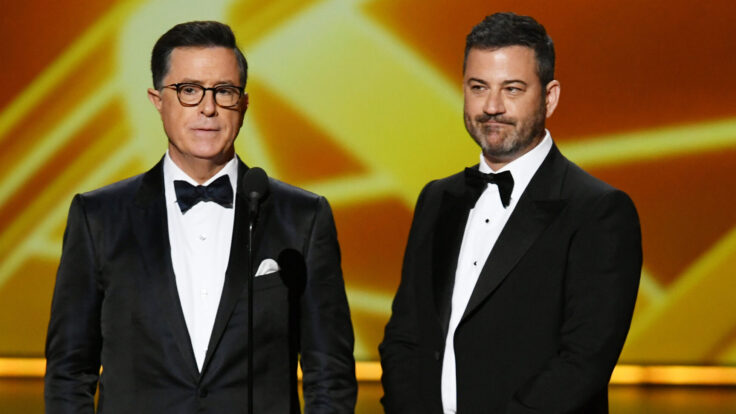
- More late-night news: Meanwhile, on the other side of Paramount, another late-night job is close to being filled. CBS chief George Cheeks is testing three potential hosts next week for the new @midnight scheduled to take over the James Corden slot after Stephen Colbert. The candidates, I’m told, are Ricky Velez, a stand-up comic and writer (and BFF of Pete Davidson), X Mayo, an actress (American Auto, The Blackening) and former Daily Show writer, and Taylor Tomlinson, a stand-up and writer. Colbert is producing, along with Funny or Die, and will have a big say in who gets the gig. CBS declined to comment.
- Home off the Range: A bit of irony in the defection of those Range Media talent managers to Entertainment 360. Susie Fox, MacKenzie Roussos, and Chelsea McKinnies have all started at the new company, with clients including Ramy Youssef, Michael Che, and Shane Gillis (Range is trying to save that one). But Range and 360 are still haggling over the terms of their exits. Commission splits, non-solicitation clauses, and the women all had non-competes in their deals, which aren’t enforceable in California but two of them live in New York. It’s definitely funny that the Range guys are giving their former partners a hard time, considering several of the company’s founders are in arbitration with CAA, their former employer, over—you guessed it—claims that they were screwed when they defected. (Range and 360 declined to comment.)
- Box office over/under: Welcome to wide movie releases, Apple! With a reported $200 million budget (add the usual Scorsese tax onto that number), Killers of the Flower Moon is tracking at about $26 million. That would be hugely disappointing for any traditional studio (Paramount is distributing for a fee), but hey, it’s Apple, so who cares? I’ll take the under. Scorsese and Leo, but it’s three and a half hours with no blue people or talking space whales.
|
| Now to the latest in the SAG-AFTRA strike… |
 |
| Clooney Can’t Solve the Actor Strike |
| A celebrity-led proposal to redistribute income could have generated $150 million over three years—nice, of course, but it’s ultimately a symbolic gesture, and entirely irrelevant to the issues in this negotiation. |
|
|
|
| No, George Clooney will not save us. That would’ve been a nice Hollywood ending for this tragic SAG-AFTRA strike. One of our great movie stars, parachuting in with Scarlett Johansson, Emma Stone, and a bottle of Casamigos at perhaps the lowest point of the nearly 100-day impasse, a week after the studio heads walked out of negotiations in response to a request to add a payment for each streaming subscriber. Logline: Our hero boldly proposes a winning formula that, against all odds, persuades the stalemated union and leads to a fantastic new deal. Cue the fanfare!
Alas, the Clooney plan will not end this strike. It doesn’t even make sense. On a Zoom meeting Tuesday with SAG-AFTRA president Fran Drescher and lead negotiator Duncan Crabtree-Ireland, Clooney and others proposed removing the cap on member dues (it’s now at $1 million in earnings), which he said would generate $50 million annually for the guild from its high-earning members, and switching up the hierarchy so lower-paid actors get residuals first. The move, he argued, would throw the needed dough into the financial hole that the guild is struggling to fill via negotiations with the AMPTP.
That $150 million over three years would be nice, of course, and might lead to better benefits—like healthcare supplements for those who don’t earn enough to trigger coverage—not to mention a ton of goodwill toward the marquee stars who would fund them. But it’s a symbolic gesture, a very expensive bone to throw at the proletariat, and entirely irrelevant to the issues in this negotiation. The guild negotiating committee took a look at the proposal in a follow-up call and was extremely skeptical, I’m told. Drescher also shot it down in an Instagram post tonight. Plus, it’s not even legal for individual members to fund health care benefits; employee benefit plans must be funded by employers. And raising the cap on member dues is actually part of the current SAG-AFTRA proposal. “This is super well-intentioned and we appreciate ideas from all our members, but it doesn’t solve the problem,” Crabtree-Ireland told me tonight.
No, it doesn’t. And Clooney’s not the only super-famous member with a plan to break the logjam since last Wednesday, when I first reported that talks had imploded. Ben Affleck and his lawyer had some thoughts on how to flip the revenue-sharing proposal and structure it differently, I’m told. A lot of ideas have been shared during the Zooms with the many boldface names in the world’s most bold-faced union. Everyone has been careful to describe the meetings as “supportive” and “constructive,” and I do believe them. Last thing anyone wants is even the appearance of dissent for the AMPTP to leverage.
But…it’s also clear from these moves that the top-earners and even the dwindling middle class of working actors are super-frustrated with the stalemate. They took the summer off; fine. Now they’re losing a second movie, or a new season of their lucrative show. The rest of the industry is also frustrated. After the grueling 148-day writers strike, many hoped SAG-AFTRA would negotiate gains on a few actor-specific issues, then wrap this up quickly so production can re-start by the end of the year. Now, everything is getting pushed to 2024, and next summer’s movie season is in disarray.
It’s a mess, no matter who you blame. The studios could end this tomorrow, of course, instead of Netflix co-C.E.O. Ted Sarandos calling the latest proposal a “levy” and “a bridge too far” only days before reporting a giant earnings beat and a whopping $6.5 billion in free cash flow, largely thanks to the strike. “The reason they call it a levy is because it’s more than they want to pay,” Crabtree-Ireland told me. SAG-AFTRA was never gonna settle for a straight pattern deal, and as Puck contributor Jonathan Handel has written, the studios will likely need to settle for some kind of revenue-sharing scheme to resolve the impasse.
Still, SAG-AFTRA often doesn’t do itself any favors. Drescher unleashed the class-warfare rhetoric and a re-election campaign based on achieving specific and extraordinary gains, so it’s no surprise she is now digging in on issues where a compromise might be the best play. Some believe she painted herself into a corner with all the promises and now doesn’t know where to go. After all, having endured the tough DGA and especially WGA negotiations, the studios are probably not gonna reinvent the wheel for SAG-AFTRA. Drescher, say her critics, has treated this situation as a movement, not a negotiation, bringing all of Hollywood along for the ride.
In this way, the SAG situation is basically a ridiculously good-looking version of what transpired with the WGA, where the class differences and incentives made a deal more difficult to achieve. Both these unions are led by and largely represent the interests of the lower-earning members, many of whom don’t work. Yet the burden of the walkout falls on the middle and high-earners, as well as the rest of the community that will not see any financial benefit from a deal. Remember, only 14 percent of SAG-AFTRA members make at least $26,470 annually to qualify for healthcare coverage, according to the union. A Times trend piece about actors “returning” to restaurant jobs during the strike was a headscratcher because most actors already had other jobs before the strike. At least they get to be striking actors now—rather than unemployed actors—and there’s less incentive to make a deal.
That’s kinda fine, though. The entire purpose of unions is to represent that lower-tier worker, those without agents, without power, the very people who can’t summon the union leadership to hop on a Zoom and hear ideas that aren’t remotely feasible. Best case, the high-wage people lift those lower earners, the people the studios don’t have to care about.
That’s the problem with the Clooney gambit: It doesn’t address the actual issues. Transparency, financial incentive alignment, and A.I. protections are what this actors strike is about. These negotiations have been the result of months and months of comments from members, strategy sessions, and issue prioritization. It’s in a bad place, and the hope is that all the backchanneling I’m hearing about will lead to a restart of negotiations ASAP. The big stars aren’t gonna make that happen any faster, at least not by proposing their own path to a deal, so maybe they should step out of the spotlight for once. |
|
|
See you Sunday,
Matt
Got a question, comment, complaint, or a good seat cushion to use during Killers of the Flower Moon? Email me at Matt@puck.news or call/text me at 310-804-3198. |
|
|
|
| FOUR STORIES WE’RE TALKING ABOUT |
|
|
|
|
|
 |
|
|
|
Need help? Review our FAQs
page or contact
us for assistance. For brand partnerships, email ads@puck.news.
|
|
You received this email because you signed up to receive emails from Puck, or as part of your Puck account associated with . To stop receiving this newsletter and/or manage all your email preferences, click here.
|
|
Puck is published by Heat Media LLC. 227 W 17th St New York, NY 10011.
|
|
|
|