Welcome back to Wall Power. I’m Marion Maneker, still
at sea for the next few days.
Tonight, Jamie Lincoln Kitman is here with a fascinating look at Broad Arrow, the classic car auction house established by Hagerty insurance, a behemoth in the classic car world. Up top, the Swiss Institute gets a permanent home, and I look at the upcoming Old Masters sales in London.
Also mentioned in this issue: Doug DeMuro, Ramsey Potts, Barney
Ruprecht, Bill Ruprecht, McKeel Hagerty, Maja Hoffmann, Sir Edwin Henry Landseer, Hans Memling, Anthony van Dyck, Peter Paul Rubens, Botticelli, Bernardo Bellotto, Jan van Huysum, the Rothschilds, Canaletto, and more.
Let’s get started…
|
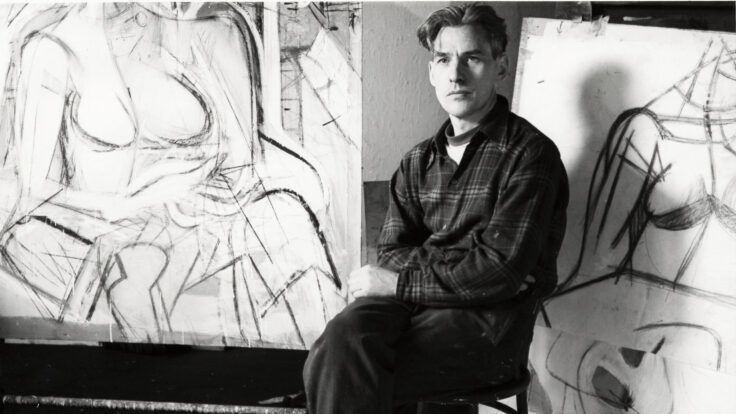
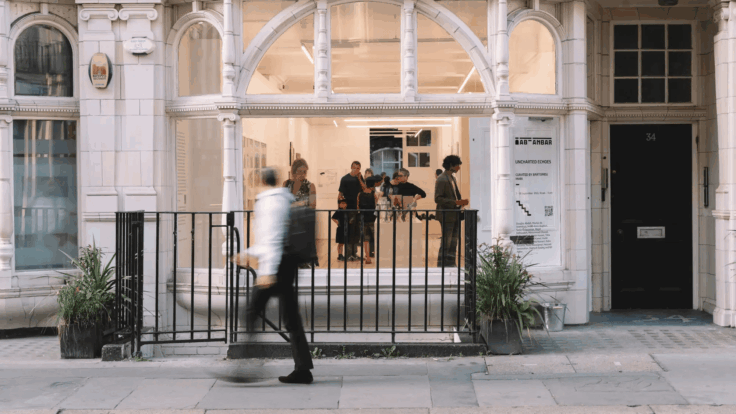
- The Swiss Institute finds a home: The Swiss Institute, an organization that supports contemporary artists, will relocate from St. Marks in New York’s East Village to 250 Bowery, across the street from the New Museum, in early 2027. The new location will be the Swiss Institute’s first permanent home after 40 years of moving around New York City. The organization, chaired by Swiss pharmaceutical heir and collector Maja Hoffmann, has chosen Johnston Marklee to
renovate the space to accommodate exhibitions, artist-led education, and community initiatives that will all remain free to the public.
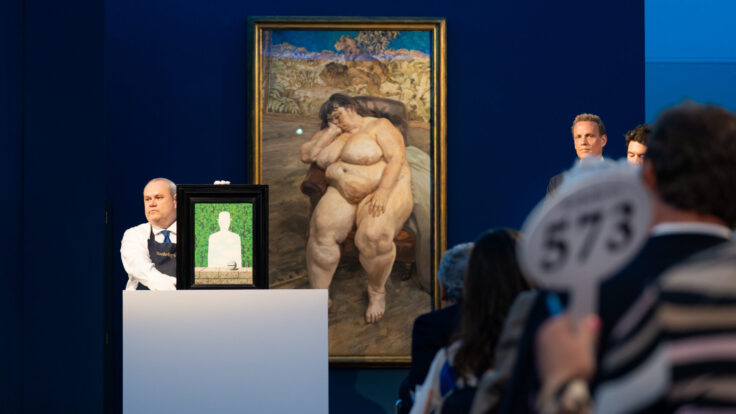
- An Old Masters preview: I’ve already written about the single-lot Laocoön sale at Sotheby’s this coming Wednesday and the rediscovered
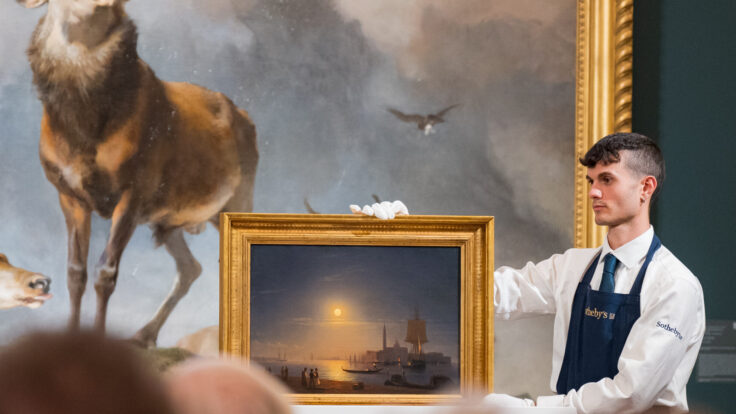
Rembrandt that leads the following evening sale. But there’s a fair bit more on offer, including Edwin Henry Landseer’s painting of a huge stag titled Scene in Braemar—Highland Deer, which is a sequel to another painting of a noble deer, The Monarch of the Glen, that hangs in the Scottish National Gallery.
Estimated at £3 million–£4 million, the work exceeds anything else by Landseer that has come to auction, though one painting did sell for more than $2 million almost 25 years ago.
Also on offer is Hans Memling’s The Virgin Mary Nursing the Christ Child, a small devotional
roundel from 1485-90 that is among the last remaining works by Memling to be held privately and is estimated at £3 million. Pieter Brueghel the Younger’s Village scene with peasants carousing and dancing around a maypole,
estimated at £2.5 million, is considered the fullest expression of the artist’s own personality; much of Brueghel’s career was spent fulfilling demand for images originated by his late father, Pieter the Elder. But the younger Brueghel, according to Sotheby’s, was a peer of
Anthony van Dyck, who painted his portrait, and Peter Paul Rubens, who owned some of his work. Sandro Botticelli’s The Virgin and Child with the young Saint John the Baptist, estimated at £2 million, is a smaller version of the
same image that hangs in the Louvre. There seems to be some question of whether the painting is the product of Botticelli’s workshop or, as Sotheby’s believes, was made at the same time as the work in the Louvre and in consultation with the young master.
At Christie’s, the highest price ever secured at auction for a work by Thomas Lawrence was the nearly $4 million paid in 2006 for a portrait of the Duke of Wellington, who defeated
Napoleon at Waterloo. That same picture is coming back to auction this week in London, with an estimate of £8 million. Then there’s Venice, the Bacino di San Marco from the Canale della Giudecca, a famous view painting by Bernardo Bellotto that was acquired privately a dozen years ago and is now
estimated at £4 million. Jan van Huysum’s Peaches and grapes in a wicker basket—a lush still life overflowing with fruit that is estimated at £3 million and covered by a third-party guarantee—was once owned by several
generations of the Rothschild family. Van Huysum’s Roses, orange blossoms, peonies—also owned by the same Rothschilds, as well as King Willem II of the Netherlands—is estimated at slightly less, or £2.5 million. A sketch of Aeneas helping Dido from her horse by Peter Paul Rubens is
estimated at £2 million, even though the painting is fairly small. Finally, Christie’s has a small painting of a public building in Venice by Canaletto that is estimated at £1.2 million.
|
|
|
|
In a few short years, Broad Arrow has become the second-largest auction house in
the collector car world, and the fastest-growing. Is it any surprise that some of its competitors claim its parent company has morphed into a “Death Star”? |
|
|
|
In December 2021, in the collector car world’s equivalent of a ’70s supergroup, Broad Arrow
Auctions was formed by 11 highly regarded defectors from established collector car auction houses. And, in the few short years since its debut, it’s become the second-largest and fastest-growing house in the field. In 2025, its $624 million sales total marked 97 percent growth from the $316
million netted in 2024—enough, presumably, to bring tears of joy to investors who’d bought into its acquisitive parentco, the classic car insurance giant Hagerty, which used a SPAC to go public in 2021 at a $3.13 billion valuation.
In short, it’s been heady days for collector car buffs. Since the Great
Recession until just recently, when the A.I. boom worked its dark magic on the Magnificent Seven, old car investments have outperformed the stock market. The big auction houses have used the occasion of this extended rally to shore up their positions: In 2015, Sotheby’s acquired an interest in Canada’s powerhouse
RM Auctions, and in 2024, Christie’s acquired Gooding & Co. to form Gooding Christie’s. But while these long-established auction houses are sure to continue selling collectible automobiles, much of the biggest action these days takes place on the digital-native platforms, such as Bring a Trailer—founded in 2007 and now owned by Hearst—which sold $1.7 billion worth of cars online last year. The upstart Cars & Bids, launched in 2020 by YouTube personality Doug DeMuro, sold an estimated $150 million worth of inventory last year.
After online auction sales finally overtook live car auctions in 2024, the old houses continued to make their way into the 21st century and the once-unthinkable world of online auctions. But according to Ramsey Potts, Broad Arrow’s vice president of sales, there’s enough business to go around. “I
don’t think the car collecting, car eventing hobby has ever been better,” he said. “When I hear some of these prior-generation enthusiasts—and there’s not many left—say the kids aren’t into the car hobby, I tell them, ‘Kids are more into the car hobby than they’ve ever been.’”
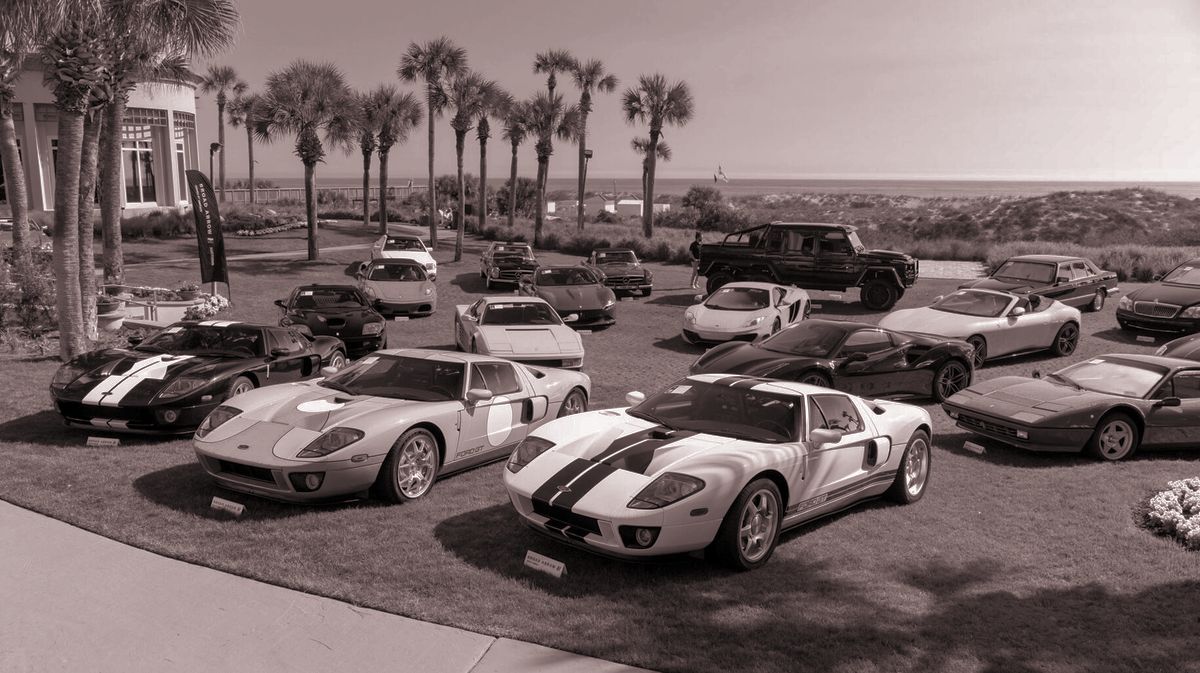
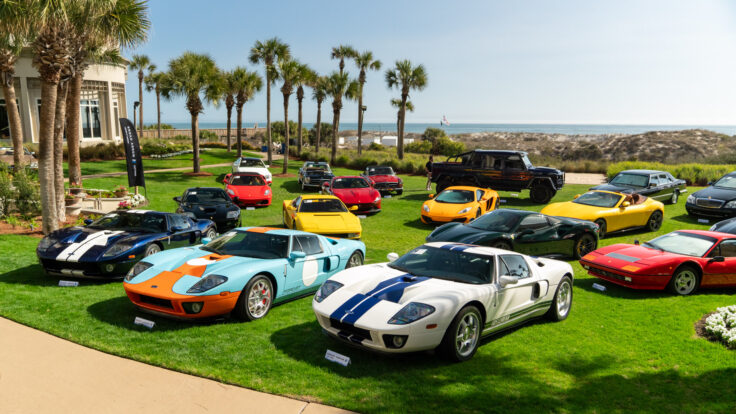
Some recent sales make his point. At the Amelia Concours auction in March, Broad Arrow
realized $111 million in sales, rendering it the most successful sales event ever at Florida’s ritzy Amelia Island Car Week. The event featured 1,000 bidders from 23 countries and set records for five relatively modern supercars, including a 2003 Ferrari Enzo, hammered at $15.2
million, and a 2017 Ferrari F12tdf, which changed hands at a never-before-achieved $4.2 million. |
2003 Ferrari Enzo, sold for $15.2 million. Photo: Courtesy of Broad Arrow Auctions
|
For Potts, the data that Broad Arrow brings to the auction business can be as important as the
expertise—and the data is encouraging. “We’re trying very hard to be the house that cares about the science as much as the theater. From day one—maybe before day one—we believed in the coming wave of the next generation. Others were late to that,” he said. “We always need to stay cognizant of that statistic that shows car collectors are in their prime from ages 50 to 70. A 60-year-old car collector graduated from high school in 1984. Figuring out what cars are relevant to them is not hard.”
|
Broad Arrow arrived on the scene with a built-in advantage stemming from the collective experience
of the industry veterans who started it—including Barney Ruprecht, the son of former Sotheby’s C.E.O. Bill Ruprecht. But, of course, the house also benefitted significantly from the capital and support of perhaps the most developed collector car ecosystem on the planet.
McKeel Hagerty, a divinity student turned crackerjack businessman and now the C.E.O. of Hagerty, took his parents’ tiny insurance business underwriting pleasure boats from
their Michigan kitchen and supersized it in his own image. In addition to insuring 2.5 million old cars around the world, Hagerty publishes a magazine with a circulation of nearly 2.2 million (full disclosure: I write for it), has an extensive online and social media presence, and runs a profitable YouTube channel with 3.82 million subscribers. Hagerty also offers valuation guides for collector cars and makes substantial investments in old car culture—owning or sponsoring car shows here and abroad that pop up everywhere from England’s Goodwood Festival of Speed to the Concours d’Lemons races
in America. |
1954 Maserati A6GCS by Fiandri & Malagoli, estimated price $2.4 million–$2.9 million. Photo:
Courtesy of Broad Arrow Auctions |
Hagerty Marketplace, its online marketplace, has grown with each passing year since its 2022
launch. And its captive finance company, Broad Arrow Capital, which debuted the same year, finances high-ticket auction purchases (typically exceeding $250,000) for live or online buyers and arranges private treaty sales for high rollers.
So yes, Hagerty may be the most trusted name in the classic car world. But since its SPAC deal and extended dalliance with private equity, many of its competitors also claim that Hagerty has morphed into a “Death Star.” The laundry list of complaints
includes the accusation that it’s buying up everything that isn’t nailed down, raising prices at car shows, and attempting to monetize a hobby that once relied on volunteerism while raising money for charity. Also, said one competitor, “It’s a little scary for an insurance company to be actively trying to be part of the sales of the property they insure.” (Hagerty declined to comment for this story.)
At the same time, plenty of collectors and even rivals see Hagerty’s entry with Broad
Arrow as a logical progression—a synergistic marriage of old-school enthusiasm for old cars, substantial capital investment, bountiful data, and a vast customer base it has accumulated as an insurer. Plus, it’s not as if Sotheby’s (founded in 1744) or Christie’s (1766) haven’t been in the business of making money. It’s just that it’s 2026, and every possible cash stream gets securitized.
Still, Potts recognizes that the luxury auction business is at least part show business. After all,
they’re not auctioning mining rights. “We strive to make the experience rewarding whether it’s online or live,” he said. “Beyond the magic, the art of it, it matters to us that we get it right. It’s not just the show, it’s the product. And we only get to do this because of the tenured talent we have.” |
Thanks, Jamie. It’s fascinating to see the classic car market keep growing, even as we imagine the
buyers are aging out. I’ll be back tomorrow in the Inner Circle with the data from the London auctions. Upgrade for access.
See you there,
M |
|
|
|
Puck founding partner Matt Belloni takes you inside the business of Hollywood, using exclusive reporting and insight
to explain the backstories on everything from Marvel movies to the streaming wars. |
|
|
|
Ace media reporter Dylan Byers brings readers into the C-suite as he chronicles the biggest stories in the industry:
the future of cable news in the streaming era, the transformation of legacy publishers, the tech giants remaking the market, and all the egos involved. Also featuring a weekly dispatch from Puck’s crack streaming/media analyst, Julia Alexander. |
|
|
|
Need help? Review our
FAQ page or contact us for assistance. For brand partnerships, email ads@puck.news.
You received this email because you signed up to receive emails from Puck, or as part of your Puck account associated with {{customer.email}}. To stop receiving this newsletter and/or manage all your email preferences, click here. |
Puck is published by Heat Media LLC. 107 Greenwich St., New York, NY 10006 |
|
|
|
|