{{ 'now' | timezone: 'America/New_York' | date: '%b %d, %Y' }} |
|
|
Hi, and welcome back to Line Sheet. Things are ramping up in Paris, where the smart
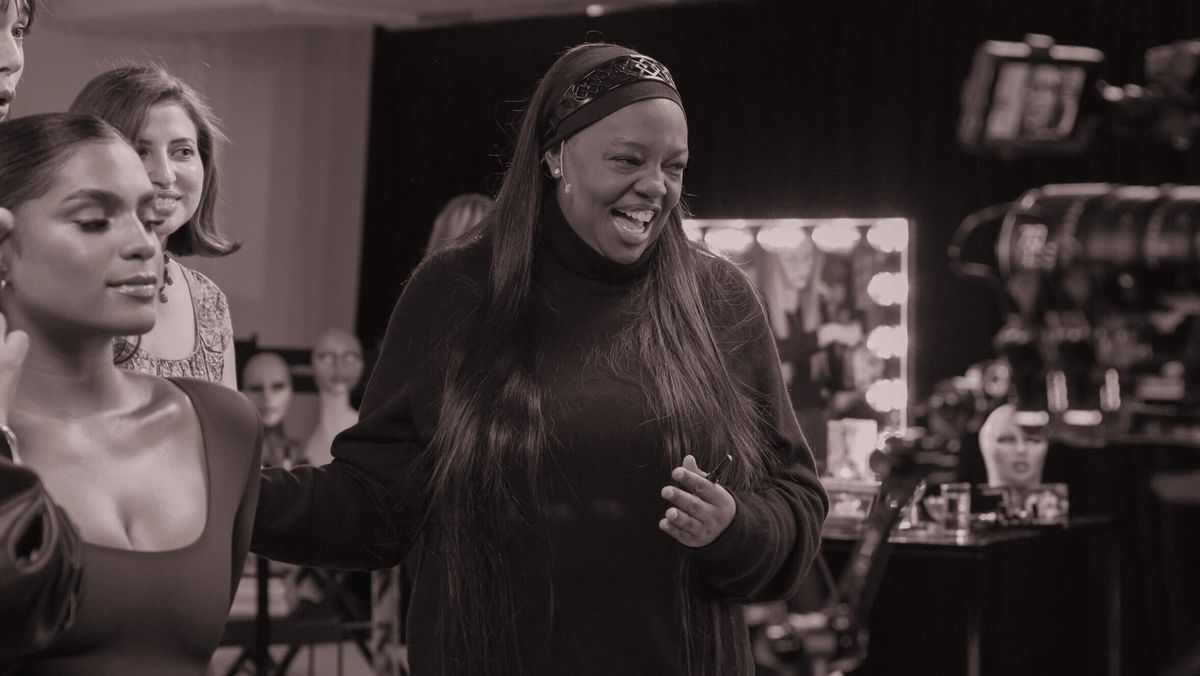
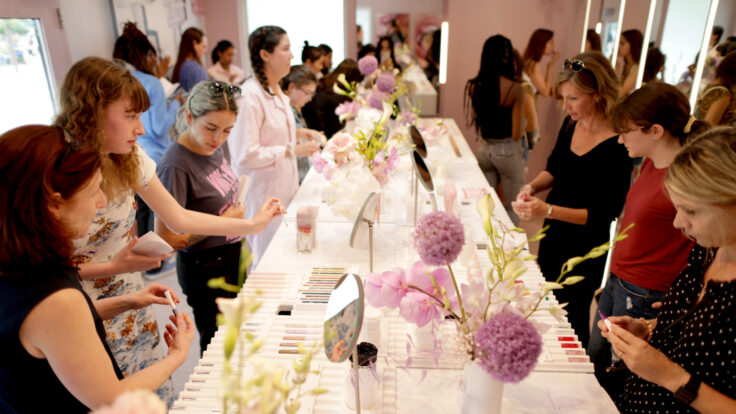
people in the front row are discussing Trump’s Davos speech. (So, that means… Tim Blanks.) Today, Rachel “Rachel@puck.news” Strugatz is here with a preview of the public auction of Pat McGrath Labs, a beauty brand once valued at $1 billion. It’s a cautionary tale, to be sure, but the exciting part is that it’s not over.
Up top, I’ve got the scoop on a
major editor’s next act and a look at the past couple of days of downright polarizing men’s shows. Plus, Rachel shares the latest, and perhaps funniest, dupe of Santal 33 ever. I’ll be back tomorrow with a super-special Inner Circle–only issue. If you haven’t upgraded already, what are you doing with your life? (I know how badly you want access to our merch, so get going.)
P.S.: Thanks
to everyone who has sent me their peptide stacks. I’ll share the, uh, results (?) in a future email.
Mentioned in this issue: Pat McGrath, Louis Vuitton, Alastair McKimm, Peter Jones, Jonathan Anderson, Dior, New Radicals, Hedi Slimane, Boring Not Com, Auralee, Lemaire, Our Legacy, Pharrell Williams, LVMH, Le Labo, Harry’s, TikTok Shop, Anna Delvey,
Eugene Rabkin, Malin + Goetz, and many more… |
Three Things You Should Know…
|
-
Alastair McKimm’s new thing: A while back, I heard that the former i-D editor-in-chief had quietly left his post as French Vogue’s fashion and image director at large. Now, there’s chatter on London’s indie magazine editor circuit about McKimm launching a new title with Peter Jones, the British
entrepreneur and star of the BBC reality show Dragons’ Den, which is basically Shark Tank. Jones also happens to be the proprietor of a small publishing company called Visual Talent Ltd., which owns Man About Town, Wonderland, and Rollacoaster. People are saying that McKimm, who is based in New York, appeared in the London offices of Visual Talent this week to get going on the first issue. I reached out to McKimm to see what was up, but have yet to
hear back. More to come, I’m sure, but I wouldn’t be surprised if we see more magazine launches this year.
|
|
|
A MESSAGE FROM OUR SPONSOR |
|
|
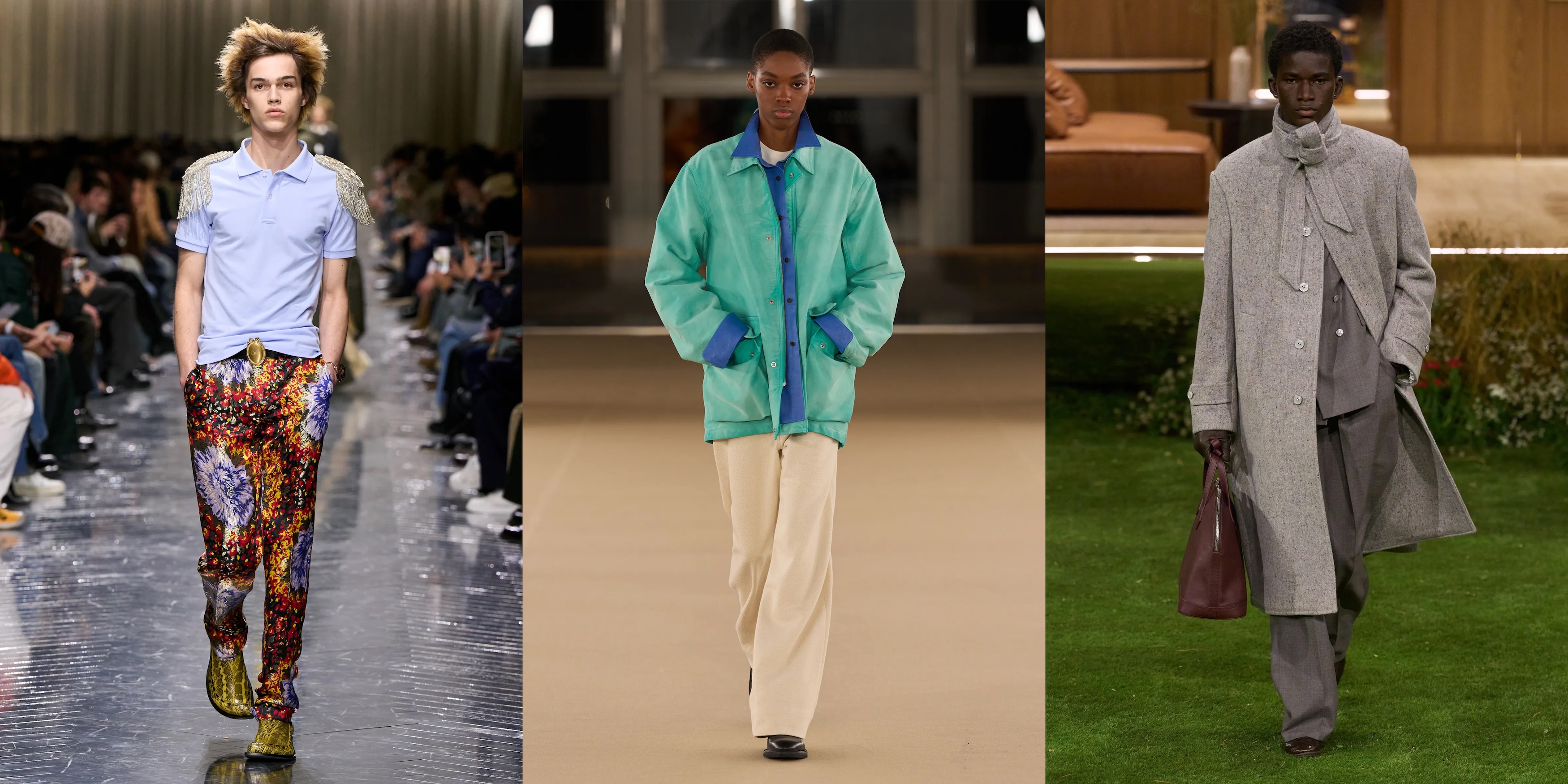
- Paris so far: “How would Hedi Slimane fare in the age of Boring Not Com?” I wondered today, when the aggro Instagram account slammed Jonathan Anderson’s second menswear collection for Dior. (Someday we will find out who this guy actually is… and I have a feeling it’s someone we all know.) Anderson clearly took a page from Slimane’s book both
in the silhouettes and styling, but more so the concept of a concept. Can each season serve a new muse—Irish prep for Spring; greasy-haired singer-songwriter for Fall—while offering a big idea?
Sure, Anderson just needs to more clearly communicate the big idea. He’s giving a lot, and the world expects a lot from him. I’m curious to see whether his couture show on Monday is an iteration on September ready-to-wear, or something that feels entirely new. The one thing we know about
his Dior: It will never be simple.
|
Photos (from left): Courtesy of Dior, Auralee, Louis Vuitton |
-
“Simple” could otherwise sum up many of the men’s collections so far. Eugene Rabkin published a thoughtful opinion piece in BoF about the “epidemic of nice clothes” on the runway, with a photo of the latest Auralee show as the lead. “What happens when culture has stopped innovating for so long that we have nothing to
reference but references themselves?” he wrote. “In a fashion world that’s not produced anything radically new since the beginning of this century, the answer seems to be an epidemic of nice clothes.” There weren’t just “nice” clothes at Auralee, but also Lemaire and plenty of others. The Swedish brand Our Legacy called its latest collection “Just Clothes” to underscore its simplicity.
I’m a big fan of Eugene’s, but I rarely agree with him. In this case, he is failing to understand that
the major innovation over the past 25 years has been in the business model. It’s also a matter of taste. Eugene likes to wear complicated clothes; not everyone does. The Auralee collection gave me the light dopamine hit that I seek in fashion as a consumer. It doesn’t have to be deep to be good, and it doesn’t have to be difficult to be deep.
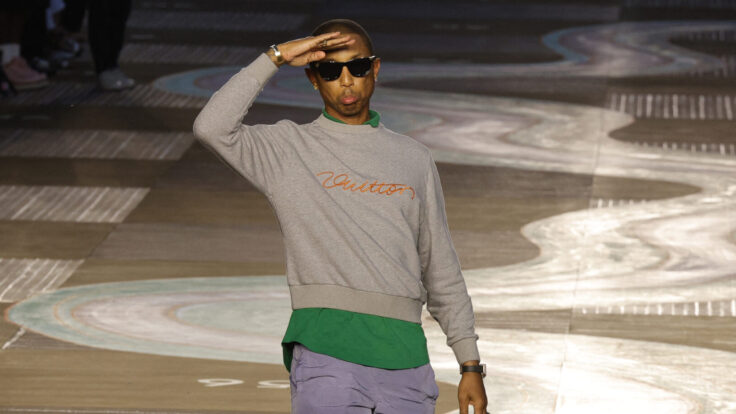
But there’s also no denying that fashion is once again transforming. Pharrell’s latest for Louis Vuitton was stuck between the old
and the new. “It felt like a runway show from 2018,” one LVMH insider put it to me. And yet the clothes were pretty good, if unmemorable. The good news? Boring Not Com liked it.
|
|
|

| Rachel Strugatz
|
|
- Super-duper: I
was highly amused when someone sent me a photo of Harry’s new body wash, “Redacted,” a very obvious dupe of Le Labo’s Santal 33, including a carbon-copy bottle. This may be the ballsiest thing that Harry’s has ever done. The brand declined to comment, but what I did find out is that Harry’s is in the process of launching “Scent Labs,” a series of monthly body wash drops that will be sold only on TikTok Shop and their own site—an idea born from customers comparing their body washes to popular
fragrances online. (“Fig” is supposed to smell like Glossier You.) The TikTok piece is important, as the platform is perhaps the only mass-distribution channel Harry’s has yet to penetrate. The brand also tapped Anna Delvey to help launch Redacted.
For what it’s worth, the $16 price point is quite high for Harry’s—their regular body washes retail for $8—but makes sense here and could prove to be a powerful acquisition tool for both new and younger customers. I
wonder how much the folks at E.L.C. will care, but my assumption is not much. The person buying $65 body wash probably isn’t a Harry’s customer, but who knows?
|
|
|
It wasn’t so long ago that the namesake beauty line of the fashion industry’s
go-to makeup artist was a market leader, with a frothy valuation to match. Next week, it will hit the auction block. What went wrong? And can it be resurrected? |
|
|
In 2018, Eurazeo Brands, the consumer investment arm of Eurazeo Global, very publicly put $60 million into
Pat McGrath Labs at a $1 billion valuation. Even in an era defined by frothy valuations, this was unhinged math for a brand that, at the time, was on track to hit $40 million in net sales, according to a source close to the business. Indeed, it turned out to have been the high-water mark for the beauty firm founded by high fashion’s perennial makeup artist of choice. Next week, Pat McGrath
Labs’ assets will go on the block; bids are due January 26, and a public auction will be held the next day. |
|
|
A MESSAGE FROM OUR SPONSOR |
|
|
The sale is the disappointing culmination of a challenging few years for the company,
defined by dramatic sales declines, investor musical chairs, manic emails from fractional leadership, a Candy Crush collaboration in 2025, and more indignities. I don’t think anyone is terribly surprised; a loss of relevance has
continued to plague the brand, despite Pat McGrath’s continued knack for creating viral beauty looks on the runway. Sales have slid from a little more than $100 million in 2023, according to someone with direct knowledge of the business, to just $50 million in 2025, per a recent piece in WWD. Eurazeo quietly sold its stake in 2021. Sienna Investment Managers, the allocation arm of Belgian holding firm Groupe Bruxelles Lambert, swooped in, only to eventually write down
its investment by close to 90 percent, and last year announce its intent to exit its stake. (Eurazeo Brands, by the way, is no more, according to BoF.)
To be clear, Pat McGrath Labs has not filed for bankruptcy. The brand is undergoing a restructuring via an Article 9 secured party foreclosure sale, which is
more or less an asset-based fire sale. (Hilco Global’s Hilco Streambank subsidiary is managing the process.) I was told by someone with knowledge of the process that the company’s debt is significant. It’s not clear how the transaction will eventually break down—and there’s even some debate about which part of the business will extract the most value at auction. One insider felt confident that all of Pat McGrath Labs’ assets––inventory, I.P., etcetera––would be up for grabs. Another
said the majority of the value comes from remaining inventory, and that the I.P. isn’t worth much. It was explained to me that the sale price will be largely contingent on the value of the inventory, and that it’s likely the new owner will turn a profit even if the products are resold at a steep discount. |
Still, there’s interest in attempting Pat McGrath Labs 2.0—largely due to the potential involvement
of McGrath, the artist, as well as the media attention the sale has attracted. (WWD recently profiled a “growing universe” of buyers of distressed beauty brands, including Windsong Global and AS Beauty.) I’ve heard rumors that McGrath is indeed entertaining rejoining the brand once the
cleanup is over. “Pat is not necessarily out. She’s willing and will consider working with some teams who are coming in, depending on who it is,” the person with knowledge of the process said. “It’s a ‘glamorous’ brand, and the thinking is, ‘If we can get Pat on board, we can do it better.’”
Another insider threw cold water on the idea, though, speculating that McGrath would “seemingly totally never be involved again.” That’s at least plausible, given the state of the brand and
the fact that she’s now putting her talents to use as the cosmetics creative director of La Beauté Louis Vuitton. McGrath’s engagement could also come with challenges. In recent years, past and current employees have pointed to blurred lines between the brand and McGrath’s commitments as a makeup artist, as well as instances of the company resources being put
to use on McGrath’s consulting gigs with other companies. (A rep for McGrath did not respond to a request for comment.)
And yet, I don’t think the involvement of a sharply focused McGrath alone would be enough to fully realize a resurrected brand’s potential. Beyond the obvious—a perennial lack of commercial viability, McGrath’s discomfort with being in the spotlight, etcetera––the brand overall feels, well, dated. “Pat is disconnected from how the consumer wears makeup today,” is how one
beauty veteran bluntly put it. “In 2016, her brand dominated because you had a 12-step eyeshadow routine and blush under frosty highlighter, and so on. The bitchy MAC counter queen vibe is no longer relevant, and that’s what her brand is giving, unfortunately.”
One has to wonder what McGrath’s motivations would be to stay involved. She has a very cushy gig with Louis Vuitton and remains the go-to makeup artist for runway beauty, and I can’t see that changing. My intel says that McGrath is
likely meeting with prospective buyers, where the financial incentives––plus the proposition of fresh capital and a new company that doesn’t owe anyone money––could be enough to sway her. But despite her enormous talents, product these days is almost as important as a creator at the helm. An artist-led brand requires the founder to be at the center, where they must appear accessible and like they’re connecting and interacting with their customer base. |
|
|
And the products must be commercially viable. Viral runway makeup doesn’t equate to
sales, and no one knows that better than McGrath. At the same time, I can’t imagine wanting to keep the business going without McGrath. A high-profile investor suggested that the only path to a viable business would be a licensing agreement, but even that is unlikely given that McGrath’s brand, name, and platform aren’t big enough to be licensed and streamlined without her involvement. “That’s the only exercise––it’s not ‘Let’s figure out a way to work with Pat creatively,’ this
investor said. “This isn’t where Pat’s passions or interests lie. I don’t think Pat is meant to be a founder.”
This is a long shot, but there’s always LVMH. If Louis Vuitton is actually bullish on building its beauty business––and equally bullish on maintaining McGrath’s association––the company could consider buying Pat McGrath Labs, merely to prevent McGrath’s name and reputation from being tarnished. “If I were LVMH, I’d be sniffing around the process to see what I could do to make
sure this doesn’t get messy,” said an insider. “If it costs a few million to make something not get messy, well then that’s a marketing expense for LVMH.” |
Malin + Goetz, the gayest brand to ever exist, has closed all of its stores in the U.K. (F.Y.I.,
it’s owned by Manzanita Capital, Gap heir Bill Fisher’s taste-driven private equity firm.) [The Industry]
As a friend noted, it doesn’t get cooler than having Alec Soth shoot your first campaign. Also, it makes you want to say, Yay!
[Style Not Com/Chanel]
It’s LVMH Watch Week in Milan, and the conglomerate is under pressure. [BoF] |
Until tomorrow,
Lauren
P.S.: We use affiliate links because we are a business.
We may make a couple bucks off them. |
|
|
Need help? Review our FAQ page or contact us for assistance. For brand partnerships, email ads@puck.news. You received this email because you
signed up to receive emails from Puck, or as part of your Puck account associated with {{customer.email}}. To stop receiving this newsletter and/or manage all your email preferences, click here. |
Puck is published by Heat Media LLC. 107 Greenwich St., New York, NY 10006 |
|
|
|