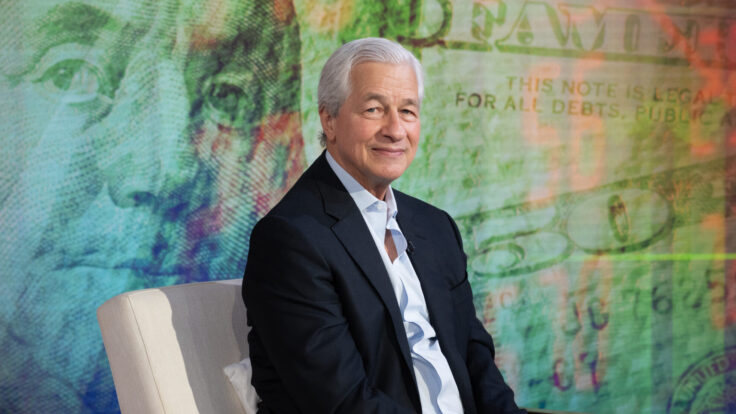
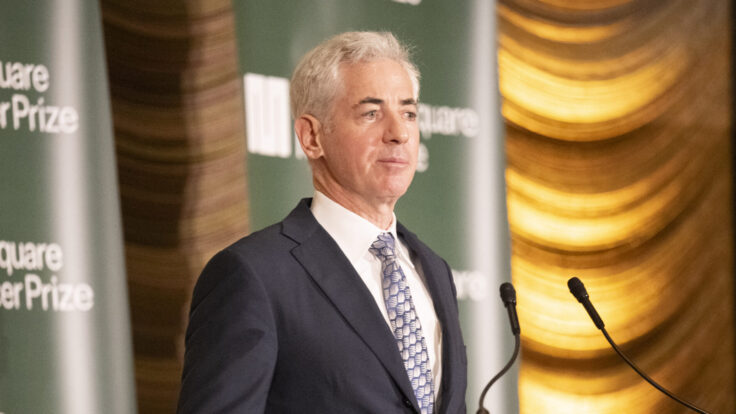
Welcome back to Dry Powder. I’m Bill Cohan, on the road this week so I’m handing
the reins to my esteemed partners this holiday weekend.
First up, Ian Krietzberg looks into what Anthropic’s source code leak means for the A.I. arms race, and Julia Alexander breaks down TBPN’s shocking sale to OpenAI. Then, for the main event, Eriq Gardner uncovers a surprising new twist in the legal battle to block the $69 billion Microsoft–Activision deal—with superlawyer Alex Spiro going to bat for
Bobby Kotick and the plaintiffs dragging the Epstein files into the mix.
Also mentioned in this issue: Jim Bankoff, Jonah Peretti, Shane Smith, Jordi Hays, John Coogan, Mark Zuckerberg, Dario Amodei, Sam Altman, Yuchen Jin, Graham Neray, Jeff Smith, Russ
Pearlman, Kathaleen McCormick, Lina Khan, Dawn Ostroff, Casey Wasserman, Alec Baldwin, Lars Wingefors, Emma Ihre, and… David Blaine. |
|
|
|

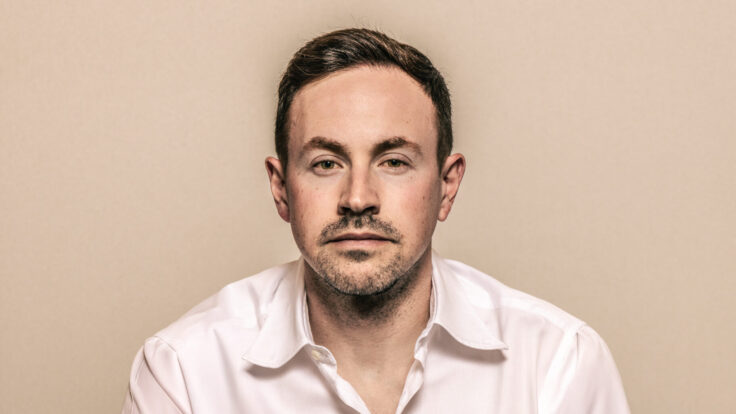
| Ian Krietzberg
|
|
- Anthropic’s Claude Code
snafu: Shortly after leaking details regarding its plans for upcoming model releases, Anthropic had another security breakdown: It leaked 500,000 lines of Claude Code’s source code. Whoops. A tweet linking to the leaked code has garnered more than 30 million views. Some folks, like Hyperbolic labs co-founder Yuchen Jin, think the mishap has effectively
blunted Anthropic’s edge: “Every model lab and A.I. coding startup, including open-source A.I. labs, will study it and close that gap fast,” he said. But Graham Neray, the C.E.O. of agent-authorization firm Oso, told me that the sheer pace of new model development and deployment makes this leak relatively insignificant in the grand scheme of things. Even if a
competitor or hacker is able to do something with the information, he said, “it will be irrelevant by the time the next model comes out.” Still, he added, “It’s a bit embarrassing.” (An Anthropic spokesperson said that “no sensitive customer data or credentials were involved or exposed. This was a release packaging issue caused by human error, not a security breach. We’re rolling out measures to prevent this from happening again.”)
Either way, there may be some second-order impacts. For
one, as Jeff Smith, an A.I. researcher and co-founder of 2nd Set AI, told me, though the leak didn’t expose Claude Code’s “secret sauce,” it did reveal “the nasty bugs that eat people’s capacity.” And indeed, there’s been an intense rate-limiting issue lately, where users on the top-tier, $200/month plan are running out of usage just a few days in. “The cost implications of a tiny amount of bad code are a staggering rug pull for a huge slice of the software industry,”
he said.
And while customer information was not exposed, Dallas College C.I.O. and A.I. governance expert Russ Pearlman said the leak is a perfect example of what can happen when you move too fast—and that it ought to serve as a warning for companies to take a beat and slow down their FOMO-fueled breakneck push for A.I. adoption. “As an I.T. practitioner, you look at this story and go, Oh shit. This is pretty bad,” he told me. “I think at the end of the day, the
story people should be taking home is: A.I. requires governance, just like any other technology.”
|
|
|
|

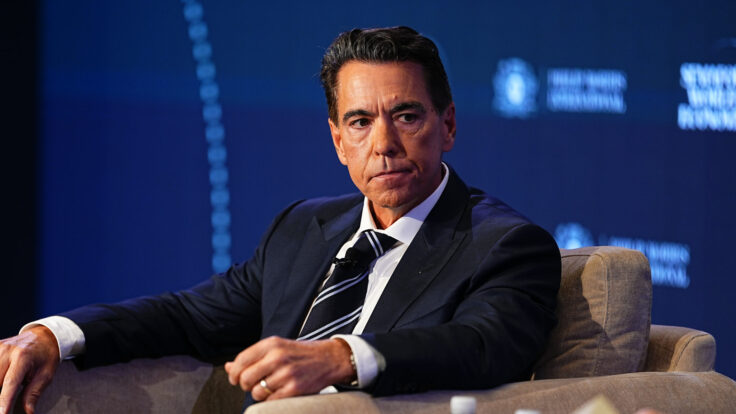
| Julia Alexander
|
|
- TBPN’s exit ramp:
Last November, I was having drinks with a prominent media investor who told me there are two types of founders: those who know when to sell and those who don’t. I think about this a lot, having come up amid the staggering valuations and missed opportunities of the Jim Bankoff–Jonah Peretti–Shane Smith era of digital media. Today, of course, Vox Media is struggling to maintain its websites while trying to off-load its podcast business to
Versant, BuzzFeed is a penny stock, and Vice has been taken over by its lenders.
I recalled this investor’s philosophy again last week when listening to TBPN’s Jordi Hays and John Coogan explain their decision to sell their burgeoning tech media company to OpenAI. There’s been a lot of commentary—an unsurprising mix of grumbling, praise, and envy—about what the deal could mean: Is OpenAI getting into the media
business? Will TBPN still do interviews with guests like Mark Zuckerberg or Anthropic’s Dario Amodei? And with TBPN’s advertising business shutting down, what’s really in it for OpenAI beyond Sam Altman controlling an outlet to dispense pro-A.I. propaganda? OpenAI’s actual position is still pretty cloudy, but Hays and Coogan’s is not.
|
|
|
|
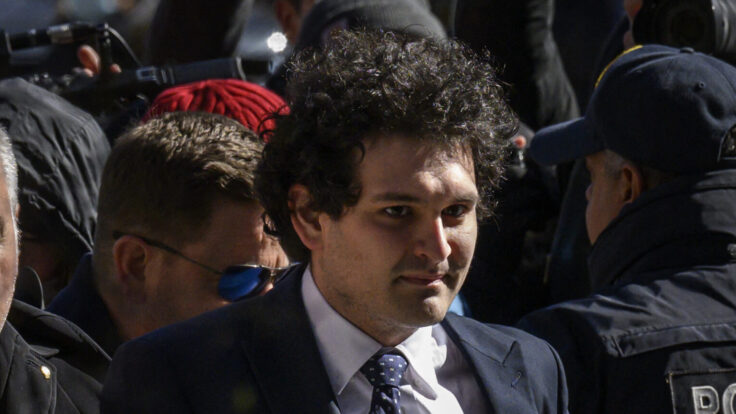
After Microsoft’s 2023 acquisition of Activision, the game maker’s former C.E.O. came under
legal fire for allegedly rushing the deal ahead of negative news about the company’s bro-ey culture. The ensuing lawsuit has now gone thermonuclear, with a featured role for superlawyer Alex Spiro… and the Epstein files. |
|
|
|
It’s safe to say the Delaware Court of Chancery hasn’t seen many cases like the fight over Activision
Blizzard’s $69 billion sale to Microsoft. This one has already helped prompt a tweak to Delaware corporate law. And that was before Chancellor Kathaleen McCormick issued a ruling last autumn that brought Quinn Emanuel superlawyer Alex Spiro into the mix on behalf of former Activision C.E.O. Bobby Kotick. Now the case is veering into stranger territory, with Spiro trying to put a Swedish pension fund on trial and the plaintiffs dragging the
Jeffrey Epstein files into the orbit.
Sjunde AP-Fonden v. Activision Blizzard didn’t start out this way—or at least not quite. Back in 2022, Microsoft announced its blockbuster acquisition. As Lina Khan trained regulators on stopping the Xbox maker from swallowing the publisher of Call of Duty, the Swedish pension fund Sjunde AP-Fonden—known as AP7—took aim at something more granular. It argued the deal process had been rushed,
particularly in the wake of The Wall Street Journal reporting that Kotick had known about pervasive sexual harassment
issues at the company. (At the time, Kotick told the paper that he was committed to ensuring an inclusive workplace.)
In 2024, McCormick found it conceivable that Activision’s board had failed to comply with key provisions of Delaware law by approving a merger agreement that wasn’t essentially complete and improperly delegating authority. The opinion rattled deal lawyers because it called into question a common market practice, and helped to spur a legislative fix aimed at retroactively
validating much of what the court had put in doubt.
Then, last October, McCormick allowed an amended complaint to proceed, now focused on a sharper theory: that Kotick had rushed into a deal tilted in Microsoft’s favor to insulate himself from scrutiny. She called it a “paradigmatic Revlon” claim, pointing to potential conflicts
and what she described as a conspicuously disengaged board whose members included former Warner Bros. C.E.O. Barry Meyer, former Spotify chief content officer Dawn Ostroff, and sports powerbroker Casey Wasserman, whose résumés made the alleged passivity only more glaring. (Kotick allegedly convened the full board only after he had been negotiating with Microsoft for weeks.)
Enter Spiro. His pitch is that the Microsoft deal was a “heavily
negotiated” deal that represented a “once-in-a-lifetime … match made in gaming heaven” for Activision, particularly as the industry lurches into a fraught, A.I.-driven future. If the deal was tilted in anyone’s favor, it was Activision’s, he insisted.
But, as is typical, Spiro isn’t just playing defense. He countersued, recasting the plaintiff as the real problem. In his telling, AP7 was a conflicted activist investor, coordinating with labor interests and using E.S.G. rhetoric as a cover
to pursue an agenda designed to benefit a video game rival. It’s an aggressive move, and maybe not the cleanest one, but it changes the posture of the case. Now, this Delaware fiduciary-duty dispute is starting to look more like a full-contact proxy war, with each side trying to put the other’s motives on trial. |
The
Investor With the E.S.G. Tattoo
|
At first blush, it’s hardly a surprise that Spiro is waging a counteroffensive. Consider the way he went
after New Mexico prosecutors in the Alec Baldwin manslaughter saga, or how he fired back with an extortion suit against a lawyer who suggested Jay-Z was entangled in the Sean Combs “freak-offs” scandal. And, of course, there are his many turns on behalf of Elon Musk.
Just last week, in a case brought by Tesla shareholders over Musk’s conduct leading up to the 2022 Twitter acquisition, Spiro demanded that McCormick—yes,
the same judge presiding over the Activision fight—recuse herself from the case after she’d hit “support” on an anti-Musk post on LinkedIn. She denied hearting the post, but nevertheless recused herself from three Musk cases yesterday—though not from the Activision case. So, no, Spiro’s instinct to flip the script and change who’s playing defense isn’t shocking.
That said, the story he has spun in support of a counterclaim against AP7 is like something out of a Stieg
Larsson novel. The narrative, as Spiro tells it, began in 2018, when the Communications Workers of America launched a campaign to unionize the video game industry. To assist that effort, he alleges, “unscrupulous government employees”—including some at the California Civil Rights Department, which, perhaps coincidentally, has also tangled with Tesla—opened an investigation into Activision’s workplace aimed at destabilizing the company. The subsequent reporting—in the Journal
and elsewhere—about a “frat boy” culture involving heavy drinking, stripper poles, and even allegations of rape was all unjustly sensationalized, he argues, the product of a coordinated campaign by the C.W.A. “exploiting the #MeToo and #TimesUp movements” alongside sympathetic media allies. (The filing even placed “journalists” in scare quotes, naming specific reporters and suggesting that they should’ve disclosed affiliations with the NewsGuild, a C.W.A. affiliate.)
And that’s merely the
opening act. The counterclaim then pivoted to a comparative foil: Sweden’s Embracer Group, the Lars Wingefors–led computer games conglomerate that has rolled up studios like THQ Nordic, CDE, and Dark Horse. According to Kotick and Spiro, Embracer had its own “significant workplace issues,” yet somehow avoided comparable scrutiny. Why? The answer, they suggested, lay in overlapping networks. At the time this suit was filed, Embracer’s head of sustainability and E.S.G. was
Emma Ihre—who also happened to serve as vice chair of AP7’s board. That alleged conflict, Spiro argued, raised uncomfortable questions about the independence of the institutional investor now pursuing claims against Activision.
Now, as Kotick and the rest of Activision’s board push for foreign discovery under the Hague Convention—hinting that this long-running litigation may in fact be a kind of strategic lawfare—AP7 has responded by dismissing the entire theory as
“revisionist history” that is both legally and factually frivolous. The matter now lands back in McCormick’s courtroom, where the question is not just who’s telling the better story, but how much of this one she’s willing to indulge. |
AP7 isn’t just asking for dismissal of the counterclaim. The pension fund is also getting down in the mud,
invoking Jeffrey Epstein to try to tar the defendants.
The Epstein thread first surfaced as a way to challenge the independence of Activision’s board, particularly Kotick’s relationship with Wasserman. AP7 pointed out that Wasserman and Kotick, in addition to overlapping philanthropic and LACMA circles, both appear in Epstein’s so-called “little black book.” (Wasserman’s ties to Epstein associate Ghislaine Maxwell, of course, caused enough backlash that he ultimately
renamed his firm and put it up for sale.) The implication was straightforward: These didn’t exactly seem like arm’s-length relationships.
Kotick fired back that Epstein has nothing to do with this dispute. (His reps have previously said that he did not have a close relationship with Epstein and that they were never friends or colleagues.) But AP7’s lawyers responded that “Kotick’s association with a convicted sexual abuser would cast doubt on his pious pronouncements that he would never
tolerate sexual harassment.”
And now, in the face of Spiro’s counteroffensive, AP7 is leaning in further. Last week, in support of its motion to dismiss, the Swedish pension fund filed a tranche of Epstein-related communications with Kotick. One email shows Epstein inviting Kotick to his New York townhouse to spend time with Woody Allen and David Blaine. Another referenced a Caribbean trip, with Kotick responding that he wished he could have stopped by
Epstein’s island. Then there’s the more surreal exchange: Epstein pitched a plan to overhaul education through some sort of video game tournament featuring scantily clad women, declaring, “Fuck educational reform. We need educational subversion!” To the idea that young men would readily learn if voluptuous avatars were the ones teaching, Kotick replied, somewhat punctiliously: “X prize is a good idea but key is real world rewards. Learn to read: earn cell phone minutes, iPhone credits, virtual
items in games.”
Will any of this move the legal needle? Probably not. But litigation at this level is as much about pressure, posture, and narrative control as it is about doctrine. And if this is where things are already headed, it’s a safe bet the gloves aren’t coming back on anytime soon. Not when the real-world rewards are so great. |
|
|
|
Join Puck’s chief political columnist, John Heilemann, as he roams the corridors of power and influence in America on this
twice-weekly interview show, taking you beyond the headlines with the people who shape our culture: icons and up-and-comers, incumbents and insurgents, moguls and machers in the overlapping worlds of politics, entertainment, tech, business, sports, media, and beyond. The conversations are rich and revealing, unrehearsed and unexpected… and reliably impolitic. A Puck-Audacy joint, new episodes drop every Wednesday and Friday. |
|
|
|
Puck’s daily political newsletter from Washington on what’s really happening in this town, from the White House to the Pentagon
to Capitol Hill, K Street, and the campaign trail. |
|
|
|
|
|
DYLAN BYERS & IAN KRIETZBERG |
|
|
|
Need help? Review our
FAQ page or contact us for assistance. For brand partnerships, email ads@puck.news.
You received this email because you signed up to receive emails from Puck, or as part of your Puck account associated with {{customer.email}}. To stop receiving this newsletter and/or manage all your email preferences, click here. |
Puck is published by Heat Media LLC. 107 Greenwich St., New York, NY 10006 |
|
|
|
|