{{ 'now' | timezone: 'America/New_York' | date: '%b %d, %Y' }} |
|
|
|
Hello and welcome back to The Best & The Brightest. I’m Leigh Ann
Caldwell.
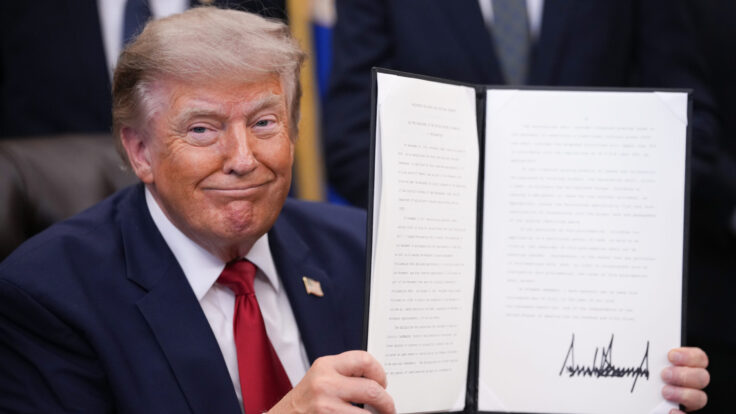
It’s another Monday in June, which means there’s another round of primaries tomorrow. Voters are heading to the polls in Washington, D.C. (where I’ll be voting for my husband, Greg Jaczko), Oklahoma, and both Georgia and Alabama for runoffs. Meanwhile, President Trump posted a fresh round of endorsements while en route to the G7 in Europe, including for noncompetitive primaries—a reliable way to pad your win-loss record.
Notably, he re-upped his support for Rep. Barry Moore, who is facing off in the runoff against former Navy SEAL Jared Hudson for the open Senate seat in Alabama, which Tommy Tuberville has ditched to run for governor.
Anyway, we’ve got a packed issue today. Up top, notes on Republicans’ silence over Trump’s not-quite-a-deal with Iran, which has been newly downgraded to a memorandum of understanding. Plus: Will the Senate call the
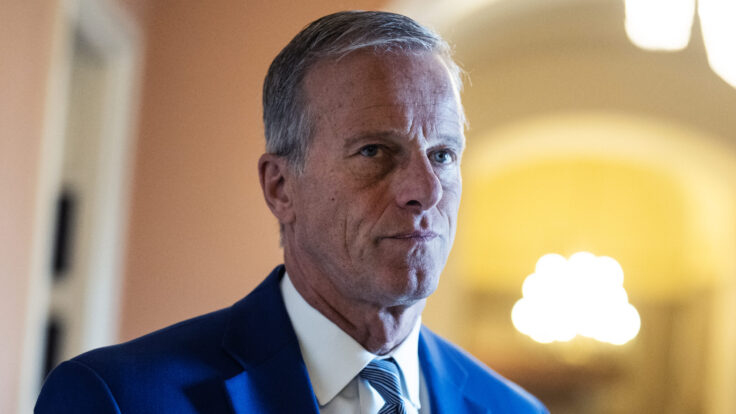
president’s bluff and move FISA without the SAVE Act?
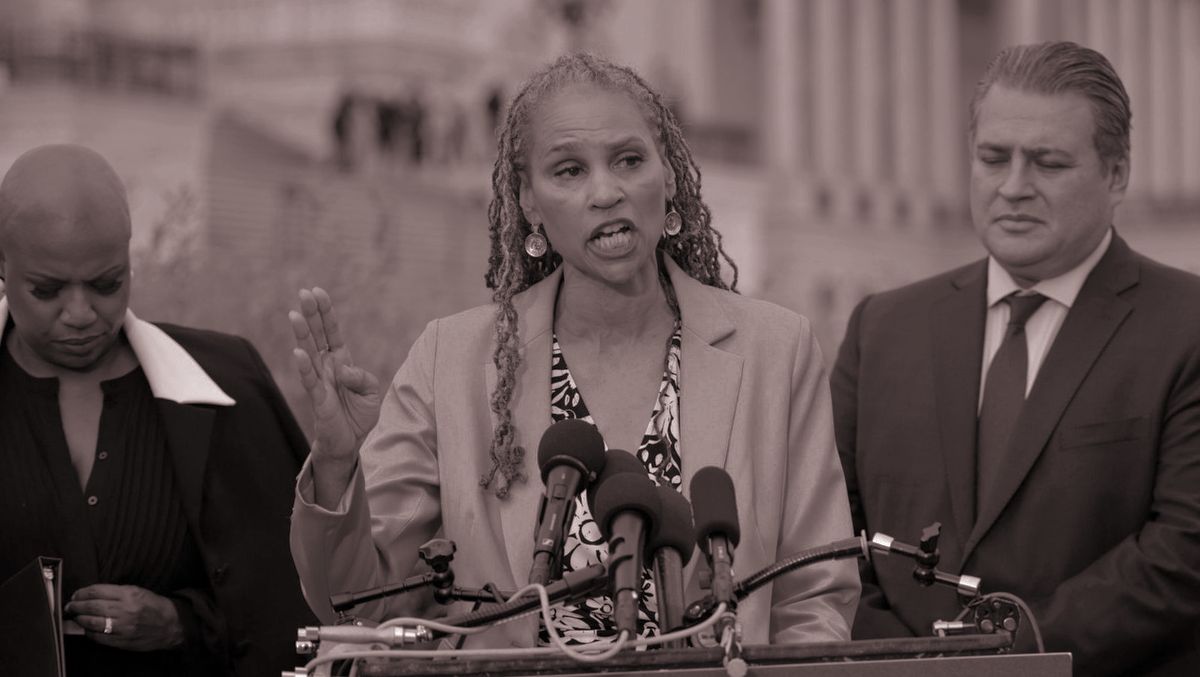
Then, for today’s main event, John Heilemann sits down with prominent civil rights activist and lawyer Maya Wiley for a tremendously timely conversation about Trump’s attempts to nuke the nonprofit sector—including, most recently, the Southern Poverty Law Center—and how, as she put it, “the Department of Justice is the Department of ‘Just Trump.’”
Also mentioned in this issue:
Todd Blanche, Graham Platner, Jim Jordan, Morris Dees, Emmanuel Macron, Susan Collins, Jay Clayton, Cleta Mitchell, Elissa Slotkin, and more. |
- House
redistricting math: After a year of scorched-earth redistricting warfare and the Supreme Court’s nukage of the Voting Rights Act, the House map has shifted even further in Republicans’ favor. According to a new analysis by the N.R.C.C., the number of seats represented by Republicans in districts that Kamala Harris won has increased from three to eight. And the number of Democratic-held districts won by Donald Trump has increased from 13 to 23.
Overall, Democrats must now win Republican-held seats where Trump averaged 53.2 percent of the vote in 2024—a much steeper climb than during the blue wave of 2018, when Democrats flipped seats where Trump had averaged 46.6 percent two years earlier, according to the analysis.
Democrats admit that these structural factors play in Republicans’ favor while arguing that the election will not be fought on Trump’s 2024 performance but rather on his current standing. Indeed, in more
than three dozen special election races in 2025 and 2026, Democrats have overperformed by 13 points so far. If that trend holds, they should easily retain 16 of the 23 Democratic-held Trump seats and flip all of the eight Republican-held Harris seats, which would inch them closer to the majority.
|
- Art
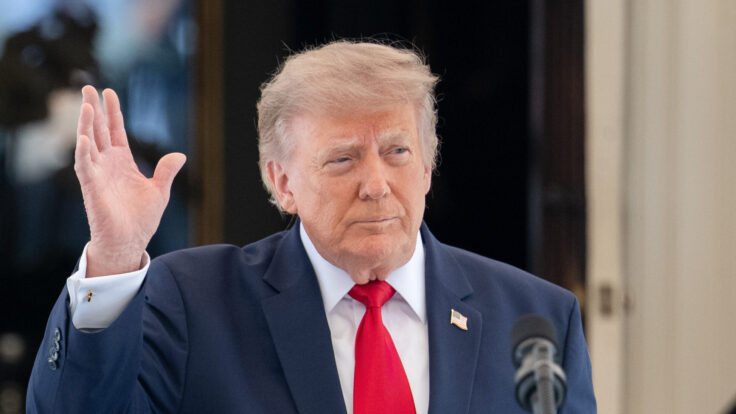
of the memorandum: Republicans on Capitol Hill are staying notably quiet about Trump’s newly announced “memorandum of understanding” with Iran—a conspicuous downgrade from the president’s earlier characterization of the arrangement as a “peace deal.” With gas prices and the midterms potentially on the line, they are eager for positive news—but they also know better than to get over their skis while everyone awaits more details. As of Monday afternoon, there are no planned briefings for
Congress, and the Hill doesn’t expect to learn more until after the documentation is released. “We will continue our long history of extraordinary levels of transparency with the Hill, as we maintained throughout the course of this conflict,” a White House official told me.
Not surprisingly, even that timeline is up in the air. Earlier today, Trump said in a meeting with French President Emmanuel Macron that the text and details of the agreement won’t be released until
after the framework is ceremonially signed in Switzerland on Friday. That makes Republicans understandably nervous, especially since Trump and the Iranians still aren’t describing their “understanding” in the same way, including under what terms the Strait of Hormuz will open. - Trump’s FISA bluff: Twice in the past 24 hours, Trump has posted on social media that he will not sign an extension of Section 702 of the Foreign Intelligence
Surveillance Act—the government’s premier surveillance authority, which expired Friday—unless it is paired with an expanded version of the SAVE Act, the ultra-controversial legislation requiring proof of citizenship to vote, along with provisions targeting mail-in voting and transgender participation in sports.
For now, the Senate is proceeding as though it’s business as usual. Jay Clayton’s confirmation hearing to serve as director of national intelligence is scheduled
for Wednesday, and Republicans hope to move both his confirmation and the Section 702 legislation through the chamber by the end of the week. But pulling that off would be a monumental feat. The wild card is Trump: As Republican leadership has signaled to the president on multiple occasions, there’s no viable path for the SAVE Act to advance. Republicans are betting that once an extension reaches his desk, Trump won’t be willing to veto the country’s most important surveillance tool. We’ll
see…
|
|
|
|
An eye-opening conversation with Maya Wiley, the renowned lawyer and civil rights activist,
about the president’s plans to contest the midterm elections, his legal assault on nonprofits, and her pressing thoughts on Platnergate. |
|
|
|
Maya Wiley has spent her adult life in and around the fight for civil rights, and these days
she has the title to match: president and C.E.O. of the Leadership Conference on Civil and Human Rights, the coalition of more than 240 national organizations founded in 1950 as a partnership coming out of the Black liberation struggle. Among the groups in that coalition is the Southern Poverty Law Center. When Donald Trump’s Justice Department brought an 11-count fraud indictment against the S.P.L.C., and hauled the head of the group before the House Judiciary Committee last
week for a daylong stream of bad-faith abuse from Jim Jordan and other MAGA Republicans, Wiley took it personally.
Wiley came on my Impolitic podcast at a moment when the abuses are stacking up fast: the prosecution of the S.P.L.C., which she sees as a leading indicator of a far broader assault on the nonprofit sector; Trump once again crying fraud over election results he doesn’t like—this time a California primary—and telegraphing his intent to do the same come
the midterms in November; and his nomination of his former personal attorney Todd Blanche to serve as the next U.S. attorney general. As always, this transcript has been edited and condensed for clarity. You can listen to the whole thing here. |
John Heilemann: Trump always telegraphs his punches. He said in 2016 the
election was going to be rigged, and then he won. He cried fraud in 2020. Now he’s doing it over a California primary. For a lot of people, it’s self-evidently the case that they are setting the table for claiming if they lose the House or lose the Senate, that these elections have been rigged. What can be done to keep them from stealing the election in November?
Maya Wiley: You’re right that they telegraph it, they just say the quiet part out loud all the time. And that
“they” is Donald Trump, but it’s also broader than Donald Trump. There’s a whole apparatus for it, including Cleta Mitchell, who has a 50-state strategy to drive the disinformation and make it harder for people to vote. It’s a playbook that’s happened in other countries. It’s a playbook that’s happening here—anytime they think it’s not going to go their way, rather than trying to earn our votes, they’re going to try to make it harder for us to vote. We’ve got a case in the
Supreme Court right now that looks like it is poised to decide something that’s going to change mail-in vote counting in 16 states.
So this is the way we confront it. It’s organizing, making sure people know their rights to vote, where to vote, how to vote. It’s countering the lies that are happening in the cycle. You’re doing it here right now by saying it’s not just that there’s no evidence, it’s that it’s a lie. California is doing what it’s always done, which is you allow mail-in
voting, and then it takes time to count the votes. That’s normal, but they’re trying to make it seem like it’s not normal. It’s going to be a long fight, but we have power, and if we didn’t have power, they wouldn’t be coming after groups like S.P.L.C. They’re coming after us because we have power, and that’s what we have to remind people.
The administration’s case against the S.P.L.C. isn’t just about the S.P.L.C. The nonprofit sector in general is under attack here, with the
administration using the D.O.J., the F.B.I., O.M.B., and a wide variety of executive-branch appendages to try to squash it. Talk about why this case should command our attention, because it’s a leading indicator of a much bigger problem.
What the Trump administration made clear at the beginning of Trump 2.0 in January of 2025, through executive order and through public statements, is that they were going to turn government against any opposition—and opposition meant anyone who
disagreed with their positions in any way and for any reason. We already saw it building when they attacked law firms—because of who those law firms were giving free legal services to. We call it pro bono counsel, but it’s private law firms saying, “We’ll give you some of our time to support some of your legal work,” such as challenging voters being blocked at the ballot. The second was universities, to go after what they’re teaching and to go after student protests.
And it was very clear
that they were also starting to say that any group, including not-for-profit groups, groups that have I.R.S. designations like 501(c)(3) status, they immediately started weaponizing the agency to say, “We’re going to investigate you,” potentially as supporting terrorism—by which they mean supporting organizing, rallies, protests, or other forms of advocacy. The point is, if we don’t like what you’re doing, telling people what their rights are, or giving services to communities we don’t want
empowered in any way, we will use our power. It’s not just the Department of Justice to make sure that you are kneecapped. But if you are a group that supports what they’re doing, you’re fine.
It’s a diabolical strategy, and it’s about a much larger pattern and practice of political and juridical and criminal abuse by the administration.
We have to understand the Department of Justice is the Department of “Just Trump.”
Were you
surprised by the S.P.L.C. indictment? Was that out of the blue, or did you know this was something they were pursuing?
No. Remember, there was a hearing to attack the Southern Poverty Law Center in December of 2025. We understood that there was a reason that you would identify the Southern Poverty Law Center as one of your first big gets. It’s the proverbial and metaphorical putting a head on a stake to advocacy groups: If you keep doing
what you’re doing, you’re a problem for us, and we are going to persecute you.
If you go after the Southern Poverty Law Center, you can do two things. One thing you can do is literally flip the script on people identifying hate and extremism and call them the haters and the extremists, which allows you to use your base, which are hate and extremist groups. I’m going to call it whitewashing white supremacy, whitewashing neo-Nazism, because that’s what it is. But the other thing is, it’s
coming after the money to oppose tyranny. One of the things Morris Dees historically built was a great fundraising apparatus, so they were resourced to do the work, to give those free legal services. And they were using donor-advised funds, fund-linked through banks. So suddenly banks were using their discretion to tell donors they wouldn’t pass through their money to the Southern Poverty Law Center.
Fidelity, Schwab, Vanguard, and a bunch of other financial
institutions immediately cut off money to the S.P.L.C.—kind of proof of the effectiveness of this.
Violating the First Amendment rights of the donors who are saying, “Please send my money to this group.” They’re accusing the S.P.L.C. of violating people’s First Amendment rights, because they’re using theirs, but they’re also now violating the right of donors to decide where to take their money. So it completely undermines all their arguments, but it also shows how they can get
the private sector to abuse your rights. This isn’t about winning the prosecution. The win they’re trying to get is undermining the support. That is the point, not whether they win this prosecution. In my legal opinion, they haven’t brought forth any evidence of fraud. |
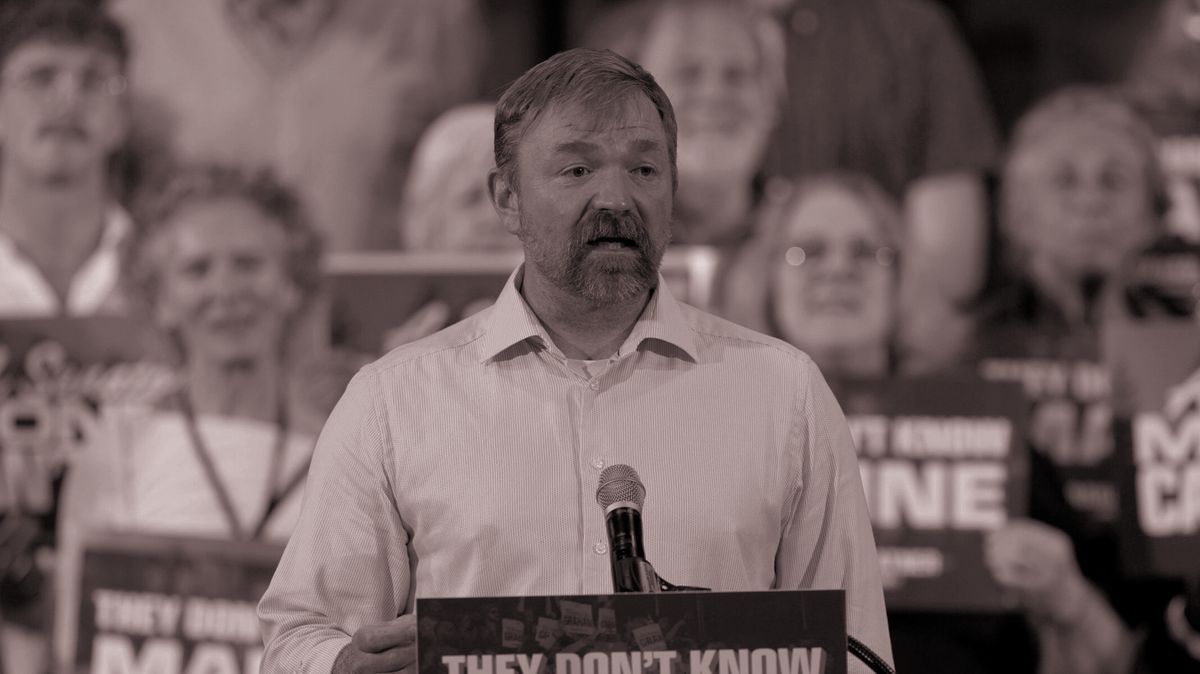
Graham Platner won the Maine Democratic primary despite all the scandals. Without winning Maine in
the general, the path to retaking the Senate is pretty daunting for Democrats. I have an ongoing conversation about Platner with basically every woman I know. What do you think of Platner?
I don’t live in Maine. I know and believe that the people of Maine have to make the choice. I’ve consistently called out sexual harassment, and I’ve consistently called out sexual predators. I don’t think there’s any question that there’s a problem with Graham Platner’s history with women, and
it’s an ongoing problem. It’s also not only in one party. It is a problem we have in this society, is there’s way too much in the way of sexual predators. Donald Trump is the biggest sexual predator I’ve ever seen in office and who got total permission to be a sexual predator and be in office. That’s exactly what we’re seeing with the Epstein files. So this is what makes elections tough, when you have to make tough choices, and we just have to keep calling out all of the ways in which people in
power, and men in many instances—we’ve got to do something about the fact that there’s just too much danger for women out here.
Is there a line? Elissa Slotkin said violence is a bright line for her—if there’s credible evidence a guy has been physically violent toward women, that’s disqualifying. If further evidence were to emerge of physical violence, is there a line over which you would finally say, “You know what? If we have to live with Susan Collins, we live with Susan
Collins, because this guy has gone too far.”
The problem with these conversations is they’re exceptionally painful, because there’s no question sexual violence should be a red line. Frankly, sexual harassment should be—I mean, that’s an abuse of power. I’m one who’s always said we have to understand these as abuses of power, and if you are going to abuse power, that’s a problem. The reason I say it’s up to the people of Maine—and I don’t mean it in a small or superficial or dodgy
way—is because they’re the only people voting in this election and they’re the people who have to show up for the hard choice.
But I will say this: Power matters so much right now. The Senate is the place that will decide whether people like Todd Blanche have the ability to persecute us. The Senate is the place that will decide whether or not we rein in the abuses of the ideological danger and damage of a majority of this Supreme Court. They’re the people and places where we can stop bad
things from happening by this current regime, which is so actively and aggressively undermining our democracy. And that power matters, too. The guardrails matter, and that’s why it’s so painful, because it’s really easy to think that our choices are simple, and they are not, or to think that a red line is simple. We’ve crossed so many red lines in this country, I can’t keep count. So all I can say is, it’s really easy to make a principled statement about one election and one individual in it.
What’s at stake here is so much bigger, and it’s horrible to have to even say that out loud. |
|
|
|
Join Emmy Award-winning journalist Peter Hamby, along with the team of expert journalists at Puck, as they let you in on the
conversations insiders are having across the four corners of power in America: Wall Street, Washington, Silicon Valley, and Hollywood. Presented in partnership with Audacy, new episodes publish daily, Monday through Friday. |
|
|
|
Unique and privileged insight into the private conversations taking place inside boardrooms and corner offices up and down Wall
Street, relayed by best-selling author, journalist, and former M&A senior banker William D. Cohan. |
|
|
|
Need help? Review our
FAQ page or contact us for assistance. For brand partnerships, email ads@puck.news.
You received this email because you signed up to receive emails from Puck, or as part of your Puck account associated with {{customer.email}}. To stop receiving this newsletter and/or manage all your email preferences, click here.
|
Puck is published by Heat Media LLC. 107 Greenwich St., New York, NY 10006 |
|
|
|
|