Welcome to The Varsity, where we’re still on blizzard watch. I’m told that several NBC
execs, including Rick Cordella and Gary Zenkel, had to stay in temperate Milan an extra day because of canceled flights. Tough life!
Light a candle for the end of NBC’s “Legendary February,” which closed with a bang on Sunday morning with a thrilling conclusion to a riveting men’s gold medal hockey game. Below, I’ll look into whether the NHL should expect a bump from Olympicsmania. Meanwhile, if you haven’t seen it already, you might take a minute to watch this Mike Tirico video essay, which touched many who texted the clip to me.
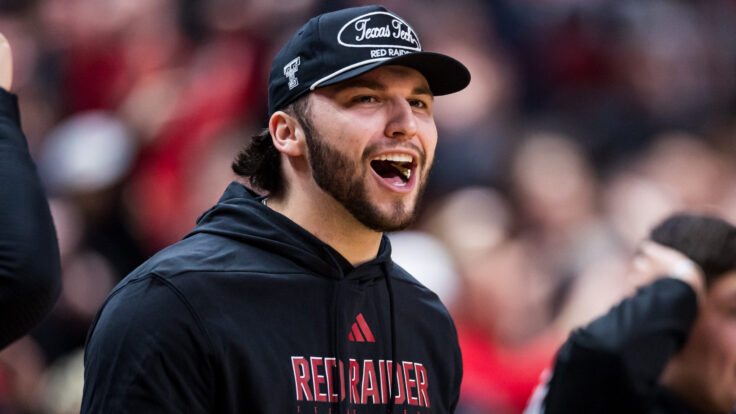
Pod alert: That guy Marchand is back on the show tomorrow to parse through some quotidian topics and take my wine order. Plus, make sure to listen to ESPN’s Jay Bilas on yesterday’s episode. After hearing all the talk about chaos in college sports these days, it was refreshing to hear a full-throated defense of college basketball’s free-market principles from the former Duke forward. (More on that below.)
Also mentioned in this issue: Jack Hughes, Sidney Crosby, Kathy Hochul, Greg Wyshynski,
Kevin Fiala, Kash Patel, Gary Bettman, and more…
As always, this issue was created with contributions from Curtis Rowser. |
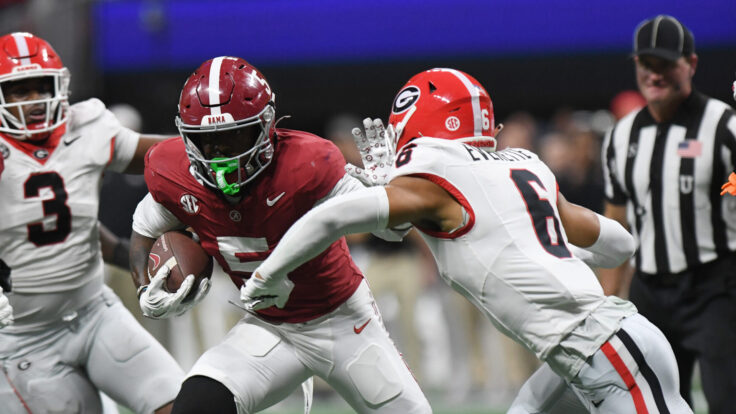
- In defense of college basketball: I was caught off guard when ESPN’s college hoops sage, Jay Bilas, told me on the Varsity podcast that the sport is “better than it’s ever been.” After all, it’s common to view the college sports landscape as chaotic given the influx of N.I.L. money, professionalization of the industry, and onslaught of the transfer portal. But Bilas did blame NCAA leadership for… well, many things… but most notably for sitting on its hands for
a generation, failing to anticipate systemic and legislative change, then recklessly and ubiquitously touting this “chaos” narrative. “I think the NCAA and its member institutions like us thinking it’s chaotic because they want Congress to come in and give them an antitrust exemption,” Bilas said.
He reiterated: “Not one game has been canceled. Every check has cleared. The Brink’s trucks are still backing up to the bank. And ratings and interest are higher than they’ve ever been. But
this feeling of chaos gives them the opportunity to beg Congress for an antitrust exemption.”
In Bilas’s view, then, any turmoil is self-inflicted. “This is a lack of leadership over the years,” he said. “They thought they’d win every court case and be able to operate the way they always had. The writing was on the wall—they just didn’t read it. And they could fix this tomorrow if they wanted to.” (Much more from Bilas on the pod
here and here.) - Duel in the District: D.C. was at the center of college basketball this weekend—and, no, I’m not talking about the Washington–Maryland battle for the
bottom of the Big Ten. ESPN carried an unusual non-conference, neutral-site game at Capital One Arena between No. 3 Duke and No. 1 Michigan. With rabid crowds in sold-out arenas and get-in prices eclipsing $300, this trend of pairing nationally ranked teams late in the season outside of conference obligations remains a hot trend in the live sports space.
ESPN proved the lucky beneficiary of the ACC-controlled game. (ESPN holds the ACC’s rights; Fox has the Big Ten’s.) Last year, Fox
carried a similar game, between Duke and Illinois from Madison Square Garden. The schools pushed for this matchup to try to replicate the feel of an NCAA Tournament game. A.B.E.—Always Be Eventizing. - D.C. United’s “disgrace”: In The Athletic’s anonymous survey
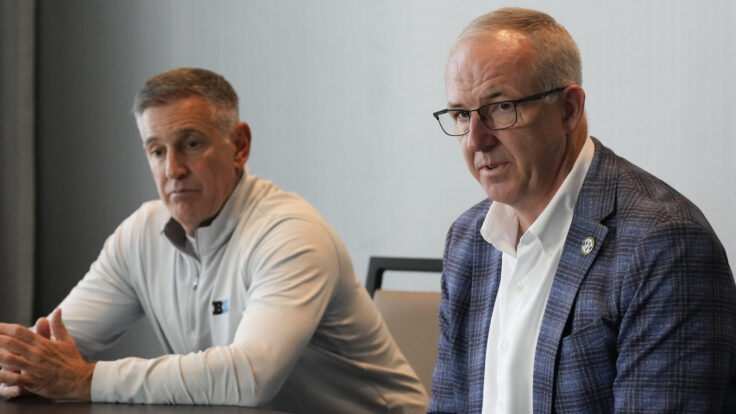
of top MLS executives, I paid special attention to the votes for best and worst soccer stadiums. Not surprisingly, FC Cincinnati’s TQL Stadium—a privately financed showpiece that opened in 2021—was the runaway winner. Los Angeles FC’s BMO Stadium drew the second-most votes. At the other end of the spectrum, executives tagged the home stadiums of the Vancouver Whitecaps FC, New England Revolution, and, alas, my hometown D.C. United as the league’s worst watering holes, and by a noticeable
margin.
The criticism of Audi Field, which opened eight years ago in Southwest D.C., was especially pointed. “It’s so f***ing bad,” one chief soccer officer said, taking aim at a cavernous, oddly built-out section of the stadium. “Their field is a disgrace,” said another. Feedback is a gift!
|
And now for the main event… |
|
|
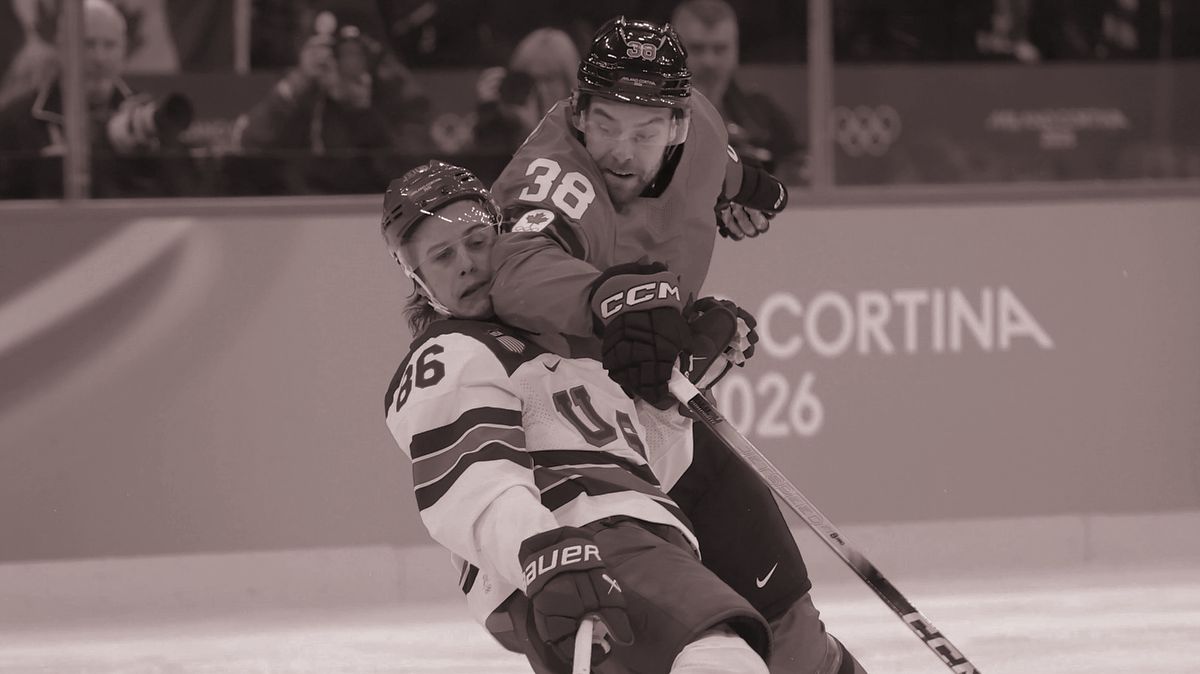
The U.S. men’s Olympic hockey team’s exhilarating gold medal victory may be
dampened by an inconvenient truth for the NHL: Olympic success hasn’t usually translated into ratings and attendance gains. |
|
|
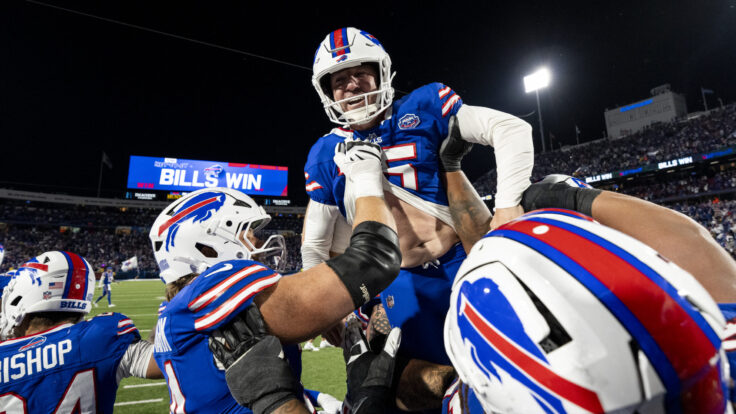
When Jack Hughes scored his overtime goal against Canada, propelling the U.S.
men’s Olympic ice hockey team to its first gold medal in 46 years this weekend, it seemed like the toothless wonder had achieved that rare monocultural breakthrough: Millions of Americans were watching the game across NBC’s platforms (official numbers will come out tomorrow), many of them in groups, all on a Sunday morning.
By evening, Hughes’s bloody, gap-toothed grin was everywhere, and not even a blizzard slamming into the Northeast could dim the glow. (Even Kash Patel
showed up to slam brewdogs in the winning locker room.) Surely all the NHL had to do now was await an Olympic halo effect to boost TV ratings and attendance—both of which had already seen increases this season going into the break.
Alas, the league has been here before, and there’s little it can actually do to turn victory on the Milanese ice to its advantage. My partner Julia Alexander recently wrote about the NHL’s unexpected
entrance into the zeitgeist and its long-term project of imbuing hockey games with as much intensity as steamy hockey soap operas. These opportunities not only exist, but also help explain why commissioner Gary Bettman is opportunistically trying to front-run the NFL in the media rights market. Yet many around the industry expect the
league to descend into a post-Milan swoon as it reenters the usual gravitational dynamics of the early-spring TV schedule. “We’ve always been a big-event society in the U.S.,” said a sports business executive. “The reality is that there’s only so much leagues can do to market their sport in these cases.”
Just one year ago, for example, the NHL’s 4 Nations Face-Off between the U.S., Canada, Sweden, and Finland was a television hit—the final between the U.S. and Canada remains ESPN’s most
popular hockey telecast, with 9.3 million viewers. But regular-season viewership still dropped by double digits last season, even with Nielsen changes that benefitted sports more than other genres. The last time NHL players participated in the Olympics, the league didn’t register any kind of bump.
The Games, of course, are a massive event that draws casual viewers and boosts national pride. And the U.S. gold medal slots perfectly into the league’s recent emphasis on international
competitions, like the World Cup of Hockey and the 4 Nations Face-Off, both of which are jointly owned by the NHL and the Players Association. But NHL games rarely qualify as big events themselves. |
Not every NHL owner gets Olympic fever either. In fact, owners have generally grown frustrated when
their players compete in the Olympics and risk midseason injury by prioritizing patriotic glory over pertinent economic concerns. Kevin Fiala broke his leg representing Switzerland in Milan, and will miss the rest of the season just as his L.A. Kings are battling for a playoff berth. Penguins star Sidney Crosby had to sit out the gold medal game for the Canadian side because of a lower-leg injury sustained in an earlier game.
Owners also gripe that the
I.O.C. forbids branding at a tournament stacked with NHL players. And forget about any media rights to broadcast Olympic highlight reels to help promote the league. Yet they put up with it because it matters to their players—so much so that it’s been a negotiating point in recent collective bargaining agreements. The league has committed to allowing players to compete in the 2030 Winter Olympics in the French Alps, and it’s hard to imagine they’ll draw the line at the 2034 Games, hosted by Salt
Lake City—home to the newest NHL team, the Utah Mammoth. “It means so much to the players that they went to the bargaining table for it,” ESPN’s Greg Wyshynski told me.
Wyshynski believes that owners relented on the Olympics because the NHL has decided to embrace more lucrative eventized opportunities in international hockey—the World Cup, 4 Nations, and perhaps more. There’s speculation, for example, that the NHL could use the U.S.–Canada rivalry to create a
Ryder Cup–style event. “What’s changed is that there’s more of a focus on taking a few things that are like the Olympics and figuring out how to be the only one who profits from them,” said Wyshynski. Unfortunately, the two countries have never been more divided. That’s not as alluring as an unexpected gay romance, perhaps, but it might serve as a good plotline. |
The NBA’s real window: “With the NFL season and the Olympics behind us, and March Madness
still weeks away, the NBA’s new broadcast partners face their first real ratings test across three key weekend windows: ABC Saturday night, ABC Sunday afternoon, and NBC’s Sunday Night Basketball. This past weekend featured the Knicks, Lakers, Celtics, and Warriors, all perennial ratings draws when healthy. In year one of this new TV deal, it will be worth watching whether the ABC windows face any cannibalization now that NBC offers a strong primetime alternative in a far more
viewer-friendly slot.” —A sports business executive
On the problem with salary caps: “Salary caps are an utter disaster for sports, especially hard caps. This myth that they give everyone a chance, which is spun by owners and bought by people like the media executive you quoted, is pure fancy. The only people who will benefit from a salary cap are the owners. And MLB owners might not even benefit, because getting a cap will involve losing a season—and 1994 suggests a lot
of fans won’t come back. Add that to increased competition from soccer, women’s basketball, the PGA Tour, and more, and losing games—let alone an entire season—would be a catastrophic blunder.” —A Varsity subscriber
On the power of sports: “New York Governor Kathy Hochul’s tweet about allowing bars to open early for the U.S.–Canada
hockey game encapsulates it all. Live sports are one of the few things powerful enough to move government policy, change operating hours across an entire state, and bring communities together at 8 in the morning on a Sunday.” —A media executive |
Have a great week. See you tomorrow.
John |
|
|
Ace media reporter Dylan Byers brings readers into the C-suite as he chronicles the biggest stories in the industry:
the future of cable news in the streaming era, the transformation of legacy publishers, the tech giants remaking the market, and all the egos involved. |
|
|
Join Puck’s chief political columnist, John Heilemann, as he roams the corridors of power and influence in America on
this twice-weekly interview show, taking you beyond the headlines with the people who shape our culture: icons and up-and-comers, incumbents and insurgents, moguls and machers in the overlapping worlds of politics, entertainment, tech, business, sports, media, and beyond. The conversations are rich and revealing, unrehearsed and unexpected… and reliably impolitic. A Puck-Audacy joint, new episodes drop every Wednesday and Friday. |
|
|
Need help? Review our FAQ page or contact us for assistance. For brand partnerships, email ads@puck.news. You received this email because you
signed up to receive emails from Puck, or as part of your Puck account associated with {{customer.email}}. To stop receiving this newsletter and/or manage all your email preferences, click here. |
Puck is published by Heat Media LLC. 107 Greenwich St., New York, NY 10006 |
|
|
|