 |
|
Welcome back to The Stratosphere, and hello to all the new Puck subscribers.
|
|
Today, a look at how a federal investigation into FTX has crossed paths with a messy divorce in suburban Washington. As always, my inbox remains open for any thoughts or tips.
Teddy
|
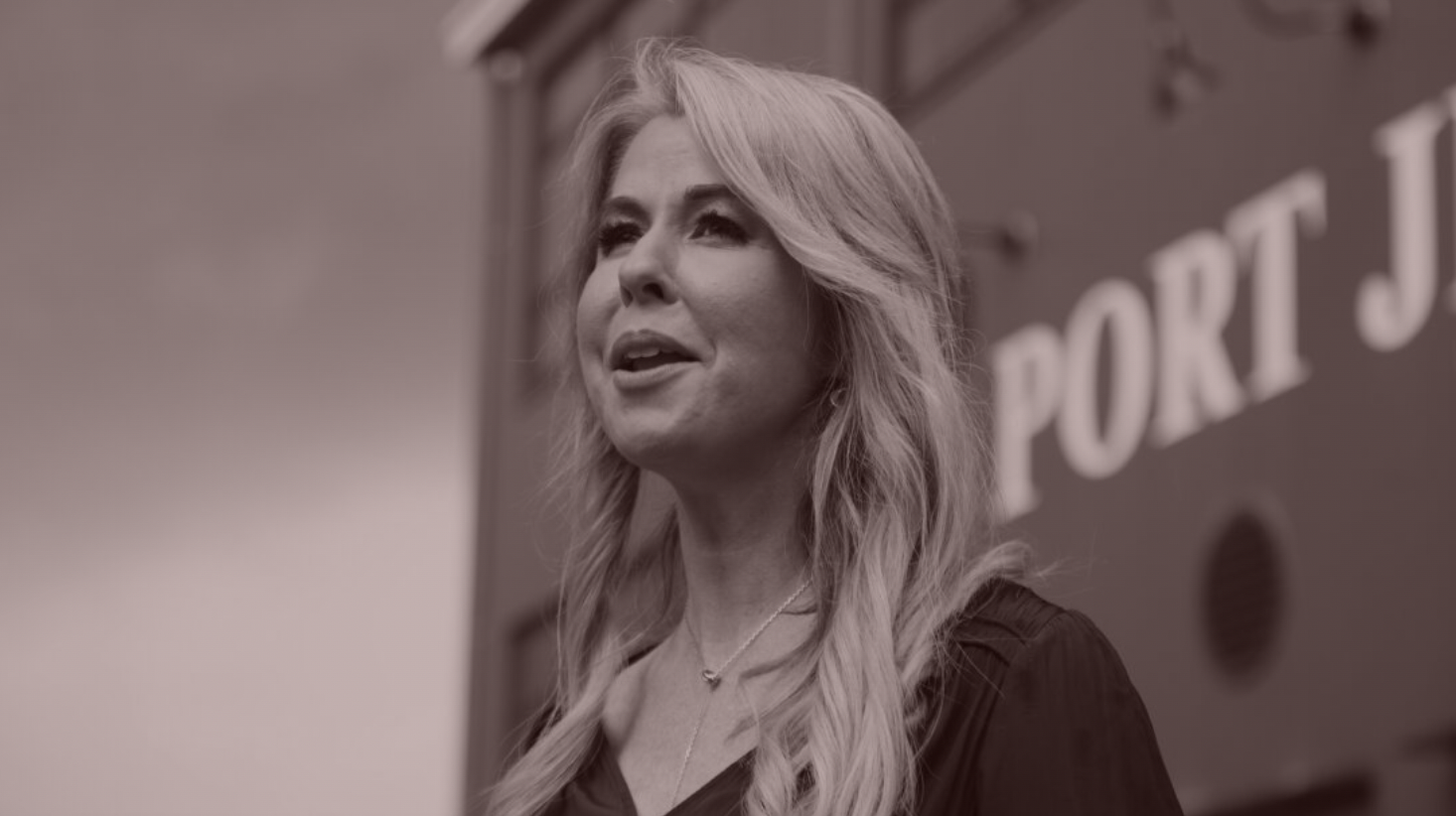 |
| An S.B.F. Arm Twist for Crypto’s Bonnie & Clyde |
| How Ryan Salame and Michelle Bond, the Potomac power couple fueled by FTX money, found themselves in the crosshairs of federal prosecutors and a jilted ex-husband with a joint interest in their downfall. |
|
|
|
| When crypto lobbyist Michelle Bond launched her run for Congress on Long Island, last summer, even some of the people working with her had a few misgivings. They weren’t necessarily worried about the campaign, which made up for its late start by enlisting the professional services of G.O.P. consultant Jeff Roe & Co., or about Bond, herself, who stunned friends by rebranding as an ultra-MAGA candidate with an endorsement from Don Jr. and an alliance with George Santos. But they did have second thoughts about the financial role of Bond’s partner, Ryan Salame, the FTX executive with whom she was joined at the hip.
Salame, who was perpetually bedecked in loafers and linens, and owned a private airstrip within driving distance of his fledgling Berkshires restaurant empire, clearly had money. And yet some wondered about the specifics of how Bond was self-funding her campaign to the tune of $1 million. Because, crucially, Salame and Bond were not married, even if they appeared to spend practically every waking moment together, traipsing about Greek community festivals and luxury car races. Alas, there’s no boyfriend exemption to the self-funding rule under federal election law.
These concerns weren’t shared with the couple, but they now appear to have been well-placed. The Wall Street Journal recently reported that the Southern District of New York is investigating whether the couple may have broken campaign-finance law—an inquiry that is theoretically unrelated to the charges against Salame’s former boss, Sam Bankman-Fried. The issue is that while a candidate can give millions to their own campaigns or their spouse’s campaign, Bond should only have been able to take the legal maximum, $2,900, from her boyfriend. Is it possible that she took more? |
|
|
| Salame and Bond began dating in November 2021, during the halcyon days of FTX, when the crypto exchange was in talks to raise up to $1 billion at a valuation of $32 billion. (According to the company’s bankruptcy filings, Salame at one point received a $55 million loan from Alameda Research, FTX’s trading arm, which he had yet to pay back.) In June 2022, the couple jointly purchased a 13,000-square foot house alongside the fourth hole of a golf course in suburban Washington, for $4 million, according to a copy of the deed. That home would eventually become known to Bond’s opponents as the “Maryland Mansion” when, shortly after buying it, she decided at the last minute to run for Congress back in Long Island.
As a first-time candidate running on extraordinarily short notice in a state where qualifying for the ballot is extremely difficult, Bond received the standard advice, gently delivered, that it would be good to put some of her own money into the campaign. And there was no reason to think that she wouldn’t be able to do so. Bond made as much as $650,000 a year as a top regulatory official at Bloomberg, and a half-million a year at her crypto lobbying shop—to say nothing of the $200,000-a-year consulting gig she later landed at FTX. Few people involved blinked when she eventually contributed $1 million total to her campaign, in direct donations and loans, as there seemed to be no reason to think that the money wasn’t hers.
Bond raised outside money, too. She did a donor-swap with backers of Santos (whom she once considered running against) and solicited some of her colleagues at FTX and asked them for names of other possible donors. Last August, for instance, Bond flew down to Miami for a fundraising reception alongside crypto-boosting Miami mayor Francis Suarez, according to an invitation I’ve seen, where tickets went for either $1,000 or $5,000. “Michelle and Ryan look forward to seeing you there!” read the email sent by a fundraiser.
Salame played the typical political spouse, constantly by her side. He had standard wealthy New Englander centrist policy views, sure, but he was absolutely fascinated by the sausage-making of politics and took to the venture with alacrity, often joining campaign conference calls to go over strategy and polling. He eventually hired a professional donor-advisor, Tyler Deaton, to help introduce him to people like Mitch McConnell. He would show friends photos of his good times traveling with Trump Jr. on private jets.
Bond got creamed that September. But even after the campaign ended, she and Salame continued to approach politics like Jack and Jackie of the Potomac. Just before Election Day, Annie Dickerson—the longtime fundraising impresario for hedge fund billionaire Paul Singer—notified her network that they would be hosting a holiday reception for Winning for Women, Dickerson’s female-empowering G.O.P. fundraising group, at the Maryland Mansion. Her loss notwithstanding, Bond was being cultivated as a rising star in the party.
That all changed a week after the invites were sent, when FTX imploded. Shortly thereafter, Bond resigned from leadership of her crypto lobbying shop. Suddenly, the two of them had, well, a lot going on, to say nothing of the fact that the optics of a party at the Salame-Bond home were decidedly awkward. The event at their home was eventually canceled. |
|
|
| The FTX fallout came to a head earlier this year amid a seemingly unrelated legal firestorm stemming from Bond’s ongoing divorce from her husband, Dan Bond. I visited the Montgomery County Circuit Courthouse on Monday to take a look at the records, and they are a doozy. There’s no use in airing all the dirty laundry—needless to say it’s been a messy, nearly two-year separation involving a child custody battle—but there’s one allegation in particular that’s relevant to federal prosecutors.
Dan accused Michelle of having taken part in a scheme in which Salame reimbursed her for campaign loans, alleging that she “may have violated federal election financing laws,” according to court records. None of this on the surface has anything to do with child custody, of course. But Dan Bond has sought to make hay of it. “They are not ‘collateral’ to this proceeding as they relate to Defendant’s credibility, character and judgment,” his lawyers have argued. In May, Dan Bond even tried several times to serve Salame, unsuccessfully, at the Maryland Mansion. (Family lawyers involved in the case did not respond to requests for comment.)
Michelle Bond has characterized the allegation as a fishing expedition. “The deposits that Ryan made into your checking account… in June and September of 2022, those were methods of him contributing to your campaign?,” Dan Bond’s lawyers asked Michelle in a March deposition, records show. “No,” she replied. “Okay. And that was a method by which he sought to, and you sought to, avoid the limits on political campaign contributions, correct?” the plaintiff’s lawyers responded. “No. That’s absolutely wrong,” said Michelle. In May, Bond successfully convinced the court to rule that this line of questioning was inadmissible, arguing that there was no serious evidence of malfeasance.
On the merits, the allegations don’t make sense to me, for a few reasons. First, it’s not as if Bond didn’t have her own money—$1 million is a relatively modest amount to self-fund. Plus, Salame did end up spending $1 million anyway of his own money on a super PAC he set up to boost Bond. Sure, he couldn’t legally donate that much to the campaign itself, but it’s not as if he was encumbered by the contribution limits. Put another way: What’s the need for an illegal, elaborate “self-funding” ruse if you can simply donate to a super PAC?
But investigators for the Southern District seem to believe there is cause to look into the Bond campaign. There has to be some evidence, no? Then again, the feds are “investigating” everything and everyone connected to the FTX mess—and the Bond campaign is a natural place to poke around, even if the inquiry is theoretically unconnected. And having the prosecutors publicly scrutinizing Michelle Bond’s integrity is certainly in her ex-husband’s interest, even if it wasn’t proactively leaked by his team.
That’s why some savvy observers wonder if the feds’ supposed snooping around Bond is merely a roundabout way to further pressure Salame, who has yet to plead guilty to any federal crimes. First, the feds not-so-obliquely referenced Salame “co-conspirator 2” in an alleged straw-donor scheme with Bankman-Fried, in February, as part of the S.D.N.Y.’s superseding indictment. A few weeks later, F.B.I. agents raided his Maryland home and seized his and Bond’s phones. Is it a coincidence that his girlfriend is now being “investigated” for an unrelated campaign-finance violation? The S.B.F. trial begins in less than three months, and Salame hasn’t flipped yet. |
|
|
| Bond and Salame’s lawyer, Jason Linder, didn’t return a request for comment, but the inquiry raises some interesting, avant-garde questions about the definition of the word “spouse” as it appears in the relevant election law. Lawyers told me this is a gray area: People that share joint assets with a spouse have the right to half of the assets for their campaign. But in practice, society rarely distinguishes between the bank accounts of married partners: No one alleges that Kelly Craft’s money is really Joe Craft’s money when Kelly “self-financed” her campaign to the tune of $11 million during her gubernatorial run; or that John Kerry was illegally using Teresa Heinz Kerry’s money when he ran for president.
But these days, younger people are no longer guaranteed to commingle their finances, for instance, or to ever get married at all: What if two spouses are married but don’t jointly share assets? What if longtime partners do share assets, but aren’t formally married—can one finance the congressional bid of the other? Campaign-finance lawyers eagerly await their calls. |
|
|
|
| FOUR STORIES WE’RE TALKING ABOUT |
|
|
|
|
|
 |
|
|
|
Need help? Review our FAQs
page or contact
us for assistance. For brand partnerships, email ads@puck.news.
|
|
You received this email because you signed up to receive emails from Puck, or as part of your Puck account associated with . To stop receiving this newsletter and/or manage all your email preferences, click here.
|
|
Puck is published by Heat Media LLC. 227 W 17th St New York, NY 10011.
|
|
|
|